
Beat the Wealth Management Hustle: Take Back Control of Your Money

 iHeartRadio iHeartRadio
 Spotify Spotify
 Youtube Music Youtube Music
 Amazon Music Amazon Music
 Apple Podcasts Apple Podcasts
 Pandora Pandora
 Audible Audible
 Podchaser Podchaser
 Audacy Audacy
 Spreaker Spreaker
 Deezer Deezer
 Podcast Addict Podcast Addict
 JioSaavn JioSaavn
 TuneIn TuneIn
 Castbox Castbox
 Castamatic Castamatic
 Castro Castro
 Fountain Fountain
 Goodpods Goodpods
 Overcast Overcast
 PlayerFM PlayerFM
 PocketCasts PocketCasts
 Podimo Podimo
 Podurama Podurama
 Podverse Podverse
 Podyssey Podyssey
 RSS Feed RSS Feed
 YouTube YouTube iHeartRadio iHeartRadio Spotify Spotify Youtube Music Youtube Music Amazon Music Amazon Music Apple Podcasts Apple Podcasts Pandora Pandora Audible Audible Podchaser Podchaser Audacy Audacy Spreaker Spreaker Deezer Deezer Podcast Addict Podcast Addict JioSaavn JioSaavn TuneIn TuneIn Castbox Castbox Castamatic Castamatic Castro Castro Fountain Fountain Goodpods Goodpods Overcast Overcast PlayerFM PlayerFM PocketCasts PocketCasts Podimo Podimo Podurama Podurama Podverse Podverse Podyssey Podyssey RSS Feed RSS Feed YouTube YouTube
In this eye-opening episode of Beyond Confidence, host Divya Parekh sits down with institutional investor and author Andrew Parrillo to challenge everything you think you know about wealth management. If you’ve ever wondered whether you’re paying too much for investment advice, this episode pulls back the curtain on the costly truths of the financial advisory world—and reveals how you can reclaim control.
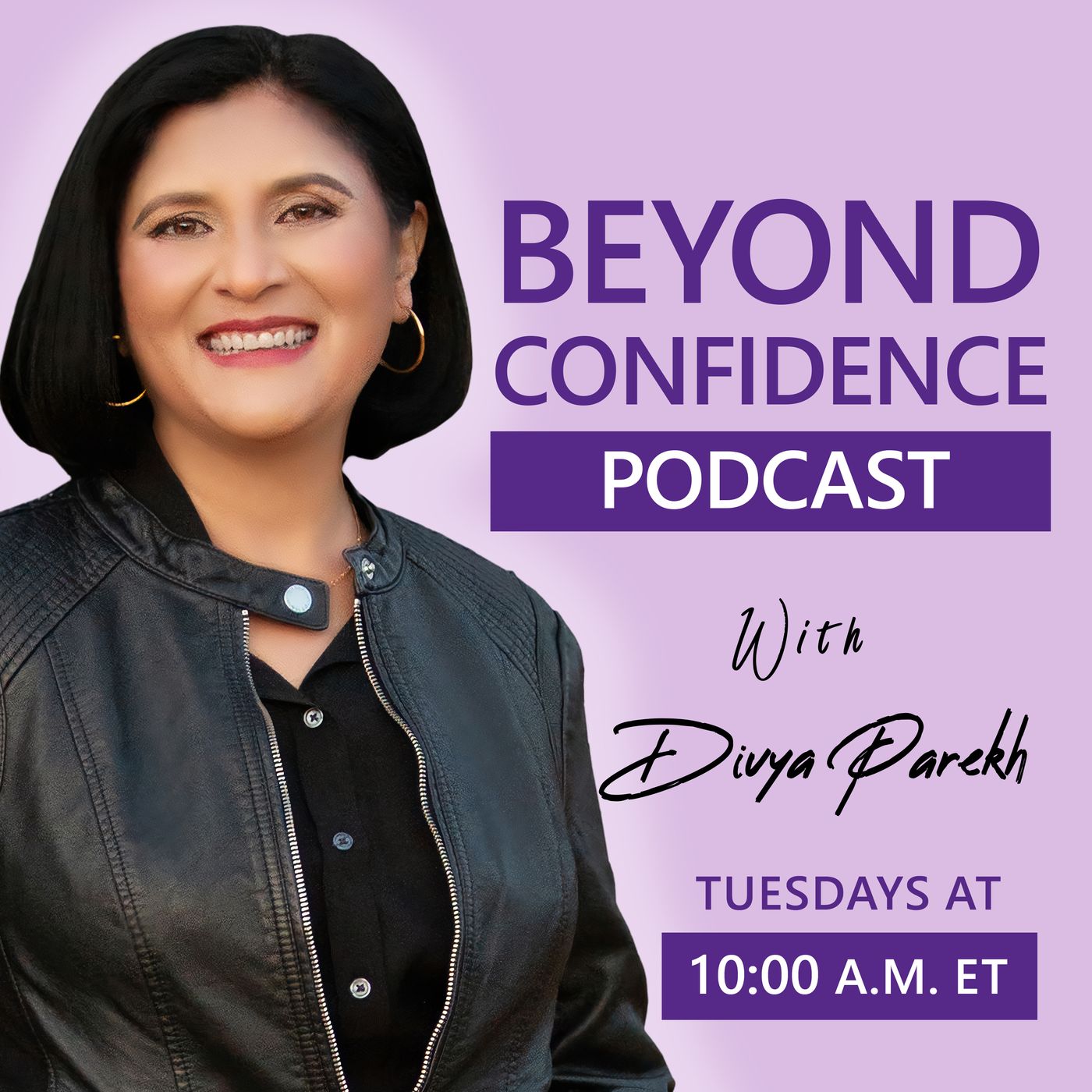
Beyond Confidence is broadcast live Tuesdays at 10AM ET on W4WN Radio - Women 4 Women Network (www.w4wn.com) part of Talk 4 Radio (www.talk4radio.com) on the Talk 4 Media Network (www.talk4media.com). Beyond Confidence TV Show is viewed on Talk 4 TV (www.talk4tv.com).
Beyond Confidence Podcast is also available on Talk 4 Media (www.talk4media.com), Talk 4 Podcasting (www.talk4podcasting.com), iHeartRadio, Amazon Music, Pandora, Spotify, Audible, and over 100 other podcast outlets.
Become a supporter of this podcast: https://www.spreaker.com/podcast/beyond-confidence--1885197/support.
0:00 The topics and opinions expressed on the following show are solely those of the hosts and their guests, and not those of W four WN Radio It's employees or affiliates. We make no recommendations or endorsement for radio show programs, services, or products mentioned on air or on our web. No liability, explicit or implied shall be extended to W four WN Radio It's employees or affiliates. Any questions or common should be directed to those show hosts. Thank you for choosing W four WN Radio. This is Beyond Confidence with your host w Park. Do you want to live a more fulfilling life? Do you want to live your legacy and achieve your personal, professional, and financial goals? Well? Coming up on dvparks Beyond Confidence, you will hear real stories of leaders, entrepreneurs, and achievers who have stepped into discomfort, shattered their status quo, and are living the life they want. You will learn how relationships are the key to achieving your aspirations and financial goals.
0:52 Moving your career business forward does not have to happen at the expense of your personal or family life or vice versa. Learn more at www dot Divpork dot com and you can connect with div at contact at givpark dot com. This is beyond confidence and now here's your host, div Park. Good morning listeners. So I'm calling from New York and I got to share with you. It's I'm at the ocean. An ocean gives you such beautiful vibes and it just brings you so much joy and that calm and connects you with the nature. So it's important to take the time out of your life and connect. So let's bring in our guest today. Our guest is Andrew. Welcome Andrew.
1:48 Thank you. So Andrew shared with us a moment or a time very probably you know, sometimes in your early youth, then you remember going on and was there some person or a moment that left to mark on you. That's a really good question. I don't know if there's a person trying to think of that one. That's a that's a good question. But yeah, actually I had a It just so happens that I had a mentor when I was first getting into a bank training program who wanted me to be in the investment department. And he was a very experienced, very well respected person in that organization.
2:37 For a senior person and he kind of he supported my, you know, my my efforts in the investment function at that trust department a bank. So I was very fortunate to have that support and it opened my eyes to an opportunity that I pursued for the rest of my adult life. Yeah, so I was like, how did you get into finance? Well, that's how I got into it because he introduced me, and I didn't. I didn't know anything about it, but it was fascinating to me and and a challenge. And I was fortunate to be put into a position at a very early stage of my career that was a very important, responsible position, and I just took it from there and I just I just did it. I don't know how to say that, but I just, you know, I just thought, this is this is good, this is fun, this is helping people. I understand what's going on here.
3:39 And I was making I was helping my clients. So yeah, it was just it was very gratifying. And you know, I was married with you know, with I was married at that I didn't have any kids at that point. I did shortly thereafter, So yeah, I know, it looked like a good opportunity to me. So I just pursued it. Oh fantastic, So can you share with us. You know, people may be starting out, people are different periods of their life journey. How can they get into investing? Well, okay, the first first thing I'm going to say is what my experience and this is this is what I've discussed in my book. And my experience is that most people that you know, that I talk to anyway, are intimidated about investing. They say it's chaotic, they don't understand it, you know, they want to leave it up to somebody else. And you know, and I understand that.
4:36 And money is a very is a very u it's a it's a very touchy subject for most people. Most people really don't want to deal with it. They don't wake up in the morning thinking about difficult decisions they want to make with their money. So what I would say is that the the and this is just you know, this is just my experience and history. But the best way to preserve the purchasing power of your money is not by putting it into a bank where you could almost be positive that the dollar, the value of your of your the purchasing power of your money, will decline as inflation goes up because the interest rate you're going to get in a bank is not enough to offset inflation and taxes, but investing in stocks will now. But that scares people because it's uncertain, it's risk it's deemed to be risky. And one of the reasons one of the things I wanted to do in my book is to help people develop a mindset to overcome the anxiety and indeed look at the opportunity to save your money and invest it by the way to preserve its value, as as as something that's that you should you should do with confidence and joy. And in fact, I wanted to name my book invest with Confidence and Joy, but my editors said, no, you can't do that. You can't you can't do that. I said, well, okay, but that's what I want to do, because that's the way I look at it. It truly is. And you know, being mindful of your own anxieties is really important, and you have to try to separate those that emotional reaction of
6:09 being fearful of losing money to the fact that over time the stock market really has been very, very productive for people who have invested in it on the long term. And I based my book on behavioral finance and my practice on behavioral finance and have and one of the things that one of the most famous behavioral finance people who's now passed passed on, Daniel Konnoman, said in his book Thinking Fast and Slow, is that people are two and a half times more concerned about losing money than making money. And that is true. I have found and I don't know that that how he exactly derived the two and a half times more concerned, but he did, and I accept that, and that's where and that's where people get hung up. They have to understand that not taking risk is a risk to your financial wellbeing. And the other thing they have to understand is you are your own chief financial officer. Whether you have somebody helping you or a wealth manager or a friend, you still make the decisions. So you have to take charge. So just take I hate to say this, take ownership because literally it is ownership of your money. So you have to accept that responsibility and discharge it, you know, for your benefit.
7:31 And that's so we can kind of sit here and say right that, like, yeah, go take charge of that ownership. And so many times what happens is that there is that knowledge gap. People want to take it, but then there is that gap. So we are going to explore people investors at different times in their lives. Let's say, you know, we're talking about young professionals, young entrepreneurs in the twenties and they're getting started. What are some of the things that they can and keep in mind as they are working through their mindset and how can they get started? Well, I think the most important thing, bigat is that people have to make a decision to save versus spend.
8:12 That's the most important thing, and that's called the time preference decision. All right, So once you've decided to save, then you have to decide how are you going to invest your savings? Will you keep it in cash, will you keep it in a bank? Will you invest it in something else? And what's happened, you know, in the last fifteen or so years, ten or fifteen years in particular, is that the accessibility of prudent investment vehicles has increased a lot and the cost of it has gone down to almost nothing. Okay, and so they really and so what people have to start up by doing is Okay, I decided to save, How am I going to say what can I save? And what I would suggest to people is to go to a simple interest rate calculator and calculate, if you save, you know, one hundred dollars a month and it grows at six percent a year, how much will that be worth in twenty years. And just do that calculation. It might take you a minute on the internet, and you will see that the numbers are astonishing, because compound interest is a really Einstein's right, it's the eighth wonder of the world. But most people don't understand compound interests. So then then take that same example of say six percent, and move it to seven percent and see what that amounts to. And seven percent is a very reasonable objective for a return for most people.
9:36 Of course you'd like to make more, but just do that, Just do some math and say that should be a very powerful motivator for people to stay on track with their investing. And you know, I think that's that's less than number one. The other thing to do is for people who are you asked about young you know, people in their career, people earlier in their careers. The importance of savings is good, but the most important thing they have is they have time. That's a very valuable resource. Time is an incredibly valuable resource. So take advantage of the time that you have to invest and do those calculations and see what it looks like in ten, twenty thirty or longer years, and you'll be pretty surprised. The other thing you have to do, and this is specifically what I talk about in my book and what I do is people have to know how much risky they want, how much risks they have, and how much risk they need.
10:32 And those are the three questions that they have to answer, and that those are the questions that in my particular approach to the world, and you could see that on my website. There's a short video that explains how that works. But look at what it really means to what is risk? Well, risk is it's losing money, it's not making as much as you could make, and it's other things and so but you have to have to underunderstand what risk means to you and how you're going to address that, because if you don't take risk, you won't make any money. And that's just the way it is. That is definitely the case, right if you're not going to have a certain amount of risk, any money could be sitting in the bank and not give you any passive income, as you very rightfully said, and that the value goes down as the inflation goes up. So in terms of the risks, now, let's say, like you know, these professionals have advanced, they're at a point in time in a good job, and now they're getting for a one k. So one of the key things about for a one k because now you know, pensions are unheard of.
11:49 Nobody talks about pensions anymore. Maybe there are pensions in some of the companies, but that is an outdated thing most of the time. So the thing is that they can not take out the money until they're fifty nine and a half, and who knows, the age may go up as we are living longer. So what is the best way to decide that, Yes, you know, I've got to have that discipline and invest at least the amount of the money that my employer is giving me or the matching me for whatever I invest. Yeah, well, that is the central question, and I think the answer to it is people should look at Again.
12:32 I try to explain this as simple terms as possible in my book, and that is to look at the history of the stock market or financial markets, but in particular the stock market. Now, the standard edport is five hundred, which is an index of stocks US US based company stocks. It's five hundred companies and the index of returns goes back to nineteen twenty six, so almost one hundred years now. And for that tinety nine years these that index has produced a ten percent rate of return per year with income reinvested with no taxes, which is what would happen in a retirement account. It wouldn't have any taxes until you take the money out and the and that's you know, that's what you should just do the calculation. But now that is not to say that the stock market is an easy place to be because during the Great Depression it went down eighty five percent over three years, and it came back. During the dot com boom, it went down about fifty percent over a couple of years and it came back. And the Great Financial Crisis the same thing, over a year and a half fifty percent decline, it came back. The COVID crisis was you know, another big thirty percent decline and came back within a month. You know, it was it was down thirty percent in a month or thirty five percent a month, and it came back.
13:55 And that was only five years ago and it came back. So the market has always been resilient, and the investors who have profited from being invested in the stock market are also have resilience and resolve and understand that the market will test us, it will go down, it will make us feel very uneasy, uncomfortable and anxious, and just understand that is going to happen. So the most important thing people do, and this is what I tell people, is to understand your tolerance for investment risk before you exceed it. Because if you say, Okay, I can afford to watch this portfolio go down by X percent and I won't do anything and I'll just stay invested and I'll be patient, But then it goes down by X plus ten or twenty percent and you're going to say, oh no, I have to get out. Well, at that point, you know you've you've increased the risk of not achieving your long term goal because you will have already realized a loss unless you get in at a lower level, which is very difficult to do. You know you've lost out.
14:58 So just be patient and you know and all I can tell people is that you know who am I. Nobody knows who I am but accept a few of my clients, a few people around me. But people know who Warren Buffett is. And Warren Buffett's been giving the same advice for many, many years, and he says, just put the majority of your money in the S and P five hundred and be patient. And what's Warren Buffett's favorite holding period for stocks. It's forever, so you don't have to make changes. And if you have a diversified portfolio that is in companies that are sound companies. And of course companies do fail, okay, and they'll be out of the index, but you know you should just do that.
15:40 And another way to look at this is to say, okay, I've only got a few hundred dollars to invest, Well, guess what you could actually invest in the in the S and P five hundred through some of the bigger firms ETFs exchange traded funds for very low minimums. And what you're doing is and I don't know if you're working for a large company or not, but if you are thinking it this way, that you are for your with your investment at the SF you are engaging the five hundred of the best corporate managements in the world to manage your money, and you're doing it for almost no expense, and that's pretty cool. I think that's a great opportunity. Absolutely no, And you said it really well that, like you know, when you're going with manage funds or ETFs or something like that, like you know, as you're investing, So a lot of times, you know, people are curious if they want to do it on their own or go with the financial advisor planner like yourself. So before they even kind of do it, how can they get educated?
16:45 I know you mentioned your book and websites, So what's the best way to get educated? Well, I mean, I think that's a pretty good place to start. I don't have any I think the other recommendation I've had for a book is Thinking Fast and Slow by Day. Oh yeah, amazing book. That's an amazing book. And you know, there's there's incredible wisdom in that. And you know, when we're in the middle of a of a battle, it's difficult to keep your eye on you know, the long term. You're interested in survival for the moment. And I get that, but that's exactly what the stock market will do. The stock market will test everybody's resolved will It will give us terrifying declines, and it will give us, you know, soaring advances.
17:31 And my point is you can't get emotionally involved in that process. You have to look at it as a this is what happens. This is human behavior repeating itself, and that's what it does. And now maybe it's I mean, maybe after one hundred years it will stop going up at ten percent a year over the long term, but there are almost no twenty year periods during which you haven't done very well in stock investing in this country. Now there are some ten year periods where you haven't done well. Okay, but ultimately it comes back and you do well. So you just have to be patient. Now, the big thing is what is your time horizon for investing. If your horizon for investing is five years, I would say you probably shouldn't own too much in stocks because stocks could go down by a lot and stay down for you know, a couple of years, and you may be you know, if you need the money, you're going to have to sell at a depressed price. So you have to have a longer horizon to be invested in stocks.
18:30 One of the things that I say to people is in ter do you hire an advisor or do you do it on your own? Well, I advocate independent investing. And the reason I do that is because a couple of reasons. One is that expenses management expenses are very, very costly. Now I have on my website there's a calculator that might take somebody literally twenty seconds ten seconds to do, and it shows you how much if you have, how much money you have, how much you know your your investment management fee is it's usually around one percent, and how many years you're going to have it invested in? What kind of rate of return might you expect? And you can put whatever numbers you wanted there and it'll give you the answer, and you will be surprised at how much that one percent actually costs over time. And I could give some examples, but but I would encourage people to go to use that calculator. There's no email required.
19:28 You know, no one's going to be asking you for an email. You just just go in and do the calculation and you'll get the answer and you know and then if because I think that that should persuade somebody that if they are going to pay an advisor a fee, they have to do their diligence and make sure that that advisor after actually can add value after their fees. Because if the advisor is going to say, well, you know, you look like you should have this portfolio and we'll put it in et apps, we'll put it in an index bo which is what most advisors do actually, and then you say, okay, well you're going to charge me a fee to do that, So how are you going to do better than the index if you're investing in index funds after your fee? And the answer is, well, I don't know, we you know, but I'm here for you.
20:16 You know you could be. And most people feel very comfortable with advisors. And what I have gotten from people is, you know, when they asked you, what have you been doing, I said, well, I wrote a book, I'm investing. What's it about. It's just about efficient investing for individuals, and all I have an advisor and they've maybe a lot of money. I said, well that's wonderful. Great. Now I don't ask them, you know, compared to what because anybody who's been in the stock market in the last five, ten, twenty years has made a lot of money, okay anybody, So, you know, has the advisor made more for themselves or their clients? And that's the question that the investor has to pursue and to try to answer. And some advisors now keep in mind, Centred first five hundred has said in there's studies that over the last fifteen years only ten percent of mutual funds have outperformed their benchmarks, their index benchmarks. So you can find that one in ten advisors that actually can outperform the index after their fees.
21:14 But mind you, after their fees, which they often don't disclose, by the way, they don't disclose those numbers after their fees. They just say, oh, yeah, you have to what have you done after your fees for me? And you know, if you can find that one in ten, that's great, I think I'm all for it. Look, I was an investment advisor myself. I had my own firm, you know, so but if we didn't add value, we lost the client. We had. Well, I had endowment clients and I had family offices, and these were sophisticated, demanding clients, so they weren't you know, they so they asked a lot of questions and so on. Are the things I have in the book is for those people who are considering hiring an advisor. I have some questions and they're on my website and you can.
21:56 Go look at the court and share some of because you know, the listeners listening over here to Live, they may be thinking, okay, Andrew, why don't you share some of those questions with tis. Well, those are the questions, and those people are quite welcome to go and look at the questions, and you know, they're just common sense. It's the way an institution would approach investing the institution's money. And what I find is the interesting dichotomy that I'm seeing in this so called wealth management industry, which is, by the way, it is a it's a two hundred and sixty billion dollars a year industry according to a recent McKinsey study. So it's a and that's for wealth management. That's not institutional man, it's wealth management. So that there's a lot of money, and are they adding that much value? I hope so, because that's a whole lot of money. And so you know, ask the questions and you know you'll you'll they're they're just common sense questions there, and advisors one of them.
22:53 Of those questions, the most important question to me is how are you going to add value to my money after your fee? What is your structure? So let's say somebody came to. You, what is what is your structural advantage to add value for your feed? And that's that is the question. And if they what do you mean what's my structural advantage? No, No, tell me how it is that you're going to beat the market. And if you're not going to beat the market, then what is your strategy and how will you add value to my portfolio? Well, I'll be here for you, and you know we're always here for you. Okay, But keep in mind, people that you're paying that advisor every single day. It's not like a lawyer or an accountant. Okay, you know what you're going to pay a lawyer. You know what you're going to pay an accountant. But most people, and this is the reason I wrote the book. I asked a dozen friends of mine before I wrote the book, I said, how much are you paying your advisor? And I know they had they had significant accounts with wealth managers, and every one of them said, you know, I don't really know. And one of them actually said, well, I don't want to ask because that would be a confrontational I'm thinking, yeah, So all I can say is that people the industry makes it so complicated for people, and I think that it's it's it's ultimately a simple process
24:23 that is made complicated the news. If you look at the news, there's no way anybody can make sense of anything. If you look at the daily news, it's like, oh, right, today's well, the interest rates are going up, the Fed is going to do this. No, they're going down. You know what that that is? Those aren't signals, that's that's noise, okay, And so the signal is the signal that you want to pay attention to is what is the long term potential of of my portfolio? Not what is it going to do next week or next month or next year, but what's it going to do over a long period of time. So basically what I'm hearing is you're saying that you know, okay, you've invested it, keep it for long term and depending on if you're retiring where you may you may have seven figures after having compounded interest and all that, and depending on how much you have invested six figures high, six figures, seven figures multiple, seven figures. We don't know now.
25:20 As you're doing that, you talked about the visor's keeping some of the money, like you know, based on the fee, and that even that one percent can add all time. There are even ETFs, right, so there are different financial institutions like fidelity when god So for some it may just be zero point three five percent, For some it may be zero point five. For some it may be zero point one. So how do you compare those ETFs, especially if you're doing the financial investing yourself. Well, First of all, an ETF is nothing more than a portfolio of stocks that you have easy access to that you can buy and sell during the trading day on like a mutual fund, which you can only get the price at the end. At the close of the next day, you'll find out what the price is. So the ETFs are very efficient. They tend to be more tax efficient if it's a taxable portfolio. But there are also efficient in that the charges, the fees that they charge are very low, are generally very low. It's a very competitive industry, so fees are important. How do you know whether you know what the fee is, whether it's going to add value. Well, you can look at the report from the from the ETF company itself and see how has its return compared to the actual index return.
26:36 That's for starters, and they track very closely, and they might be I mean literally they should be. You know, well most the biggest, the biggest ones at van Guard and Fidelity charged three hundreds of one percent fee, so three basis points called three one hundreds of one percent is three basis points, and so literally there are that they should be showing is no less than three hundred basis points less than the market return, and most of them are going to show pretty much the market return because they have other transactions they can do with securities, lending and so forth that could be enhancing the return of that ETF. But that gets a little technical, But the bottom line is low fees matter. Okay, how do you decide on where you want to invest? Well, and that's an asset allocation question. How much should I have in stocks or bonds? And in stocks what kind of stocks domestic, international? You know, what kind of stocks? You know, what is my risk order? And the approach that I take to that Divia and this gets very you know, I'm very self promotional when I say this, so please forgive this. But it's the way I think it's the sensible way to do it. People should understand what their risk tolerance is. And one of the things that Daniel Kanaman did he's created prospect theory, which in what I do is a questionnaire that's based on prospect theory. Is it his questionnaire And it's like five or six questions that people could answer in five or no more than ten minutes, and it produces a risk score. And what
28:09 is that risk score? Well, a risk score is from zero to ninety nine, and the S and P five hundred and seventy two, just for reference in video, would be ninety nine, you know. Or higher risk stocks would be higher score. Lower risk like money market funds would be zero or one. And so you have to decide on what your risk is. And what I found is that in people that have done this risk assessment, it's a data driven risk assessment. It takes almost no time to complete, and it gives you a score. So what do you do with that score? Well, in one case, there was a person who did a risk assessment and had a significant portfolio was at retirement age sixty five, wanted to know what to do, and his risk score was sixty eight. And I looked at the portfolio that he had been investing in a spoor O one K for fifteen years plus and his risk score in the portfolio is thirty eight. Wait a minute, you wanted sixty eight, but you have thirty eight. Now, maybe you don't really want a sixty eight risk Okay, maybe you want something less than that, but your actual risk has been thirty eight.
29:19 So what did that mean for him? Well, in his case, it meant that he lost a million and a half dollars in opportunity for earnings on his money because his risk in the portfolio was too low. Yeah okay, so now it could have been the other way around, where you know his risk was too high and you know and do. But the point the point is is this is a very objective way rather than saying to this gentleman, well you're sixty five years old, you're probably a conservative investor, right, yeah, that sounds right unconservative? What does that mean? How do you translate that into an actual portfolio allocation? And the answer is it's if you can get a straight answer out of an advisor wealth, Sure, that's great, But you can get a straight answer out of me because I'll tell you exactly how I do it. Here is the risk of this portfolio of ETFs that you have, and here's what here's what you want. So here's how we're going to adjust that to get to the risk score that you want. Again, keep in mind, how much rist do you want, how much risk do you have, and then how much risk do you need and how much risk do you need? Part comes in where we do some projections and this is based upon probability. There's no other way you can do it. And what is the probably the probability is based upon historical returns. And what does that mean? Well, that means that that's what people have done with their money. Okay, that's what people have done with their money. It's not what you know. I'm guessing that they'll do that. So that I've actually done and that's how it's expressed in stock market returns is because you know, it's that's just that's just what the
30:49 return has been. So you know, you've got to just be realistic and objective about how you're doing it and what I do. Unlike the industry, which is, you know, I'm trying to disrupt a two or to sixty billion dollar industry that charges asset based fees, which charge pees based on the size of the assents, and rather than rather than setting a strategy, you know, determining somebody's risk tolerance, constructing portfolio that's a long term portfolio, and then occasionally checking in but not charging them every day, charging people one time to do a strategy session, to get coaching on investing. Basically thinking was investing coaching. There's no obligation beyond that, there's no And the other thing I would say to people is thinking about hiring a manager. I've written articles on of the book is written. There's a calculator on there. You have to understand the what you're getting into because that that comfort level that people seek with a third party wealth manager. Wealth manager arts investment management, but the industry has decided to call it wealth manage because it sounds better. But just understand what you're what you're paying, and what you're getting. It's not I'm really kind of I'm kind of I won't say an diagnostic on the question because I do think that people have to prove that they can add value before you should you know you can, you should pay them. But if
32:22 they can add value, oh that's wonderful. You found the right person or people or firm. But don't just listen to the advertising like, well, where fiduciaries. Well, the reality is that every registered investment advisor, by law is a fiduciary. Okay, So these ads say, well, where fiduciary is and we're different. Well, you're not different from every other registered investment advisor. And you charge fees on the same asset based it's still charging eight percentage of assets. Whether that's point three or point five or one point five, you're still charging a percent. You're going to make money no matter what. So don't tell us that you're only going to make money when you're client makes money, because that's not true. You're going to make money whether the account goes up or down.
33:04 And so that's that's kind of but that's what people are being hit with all the time from the advertising in the. Industry, and absolutely no very valuable advice here, Andrew. And I'm sure, like you know, some of our listeners might be even thinking, Okay, how can I work with Andrew? Where can I find his book, so share it has that information. Well, yeah, it's there's there's Yeah. My webs website has a link to the book which is on Amazon. So I would say it's probably the best ten dollars anybody could spend if they buy the buy the the the e book version, the you know, the kindle version. But yeah, you have to educate yourself and then and then go forward with the confidence that you can do it and you are in charge and just accept that responsibility and don't and don't and don't deny it and look, you know, just face up and do the work. And if you want to work with me, I'm happy to have a complimentary consultation. But I would suggest that you do the risk assessment to see what your risk score is, and then if you want, then we could look at your portfolio and again no charge, I mean, just compliment. We could look at the portfolio, see what your risk score actually is, what you want and then what you have, and then if you want to make changes, then then we would talk about engaging me for a fee to get that advice. And what would that mean. That would mean getting the specific portfolio recommendations. It would also mean
34:36 getting a specific written investment strategy letter and agreement. It would also mean getting a projection of future values in that portfolio within certain probability bounds, starting with a six month projection of the return and then going to as long as you want out to retirement age ten twenty thirty forty plus years and show it and then and then input the things how much you're going to save, how much you're going to need when you retire, are you expecting any big additions to the portfolio, et cetera, so we can model those in and that so all that would be included in an engagement. And then if you want after the initial period is over, then you want to check in, then we can say, oh, please let me know in six months what's going on. So I'd send people an email and say, okay, let's check in and here's what it is. And there's a very small fee to do that. So rather than charging them every day for essentially saying that they're monitoring their portfolio but not really not doing anything, I'm just you know, that's this is the whole business of finance. Is this rough and tumble, you know world. And I say and invest with joy and peace of mind, which is like the opposite are rough and tumble, but that's the way I look at it.
35:53 Yeah No, thank you for sharing that. Thank you for joining us, Andrew. Thank you listeners for joining us. We love having you on the show. We appreciate you and let us know what other stories and support we can bring you so you can live the life you deserve. And thank you on for making the show technically possible. Be well and take care until next time. Thank you for being part of Beyond Confidence. With your host v Park, we hope you have learned more about how to start living the life you want. Each week on Beyond Confidence, you hear stories of real people who've experienced growth by overcoming their fears and building meaningful relationships. During Beyond Confidence, Vpark shares what happened to her when she stepped out of her comfort zone to work directly with people across the globe. She not only coaches people how to form hard connections, but also transform relationships to mutually beneficial partnerships as they strive to live the life they want. If you are ready to live the life you want and leverage your strengths, learn more at www dot Dvpark dot com and you can connect with dvat contact at dvpark dot com. We look forward to you're joining us next week Hmm.


