
How to Build Emotional Resilience and Teach It, Too
 iHeartRadio iHeartRadio
 Spotify Spotify
 Youtube Music Youtube Music
 Amazon Music Amazon Music
 Apple Podcasts Apple Podcasts
 Pandora Pandora
 Audible Audible
 Podchaser Podchaser
 Audacy Audacy
 Spreaker Spreaker
 Deezer Deezer
 Podcast Addict Podcast Addict
 JioSaavn JioSaavn
 TuneIn TuneIn
 Castbox Castbox
 Castamatic Castamatic
 Castro Castro
 Fountain Fountain
 Goodpods Goodpods
 Overcast Overcast
 PlayerFM PlayerFM
 PocketCasts PocketCasts
 Podimo Podimo
 Podurama Podurama
 Podverse Podverse
 Podyssey Podyssey
 RSS Feed RSS Feed
 YouTube YouTube iHeartRadio iHeartRadio Spotify Spotify Youtube Music Youtube Music Amazon Music Amazon Music Apple Podcasts Apple Podcasts Pandora Pandora Audible Audible Podchaser Podchaser Audacy Audacy Spreaker Spreaker Deezer Deezer Podcast Addict Podcast Addict JioSaavn JioSaavn TuneIn TuneIn Castbox Castbox Castamatic Castamatic Castro Castro Fountain Fountain Goodpods Goodpods Overcast Overcast PlayerFM PlayerFM PocketCasts PocketCasts Podimo Podimo Podurama Podurama Podverse Podverse Podyssey Podyssey RSS Feed RSS Feed YouTube YouTube
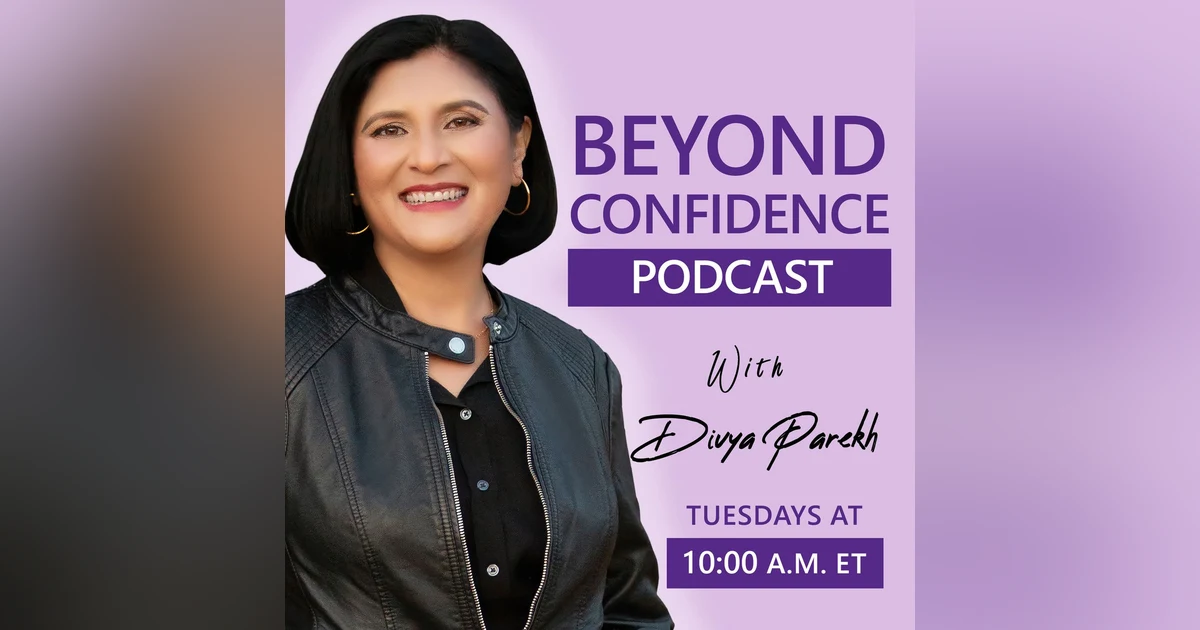
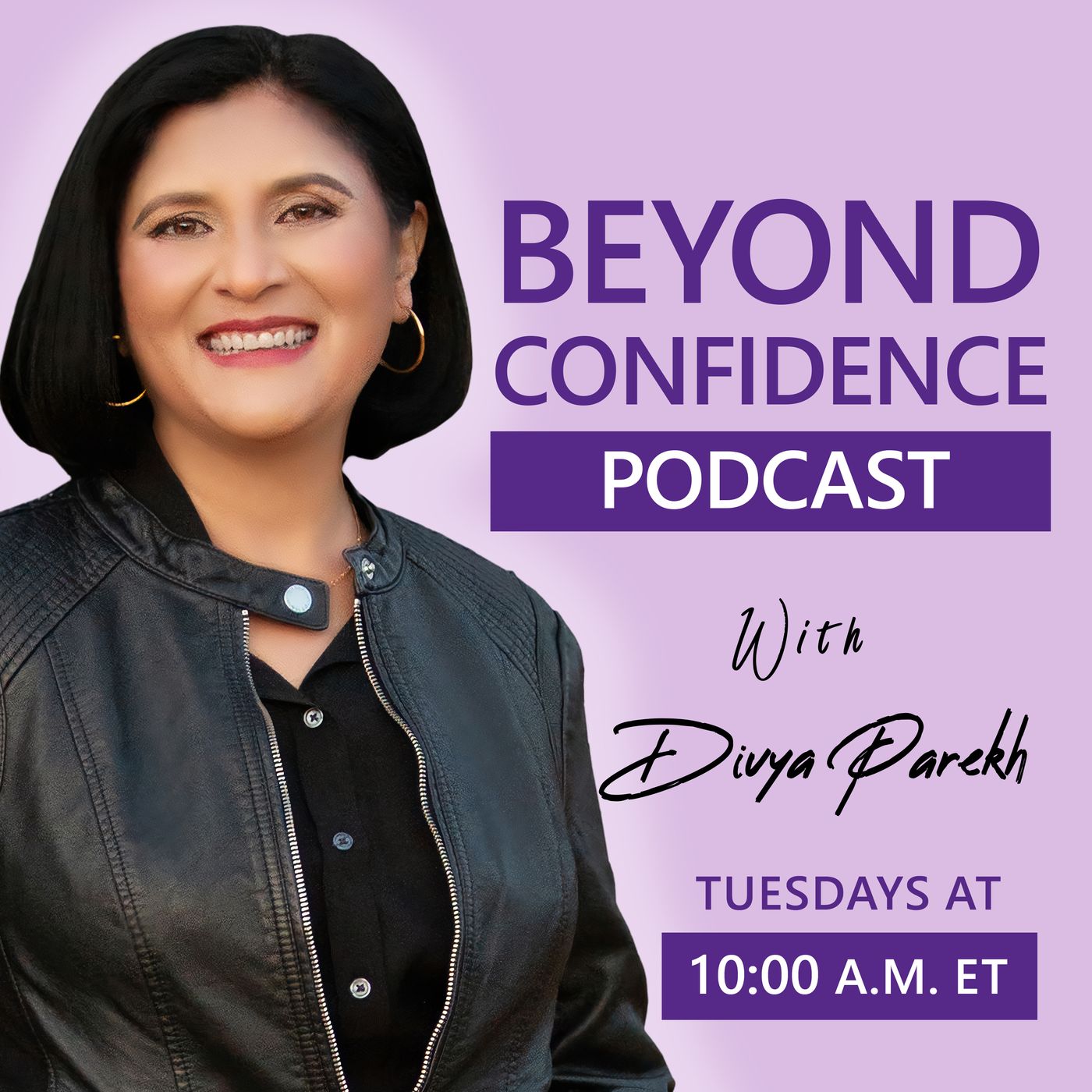
In this powerful episode of Beyond Confidence, host Divya Parekh invites you into a conversation designed to reset how we think about leadership—not as a title, but as a way of living. Together with lifelong educator and athlete Paula Brill Adelman, they explore how leaders are shaped through everyday choices: the habits we model, the dreams we pursue (even later in life), and the values we pass on.
Beyond Confidence is broadcast live Tuesdays at 10AM ET on W4WN Radio - Women 4 Women Network (www.w4wn.com) part of Talk 4 Radio (www.talk4radio.com) on the Talk 4 Media Network (www.talk4media.com). Beyond Confidence TV Show is viewed on Talk 4 TV (www.talk4tv.com).
Beyond Confidence Podcast is also available on Talk 4 Media (www.talk4media.com), Talk 4 Podcasting (www.talk4podcasting.com), iHeartRadio, Amazon Music, Pandora, Spotify, Audible, and over 100 other podcast outlets.
Become a supporter of this podcast: https://www.spreaker.com/podcast/beyond-confidence--1885197/support.
0:00 The topics and opinions expressed on the following show are solely those of the hosts and their guests, and not those of W four WN Radio It's employees or affiliates. We make no recommendations or endorsement for radio show programs, services, or products mentioned on air or on our web. No liability, explicit or implied shall be extended to W four WN Radio It's employees or affiliates. Any questions or common should be directed to those show hosts. Thank you for choosing W four WN Radio. This is Beyond Confidence with your host w Park. Do you want to live a more fulfilling life? Do you want to live your legacy and achieve your personal, professional, and financial goals? Well? Coming up on DVO parks Beyond Confidence, you will hear real stories of leaders, entrepreneurs, and achievers who have stepped into discomfort, shattered their status quo, and are living the life they want. You will learn how relationships are the key to achieving your aspirations and financial goals. Moving your career business forward does not have to happen at the expense of your personal or family life or vice versa.
0:58 Learn more at WWWA. You don't divpark dot com and you can connect with Diva ants Contact Dants divpark dot com. This is beyond confidence and now here's your host div Park. Good morning listeners. So I'm going to invite you to think about the last time your life knocked you down, not just a little, but hard enough that it just took your breath away. And in that moment you have felt down, and yet you moved through it. You got backed up again. Think about it, and that's the quiet strength that whispers to you keep going. And that's what emotional resilience is. And that's not something we're born with.
1:54 It's something that we learn that we build on choice at a time, one step at a time, and that's what we will be talking about today. So I want to. Share something very exciting. I have finished my book, yes, my book on artificial intelligence and how to bring humanity at the intersection of it. Because currently when we are standing between human beings and AI, there's that intersection and how we can meet each other at that intersection. That's what it's all about, and I'll be keeping you posted about it. So let's jump into it and talk about how can we build that emotional resilience today?
2:50 Welcome. Paula. Well, thank you for having me. I'm excited about being here. Excited to have you. So Paula shared with us how did you get into sports. Well, I'm one of six children and I'm the fourth after three brothers, and I was I think born an athlete. I don't know if such things happen, but as long as I can remember, I was always playing ball with my brothers, and then I was swimming, and it just seemed that back then we played outside, and you know, I was one of them and they were very supportive of. Me being with them and playing.
3:31 So I think it was a very early thing that I started with my sports. Oh that's wonderful because sports is something what I find is that it binds people together, regardless wherever you're from. You've got to have a soccer game going, and like, you know, so many different people and so many different countries, it's just you know, cheering the same way. It has that common human language. So as you continued growing up, was there a specific that held your attention. Well, the first one that held my attention was swimming, and it was very much so. When I was ten years old, I went to the swimming pool that was the neighborhood house. It was only in the summer, and I tried out for the swimming team, and I guess I had a pretty fast time and they took me and I went on to continue racing and I was a brag about I was the Bronx champion in swimming when I was eleven years old.
4:34 I set a record, go for it. It was so. Funny, you know, it was in the newspaper in New York, and you know, it was very very It was so rewarding. And I was part of a team and even one time my mother wanted me to go to camp and I said, no, I want to stay and I want to go. I want to swim and I want to be on the team. And that was really important. And I have to give a shout out to my oldest brother who would come to watch to all my swimming meets and he'd even bring his dates. Because my father, my father was a businessman, he was busy and my mother was busy with six kids. So it was yeah, it was wonderful. So that was my first thing. But talk about a little kick in the teeth, you know, overcoming an obstacle. After I won the Bronx Championship. We got a phone call in the house and I answered because we had a few phones with eight people in the house, and they say, can we talk to your parents?
5:33 Were from the Olympic committee or whatever. My father gets on the phone and the woman says, you know your daughter won this championship. We'd like her to train for the sixty four Olympics. And I'm on the phone listening to this and he says, no, daughter of mine is going to spend the next two years in a swimming pool. Ah. That was his response, and then he hung up, and I was like, whoa, this is crazy. And so this was my first I had a hurdle that I had to murder. Didn't want to watch the Olympics. It was the Tokyo Olympics on the television, and you know, I was frustrated. I managed later on in nineteen ninety three to overcome this up, this feeling like I still have something in myself that I want to achieve. And in Israel, where I'm a dual citizen, they had the first Masters tournaments and I said, oh, maybe I can be in swimming.
6:29 And I looked for the times, the starting times, and I found them. I put myself in the middle. Then I trained with the high school team and rale in Rocky Mount, North Carolina a month. It was I had one month to train and they took me on the team and I ended up winning seven medals. I felt like Mark Spitz in the I Want So it was like the finish of a dream. So this is kind of something it shows you can do it. If I could do it at forty something years old where it started at age eleven. But it wasn't something I put in the forefront. It was kind of like always just there, and I thought, when I have an opportunity, I'm going to go after it.
7:12 And that's what I did. So that was yes, Yeah, Paula. That's amazing because and that is so many times what happens is that we put that timestamp on our dreams and then that's what kills it. That like I got to achieve it. But in this next one year or two years, what I'm hearing from you is that you did not give up on your dream. What you did was you stuck with it right it was there. You just didn't like bury it somewhere like Okay, I'm done. I'm not going to think about it. And as a result of what happened was when you got a chance, you did not put that timestamp on it, and you were able to achieve that. So when you got those medals, how did it feel?
7:58 Oh? It was amazing. I mean it was just you know, and I was the team and the whole process and the metals around my neck and I was thinking, Wow, this was like a highlight of my life. It was one of the highlights, but it was so just felt like I did I completed something. The circle was completed. And I'm still swimming to this day and still competing. At age seventy six. I just turned seventy six two days ago. So yes, I think if I can do it, there are ways to do it. There are That was my first sport, but then I continued with since I was born in the generation where it wasn't the sports were not so accessible for girls as they were for boys. Team sports and things like that. The swimming was fine, and then I started just playing tennis on my own and that became a passion. And like I said, will follow the three p's they purpose, passion, and perseverance. They do those three things. You know when there's a way you can, when there's a why, you can find the how, you know, you know, so I think that that's that was the second sport that I excelled in. And actually, just to add a little bit to it, I kept going with
9:31 my tennis. I was in the tennis team. At the University of Florida, and then I went and I became a tennis pro teaching professional. And I had already and I was playing competitively too. Anyway, my father and mother came to visit one time when I was competing. They never came to visit, you know, to do anything with my sports. I mean, it didn't matter to me either. And they watched me win singles, doubles and mixed in New Hampshire was the New Hampshire State championship. And afterwards my father came up to me and he said, I'll go find the best coach in the United States and see if you can make it on the tour. Now then I was twenty. Already, and I thought, you know what, okay, this was another thing, you know, maybe he was feeling bad about the swimming. And I went inside afterwards after I finished, and I had the book of all the tennis pros.
10:20 This was back in nineteen seventy something, and I had a two hand forehand because I was fooling my swing and I ended up used and I said, who has a two hand and four end? That's a coach. And I said, Pancha Segura. Now, Pancha Segura, you have to be older. I mean, you may know, but I don't know how many of the audience knows who Pancha Segura was. But a very famous tennis pro with a two hander forehand. So I called him up. I found his phone number and called him myself, and I told him my situation. I was interested in play, you know, in advancing. I just won the state championship and I was on the team at Florida, this, that and the other. He said, well, okay, come out to Carlsbad in California. I was in New Hampshire. I'll and meet me at the tennis court. And I thought, okay.
11:10 I took the first step and then I went out there and I met him. He said, play this kid, and I said, okay. So I played this kid, and I guess I did, okay. And afterwards he said, how about coming to lunch? And he had his daughter there too. We went to lunch and he said, first question he asked me was how old I was. And he said, look, how do you think you're going to make it on tour when Chris Everts has already won Wimbledon and she was eighteen, she's eighteen and you're twenty whatever. But I like the way you run, and you're the first person that's ever come to me without a connection. And I'll never forget that because he said, and I'll take you on, he said after I after I work with Jimmy Conners for a few months, then I will take you on.
11:58 And then the story goes on. But this is the thing that it always stuck with me is when you make the first step and then you take the second. You know, I made the call myself, and I think a lot of people are afraid. And I think if you have confidence in the way you present yourself and you have a goal in mind, what's the worst thing they can do is maybe they could they could say no, or they could say sorry, or but instead with that statement afterwards, it was a pretty amazing. That was something very special. Yeah, no, I'm definitely intrigued to hear about the rest of the story.
12:41 Yeah, yeah, the rest of the story. Oh it gets really you want to talk about being able to get over obstacles and to really be whole, and this one can finishes this. The tennis story is I ended up trying to go for my dream and he said I had three months. So I was actually working out in San Diego with a famous coach I don't want to mention names, and he was my coach. He was great, and he was teaching all the you know, those that went on tour at that time. I had a few months, but he was very jealous if I played with any man or worked out with you know, worked up anyway, I went on tour and he came with me, and I ended up with a back problem and we took a little break and I went in a cave. We went to Ruby Falls, Tennessee, and I went in this cave with you know, it was with a group, you know, and I get down there and oh, what's going on? I felt like, and I'm not. It wasn't clausaphobia or anything. And I came I said, I got to get out of here. And I went up and the same thing was going on. When I got outside outside, I felt like I was closed in and I found what is going on and.
13:49 They didn't even know. I didn't even know the word agoraphobia. But and then I you know, ended up. You know, I told Carl, you know, I'm going to have to when we got back to San Diego, I said, look, I'm going to have to go look for a teaching job because I can't go on. I've got to find the answer to what's going on, and I just have to quit the you know. This, So I took a job and a job at Cherry Hills Country Club in Denver, Colorado. I you know, I had information and and then I thought, okay, but Carl said, if I leave him, he's going to kill himself. M And I get a call when I'm at Terry Hills on the and on the phone, my friend called me from then from the San Diego which said, Paul, he killed himself. And this you talk about having to like, I've done some amazing things, but I've also had to jump over some incredible hurdles. And so I ended up going to a psychiatrists, going to a psychologist, change the red light green. And this that what happened in your childhood night a wonderful And finally I went to the to the to the synagogue of the Temple, and the rabbi was there. Because I just thought i'd give up.
15:06 Maybe I'll go to the you know. And he said, listen, Paul, my brother just died jogging with his son. And I had to go see somebody myself. He did, and he said, listen, go to this man, Robert Aldolstein. I'm just giving him a shout out. He saved a lot from me. And when I went to him, he said, Paul, I said, I want to fly again. I want to go back on tour. I want to go on the tour to turn to you know. And I was in the avon futures and he said, what's the worst thing that could happen to you if you fly m And I said, well, I guess I could die, you know, I actually made a statement. He said, well, then go find the shortest flight possible and see if you can do it. So I rented a car went down to the Broadmoor down in Colorado Springs. They had the grand Masters playing then in tennis to talk about something. I said, I'll go up there in the meantime, I got my flights tomorrow and the grand master's Betty Merla was watching down, you know, watching the courts down where Pancho Gonzalez and Torbinoulrich were playing, and he's talking to me, who are you?
16:07 I said, oh, I played tennis. I'm a tennis prow And then he after everything was over, he called me afterwards and said, would you like to go to them? Would you like to warm up with us tomorrow to grand masters for our you know, And then they invited me to to dinner and they knew why I was there because Beppy had the same phobia. This this Italian grandmaster. It was incredible. And so then I end up on the same flight as they're taking back and Torbin Ulrich, I'll never forget that man, anybody who knows tennis, this is. My ring a bell. He took my hand, walked me to the plane. It was like a ten seater and we go on the plane and he's calmed me down. He's like, mister guru, mister you know, Buddhist Kyle Omas guy, wonderful I had that took that flight with them with all the grand masters.
16:57 Then they flew back and I was able to recover from my phobia. MMM, with the help of the Grand Master's tennis players. You never know when you are willing to keep going if you. Have a goal. And this is you know, where the tennis actually, you know, that's that's enough of the tennis. But it's more to show people. And I owe a lot to those friends and people that supported me, and you know, that's that's one big chapter, you know. And then I have the dual citizenship with Israel, which was the second chapter.
17:40 Yeah, so there are a few nuggets that I am getting from here. Is that keep going and it's okay to ask for help. And you talk about character, So tell us how does building a character plays into all of this. Well, it's something that I think I learned when my father let me go to a two months summer camp with my brothers, not let me. I had to go. You know, my mother was having two more chill a baby in July and I was six years old, and I learned how to be independent. I learned how to enjoy being you know who I was, and it was I mean, I knew my brothers were on the camp too, but not my bunk. And I was six and after that experience, I thought, Oh later, I was thinking, boy, I learned.
18:30 How to. Navigate the world. I mean, I felt like I was in charge of myself. That not that my parents were constantly hovering over me. We were lucky. We were, you know, at a point where you take your bike and make sure you're home by six for dinner and. You can go and play. And I think those skills that I learned with the support of maybe the sports helped a lot that I was I felt very comfid in school and also connecting on a deeper level with people. This was something I used to love to say. I love to reach below the first level when I meet people. And I think that that's I know from when my children wrote about me when they were eighteen and I was starting to write a book about character.
19:22 And. You know, they said we were we were not over and over. We were allowed to be independent, and we knew she loved us, and we knew that, but we also knew we could succeed. And we were together as a team and it was teamwork. And I think. People forget about you know, they think they can't achieve something. And I think us, as let's say, as coaches, sometimes we have to meet the person where they are. And this I've learned through a lot of years. And you know that. It's like when I teach golf, which I'm an LPGA Golf professional, I lifetime member. When I teach, I don't assume anything. I don't say the word it's easy, which I think is a big mistake when someone finds something easy, Oh it's easy, I'll show you. You know that word, you know, it doesn't resonate. And I think getting to know people, and I've had I've taught tour players one tour one made it back on tour after a lesson, and I'm thinking, he said, you know, I understand what you're saying. I could have the best bros in the world teaching me.
20:40 I'm on the tour and I'm this and I understand what you're saying. And he had me as his coach after that, and I thought, wow, I've only been teaching for like one year. Because that's another story how I became a golf professional. And that also was character. And I think. When I think back and I I, Okay, how do people. Why has this happen to me? You know, why are all these good things happening, and I think, I don't know if you you know that. I think how I became a golf pro is the one that's in my book, the Book of Finding Life's Passion, and I wrote about that, and I think that that one sums up the other two is I was in Israel.
21:27 Goldemeyer inspired me when nineteen seventy I went to Israel and I became a dual citizen at that point in nineteen seventy and I felt like I was part of something greater than myself and it was the most important lesson I learned. I was first worked in the kitchen. Then they put me in the children's house. And when I was there, after working there a long time, I said, when I have kids, I'm going to bring them back to the kibootz and so they can be raised in this kind of environment or leadership. You can learn to be a leader in a group, and you was something very very special. And I taught swimming and I created taught them golf under the keyboard. But it was just a beginning. And then just to finish the last with I think is the most interesting one, with how I became a golf pro overnight I had to go back to the States with my kids. I was divorced and had to go back for the summers. And I stayed because I had a little back issue too, and I was teaching golf. And this is one thing you could hear.
22:27 Audience may appreciate, maybe this tip. I was playing and I had a bulging disc. Anybody with a back operation, Okay, I had a bulging disc from my tennis playing disc. And I did just go easy? Well, I went easy, you know. I was at the playing I was teaching, and then I sneezed, and I sneezed and my back the disc ruptured and I fell onto the table. I was upstairs and I go, oh no, I could hardly walk and my I was in neurologies. He said, Paul, one percent need a back operation. You probably, he said, but bring me in the X rays the MRI, he said, had you get in here, you're the one percent. So I ended up staying in Raleigh. Where was in Raleigh and got a back operation, had a divorce and after that, after and I asked him how long before I can go back to sports? He said, give it two weeks at least, and that's all I asked, was the swimming?
23:25 But then I decided to take the kids back to Israel, back to the Keybooz. But I needed a new sport. I didn't have a sport. You know. I taught these things, but I wanted something to play. And the golf course was close by. So I went to the golf course and I thought, okay, I'm going to learn. Maybe I can learn how to play. So the guy standing there and I said to him, it was a They were playing a pro am. I didn't know much about golf, and he said, you know. I told him, I'm I'm trying to learn how to play golf. And he said, well, I'm giving a kids clinic right now. He says, if you'd like to come and you can get some pointers. So I went down and he asked me a question about tennis in the middle of this kid's clinic and said I was a pro or something.
24:05 And then after the clinic this guy comes up. He was the head pro, Charlie Mandelstan, and he said, would you mind hitting. Some golf balls? I thought, but I don't play golf. He said, well that's okay, just hit some balls. Hit about ten balls. He says, how would you like to teach with me And I said teach what and he said, teach golf. I said, but I don't play golf. He said, that's okay. I said, I have two kids, there're seven and nine. That's okay. You'll teach the clinics and they'll be part of it and they get out of school arly. Okay, that's fine. I don't have to go back in the summer to the because that was our agreement with my ex husband. Okay, no problem, you come back in September and you will be my assistant. And I thought, oh oh, this is crazy.
24:48 And I was forty years old. So I went back to the States and everything, and I, you know, come back and every week they have fun tournaments with the player, you know, without anybody who played golf. And it was only one course. So I show up early that day and they said, hurry up, Paul, we need a fourth for this group. And I thought, whoh, I've met a tournament. I go down the steps and this old, this older gentleman with a floppy hat says, Paul, would you like to ride with me in the cart? And back then in nineteen eighty nine, we were using pool cards most of us, you know, and I like to walk. I said, oh, that's no problem. Halfway down, I notice a cart following us, and I say, oh, do they keep score for you?
25:29 One golf? You know. I was like saying this to myself. Get to the end of the first hole in one of the fours, and I knew his name because he was my neighbor. I said, Tony, what's my partner's name? He said, just call him mister president. And I got over to the cart and Heim Hertzar, the current president at that time of Israel, was my golf partner, the one I rejected to go with him. And I thought, oh, no, this doesn't happen two weeks after I show up to be a golf prone. Now I play with the president of the country and his and we're on the last or one of the last holes walking up the hill and he turns to me and he said, Paula, how would you like to be part of our regular forsome. Thomas Friedman just left the country after writing from Beirut to Jerusalem, and we'd like you to be our fourth.
26:17 Now, I mean, and this is what happened. I was part of their forsome and I always wanted to thank Thomas Friedman, but I haven't been able to reach to get. Hold of him. But it was these are the kinds of things that make you wonder why. And the head pro so Polies never even agreed to play with a woman before, and there was nothing between me. I learned that very young. You know, there was nothing between me and the president, you know, in a romantic way or whatever people might dream up. And I thought, how come this happens? And then people would say, it's you. It's the way you behave, it's the way you are. You're not looking for this to happen to you, but you're putting one foot in front of the other and you're showing up. And I think it's a lot for you know, I think these skills need to be taught very early in life. And this is where I think there is a connection. Not I was born with these skills, but I think that parents just to put that in there, that parents can make a big difference.
27:25 And role models. And Charlie, this pro was a role. Model for me. He believed in me, and one year later I was I joined the LPGA as apprentice and worked my way up and now I'm a life member of the LPGA Teaching Division and it always because of Israel one golf course then being able to, you know, really pay attention and have a passion for this game. And my children became very good golfers and that affected their life too positively. So these are my stories and I'm sticking to them.
28:05 Beautiful stories, Paula, and I really like how you said that it's about showing up, showing up for yourself and you may not have the path laid out, and that's the beauty of life. Think about it, how life would be boring or if we were to go watch a movie where we knew exactly what was going to happen, nobody would go what we would be done in like five minutes. So life is no different and taking life as an adventure showing up. So tell us what books you've written, how parents can support their children and how can you connect with you. Well, the book that I am part of that I was asked to write. My story is Finding Life's Passion.
28:50 Just Funes is in the series Wake Up, Live the Life You Love. Now you have to look. It's on Amazon, but you have to look. Under the top of the series and then you see six or seven books and this is the name. And my overnight golf professional story that I wrote is in this book. And that's the only thing I have also started. I started to write a book on raising kids with character and to succeed in life, at school and in life. And I got through a. Part of it, but it isn't out there yet. But I did a lot of interviewing, and I interviewed the children of these kids that actually I used Harvard since my son very proud of both of my sons. One went to Harvard and the other went to Brown with no connections and it was no wealth, and it was you know, I interviewed kids that got in on character.
29:46 And when we went to look at the school, they said one third of our student body gets in on character. And yes, it was very interesting to sit there and my son was next to me, son David, and I said, David, you know, I kind of nudged him, you know, because the character was so important, and I didn't realize that that we don't want to hear about kids that did million sports and a million activities, and we want to know you as a leader, that you created the opportunity for others to join, and he stuck his neck out when he was the president of the Harvard Student for Israel and then he was the liaison between. The Arab world and the Israeli world.
30:26 And it was this part of the combination of exposing them to different nationalities and being able to get along with people of different you know, faiths and everything else that I think has affected my children and others. And so I was writing the book about others who got in on character great employed. Their stories are so riveting, and I one of these days, I've got to get. This out, so I really get it out. Pull So yeah, the last time he might have and before you share those where can people connect with you? Well, the best way is probably on either email, which I you know, have my email, I think you my Gmail account.
31:15 That's can you read it out? It's p A D like David E. L one two three four five at gmail dot com. Mm hmm. And I also did a startup and I'm winding that down because I didn't get funded. I admit to that it didn't get enough funding. And it's so in my LinkedIn profile, it'll see it says boomers boomer surf dot com because that was my startup to help people with technology. Now I need help, you know, the boomers. But it's still there and I still get the information from there, so the LinkedIn it's possible. My Facebook account is under my oh gosh, it's under my name Paula brill Ailemen.
32:03 So that's where it differentiates me from any there are other Paula Aielman's and I've also I haven't put a lot of my pictures up, but I like photography and I have some pictures up on Instagram. But everything is really under my name, and if there's any problem, they can reach out to me with email and I can steer them in the right direction if they want to really reach out to me. For any opportunities that you know, people have, or questions that you know better children or whatever. Any last neute thoughts you might have for our audience. Well, I just think that if people can just believe more in themselves and their goals and what they want to do, I think it's and the children not to put them in a million activities right now. This is very tempting, but it's I think it's something that we all can improve on the way we present ourselves and sometimes we don't have patience and we say well or even learning to breathe, you know, I do the five two seven, you know, breathe in five, hold the two and then let it out seven. And I have a hot tub, and I think a lot of these things have helped. And I still swim. And I think that some of these things, as you get older, they keep you younger and they allow you to keep moving forward no matter what age you are. And I don't, And I think you have to value your own self worth
33:35 and go after the things you are passionate about. Beautiful, thank you for joining us, Paula. I enjoyed our conversation and wonderful audience. It's about showing up. It's about not putting your dreams on hold. It's about building that character. It's about going after your dreams. We talked about a lot, so we would love for you to share it out because we want to build a community where people. Can live the life they want and the deserve. Thank you on for making the show technically possible. He's a tech vizard, and be well, take care and show for yourself. I'll see you next time.
34:24 Thank you, Thank you for being part of Beyond Confidence with your host, d V Park, we hope you have learned more about how to start living the life you want. Each week on Beyond Confidence, you hear stories of real people who've experienced growth by overcoming their fears and building meaningful relationships. During Beyond Confidence, Vpark shares what happened to her when she stepped out of her comfort zone to work directly with people across the globe. She not only coaches people how to form hard connections, but also transform relationships to mutually beneficial partnerships as they strive to live the life they want. If you are ready to live the life you want and leverage your strengths, learn more at www dot wpark dot com and you can connect with w at contact at dwpark dot com. We look forward to you're joining us next week.


