
Authenticity is the New Authority
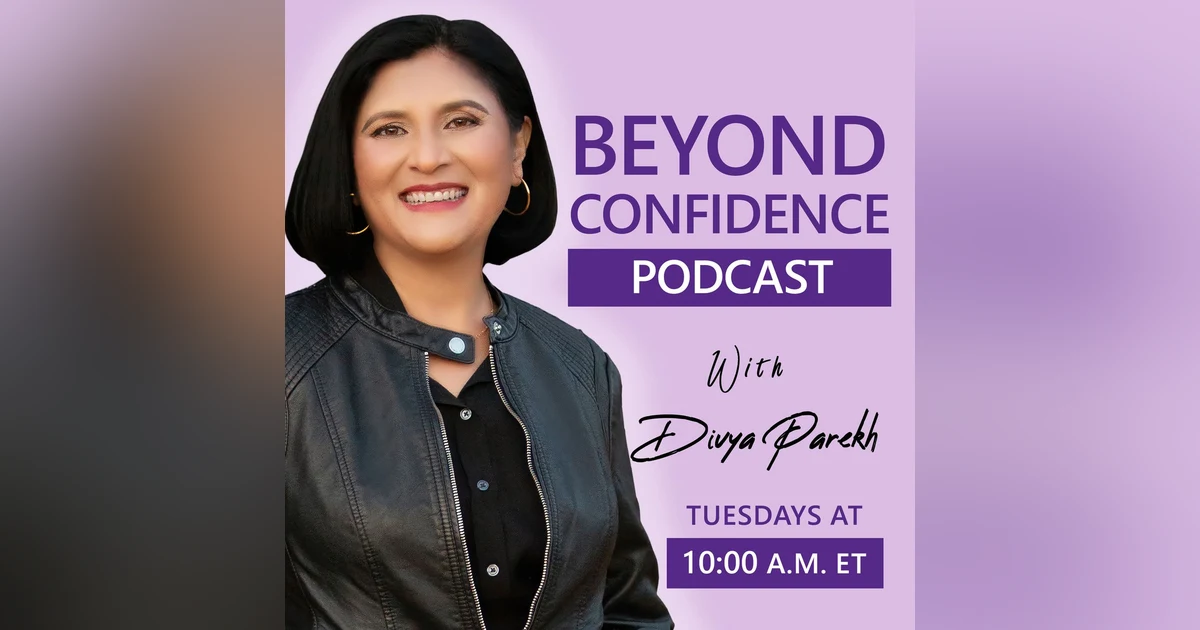

Global pandemics, technological revolutions, and seismic shifts in social dynamics have turned the world upside down, causing leaders to toss out the old rulebook. Join visionaries Divya Parekh and Lida Citroen as they dissect the DNA of modern...
 iHeartRadio iHeartRadio
 Spotify Spotify
 Youtube Music Youtube Music
 Amazon Music Amazon Music
 Apple Podcasts Apple Podcasts
 Pandora Pandora
 Audible Audible
 Podchaser Podchaser
 Audacy Audacy
 Spreaker Spreaker
 Deezer Deezer
 Podcast Addict Podcast Addict
 JioSaavn JioSaavn
 TuneIn TuneIn
 Castbox Castbox
 Castamatic Castamatic
 Castro Castro
 Fountain Fountain
 Goodpods Goodpods
 Overcast Overcast
 PlayerFM PlayerFM
 PocketCasts PocketCasts
 Podimo Podimo
 Podurama Podurama
 Podverse Podverse
 Podyssey Podyssey
 RSS Feed RSS Feed
 YouTube YouTube iHeartRadio iHeartRadio Spotify Spotify Youtube Music Youtube Music Amazon Music Amazon Music Apple Podcasts Apple Podcasts Pandora Pandora Audible Audible Podchaser Podchaser Audacy Audacy Spreaker Spreaker Deezer Deezer Podcast Addict Podcast Addict JioSaavn JioSaavn TuneIn TuneIn Castbox Castbox Castamatic Castamatic Castro Castro Fountain Fountain Goodpods Goodpods Overcast Overcast PlayerFM PlayerFM PocketCasts PocketCasts Podimo Podimo Podurama Podurama Podverse Podverse Podyssey Podyssey RSS Feed RSS Feed YouTube YouTube
Global pandemics, technological revolutions, and seismic shifts in social dynamics have turned the world upside down, causing leaders to toss out the old rulebook. Join visionaries Divya Parekh and Lida Citroen as they dissect the DNA of modern influence and redefine what it means to lead in an era of radical transparency.
Prepare to challenge everything you thought you knew about executive presence and emerge ready to lead with authenticity, agility, and audacity.
Beyond Confidence is broadcast live Tuesdays at 10AM ET on W4WN Radio - Women 4 Women Network (www.w4wn.com) part of Talk 4 Radio (www.talk4radio.com) on the Talk 4 Media Network (www.talk4media.com). Beyond Confidence TV Show is viewed on Talk 4 TV (www.talk4tv.com).
Beyond Confidence Podcast is also available on Talk 4 Media (www.talk4media.com), Talk 4 Podcasting (www.talk4podcasting.com), iHeartRadio, Amazon Music, Pandora, Spotify, Audible, and over 100 other podcast outlets.
Become a supporter of this podcast: https://www.spreaker.com/podcast/beyond-confidence--1885197/support.
0:00 The topics and opinions expressed on the following show are solely those of the hosts and their guests and not those of W four WN Radio. It's employees are affiliates. We make no recommendations or endorsement for radio show programs, services, or products mentioned on air or on our web. No liability, explicit or implied shall be extended to W four WN Radio. It's employees are affiliates. Any questions or common should be directed to those show hosts. Thank you for choosing W four WN Radio. This is Beyond Confidence with your host w Park. Do you want to live a more fulfilling life? Do you want to live your legacy and achieve your personal, professional, and financial goals? Well? Coming up on voparks Beyond Confidence, you will hear real stories of leaders, entrepreneurs, and achievers who have steps into discomfort, shattered their status quo, and are living the life they want.
0:47 You will learn how relationships are the key to achieving your aspirations and financial goals. Moving your career business forward does not have to happen at the expense of your personal or family life, or vice versa. Learn more at www dot divpork dot com and you can connect with Dvant contact Dants divpark dot com. This is beyond confidence and now here's your host div Park. Good morning listeners. It's Tuesday, and I love being here with you all, so thank you for joining us. And what I want to share is a beautiful story. So probably in some of our episodes back, I had said that about kindness. When I walk on one of our local trails, there's this wonderful person, Jennifer, and I can give her a shout out. She is usually on her bike and sometimes she has this wonderful music even going on, and every person she meets she brings on so much energy and enthusiasm and just greets good morning, and that good morning has such a power to it. So one day I just kind of waved at her her and said, you got a minute, and she said sure, and I wanted to share with her that I really appreciate your kindness in greeting me because after a couple of days, I'm looking forward to seeing you on the track. And she just started smiling and she was like, I did
2:19 not know that it had such an impact, and I told her, yes, it does have an impact. So I wrote a blog about her and people really loved the idea. We took a picture, and now Jennifer and I are really good friends. So she showed one of her friends about just she talked about it, and she showed my blog to him and he has started saying good morning on his walk. So never underestimate the power of kindness, the little actions you can take, a small gesture, a smile. So keep that kind of circle going, spending hour a month and distribute it out throughout the days. Even if it's half an hour, doesn't matter. You can be kind from where you're at without spending any time, much energy or money. And I appreciate your kindness in getting our books, especially Expert to Influencer and Entrepreneurs got in because they will change your lives. And at the same token, you are helping us help them in entrepreneurs and Keywa dot org.
3:31 So thank you for being part of our family. And let's welcome our guest today. Good morning, good morning, welcome Lyda. Well, thank you. I'm excited to be here. Excited to have you. So usually we start out with a question, do you recall a moment or a person from your childhood that left a positive mark on you? Oh? Wow, I mean there's a lot to mention, from teachers to caregivers to parents. You know, I think I would go to teachers, and I don't think there's actually one, but just a lot of teachers who just believed in me and gave me that little boost of confidence that probably I didn't know what to do with at the time but later drew upon. I think, going to your story about kindness, we don't know what we're pouring into someone and what a difference it can actually make, and sometimes we never hear about that. But I would have to say the teachers I grew.
4:35 Up with, definitely, and we forget so many times, and especially I remember when kids were young, and you know, you would talk to teachers and they're like, oh, we're so tired, and I would tell them that thank you, thank you for all that you do. You don't know who you are shaping. These are the leaders of tomorrow and kind of going into it, you know, you talk about influence and all that, tell us what was your life journey like and what brought you to where you're at today? Oh, how much time do we have? No? You know, I spent twenty years in corporate right doing what I thought I was supposed to do, and I was very successful. I achieved the next level. I got to the next rung in the corporate ladder and had a wonderful career. It just wasn't very meaningful, but I was checking all the boxes. I was getting promoted, I was making money and then making more money. And it wasn't until two thousand and eight when the economy here in the United States crashed, and like many people, I found myself out of work. I started thinking about what do I want to do as opposed to what can I do? And I'd never really had that question before because I'd always gone from one thing to the next thing to the next thing. But because of where the economy was, it actually, looking back, it should have been terrifying,
6:06 but it wasn't terrifying. I decided to start a business, and I at first going to take all of the experience I had working with these global brands and global companies and I was going to work with small companies. Very quickly realized I was better suited for big companies. So then I pivoted and instead of focusing on corporate or business branding, I said, what if we looked at people? Because who was really suffering in two thousand and eight were people. People were losing their jobs, worried about losing their homes, trying to make themselves relevant and hold on to what they had. So I came up with personal branding, which at the time nobody knew what that was. Nobody was talking about personal branding, but it happened to be with the market needed. And I wish I could say it was strategy. And I designed this and I thought it out on a cocktail napkin. I think there was a lot of divine intervention. But I launched this business on personal branding and it took off. And I had never wanted to be an entrepreneur. It was never my dream.
7:11 But once I was there, I couldn't imagine anything else. Absolutely this day, sixteen years later, I can't imagine doing anything else. Well, that's powerful. So I like what you said that it's not about the people just being there and doing check boxing, because I've been in the corporate world too, and there was a lot of soul searching and all that, where you know, I would be like, okay, do I want to check the box? And while I was in corporate I went the way where I wanted to go rather than just checking the boxes. I mean, there were a lot of box checking that I could have done, and I still did it, and yet there was a portion of me and just that was feeling conflicted and not in alignment. So I'd been starting to pave my way through it.
8:11 Now. That said, there are a lot of people over there, and not everybody can become entrepreneurs, because think about it, if everybody becomes entrepreneurs, it doesn't work right. So when you talk about people, they are the backbone of industry absolutely, so tell us that when people are in the thick and thin of their jobs, how can they bring that balance between checking the box and still doing what they want to do? Well. I applaud you for having the insight to know that there was a disconnect. I felt it. I felt that I wasn't showing up and being authentic and maybe living to my fullest potential. But I didn't know any different.
9:00 I was doing what I had been raised to do, which was get a job, do well, get the next job, get more money. And I mean that was the path I had been taught. So I think when it first starts for people is when you know either their gut, their heart or their head starts to hurt and they realize, maybe my values are out of alignment with the customers we serve or the product that we're selling. Maybe my heart just isn't in this work anymore. And there's that disconnect as you talk about starts to form, and listening to that is powerful. I think today we do encourage people to listen to that. When I was growing up in the corporate arena in the nineties, that really wasn't That wasn't the mantra if you will, So listening to that and saying, you know, just because I can doesn't mean I should. I could do the work I was doing and I was good at it and I got rewarded for it, but it doesn't mean that's what I should do. It doesn't mean that's what I was capable of.
10:04 And I think to people listening saying, you know what, if there is something more, I remind them that, in the words of Share, this isn't a dress rehearsal Right, we're on this merria go around until the music stops and then we're not. And taking advantage of your purpose and knowing why you're here and then leaning into that as scary as that can be, is a powerful thing, and you end up finding a lot of people support you. I was shocked when I started my business and I sent out an email to a whole bunch of my contacts and I said, Okay, I'm going to do this. I'm putting my name on the door and I'm going to start a business. I had so many people reach back out and say, well, it's about time. We've been telling you to do this for years. I'd never heard them.
10:53 So I think you actually find a lot of support when you lean into what your heart is telling you to do and what you feel yourself post to do. Absolutely, and there is a lot of power. And at the same time, what happens is that it can take that time to transition out really well. Absolutely. So one of the things what I've seen with my clients is that people may have responsibilities where they just can't Okay, this is what my heart wants and this is what my alignment is. So tell us, like, let's say if somebody is in that situation. Well, you absolutely have to make sure the phone bill gets paid and the kids have access to medical and I mean there's responsibilities we have as an adult, and for some people it doesn't mean taking that leap of faith in a bold way. It might mean sort of staggering or stacking the opportunities. The first thing I would think about is, if you have an idea to start a business, do you have all the tools? Are you ready to do that? Maybe you need more education, maybe you need some certifications or credentials to make that business successful.
12:06 It could also be you need more experience. I deal with a lot of people coming out of the military. That's a niche market that I work with, and they all want to just start their own business. But sometimes they don't have the experience. So get the experience first, learn what you need to learn, and then sometimes you're more ready to start. As well as a savings account. You know, there is that sense of grittiness that comes when you're hungry and you've got to make this work. I don't like that. I don't like I don't like panic, you know, but if there is an element of drive, I was just so convinced that I could help people in this way. That's what drove me. And fortunately I wasn't in a position where I had to worry about putting food on the table. But we have to be responsible to those who are dependent on us, and sometimes that means just pushing it out three or five year knowing that that's the end game, and then getting everything ready for that.
13:04 Absolutely, and that is one of the reasons I wanted to bring this up, because all that we hear is that what is your why? If your why is bigger than your want, you've got to go after it. I completely agree with that, that you have to go after it. But then again, it's also important to bring in that element of responsibility because I've seen so many of my clients who just kind of said, yep, I'm jumping in, I'm taking that leap of faith, and then they found that within two years they were going back to work, and that was even more disappointing and disheartening, versus putting in a dash of decision making criteria, putting in a dash of reality with that why what it does is it crafts it. Maybe it's one of the books. You know, I'm a fan of books. It's slow productivity. There's a book called slow productivity. So it doesn't mean that it needs to happen down. As you mentioned, it could be stacking or staggering there you are planning your things out and then putting it. So now let's say that is the route four business owners. But what if people want to stay in the corporate world, how can they align their values along with what they want and where they're working well?
14:24 And I have a lot of respect for people in the corporate world. They're my clients, so of course them. I work with entrepreneurs too, but primarily corporations. Know your values start with you, and corporations put forward values. I was in marketing for many years and I know how we wrote those values. But an individual's value is sometimes look a little different. They can sometimes be more personal or more heartfelt that a corporate value which is going to be promoted to shareholders and media and all of that. Aligning those usually isn't that right. I believe in community. My company serves a community I'm passionate about. We've got alignment.
15:08 Where it gets challenging is I believe in caring for people and my company just wants to take and doesn't really care about the clients. That's a disconnect, and that's usually not endured for a long period of time. We're not that good at faking it. We can usually start to reveal that we're out of alignment. But when there's alignment, it doesn't have to be word for word, but there's an alignment in philosophy, alignment in values. Then it's really about looking at what the company is set forth as a mission, and what you're setting forth is a mission. You talk about the why. I think the why is absolutely the foundation. I agree with you, But then comes the who, right, who do you want to serve? I'm a big fan of influence. It's what I'm talking a lot about these days, because influence doesn't come from rank.
15:59 And if you want to become CEO because you think that will give you more clout or sway or influence, I'd ask you to check that because we see people at lower levels in the organization have way more influence than the C suite. So kind of rethinking who you want to serve and how you want to serve them as well as why. When that all comes together, it makes this beautiful soup and that's what we feed off of. That's what motivates us and inspires us and keeps us going through the challenges and allows us to really celebrate during those successes. Definitely, that's very powerful, and I really would like to highlight the point that you made is that you don't have to be a CEO or a manager or leader to have cloud right you can have a cloud right there.
16:52 And kind of rewinding back a little bit when you said that if you're not in alignment, it doesn't have to be one for one or for everything for everything, and that's what happens is that people so many times are caught in the absolutes. Then they forget to live. And one of the things that recently happened was one of my clients was not happy, not aligned, and as two young kids could not leave his wife, they decided that his wife would be a stay home mom. But he felt like he was literally dying. He could not live in this company anymore. So as we were talking and coaching is more towards helping them get those aha moments, and he said, huh, what's there to stop me to go work for another company that aligns a little bit better than yeah, And he was able to negotiate more time where he could work remotely rather than going in person with the time flexibility, and then his wife took on a part time job. So even though he took a paycut, he was still able to align himself. And I really like what you mentioned about is that influence.
18:13 So tell us how can people be authentic in the leadership and start out influencing others? So I love that question because authentic leadership is the term now right in the book that I wrote, the New Rules of Influence, I actually one of the rules is to be real, and I considered using the rule be authentic, but I kind of wanted to push back on all the hype around the word authentic, so I, you know, being me, I had to go a different direction. Here's how I define it. Being authentic or being real means if I ask you a question and you choose to answer it, you'll give me a genuine answer. You will speak from your heart and your head, and you will give me an answer that's truthful. But you also reserve the right to say I'm not comfortable answering that. Now, if you're in a leadership position, that gets trickier because if it's a question you should be able to answer, then you've got to wrestle with that. But if it's a really personal question, I'm not a fan of transparency.
19:19 I think we should be authentic. We should be real, but we shouldn't be We shouldn't be transparent. And here's why. There's an aspect of reputation management that I do, which is reputation repair. And a lot of people get into trouble because they feel this social commitment, if you will, to share their opinion on everything, and sometimes they're not even real opinions. They're just jumping in. You know, a Supreme Court announcement comes down, it's all over social media, and these people don't want to miss out, so they jump into the conversation. That's challenging because once you put it out there, you can't pull it back. And some of my clients have real trauma around certain conversations and they would prefer not to talk about things. And I think as adults specifically, and as human beings, we can be real. We can speak our truth. We can look people in the eyes and show empathy and compassion and let them see who we are. But I don't feel that we need to reveal everything. We are allowed to keep some things private, and I think authentic leadership can navigate that beautifully.
20:30 I totally agree with you because a lot of people, again kind of going back into absolutes that authentic means I got to air everything. And yeah, you know, there used to be a saying that you don't have to air your dirty laundry. Nobody wants to see it. So, for example, if you have a statue of dirty clothes, so that just by not showing it does not mean you're not being authentic, right. And we saw a lot of people make that mistake during the pandemic. You know, we were all looking for connection. We were all looking the whole world was hurting, the whole world was confused, and we came together, which was the most beautiful thing to see. You know, we cheered for healthcare workers at the same time, we shared our experiences whether you were in India or Holland or the United States. But some people took it too far and then they wanted to take it back once everybody went back to work, and it just doesn't work that way.
21:32 So I'm always telling, you know, clients to be intentional about what they want to bring forward and when you have a good filter for you know, this is this is my conversation, this is where I play. This is how much I'm willing to share of who I am and my life and my history. Then you embrace that and you play in that space, and if you're challenged to go outside of that, you make a decision to do it, rather than feeling a pressure in person or online line that you have to weigh in or you have to have an opinion or comment. There are topics I don't talk about. I don't talk about politics. For instance, I have very strong political views, but it's not your maane to my brand or my business. My clients are all different political persuasions. It's not what I do, So I don't feel I need to be transparent in that way.
22:23 It doesn't affect who I. Am, absolutely So. Now we have talked about the settings, and you did say that that once you post, you are leaving that footprint. Yeah, that you could linger forever. And it's possible, even though you may be thinking, oh, it's just a post, but if somebody takes a screenshot of it and shares it out, it's there forever. And that's one of the things for our young millennials and Gen zs to kind of like think about it. Now, Let's say you are in a setting where you could be working with your boss or like where you are working with cross functional group. Now in that setting, not only talking about authenticity but building that influence, what are some of the practical aspects that people could take and use it today?
23:13 Well, and I love that question because what we're talking about when we talk about influence is not an American notion. I work in over thirty countries and being of influence. Having influence transcends culture. It works differently in the nuances of different cultures, but people in different cultures also want to have influence. So I think to someone listening, it means showing up right. If you're going to have influence, you don't sit in the back of the room every time and expect to be noticed. Maybe you need to sit in the front of the room. Maybe you raise your hand and offer an idea, knowing that you could be judged or worse even ridiculed, But you take that chance because that unwavering commitment you have to being heard, which we should all be heard, is more powerful than the risk that you're willing that you would take that somebody might say that's not a good idea. We all have to be heard, and if we're not all heard, decisions don't get made right. So having influence means a commitment to being visible. It also means a commitment to being agile. These are some of the rules I talk about.
24:29 We can't just always do things the same way and expect they're always going to turn out. When somebody tells me that they're more rigid in their structure, I ask them to think about where they were in March of twenty twenty when all the best laid plans were thrown away and we all had to pivot or we didn't survive. We have to be agile in our thinking and in our approach. And the other thing I think if you want to have influence is you have to be inclusive. And inclusivity the way I define it is to make sure all voices are in the room. If you want to represent a community, or you want to speak on behalf of your team, or you want to advocate for an idea, you need to know all the stakeholders who were involved in that. I had a wonderful conversation recently with a client who shared a great story and it's really short. She had brought an idea to her team.
25:20 They were all sitting in the room. She shared the idea and one of her team members raised his hand and kind of nervously said, that doesn't work for me, that doesn't fit my community and what we care about. And everybody panicked. Everybody looked at my client like he was going to be in trouble, and instead she said, thank you, thank you for raising that concern, thank you for bringing that to my attention. We have to start thinking that way that we want to hear why this wouldn't work or why this may not fit that ideal. When I started working with the military, I knew nothing about the military, didn't have any background or any family members who had served. But I asked questions and I listened to learn not to judge. I checked my own biases, and I practiced that inclusivity mindset and that service mindset to really understand the community I was going to go out and advocate for. And that was fifteen years ago, and I'm still learning and I'm still asking questions. But it's because I care and I want to have influence in that community. And I think that's where influence becomes a little bit harder for some people. There's no shortcut.
26:33 I know they'd like one, but there is no shortcut. Yeah, our social media and instant gratification, right, because we've got emails and sometimes I'll be sitting with let's say one of the collaborators or one of the clients and they sent an email or I've sent an email and it's not even a minute it didn't come through. So because of technology, we all have the comes so attuned or even addicted. And I don't use that word likely that we become slaves or we have become Oh the phone rings I got to get or even if you don't get it, your attention will be caught by it.
27:18 Or is that something important, something like there's a pinion in my inbox, if there's a Slack or Microsoft teams or whatever it. Is you're describing my life. Yes, So you're absolutely right that influence is not something that you can build in a day, right, And it's about showing up what you said very powerful, showing up and also creating that culture. Because when you talk about inclusivity, let's say if your client had shot down the idea, then that person would not have had the courage to speak up again, versus she created that culture. So what can people do when the leaders are not inclusive? How can the build their influence during that period and in that environment.
28:10 That's a tricky one, right, because when we talk about managing up or leading up, there's all sorts of nuances. One of the techniques I use with an international client of mine who is really struggling with that leading up. You know, how do I I believe these things, I practice these things, but my boss doesn't is to put yourself in their position first. Is there a reason they're not right? Instead of assuming we know that or believing we know why this person isn't bringing the right people into the room, is there perhaps another reason? It's remarkable what can happen when we turn the lens around and we start to imagine something from someone else's perspective. And if you can't do that by yourself, get a friend to do it with, grab your spouse or your partner, and just say, you know, here's what I'm dealing with.
29:02 What's another scenario that could be happening beyond the one I'm telling myself? And then once you have that, start to see if there aren't ways to make inroads. You might, for instance, say, you know, dear boss, I see that we have this meeting set up for Friday. I noticed you know, John and Nimesh and and Diva are not on the are not on the meeting. I think it would be important to have them there and see if you can't show or lead your boss to understanding why inclusivity matters, why those voices will contribute. And they may say all they're going to do is complain. I don't want to I don't want to hear the complaints. There could be something in there. So let's set up a second meeting with them so we don't distract from the first meeting. So we make sure that we consider what they might tell us. We can't know unless we ask.
29:56 So sometimes leading your boss gently right so they don't feel threatened is a powerful way to do that. And understanding anger, for instance, is often disguised. Resistance is often fear disguised. So what are they afraid of? Have they done this before and it didn't go well? Consider from their point of view what they might be experiencing. It's often better to show than to tell. Absolutely Really a powerful point over there that stepping into their shoes and understanding them versus making assumptions, Because as it goes, each and every one of us has our own biases and it's always interesting whenever I'm doing some team coaching or something like that. What happens is that people will be like, no, that person is like that, that person is like that. Especially I have always like a pre check or pre assessments that you know, what are the team dynamics and what is happening, and then it's always somebody else's fault. So we start out with simple bias exercises and they're like, oh, I didn't even realize it that my brain thinks in that way. And what you're sharing is that leave those assumptions at the door because you don't know what they're experiencing.
31:25 Yeah, if you can, and it's a tall order, it's a big but we don't know until we consider. Yeah, absolutely no very powerful point over there, like how to lead up. So now as we're talking about that, sometimes what happens is that, unfortunately, as the stats show that ninety percent of the people leave their jobs because of the boss, And what message might you have for people who are the boss and sometime times can be toxic or sometimes in their transition from IC to being a boss, they're micromanaging.
32:07 It's not easy being a boss. Let's face it, yeah, but I think there's a difference between being a manager and a leader, and the way I describe that as a manager is responsible for getting things done right. A manager checks the boxes, make sure things are on time, make sure people are doing what they're doing, and they're performing at or exceeding expectations. A leader has a different philosophy. So you mentioned earlier authentic leadership, right. A leader is going to make sure work gets done, but also have the big picture and be able to inspire and motivate their team because they're showing them where they're headed. Right. It's not just about getting to Friday. It's about making this customer experience better or making this product launch more successful, because this is what it will mean to the community we serve. So a leader has a very different attitude.
33:00 And what I find is a lot of people leave managers, but leaders, if they do it right, will have people follow them. We don't have to like our leader, but we should have credibility with that leader. We should trust that leader. They're consistent in how they show up. So again, we have examples in this country of leaders who are not liked, but we know what we get with them, so we can do business with them, we can transact, we can support them because there's a consistent behavior, we don't feel it's erratic. We're not going to get surprised. They have a service mindset. They really care about doing the right thing for who they serve. They're specific and they're vocal about that. Going back to our earlier conversation about values, if your values don't line up, if you believe fundamentally in a set of values that is so different from your leaders, it's probably going to be short term.
33:58 But if you can find a way to understand theirs and understand what they what they believe in in, why and where they're headed, and you like that idea, tolerate maybe some personality quirks that that aren't your favorite cup of tea. I have a client who has weird body language, just really off putting body language, and mostly the women on his team find it distracting. But this person is leading an organization to a much better future and taking a community with them, and people can put up with body language. So you know, ask yourself, is it the manager side or is it the leader side? And maybe you're better off working with a manager and you are looking for a leader maybe you're better off looking working for a leader and instead of a manager.
34:49 Very relevant points. And what I really like that you said was you don't have to be liked. Yeah, earn that trust on that so people know that you and when you talk about that trust and building that reputation, people know that, Yes, my boss or my leader or manager, whatever we want to call the title may tell me something that I don't like, but they will not lead me in the wrong direction. And that's huge. So that's very powerful. Are there any quick tips that you can give to our audience that they can run with it?
35:29 Well, I would say, you know, and it's not an easy thing to say. I care more about being trusted than being liked. They say, we all want to be liked, right, we don't want people to not like. Yes, we've got hearts beating in our chest. But I would say, when if you're a leader, if you are the boss, and you want to make sure your your team understands why you do what you do, you've got to share them. Share that with them. It doesn't mean crying at every team meeting, but it might means sharing with them your origin story, how did you get here? It was one of the first questions you asked me. That sets the stage for understanding what comes next. So, if you're a boss, share with them, Share with the people around you how you got here, Why it means so much to you to do the work you do and to have the team in place that is supporting you to get there.
36:23 Let them see the emotion behind that story. Storytelling is so powerful. If you work for the boss and you're in that position, maybe you're junior in the company or you're just a new hire, let them know why. Tell them your story. Why did you take this job, Why is this company attractive? Why is their leadership style or their backstory something that draws you in. We connect with human beings at the story level, and I think sometimes using more story. You have to share data, or you're proposing a new project, put it in a story. Talk about a customer experience that really drove this need home for you, from the boss down, from the employees up.
37:11 I think stories are really powerful. Oh absolutely. I love stories and stories is what creates the fabric of the culture of any organization. And when you connect at the storytelling or when you are sharing a bit about yourself, as you mentioned about the origin or it can be anything. Like you know, when you're sharing your why, going back to that why, which is so powerful, it forms that deeper connection. And when there is that deeper connection, than that trust will automatically either bring the respect or liking. And you know, in some instances you may like your boss, in some instances you may not because as a leader sometimes you have to make decisions that may not be popular. So it's bringing that balance that's very powerful. So share with our listeners where they can connect with you. How can they contact you?
38:06 Well, I'm pretty much on every social media platform out there. I'm very active on LinkedIn, under Leada three sixty or Leada citro in, and my website is really where we hang all the new exciting announcements. We just published the book. Have a lot of exciting things going on on Leada three sixty which is my website and that's l I d A three six to zero. Well, congratulations on you in your book. Where can people find your book? Anywhere books are being sold and interestingly, the book is doing really well internationally, So if you have listeners or people watching that are overseas, definitely check out local bookstores.
38:48 We haven't gotten it translated yet, but that's hopefully on the agenda. And of course there's Amazon. We love it. Absolutely, absolutely well. Congratulations on the success of your new book and I'm sure with your powerful insights, it'll be helping a lot of people. So thank you for joining us. Thank you, I really enjoyed the conversation. Thank you absolutely and thank you listeners for being the heartbeat of our show because without you, the show would not be possible. Thank you for being so open and sharing your thoughts and asking us you know, what do you need next? So we are here to serve and support you. So let us know keep on reaching out to us and letting us know how we can be there for you. So also want to think one because he is the bane of oire all technical stuff, and technical stuff is not that easy. So thank you one, be val and take here until next time.
39:58 Hi, thank you for being part of Beyond Confidence. With your host Dvpark, we hope you have learned more about how to start living the life you want. Each week on Beyond Confidence, you hear stories of real people who've experienced growth by overcoming their fears and building meaningful relationships. During Beyond Confidence, Vapark shares what happened to her when she stepped out of her comfort zone to work directly with people across the globe. She not only coaches people how to form hard connections, but also transform relationships to mutually beneficial partnerships as they strive to live the life they want. If you are ready to live the life you want and leverage your strengths, learn more at www dot dvpark dot com and you can connect with vat contact at dvpark dot com. We look forward to you joining us next week.


