
How to Lead Through Uncertainty Without Pretending You Have All the Answers

 iHeartRadio iHeartRadio
 Spotify Spotify
 Youtube Music Youtube Music
 Amazon Music Amazon Music
 Apple Podcasts Apple Podcasts
 Pandora Pandora
 Audible Audible
 Podchaser Podchaser
 Audacy Audacy
 Spreaker Spreaker
 Deezer Deezer
 Podcast Addict Podcast Addict
 JioSaavn JioSaavn
 TuneIn TuneIn
 Castbox Castbox
 Castamatic Castamatic
 Castro Castro
 Fountain Fountain
 Goodpods Goodpods
 Overcast Overcast
 PlayerFM PlayerFM
 PocketCasts PocketCasts
 Podimo Podimo
 Podurama Podurama
 Podverse Podverse
 Podyssey Podyssey
 RSS Feed RSS Feed
 YouTube YouTube iHeartRadio iHeartRadio Spotify Spotify Youtube Music Youtube Music Amazon Music Amazon Music Apple Podcasts Apple Podcasts Pandora Pandora Audible Audible Podchaser Podchaser Audacy Audacy Spreaker Spreaker Deezer Deezer Podcast Addict Podcast Addict JioSaavn JioSaavn TuneIn TuneIn Castbox Castbox Castamatic Castamatic Castro Castro Fountain Fountain Goodpods Goodpods Overcast Overcast PlayerFM PlayerFM PocketCasts PocketCasts Podimo Podimo Podurama Podurama Podverse Podverse Podyssey Podyssey RSS Feed RSS Feed YouTube YouTube
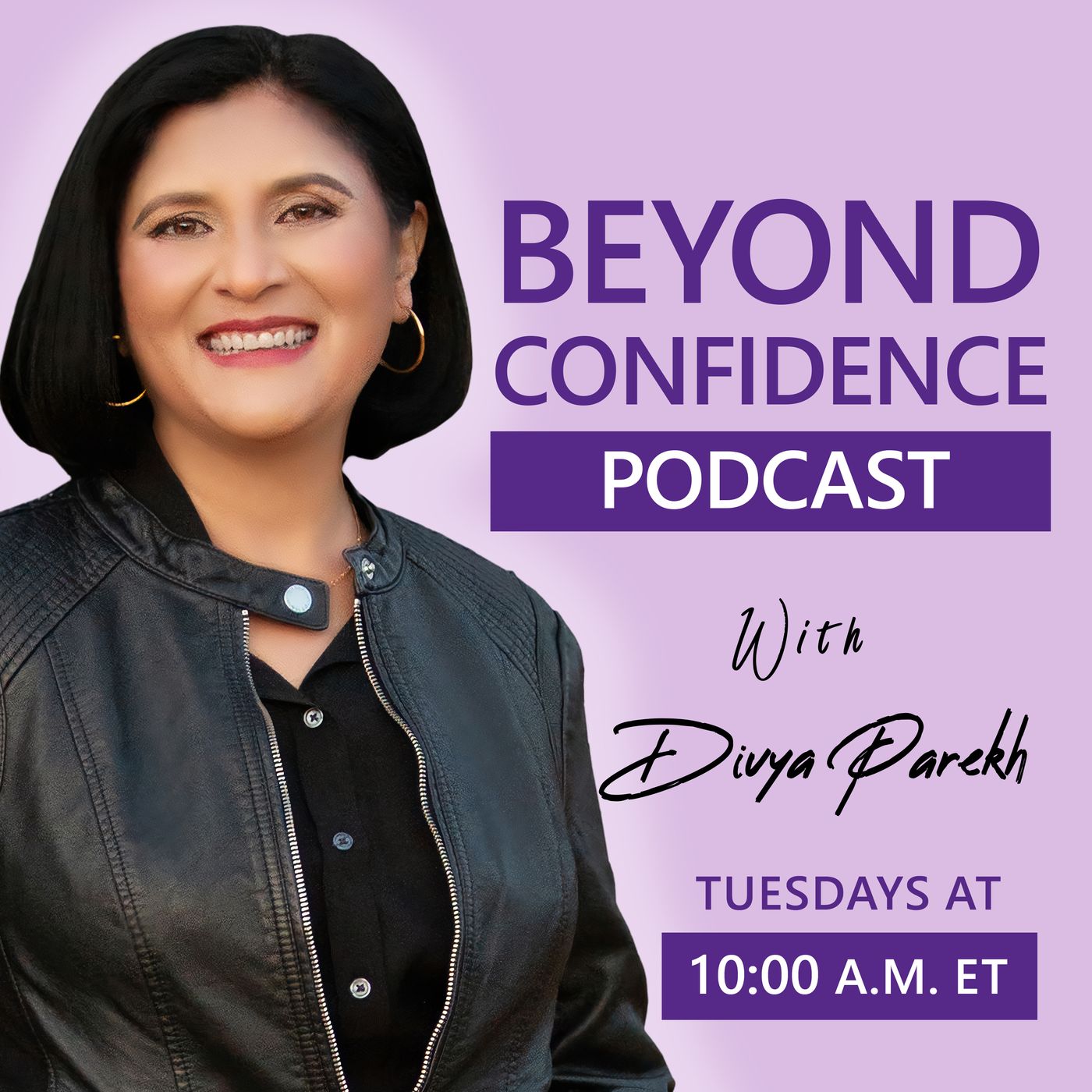
Confidence isn't about having all the answers—it's about thinking clearly when the path is uncertain. In this episode, Divya Parekh talks with sustainability and innovation strategist Vanessa Thompson about systems thinking, authentic leadership, innovation, and leading through change with clarity and resilience. Discover how to build trust, make better decisions, and lead with confidence rooted in purpose—not perfection.
Beyond Confidence is broadcast live Tuesdays at 10AM ET on W4WN Radio - Women 4 Women Network (www.w4wn.com) part of Talk 4 Radio (www.talk4radio.com) on the Talk 4 Media Network (www.talk4media.com). Beyond Confidence TV Show is viewed on Talk 4 TV (www.talk4tv.com).
Beyond Confidence Podcast is also available on Talk 4 Media (www.talk4media.com), Talk 4 Podcasting (www.talk4podcasting.com), iHeartRadio, Amazon Music, Pandora, Spotify, Audible, and over 100 other podcast outlets.
Become a supporter of this podcast: https://www.spreaker.com/podcast/beyond-confidence--1885197/support.
0:00 The topics and opinions expressed on the following show are solely those of the hosts and their guests and not those of W four WN Radio. It's employees are affiliates. We make no recommendations or endorsement for radio show programs, services, or products mentioned on air or on our web. No liability, explicit or implied shall be extended to W four WN Radio It's employees or affiliates. Any questions or common should be directed to those show hosts. Thank you for choosing W four WN Radio. This is Beyond Confidence with your host d W Park. Do you want to live a more fulfilling life? Do you want to live your legacy and achieve your personal, professional, and financial goals? Well? Coming up on Dvparks Beyond Confidence, you will hear real stories of leaders, entrepreneurs, and achievers who have stepped into discomfort, shattered their satus quo, and are living the life they want. You will learn how relationships are the key to achieving your aspirations and financial goals.
0:53 Moving your career business forward does not have to happen at the expense of your personal or family life, or vice versa. Learn more at www dot gwpark dot com and you can connect with vants contact dantsdvpark dot com. This is beyond confidence and now here's your host w Park. Hello. Hello, Hello, It's Tuesday morning, and I'm thrilled to be here with you because I look forward to this. Day because you are giving us your time. So I want to thank you to every one of you who have got our books, specially Expert to Influencer and the AI Agency, because it's going to help you build the influence and from those meaningful connections with people as well as develop that agency in this era of AI, because it's not what you think, it's how you think. Well, let's bring in our guest.
1:52 Welcome, Vanessa. Thank you so much for having me. So, Vanessa, tell us if there's a moment that you recall from your youth or from your childhood where someone or an experience left to post and. Mark on you. Oh, yeah, absolutely, There's been so many wonderful moments. I grew up in Silicon Valley, which is a really wonderful experience to grow up in that environment with lots of innovators, lots of incredible leaders who are all trying to do something completely new in their industry. So being surrounded by that has certainly shaped my perspective in the work that I do today as well now too. But I think that there was one really, really great perspective that I got and it was from doctor Beth Stevens, and she used to be the former chief of Sustainability for Disney.
2:42 And what was interesting about her role is that she had to do very very innovative work across a very very large organization that has many, many different types of businesses. And she said the role of an innovator is actually the role of a diplomat. And what she meant by that is that if you're trying to do something new in your life or new in your business, you have to really think about each and every one of your stakeholders, really really deeply listen to them, understand what is their objective, what are their incentives, what is driving them, and then connect that with your mission. And I thought that was something that really stayed with me for a very long time because I feel that when you're trying to change anything, whether it's something you want to change in your own personal life or you want to change something in your organization or business, you really have to be thinking about how am I going to be a diplomat to get this done? How am I going to really think about everyone else's agenda, objectives and incentives, and then how can I be creative in finding ways that my objectives overlap with theirs. And that's how the real kind of change and transformation happens. So that's something that's really stayed with me as a kid, and it's certainly true in my work today as well.
3:55 Yeah. No, that's such a beautiful way to take a look at it, because when you talk about the diplomacy, it is you are thinking about the other party that's concerned, and then you're also thinking about your shelf, finding that common ground and then everybody's aligned. That's where the magic happens. So, as you continued your growth in Silicon Valley, tell us what did your life take you. Yeah? Absolutely, So. I actually started out my career in biofuels. So I went to UC Berkeley as my undergraduate degree and soon went into biofuels, which was a very interesting field looking at algae based biofuels that would be these carbon neutral biofuels that we'd be able to actually ferment algae and then turn that into car diesel that could go in your car and it would be completely carbon neutral and sustainable. And so that's something that really motivated me, and I helped them raise a few rounds as well too, And then I actually got involved with some bigger institutions like the UN Foundation and the World Bank and the Nature Conserva and see all kind of within analyst roles, and then into some venture capital groups as well as startups like you know, Jobe Aviation, which is an incredible startup which is ebuchall if you're familiar with it, or it's similar to kind of electric aviation or things like that as well too. So looking at various different ways that we can be innovative in transportation and also real estate as well too. How can we kind of redefine our current infrastructure and create something that's more innovative and
5:28 again takes in all of those stakeholders in mind. Absolutely, So you have had a very rich and very background, So tell us and not all of our listeners may be familiar with the transportation that you're talking about, but don't educate us. Yeah. Absolutely, I think that there's a lot of different wonderful ways that we can start to reimagine transportation, and today we're very you know, fixated on a few particular opportunities, but there's actually so much out there for us. Of course, electrification I think is a huge element that a lot of people are talking about, which is fantastic, and I think it's certainly a huge element of the solution. I also am still a huge proponent of biofuels. I think that they're fantastic, mainly because they also work with our existing infrastructure. All of our cars today, all of our transport systems, they run off of some form of petroleum product, and because of that, it makes sense to use our exhibiting infrastructure. The investment needed to transition everything is going to just be too high given the timeline that we're thinking about for some of these transitions needed, and so it's really really important that we think about what works with our existing infrastructure and how can we be innovative with what we already have. And that's something that's always really guided my philosophy is thinking about what is it that we have? Can we take inventory of everything that we have and then utilize that in a better way than we've been using it before, And so that's actually something that led me to a lot of the work
7:00 that I've done, and I actually call it the waste to value formula, And what I mean by that is thinking about what you might be disregarding and actually thinking about how can we create a sense of value from that. And this is something that I wrote in my book and it's all in my speeches and keynotes as well too. Is this one particular case study, and I'll share this with you because I think it's interesting. Barry Calibo is one of the world's largest chocolate producers, and they were actually throwing out seventy percent of their cacao, or the bean itself that grows chocolate. They were only taking out the seeds for chocolate, and they were throwing away this delicious fruit that was around all the seeds and the shell and everything like that. They were paying to produce it, but they were throwing away seventy percent of the produce itself.
7:46 And they actually found out by talking to the local farmers that you can actually use this as a juice. There's a cocw juice. There's all sorts of different things you can make out of it. There's medical equipment that you know, medicines that you can make out of it. There's different liqueurs that you can make out of it. There's so many different things that you can use with something they were just originally throwing away. And I think this is a really great philosophy for all of us in our own lives and our own businesses as well too. If we take inventory of everything we're wasting or everything that we're disregarding, there actually might be some value in it. And this is one of the innovation strategies that I share with a lot of my clients as well too. Can we take inventory of everything we have and can we generate a new stream of income from something we're throwing away or disregarding. Can we take inventory of everything that we're overlooking and find a new source of value creation from it. So that's just one kind of case study that I've added in the book and everything like that, but I think it's very relevant when we think about any kind of change or transformation or innovation. Can we use something that we're completely disregarding.
8:51 Absolutely what a powerful story because I really like the concept of ways to value and that's where the. Biofield comes in. Yeah, And coming from a biochem background myself, it is so powerful because then you are creating that ecosystem of recycling, like proper recycling mile disrupting the industry. So you talk about systems approach, So tell us a bit more about that. Yeah. Absolutely, I think that a huge part of when we're talking about innovation is thinking about really two core things. Is we're talking about either lowering costs and being more efficient or improving quality, and we kind of think about this as guiding a philosophy for how we want to change something. So innovation is more important than ever. I don't think I have to tell our listeners that it's definitely important, especially when we're dealing with highly competitive markets like we're dealing with right now. I mean, a Fortune five hundred company will jump off of that list every few weeks to quarter. So the turnover that's happening with successful companies today is much much higher than it was in the past. So we have to continually be thinking about how are we going to innovate, how are we going to generate new streams of income that we weren't originally thinking about before, And then we continue to transition and transform so that we're not the ones that are disrupted, but that we're disrupting ourselves first, and so thinking about a system's approach is a great way to actually start to approach that innovation. And the system's approach that I like to take is actually focusing on constraints. This is
10:24 kind of something that's counterintuitive, considering that constraints are not necessarily always associated with what we think of as innovation. But constraining ourselves sometimes can help us focus on the right type of innovation at the right time. And sometimes when you say, okay, you need to come up with a new revenue stream, it's so open ended that we're not actually able to create a structure and innovate. And creating structure and constraints actually helps guide us towards the necessary ip development and innovation that we need. And so I'll give one particular example of a doctor. His name is doctor Christie, and he was working in a hospital that was very, very low income and he had the problem of not being able to provide respirators, specifically infant respirators to kids who had pneumonia. And this is a leading cause of death for a lot of infants around the world, that they're not able to get the necessary respirators that they need to help them breathe in the case that they get pneumonia. And this is heartbreaking for him, and he was so incredibly motivated to change something. Now, infant respirators cost anywhere between twenty thousand US dollars and upwards. Oh, you're looking at you know, particular hospitals that may be low on resources, They may not be able to particularly afford those types of respirators. And so he said, you know, I have to change this. I can't see another infant die.
11:46 This is too much. And so he worked together with a small team and came up with a new way to create a respirator that only cost three dollars. And this is allowed is truly incredible innovation because when you think about it, this is a multi billion dollar industry of respirator and there's plenty of brilliant doctors. But why was he the one who was able to create that innovation? Why was he so special? And breaking that down answers the question for a lot of great innovators thinking about how they're going to approach their next patent and their next invention, we have to think about what are the constraints. So for him, his constraint was cost. He had to constrain himself on the basis of cost. That forced him to throw out the old way of thinking entirely because he couldn't do it the same way that everyone else who was innovating in that industry was doing it. He had to throw out the old way of doing it and go back to the core basics. What works, what is a respirator actually doing, What are the core mechanisms that do save a child's life and help them breathe?
12:50 What kind of pressure do I need? And completely reinvented it from the core principles level and was able to create a breakthrough innovation in that regard. So, constraints can help us in a lot of ways to innovate. Whether that constraint might be cost, it might be time. There are so many different constraints that we can think. Even when we're thinking about do we want to use less resources? When we're thinking about a sustainability perspective, all of those things actually can be tools to help us innovate. And so when we're thinking about a systems approach like you mentioned, the way that I really like to approach it is actually thinking about constraints as an opportunity. And there's so much research around this as well too, thinking about actually providing a structure to innovation that constrains us and focuses us in the right direction.
13:37 So powerful when Essa and I love it because it just heartbreaking to think about that infant dying because that ispirature is not available to them and that innovation. So I'm also hearing that passion and purpose because along with constraints, then you have that purpose. You are going to. Climb high even when you're low because that why is driving you towards it. And I really like that approach because when we talk about the constraints any product development, anytime we are talking, it's important to have that structure because those constraints create the guardrails. Otherwise we can be in the Lalla land of what's possible and not be able to create pilots and create those disruptions. So let's talk about as we are talking about disruptions, there's so many different ideas, so as so many of gen z's and millennials they're thinking of starting up new companies, what are some of those key elements that they can have to have that Silicon Valley startup mindset?
14:53 Yeah, absolutely, well, I will reinforce the constraints in that system might as well too, because when when you don't have that, the alternative is complacency. When things are too comfortable, when you don't have those guardrails, you'll do things the same way that everyone else is doing things. And so sometimes those constraints actually give you a competitive advantage in the market. So for anyone who's listening, who's thinking about what is a business that I want to start, you need to start thinking about what is your competitive advantage and are the constraints that are in my life already? Maybe you have a cost constraint, maybe you have a time constraint, Maybe you have other difficulties or challenges in your life that are preventing you from creating that business.
15:34 What if those are actually opportunities to think of a completely new, unique way approaching the business model. And so that's where I want to start to help people start to think about all of those challenges as opportunities. And when you look at any great innovator, you'll see that they had a huge amount of challenges in their life. And it's those challenges and those mistakes that sometimes were the spark that created that innovation, and so I open it up to you to think about. Let me list out actually all the challenges that I'm facing in my life. Can they be a new way of thinking about the problem. Does that give me a unique perspective on the problem. Maybe other people are challenged in terms of cost, maybe other people are challenged in terms of time, whatever the constraint is, you might actually be understanding your customer more than your competitors in that regard by actually channeling this challenge as an opportunity. So something that I will really emphasize to anyone who's listening today. And of course I think this goes without saying, but you mentioned as as well too is passion and passion and purpose and things like this, they really drive us to push past the obstacle.
16:44 So when we talk about all these challenges, the way that we're actually over able to overcome it and to provide a solution is through a huge amount of passion and determination. That's the only way that we're going to be able to climb that mountain. If we don't have that passion or we're not going to be able to overcome that. When we look back at the doctor Chise example, he was hugely motivated to change things. He had the constraint, but he also had that ingredient of passion or purpose because he was so struck by those child's deaths that he wanted to change this. So there was a huge amount of motivation for him to continually design and fail and design and fail. And there's going to be so many failures along the process to you finding that wonderful spark.
17:27 We love to look at all these innovators and look back on their work and say, oh wow, they're just so brilliant. You know, they just came up with it. But when you actually look back at the history of that particular innovator, you'll see that they failed so much before they were able to find that success, and all of those failures were learnings for them to go forward. And if you don't have that purpose, you won't be able to recover from those failures as well too. So failure is an important process, and passion and purpose is what's going to be able to help you overcome each of those challenges and failures while you're getting to that solution. Came on that, I'd love to explore your passion or if there was a story behind you, getting behind the sustainability.
18:10 Yeah. Absolutely so. Of course, sustainability has been a huge passion for me and I read you know, Marketer Sex book when I was in high school that really changed the course of my life. And he was a former partner at Goldman Sachs who went on to be CEO of the Nature Conservancy and the way that he was able to conserve land actually came from a lot of the principles that he used at Goldman Sachs and that provide him a very unique perspective. And so that's what actually motivated me to go into finance as well as to have that purpose and passion behind it of sustainability, thinking about all the externalities of a business, not just when we're thinking about the internal structures, but thinking about all the external stakeholders, including sustainability as being one of those factors as we're thinking about long term revenue growth for a business. And so that's what really motivated me. But I think what's so interesting and what kind of helped me develop my book as well too, is I looked at all these startups, all these clean tech startups that are sustainable that are doing well for themselves, and I noticed something about each and every one of these clean tech startups as I was working in metro capital groups or working in those ventures themselves, that all of these clean tech startups were actually much more innovative than their competitors.
19:24 Something about having that strong sustainability purpose was actually helping them develop ip quicker, retain talent better, and go to market faster. And I thought that was so interesting. Why is it that these organizations that have a very strong purpose are actually much more innovative or able to operate much leaner, are able to be more dynamic in the market. And so I started to try to break this down. What is it about a clean tech startup that's able to do better than their competitors? And what I found was a lot of these things. Sustainability provides necessary constraints that you need to be more innovative, so it creates a dynamic culture in the organization of innovation and adaptability. It also retains really really brilliant talent because you'll see people who are right out of college staying with the organization much longer than their competitors because they believe in the purpose of the organization. It's not just a paycheck for them. They're willing to fight for that cause, they're willing to stay with that organization even when times get tough, because they believe in the vision and the purpose of it.
20:26 And you'll see this with a lot of research as well too, that you know, higher ESG organizations are able to survive recessions much better than their counterparts who rank lower in terms of ESG, so that purpose actually is able to retain more talent. And we see this with Interface, which is a key example of a very sustainable business. They're considered to be the most sustainable business in the US and also one of the most innovative, and they started out not that way at all. They were a carpet manufacturing company in the south of the United States, which is not as necessarily considered to be a very innovative business model that seems fairly traditional. So it's interesting that they were able to get so much recognition for their innovation work considering their business model. They were actually a very dirty business when they started out. Their carpets were made out of plastic, all of their factories were run on fossil fuels, and all of the transportation of their products was also run on fossil fuel, so every part of their business was dirty, and they in fact had actually lobbied individuals in government to say that they should not have any environmental regulations on them because that's just the way they had to operate their business. And so they went from what you would think of as a very traditional business model, not sustainable at all. And suddenly the CEO decides that he wants to change all of that. He wants to become a regenerative business, meaning that he gives back to the planet more than he takes.
21:48 And this was in the nineteen nineties when this kind of thing wasn't as popular. There were as many activist investors, there weren't as many impact investors to motivate this kind of change in transformation in the organization. And he said, no, we're actually going to do better by thinking about the long term stakeholder engagement when we're thinking about ten and twenty years out. And they were able to create IP that's now in Gucci, Adidas and all these big luxury brands. They were able to create fabric IP and what we mean by that is that they actually were able to take plastic out of the ocean, recycle it, and turn it into their carpeting that they used today, and this particular technology they developed with their supplier and is now used by almost the entire fashion world. And this became hugely, hugely innovative. At the time, it was not considered to be possible. It was considered to be scientifically possible, but not in practice, not economically possible to be able to do this, and so they actually changed their suppliers. They found a much smaller, leaner supplier that was willing to take a risk and they developed this ip completely from scratch with them. And today you'll see people staying at that organize for more than forty years, which is unheard of in today's you know, workforce culture. You see people switching jobs every two years. Not at interface. They stay for a very very long time, and they're really willing to fight for that corporate mission. You'll see people dedicating their full lives to really creating something that they truly believe in at this organization. I think this is such
23:19 a great example for all of our listeners who are thinking about whether they're, you know, wanting to do a startup or whether they're just a mid level manager who's wanting to change their particular team. When you think about having that driving purpose, you'll find that you actually bring more people along with you. More people will be motivated to come onto your side and fight for your mission when you have that truly authentic mission to change things, and you'll actually be much more innovative in the long run. Plenty of interfaces competitors did not survive a few of the last recessions, and they did. And I don't think that's any accident that that happened. When you develop new IP, when you continually innovate and you think about the purpose behind that innovation, you're able to survive through all of these market dynamics. So as we're thinking about all these challenges that we're facing in the market today, all of these disruptions that are happening in the market today, if you can think about a guiding purpose that really motivates each and every one of your team members behind that innovation, you're going to see your organization survive much longer.
24:20 Yeah, now, it's such a valid point. So now that brings me to the question. Let's say you have the disruption, you have that purpose, you have had that innovation, but sometimes that innovation can only get you through maybe five years, ten years now to make the growth sustainable for that company, How can you have that consistent innovation culture. Yeah, absolutely, it's so important to continually be thinking about how are you going to disrupt yourself? And of course there's really great metrics as well too, Just to be thinking about that. If you're wanting to implement that kind of change in transformation in your organization, you should dea only have key workflows surrounding KPIs that really align with that.
25:03 Meaning one example of this is we want to have twenty percent of our overall revenue from new sources by next year, so new revenue streams by next year. So continually thinking about how are we going to change our revenue streams year after year? That should be a conversation that not just the board or the executive team is happening, but all throughout the organization. This conversation should be going on, how are we going to change our revenue streams year after year? How are we going to diversify those? That should be something that's a given. So thinking about internal structures like that, thinking about KPIs like that is really really important. That's the first step when you're thinking about creating that innovation culture. Another step is then thinking past those metrics, how are you going to create structures that provide support for those innovations. So what I mean by that is Disney, again is a great example of this in the sense that they actually create different structures around their offices for innovation and different types of innovation. So I'll give one example is that during a Disney office, if you want a brainstorm, there's three different designated brainstorming rooms, and you have to book a specific room for the type of innovation conversation that you're going to be having.
26:13 The first room is off the wall ideas, crazy wild, just the super innovative ideas that are very very challenging to the existing business model, super super disruptive. The other ones are the second one is culling that down, so thinking about, okay, which ones of those are we going to prioritize those crazy wild ideas, which ones are we actually going to execute? And the third meeting room is thinking about just execution. Okay, we've decided on the idea, how are you going to bring this to market? How are we going to develop this out? And what's great about this is it creates a culture of innovation and a structure around it. Meaning if you have a crazy idea, everyone who goes into the first meeting room is ready to hear your crazy idea. They're not going to shut you down immediately. They're going to say, Okay, that's a wild and crazy idea. Let me think about that for a second, instead of just completely saying no, that's just crazy.
27:05 We just need to get this meeting done. We just need to finish the next quarter, right. So, if you want to create a structure of innovation, you have to create different systems that allow people to be creative and innovative and channel that creativity in the right direction and the right workflows as well too. So I think this is a perfect example. You don't want to have people shut down and not want to share those crazy ideas. You want to have a structure for that. But then there's other meetings where you just have to prioritize getting the work done and actually just executing that idea as well too. So what that does is it enables everyone who comes into each of those rooms to have the right mindset to hear the content. That's being shared. And so I love that as a perfect example of that.
27:47 Absolutely. It definitely makes sense because when you're creating that culture, and so many times it's done and lean sig sigma culture is also that as part of their yellow belt or green belt, they are looking to optimize processes, they're looking for efficiency, you know, where they could disrupt. So this is such a wonderful. Example because when people know that their ideas will be welcomed, they will share. Otherwise, as you talked about, so many organizations get caught up in feasibility and ideas are just even shut down, like literally crushed even before they've had a chance to take root or even germany. So that's very very powerful. Now we have talked about like okay, let's have that innovation culture that's helping employees step up and be creative, come with curiosity. Now you may have let's say thirty forty ideas. What are some of the prioritization criteria that they can use to ensure that they're going with the right idea forward.
28:54 Yeah. Absolutely, I think this is where stakeholder engagement becomes really really relevant. When you're thinking about how do you pray oritize different ideas and think about how does that connect with the business model. The first that you have to think of is your stakeholders and who this impacts. And this might not necessarily be a current customer. It might be a new customer, but it needs to be clearly identified. And I'll use one example of Red Sea Global. They're a hotel development company. They come into particular areas and they develop beautiful hotels. And what was interesting about what they did and how they prioritized certain ideas is they thought about, Okay, we're going to go into this area.
29:35 The locals, you know, are a key stakeholder, but they might not like us moving into this area, but we're going to listen to them. We're going to listen to what they want, and we're actually going to genuinely care and think about structures that support them. And so they went and they listened to the particular village that they were going into, and they listened to all of the people who were living there and what they wanted, and they gave two crazy ideas that bost companies would just throw out immediately. They said, we want a banana farm, and we want sailboats, our traditional sailboats that are unique to our culture. Now, any other hotel development company that comes in said that's great, but that's not really what we do. We're a hotel company. But they decided to go for it, and they actually did invest in agricultural land and they created a very unique farm tabled experience that's very unique to their hotels, giving the locals that banana farm, but also giving their customers a very very unique culinary experience. They also did invest in those sailboats and taught the locals how to showcase that to tourists, and now they have a very unique sailing experience that people travel all around the world to go to their specific hotels to have this very unique sailing experience. And so what I think is interesting is when you take these crazy ideas and you think about prioritizing them, sometimes the best way to do that is by thinking about your stakeholders and genuinely listening to them. Then taking each of those ideas and saying, how does that overlap with
31:06 our business model. Where is the win win between this wild and crazy idea and us delivering value to our stakeholders. And when you're able to find the bridge between the two of them, that creates a very unique competitive advantage in the market. Just like we see with red Sea Global. Yeah, and red Sea Global is such a powerful example because you're not only coming up with new ideas, you have that alignment with your stakeholders. But at the same time, what I'm hearing is that you're taking an existing ecosystem and expanding it, which is so much easier to build upon it. Because if you're building your hotels. If if the locals are not in alignment, they will they may be part of your workforce.
31:51 And yet not be fully engaged. Yeah, So what you're doing is you're creating that expansion of ecosystem, that evolution that's in alignment. And when that's in alignment, like the whole system is a win win for both the sides. And that is so rare to hear nowadays. Yes, no, definitely, it's very rare. But when it does happen, I think that companies really do see that benefit of being very unique and standing out in the market. So the message here that I'm hearing is that it can be done. We have seen several examples that you have shared. We can bring in sustainability because scaling is just not enough. Once you have scaled, it's important to sustain your progress and have that continuous improvement. Do you have any tips around that?
32:41 Yes, I will definitely say that it's both possible and to add on top of that, it creates a competitive advantage, meaning if you're thinking of, you know, changing your existing business model or starting a new business, all of these things enable you to be more dynamic. When you think about red Sea Global, they're able to be much more dynamic because they're able to be very creative and innovative and create new ideas that are unique value propositions to their specific customers. When we think about Interface, they were able to survive different recessions because of the unique ip that they developed. When we think about you know, Disney, they're a very creative and innovative company, and the structure around that innovation has helped them be more dynamic and changing as well too. So with each of these examples, I will say that, yes, of course it's possible to think about that purpose and connecting it with the core business model, but not just that it will actually help you survive when times are toughest. So my tip for everyone who's listening to this is to think about what truly speaks to you in terms of that purpose and thinking about your stakeholders and how all of that aligns with the core business model. If you continually think about that and also listen to each of those stakeholders, they're going to be telling you ways to innovate if you're truly and deeply listening to it. Just like with red Sea Global, you're going to get the cues on how to develop, how to transform, how to disrupt yourself by listening to all of those stakeholders and continually trying to adapt that to the business model. So I wouldn't just
34:13 say that it's possible. I would say that that's your unique competitive advantage to survive the worst storm as a business by thinking about how am I going to deeply listen to each and every one of those stakeholders and be very creative about how I'm going to overlap that with new streams of revenue. Definitely, I'm sure a lot of people in our audience would love to connect with you. Where can they find you? Do you have anything else that you'd like to share with us? Yeah? Absolutely, So of course they can look at my speeches or keynotes or book. That's all on my website Vanessa Thompson dot com. You can also look at the podcast that we have as well too, we bring on C suite level executives every episode talking about a different aspect of practical business advice surrounding sustainability. We've had Olympian Venus Williams on who's talked about her incredible three environmental startups that she's run. We've also had CEOs and CEOs come onto the podcast and talk about just really practical business advice. So if you want to hear that podcast, you can go to the Dash Sustainability dash experts dot com and of course you can find me Vanessa Thompson or the Sustainability Experts on LinkedIn. Always happy to connect with anyone who wants to collaborate anything else you'd like to share. I would say that for anyone who's listening to this and you're looking at all these great innovators, these great entrepreneurs that you might be looking up to, and might feel a little bit overwhelmed that everyone who
35:43 started out in this journey, including Ray Anderson from Interface who was completely transforming his business after already being a public company, all of them didn't know where they were going to go or how they were going to get to their goal. Initially, And I want to use this as kind of a point of inspiration for anyone who's just feeling a little bit lost when you think about that big, wild, crazy, ambitious goal that you're thinking about. The first initial steps, none of them knew. Each of these great innovators did not know how they were going to get there. But what they did do is they thought about what was going to be a small, achievable step, small project that they could win at. When you create that small little project that you can win at, you develop your first five people who are going to be your supporters in that transformation. You're able to win at something small, achievable, build confidence, build motivation in the organization, and that's the first key step to creating a transformation and true innovative culture in the organization itself. So if you're feeling overwhelmed, not sure, we're to start, think about something really small and achievable that can help win over those first five people, and that's.
36:50 How you're going to get there. Absolutely well. Thank you when Essa for the wonderful sites that you have given along with practical strategies. Thank you for joining us. We issue the best as you continue on your systainability Johnny. Thank you wonderful audience for joining us and being part of her family. Reach out to us like you always do and let us know how we can serve and support you to live the best life you can. And thank you on for being a tech genius. Be well and take care until next time. Thank you for being part of Beyond Confidence. With your host Divva Park, we hope you have learned more about how to start living the life you want. Each week on Beyond Confidence, you hear stories of real people who've experienced growth by overcoming their fears and building meaningful relationships.
37:42 During Beyond Confidence, Vpark shares what happened to her when she stepped out of her comfort zone to work directly with people across the globe. She not only coaches people how to form hard connections, but also transform relationships to mutually beneficial partnerships as they strive to live the life they want. If you are ready to live the life you want and leverage your strengths, learn more at www dot wpark dot com and you can connect with wats contact at wpark dot com. We look forward to you joining us next week,


