
Empower your voice
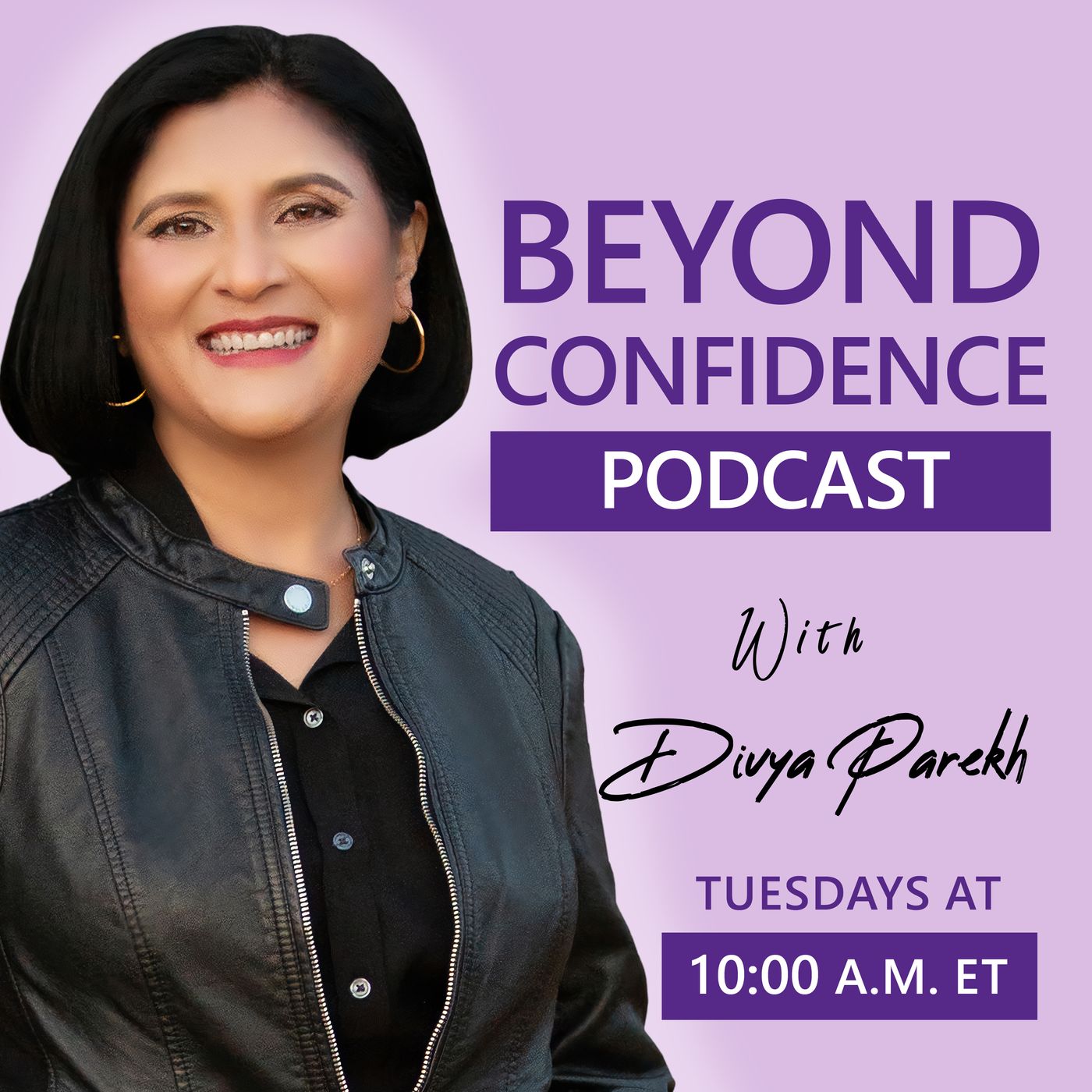
Join Divya Parekh, Laura Reid, and Jocelyn King to discover why finding your unique voice is crucial for personal and professional growth, and learn practical strategies to overcome the common fears associated with public speaking. Gain confidence,...
 iHeartRadio iHeartRadio
 Spotify Spotify
 Youtube Music Youtube Music
 Amazon Music Amazon Music
 Apple Podcasts Apple Podcasts
 Pandora Pandora
 Audible Audible
 Podchaser Podchaser
 Audacy Audacy
 Spreaker Spreaker
 Deezer Deezer
 Podcast Addict Podcast Addict
 JioSaavn JioSaavn
 TuneIn TuneIn
 Castbox Castbox
 Castamatic Castamatic
 Castro Castro
 Fountain Fountain
 Goodpods Goodpods
 Overcast Overcast
 PlayerFM PlayerFM
 PocketCasts PocketCasts
 Podimo Podimo
 Podurama Podurama
 Podverse Podverse
 Podyssey Podyssey
 RSS Feed RSS Feed
 YouTube YouTube iHeartRadio iHeartRadio Spotify Spotify Youtube Music Youtube Music Amazon Music Amazon Music Apple Podcasts Apple Podcasts Pandora Pandora Audible Audible Podchaser Podchaser Audacy Audacy Spreaker Spreaker Deezer Deezer Podcast Addict Podcast Addict JioSaavn JioSaavn TuneIn TuneIn Castbox Castbox Castamatic Castamatic Castro Castro Fountain Fountain Goodpods Goodpods Overcast Overcast PlayerFM PlayerFM PocketCasts PocketCasts Podimo Podimo Podurama Podurama Podverse Podverse Podyssey Podyssey RSS Feed RSS Feed YouTube YouTube
Join Divya Parekh, Laura Reid, and Jocelyn King to discover why finding your unique voice is crucial for personal and professional growth, and learn practical strategies to overcome the common fears associated with public speaking. Gain confidence, authenticity, and the ability to connect deeply with your audience. Tune in for actionable insights and inspiring stories that will help you slay the stage and unlock your potential as a speaker.
Beyond Confidence is broadcast live Tuesdays at 10AM ET on W4WN Radio - Women 4 Women Network (www.w4wn.com) part of Talk 4 Radio (www.talk4radio.com) on the Talk 4 Media Network (www.talk4media.com). Beyond Confidence TV Show is viewed on Talk 4 TV (www.talk4tv.com).
Beyond Confidence Podcast is also available on Talk 4 Media (www.talk4media.com), Talk 4 Podcasting (www.talk4podcasting.com), iHeartRadio, Amazon Music, Pandora, Spotify, Audible, and over 100 other podcast outlets.
Become a supporter of this podcast: https://www.spreaker.com/podcast/beyond-confidence--1885197/support.
0:00 The topics and opinions expressed on the following show are solely those of the hosts and their guests, and not those of W four WN Radio It's employees or affiliates. We make no recommendations or endorsement for radio show programs, services, or products mentioned on air or on our web. No liability, explicit or implied shall be extended to W four WN Radio It's employees or affiliates. Any questions or common should be directed to those show hosts. Thank you for choosing W four WN Radio. This is Beyond Confidence with your host d W Park. Do you want to live a more fulfilling life? Do you want to live your legacy and achieve your personal, professional, and financial goals? Well? Coming up on Dvaparks Beyond Confidence, you will hear real stories of leaders, entrepreneurs, and achievers who have stepped into discomfort, shattered their status quo, and are living the life they want. You will learn how relationships are the key to achieving your aspirations and financial goals.
0:52 Moving your career business forward does not have to happen at the expense of your personal or family life or vice versa. Learn more at wwdas don't divpork dot com and you can connect with div at contact at divpark dot com. This is Beyond Confidence and now here's your host, div Park. Good morning listeners. It's my favorite day of the week because I get to be with you and today has we are talking about kind of story I want to share. One of her guests, Laura Read, is from Hawaii and it's four am for her and I. Want to share her story. So we were in a summit and Laura and Jocelyn were pitching their stories to me so that they could get on our show. And when I said that, like.
1:40 Yep, I'd love to have both of you. And when I told Laura that, like, this is a live show and she was just so Perkin said, yeah, yeah, it's all right. I'll get up and I want to be here. So it's about showing up. And today that's our show going to be about, like you know, empowering you voice. So if you want to empower your voice, get a book. Entrepreneur has gotten other expert to influencer because both of them will help you not only empower your voice, but also empower other's voice. So let's bring in our guests. Welcome Laura, I welcome.
2:22 Jocelyn, Hello, good morning. So great to be with you, Devia, thank you for having me on. Oh absolutely so, Jocelyn, share with us a moment from your childhood, and Laura, that'll be for you as well. There there was a positive moment or a positive person who left a remarkable impression on you. Well, because we're going to be talking about speaking, I was thinking about one of my earliest memories. I grew up in southern California. I live in Silicon Valley now, but I grew up in a Hollywood family and the one that particularly loved live theater and live performance, and I remember being encouraged. It's funny, one of my best memories, one of my worst memories are the same thing. It's getting up on stage. But I remember my best memory of getting up. It actually started as what I thought was going to be horrible. We were at a very large theater room and my dad called me up on stage to sing, and I did not want to go.
3:27 I wasn't prepared. I mean, of course knew songs and I could do that, but I didn't know I was going to be doing it, and I was terrified. And I'm about twelve years old, and I got up and I was so nervous that I actually kind of blacked out and did not remember actually singing the song. And I came to in spotlight to a standing ovation and what was and what I got out of and I got so I had this adrenaline rush of fear right beforehand, and then I had this rush of a orphans after from being from having done well, and unfortunately I wasn't there to experience it. But because I literally came to, I just went into a spot of just being in the song and singing. But what I learned from that was that there's not a correlation between fear and doing well, and if anything, especially when you're on stage or performing, I learned that that fear is actually an energy and it's just like having a very powerful horse, you know, you if you have the reins, it's actually energy. Because if I'm not nervous at all, I'm not going to be I'm not going to be animated at all, and I'm going to be boring. So I've learned over the end of my career has taken me through right version.
4:52 I learned that early on, and I'm so grateful I learned that and had that wonderful, wonderful yet terrifying experience. How about you, Laura. I love that story, Jesslyn. Going from fear to endorphins. What a feeling for me. You know, I grew up with a stutter, and you know, speaking, I was just terrified of speaking. But I found so much solace in writing, even as a very young child. I think I was like five or six when I wrote my first little story. It was a little horror story. I think I always loved ghost stories since I was a little girl. And my mom she'd loved to write, and she had this old typewriter, and really she was the one I'm realizing, just really in this moment when you asked that question, that used to type out my stories. And I remember when the first time she typed it out and I held it in my hand and it felt like it had been published, even though she just pulled it from her typewriter. And you know, she really empowered me to be creative, to keep writing, because when I wrote, I found that I could express myself however I wanted. And it isn't like in speaking, where I had all these things in my head, but they would get stuck in my throat when I would try to speak them out.
6:07 So I think, you know, it's my mom, who I actually just lost in the end of Mark And so I really when you asked that, I'm like, oh, yeah, I got I gotta honor mom. And the typewriter I have behind me is you know, it kind of reminds me, reminds me of her as well. I think that maybe that's why I've always loved typewriters and they never crash, you know, it's it's kind of great. Sorry for your loss. And at the same time, as you mentioned that, you know you're honoring her memory. So beautiful stories. So, Jocelyn, you went from taking that energy of fear and transforming it into power, and Laura, you took it in form of writing. And here's the thing.
6:49 So many of us think that speaking is the only way to express your thoughts. So that showing up and empowering your voice can be through so many different mediums. It can be through writing, It can be thrown so many different phases. So that's very powerful. So, Laura, tell us a little bit about your life journey as to what were you interested in and how did you get to be where you're at. I love you know what Jocelin said too about being on stage being like the worst moment and the best moment at the same time. And I think eventually that happened for me. I even though I went through years of speech therapy to help me be a more fluid speaker, the feeling of just this shame and embarrassment and humiliation of being bullied for having a stutter, and just feeling like even into my adult years, you know, that really stayed with me. And every once in a while I would still get stuck on words and that made me feel like I was living, you know, this imposter kind of life. I wasn't really who I thought I was because I was always trying to hide that part of myself.
8:04 And it wasn't until it was about fifteen years ago and I was in a staff training and was a teacher at the time. My son was just two years old. It was my first job back after being home with him for a bit. I really needed that job, and we were in a staff training going around the room introducing ourselves. You know, I saw that word that I dreaded so much on any agenda at work, which was introductions, because I knew exactly what that meant. I would have to speak in front of people, and anytime I was put on the spot like that for whatever reason, that it made it so much worse. Like I might be fine speaking in regular conversation, but in those kind of moments, I had a lot of anxiety around it. And as I got closer and closer for my turn to speak, I started having all these symptoms. I got really nauseous, I got dizzy, the severe back pain, and I didn't really know it then, but I was having a panic attack just from the thought of having to say my name and introduce myself. It was about two people before it was my turn, and I couldn't take it anymore.
9:09 I got up and I ran into the bathroom and I ended up going home sick, but really I went home ashamed, And I remember telling myself that day, like looking in the mirror, just kind of hating myself and realizing something really has to change. It was exhausting, like to live in that kind of fear. It's true, its energy, but I had made that choice to make it be this villain, you know, this huge negative energy in my life. And then one day I'm walking by, you know, walking downtown walking by a little, you know, outdoor mall, and there's a flyer for a storytelling competition, and it was just one of these serendipitous moments where I happened to notice it, and forever reason, I was just like, I have to do that. I have to enter that competition, even though it was like the scary thing in the world for me. So I entered that storytelling competition and I found this place of refuge that I never would have expected, which was on a stage in front of a microphone, sharing my story. And I won that competition and that did boost my confidence. But really I think the most impactful thing that happened from that experience was everyone that came up to me afterwards and said, Oh, because of your vulnerability, you know, you sharing your story, I'm inspired to share mine. I'm going to get up there and do the same thing. And because I'd gone through years of training myself to speak and tell stories
10:39 and a million techniques to overcome public speaking fear, I realized I kind of had this obligation then to help other people. And that's when I really started, you know, leaning into the idea of helping people, coaching people, getting up on more stages and becoming a speaker. And Jocelyn you said something just kind of picking up back from Laura La. You said that your fear compelled you, like, you know, you had those one of those moments and then you face the fear. So we're hearing one strategy right here that if you're facing the fear, face it, and then you found refuge on public stage and in public speaking. So which is very interesting. So coming back to you, Jocelyn, you've talked about fear, tell us like, what are the reasons behind the fear of public speaking?
11:38 Oh, that's a great question. And I love this because I've studied. I've coached a lot of you know, executives, CEOs of large fortune companies and founders of startups on taking the stage. And I've i ran pr for two years in Silicon Valley where I also prepped people for just when I won interview is like with the Wall Street Journal or or local television shows and what happens, fear comes up, and so I've not only experienced it personally looked at overcoming it, but I've helped coach people through it. And I think so much of the fear is, of course fear of failure. And I think as human beings we straddle, you know, these these two sides of the coin. One is we want to fit in and the other is we want to stand out. And so I think that a lot of the fear is we want to stand out in a good way. When you stick your neck out, take a stage, take a mic, take a typewriter or a pen, you are putting yourself in the arena to stand out, and the fear of failing comes up. And also I work with a lot of people as a coach where it's actually a fear of success, and that's that's even a little more interesting.
12:55 But I think that fundamentally the fear comes from fear that something negative is going to happen. And I'm a certified neurosculptor, which is a fancy way of saying that I've studied a lot of neuroscience and how our and you know, when we get into fight or flight in our mid brain or a freeze reaction, Like personally, I learned that I was a freezer. I would just you know, freeze. But when you freeze or want to you know, fight or flight, what you are no longer in your prefrontal cortex. Your higher level thinking, the one that has the positive outcome is looking strategically, is thinking about, you know, what you can add value to And what I learned that I think would be great for your listeners to know is you can only feed one part of your brain or the other. It's a toggle. And so if you want to get out of fight or flight, you just need to engage your prefrontal cortex, or if you want to get into your prefrontal cortex, you just need to calm down your fight or flight. It's like a teeter totter.
13:55 And once you learn that and you realize, oh, the sugar, the prote everything that you're it's like a fuel pump, but you've only got one and you can easily start switching to being out of fear by your breath and I know Laura is really an expert at this as well, But by breathing, because when you're afraid, you're usually already in the future, like one minute from now, after I open my mouth, maybe I'll make a mistake an hour from now when the speech is over, maybe people won't think I'm good. If you can pull yourself back into the present moment, and go, well, right now I'm standing backstage or you know, I'm in zoom ready to go up, and you know, and you picture what it is that you want to be doing. What's your purpose? I created the clear method that I use for coaching because the first C is clarify and when you can get out of yourself and your own fear and start thinking what experience do I want the people who are going to hear me have?
14:56 What where? You know? And it's bringing in your own form of service and it's bringing in your own your own mission and purpose into what you're there to deliver and being clear on what outcome you want. And when you focus on that and get into the present moment, into your body with your breath, the fear of one minute from now, one day from now, one hour from now goes away. You toggle it down and so you can really start playing with your brain almost in a gamifying way, and have fun with fear. Mm hm definitely. As you talked about the focus, and there is this myth about multitasking and that there are studies that have been shown so coming from a science background, I love knowing what new studies are coming out and that our brains can focus only on one task at a time. So, which fits in directly with what you're saying, Jocelyn, is that use the one that will give you the momentum to keep going and switch from that flight to being in fear and working through it. So, Laura, as we have talked about different fears and all that. So there are a lot of different people out there, whether they're executives, you know, whether you're in C suite, because it doesn't matter whether you're an incoming gen Z in the workforce, whether in an entreneur, whether you're a PTM mom,
16:26 wherever you are at fear of public speaking is number one or number two right there. I don't remember exactly on the list of the fears. So somebody is just terrified. So Laura, from your experience, what are the first few steps that they can take that can ease them into public speaking? MM? Well too, I love that question and to kind of expand and what Jocelyn was saying about the importance of being present and having that clarity. You know, most people say that we need to break out of our comfort zone to grow, and what I say, especially when it comes to public speaking, is to get clear on what your comfort zone is because when we're in our comfort zones, we have that state of our relaxed brain. We can remember anything, we can recite poetry, We feel like we're our most authentic selves, and you know, we can be ourselves the minute that we say we're about to do this scary thing. And again it's so fear is so future based, so you know, based in that sense of dread because we don't really know what's going to happen, right, so we fear that so much. But when we tell ourselves we're breaking out of our comfort zone, I think it triggers that and our brains, you know, we get that nervous brain setting in where we can't remember our words, we blank out. All the nervous symptoms come up that we don't want when we're speaking. So one of the strategies that I use with my clients and with myself is to think about, Okay, how am I in my
17:58 comfort zone and really sure what that is to you, whether it's being alone in nature in the woods or on your couch watching Netflix, or you know, whatever it is for you, and then come up with maybe at least three words that embody that feeling for you. You know, maybe it's peaceful, right and calm and relaxed, authentic, and set that as your intention before you're about to do the scary job, interview or take the stage, whatever it is that is coming up for you that you're a little anxious about. So instead of really breaking out of your comfort zone, you're staying in it, but you're expanding it out to include that scary thing you're about to do.
18:40 And for me, when I stop telling myself I'm going to be you know, bold, kind of fake it till I make it and just force myself to break down my comfort zone and get up on that stage, I said, you know what, I'm just I'm just. Going to be me. I'm going to be relaxed, I'm going to be calm going into this. It was really a game changer for me and for those that I work with. M hmm. That definitely makes sense that having that calm, because when you're calm, you can see things clearly, and going back to what we have been talking about, that focus rather than even if you're focusing on future, rather than that you're going to fail, what if you succeed? So focusing on the positive and what that does is knowing that also one of the things that I've found, I do get the butterflies when I'm stepping on the stage, and then I'll just take a moment and think, like, you know what everybody puts on their pants, just likely everybody is eating, everybody's brushing their teeth, so you know what very human beings. And so what if I make a mistake.
19:56 I make a mistake? And Lauren, really some good points are there, and Jocelin, like, you know, as you were talking about coming into that moment, what could people do to lean into it? So for example like yeah, how could they set the stage? Really like, Okay, I need to have a plan b that if I make a mistake, what I'll do. What advice could you give? Well, what I love about what you're talking about is you're you're touching on there's stress and there's U stress, EU S, t R, E S S and stress is the negative and that's like where the fear is you stress is excitement. So a quick there's a couple of quick hacks I think of right away that I've used and that I've helped you know in my coaching for other people to use is recognize is when you feel that fear before you're going on an interview or before you're going on a stage, you might be feeling afraid.
20:59 But if you just recognize that feeling and go, oh, I'm excited. When you tell yourself you're excited, you realize that you're pumped up, you're not actually you know you're terrified, and you can actually your mindset really dictates a lot of how you behave. If you're reinforcing to yourself that you're afraid, you're going to start doing more behaviors of somebody who's afraid, you're actually you're actually kind of talking yourself into being afraid. Whereas if you tell yourself, I'm excited, I'm so excited to be here, that that really helps because you're telling your brain what that feeling is and being excited. Who wants to hear a bored speaker. You want to hear excited speakers because you want to hear people who are truly excited about what they're doing because they're inspiring and you know, and then you can have a transformational moment as a listener. So you want to be an excited speaker. So it's kind of that grab.
21:55 That's how you can grab the reins of that of that horse I was talking about. And I think the other thing is one thing that has really helped me and has helped others. If when you get when you get extremely self conscious, you know, and you're like, oh am I wearing the right thing? Oh I shouldn't have worn these this out there, or I should have done this, I should have done that, you're focused on yourself and you're putting a negative spotlight on yourself. And when you instead just start thinking of what do I What experience do I want these people to have? What takeaway do I want them to have? What experience do I want to give them? You know, like maybe you're going to tell a story that's going to make them feel feelings or something, so you can keep it as simple or more orchestrated as you would like. But when you focus on the audience, even when you come on a stage, to look around and see the audience and connect with them and try to meet them where they are. When you're thinking about them, you're not thinking about yourself anymore.
22:55 And I find that that fear just kind of melts. Away absolutely, because what you're doing is you're shifting the fear from I to we Yes, I to the value that you're providing. And going back to that why as to why is it that you're on that stage. Yes, yes, a lot of Yeah. A lot of people are out there. Yes, you know, speaking does take your message from one to many. Yes, it's getting your message out there. Yes, it might be building your brain. But at the end of the day, most of the speakers, when they're sitting foot on that stage, it is about providing value. It's about touching those people. It's about sharing your message. But even if you want to share your message, the key thing is why. Why why?
23:41 And it is that desire to impact. It's that desire to connect. So I love that, Jocelyn, like you know when you're saying that, make that connection, make that shift. So now we have talked about addressing the fear. The second part of public speaking is the content itself. And you could show up with great enthusiasm, great energy. Now the next thing that you've got to do is the delivery that you're providing value to people. So Laura tell us, as somebody stepping onto the stage, usually they say, you know, keep one idea or so as far as the content is concerned, tell us some few frameworks or some guidelines that can help, whether it's a professional or anything depending.
24:35 I mean, of course, if you're an executive, then you are sitting down and focusing on your audience, like who the audience is, what you're presenting, are you presenting the data or are you in conference? It all depends. But are there any elements that are crucial to any good public speaking speech. Absolutely, And the first thing I'd share is what not to do, which is wing it. Yeah, some place we see really gifted speakers and it seems like they're speaking off the cuff. But you know, I think it was Mark Twain that said, you know, it takes me weeks to prepare an impromptu speech. You know, you have to put that work in. And the model that I really love to start with though, to really clarify your message is called think feel do. So first it's what do I want my audience to think about? And then what do I want them to feel? I want them to be inspired or motivated? And lastly the do is that call to action. And the call to action could just be you know, a mindset change. You know, what you want them to, you know, take those thoughts to and turn it into some kind of action. But if I start with that, again, it's a reflection on the audience.
25:46 I'm starting with them and not really me. And then if I can tie that to my key message that I love to share with the world, and I do think it's good to kind of boil it down to the essence of what this this one singular message is and then stick to that and tie in stories to that. Right, And the more that we can share stories and anecdotes in crafting our speech, of course, the more connected and engaged our audiences is going to be. And then I'd like to just also not take ourselves so seriously. I think when we're doing a speech and really looking at it, it feels like this this huge task and it's very very serious, very important. But you know, adding some humor in, you know, thinking about the audience, what's going to be relatable human or relatable to that particular audience is really important. And so crafting that into to have some laugh moments in there, no matter how dark your topic might be, I think is really important.
26:51 Definitely humor does that, and there's nothing better than laughing at yourself because then what it does is it forms that connection between you and the audience, because I don't know about y'all. I've had very many funny moments where I've done all sorts of things that happen just like not up to par, but then when I look at them, they become such beautiful stories to be told. And usually one of the things that I've found out for myself and for my clients is that when you share a story that shows your human being and that you make mistakes just like anybody else, it forms that bond and that connection. So Jocelyn, coming to you, as you have mentioned that, you know you have coached people in the executive arenas, so let's kind of go there. Like so many times what happens is in the executives or in the professional area, people are so stressed out because there's this data they have to go through tons and tons of those slides and those can be very, very boring.
27:57 So how can they bring those elements in their meetings that not only they're influencing people, at the same time they're holding the attention and getting the point across and getting the buy it. I know that's a lot of asks here for you. No, that's great, and it reminds me. It reminds me of a great lesson I learned through a forcing function. I was presenting a multimillion dollar proposal to the executive team at a large Silicon Valley company and I I was given five minutes and two slides a budget, and I had my whole deck that I had been shopping around to the you know, with the it and you know and all the marketing and sales, all the different groups, and it had all the data in there. And what I learned from that was how to synthesize down. So what I did, as I said, you know, and I followed a formula what what's the ask, what's the why?
28:58 You know? And and you know? And then like a who and when kind of story because it was a proposal and a project. But what I did was I realized that my putting all these other slides about the benefits, what our competitors are doing and all that stuff was my wanting to overcompensate and justify why I was asking for what I was asking for. And so when you realize and so what I did was I put ten slides in the appendix, and I came in and I said, here's the problem. Statement, you know current current view, and then here, but here's what we could have. I painted the picture of the nirvana state you know that we could have if we if we invested this time and money into doing this, and what the benefit was going to be to the customers and the company, and kept it very simple and what because my tendency was I want to give them all the data and all the data to prove why you know this is a reasonable request.
29:56 By having it all in the back, it actually made it such a more interesting conversation because it created a conversation instead of a monologue. Because guess what I got forty five minutes at the executive team. They pushed other people out to the following week who were supposed to be behind me, And I went through all ten slides in the appendix, through the Q and A because an executive as well, what about this? Yeah? But what but the timing? Well, but what are our competitors doing? That was on slide five, That was on slide twelve. I got to get through all my content because they wanted to see it. And I realized the power of having a presentation be a conversation. You put up your the premise and the why and something compelling, and then you engage through question to the answers and nobody forgets your proposal or your project, and they become advocates because they're bought in because they were asking you why you weren't pushing data up in front of them.
30:58 Where they're sitting there thinking I need to get cat food, I want you know, I got to get to the gym. They are actually thinking, well, why this, why that? How would this work? And you're answering them. So the power of having short slides and a large appendix, a short ask, and a benefit a problem statement, and then having the recipe in the back. One of two things that's going to happen. You're either going to have a much shorter meeting or you're going to have a very longer meeting with very rich content. Either way, you're still going to be memorable. So it's a very powerful approach that I found mm hmm definitely. And in the arena of the corporate world, what would you say are two to three elements that are necessary when you're not present? Like the example you gave was about a proposal, but let's say they are starting out with an initiative and they need to get a buy in from the stakeholders. Just go ahead.
32:00 One thing I did that I like to do too, and I've helped other people in putting together presentations. You've got different types of people in the audience. So again back to the audience. You've got your data driven people, You've got your big picture people. So this is the kind of formula I used. I would do four slides that are key and very clear. There's a who slide, there's a what slide, there's a why slide, and there's one slide. And literally, when I would pre shop any presentation to get some feedback, depending on who I was showing it to, I would give it, you know, like like our our CFO was more of a big picture why person, So I started with the why with him, and then the what and then and when I would show it to other people who were very in the weeds about the schedule and the cost and the detail, I would say that, you know, here's here's here's the here's the outcome. And I'm not talking about a proposal right now. I'm talking about like, Okay, here's a project status, here's a status, here's where we are this. They want to know are we on schedule, on budget, so I get to that more quickly when I'm in a general meeting with like let's say you're presenting to a lot of people, you have to put it in the right order or flow. But I found that by breaking those slides and you get everybody's attention because you're giving everybody something instead of trying to appeal to everybody on every slide, You're not going to keep their attention. But if I'm a data person, I'm going to see that data and gravitate to your graph. If I'm the why big picture person, I'm going to gravitate to that benefit if you know I.
33:32 And so if you can give everybody something to be engaged again that those are memorable moments and you're going to get all the different personality types and brain types engaged and bought in to your presentation when you give them make their slide, you know, and it'll really sing to. Them definitely, And those principles as you talked about, and adding that where those principles are uniformly spread across like whether you're talking like you know, creating that report, whether it's technical writing, or whether you're doing that public speaking or creating a point across or doing an influence or writing a book, And those are very powerful questions because when they're used, you're thinking about the audience and it goes back to what we were talking in the beginning of our conversation, shifting the focus from you to them and the value that you're delivering.
34:32 Absolutely. Yes, So, Laura, now if we just talk about in the realm of as a universal public speaking, what would you say? Would be the questions? And it would be dependent on the audience, But what would be the questions or are there any other frameworks that our audience could take and implement them today? Yeah? Absolutely. You know, I think the beginning and the ending of your presentation, or you know, your conversation really that you're having with people is the most important. It's kind of like, you know, you're the pilot of a plane and the takeoff in the landing. You know, that's what people really care about. When you're up in the air.
35:13 You know, you can take a ticke, a little nap, have some peanuts, whatever, But that the beginning and the end is so important. And I think a powerful way to begin a presentation can be with a question. I would say, what not to do is start your presentation with what everyone expects, because again, you know, you want to capture everyone's attention right from the start, really hook and lure them, lure the audience in to to you know, alert them that you're going to be sharing something really interesting with them. So a word that I'd love to start with and that I share with my clients is if you can think of the word imagine, like just have the word imagine and then expand that out to include, you know, a theme of what your talk and your topic is going to be as your question, that could be really powerful way to begin. So imagine if you know, one day and then whatever it is, one day you're on stage and you're not feeling fear, you know, only excitement or whatever whatever it is, we can't help it, our brains can't help it, start to visualize and answer that question in our minds, so you kind of have them hooked in Another way that I would love to begin, that's not quite a question, but it would be with a framework that I love of a story, and they are really simple frameworks out there. One that I have in my book is, you know, just follows a very simple story arc. But it's really just to fill in the blank. And what I love too about storytelling is we think there has to be something that really creative
36:46 and we have to be writers are very creative people to tell good stories. But really it's very scientific and anyone can be a great storyteller. I given a presentation to some data scientists who gave a lot of talks and just wanted to be less bored. That was their words, and I taught them this simple framework. They all worked on it and came back and shared, and I'll never forget this one one scientist and his framework filled in the framework and it started out once there was an algorithm, and the algorithm became the hero of his story, and we're all so enthralled, like I couldn't wait to find out what happened to this algorithm, and it was just following this really simple framework. So I do think it's you know, there are methods and things out there. You know, I have in my book all of the models and frameworks that I love. But if you can find a storytelling one that really works for you and come up with some great questions, you're going to have in a much more engaged audience.
37:46 M H. So Laura, you didn't mention about the ending. What are a couple of things that and you've also mentioned called to action before? What are a couple of things that people can end with? Damn? This is one of my pet peeves with speakers. Sometimes we tend to throw away the ending, you know, and just like, well that's all I got, thanks, you know, and we've given this really powerful speech. But then that's what they're left with. So the ending, you really want to wrap it up, maybe tie to the beginning, re ask that question and maybe they're going to answer it in a different way, but leave them with something really strong there at the end. You know. Another mistake that a lot of speakers make is we end with the questions. So when you end with the questions, you're kind of giving away some of your power with that.
38:34 And I think questions can be really important, but stay in control as the speaker, and you could say I'm going to spend you know, four or five minutes taking questions right now, and then I want to share with you one last final message or you know, make sure it's like back to you, so you can end with that that call to action or that powerful statement to remind them, you know, so it's top of mind as they're leaving, you know the impact of what you shared. Powerfol So there can our audience find you and connect with you. You can go to my website which is the Speech Slayer dot com and there you can find my book.
39:15 It's also on Amazon and Barnes Andnoble dot com. But if you go to my website, I also offer just a free talk story call, and I'd love to just share some of my tips with any of your listeners that have an upcoming speech. I'm happy to just share with them in that twenty minute some things that hopefully they can walk away with and will help them. Thank you, Thank you for sharing that. And Jocelyn, how can people connect with you? So they can go to Joscelyn King dot com jo c E l y N King dot com and you can sign up for a couple of things I have. I really love sharing the simple steps to get un stuck and live a life you love. And I also have a background in cybersecurity, so I sprinkle in some life safety tips because if you don't feel safe in what you're doing, you aren't going to be building, you know, your dream life, So I do both at my site and love to have people sign up and I could share.
40:19 I love to put out free tips and free and clear tips on my clear method, and I'd love to have people engage with me and help them in any way I can well. Fantastic, So as we bring the show to a close, do y'all have any last tips that you'd like to share with her audience? Go ahead, lor okay, can go. My biggest tip is to know and realize that really what you fear will ultimately set you free. When you can really look at your fears and what they are, they can help direct you into what you need to work on in your life. And you know what stage is My await you and not let fear really get in your way, but see it as a friend that's going to be holding your hand, leading you to where you need to be to not only change your own life, but change the lives of others as well.
41:14 That's great, beautiful, Yeah, go ahead, j Just I want to I'm going to actually focus on having your listeners think about not just coming up with what they want in their life or what they want in their talk, or what they want in their business, but actually envisioning it one of the most powerful things I learned in studying our brains is that what you see with your eyes and what you imagine in the movie screen in your head, there's no differentiation. And so that's why you can terrify yourself with a thought just almost maybe even more so than you might be scared of something that's actually happening in real life. And the power of that is that when you envision your own success, if you're about to, if you're doing something in your business or in your life, or you have any kind of a goal, maybe you get clear on what you want, You clarify what you want, you list out the actions you should do.
42:13 But before you start doing something, envision your own success. That's why I made the e and clear envision before you execute, because when you envision your own success in your talk, in your business conversation, in your personal life, in whatever you want. When you envision your own success, your brain then works twenty four seven to help make sure that happens. So put your brain to work for you. Let your brain do the multitasking in the background for you, so you can live the life you love and have every success in every area of your life that you want so envision your own success, be your best advocate, and put your brain to work for you very powerful.
43:00 Well, thank you, Jocelyn, and thank you Laura for joining us. Your shared some very powerful tips that our listeners and audience can take it with them implement in their lives. Thank you so much. This has been so fun. I'm going to be going back to bed, but with lots of good feelings of that, so thank you so much. Debia, thank you you have such a wonderful show and such great listeners. I love engaging with everybody. And Aloha to. Laura, thank you, thank you, Aloha, Helloha Laura you. Thank you again both of you, and thank you wonderful family, because without you, the show would not be possible. Reach out to us, let us know how can we serve you, how we can support you, because the show is for you.
43:52 It is so that you can live the life you want. It is so that you can have the joy and freedom and love that you deserve. And thank you one for making the show technically possible and we'll see you next time. Be valuntike Care, thank. You for being part of Beyond Confidence with your host v Park, we hope you have learned more about how to start living the life you want. Each week on Beyond Confidence, you hear stories of real people who've experienced growth by overcoming their fears and building meaningful relationships. During Beyond Confidence, Divpark shares what happened to her when she stepped out of her comfort zone to work directly with people across the globe. She not only coaches people how to form hard connections, but also transform relationships to mutually beneficial partnerships as they strive to live the life they want.
44:43 If you are ready to live the life you want and leverage your strengths, learn more at www dot dvpark dot com and you can connect with vat contact at dvpark dot com. We look forward to you joining us next week.


