
From Humble Beginnings to High-Powered Executive
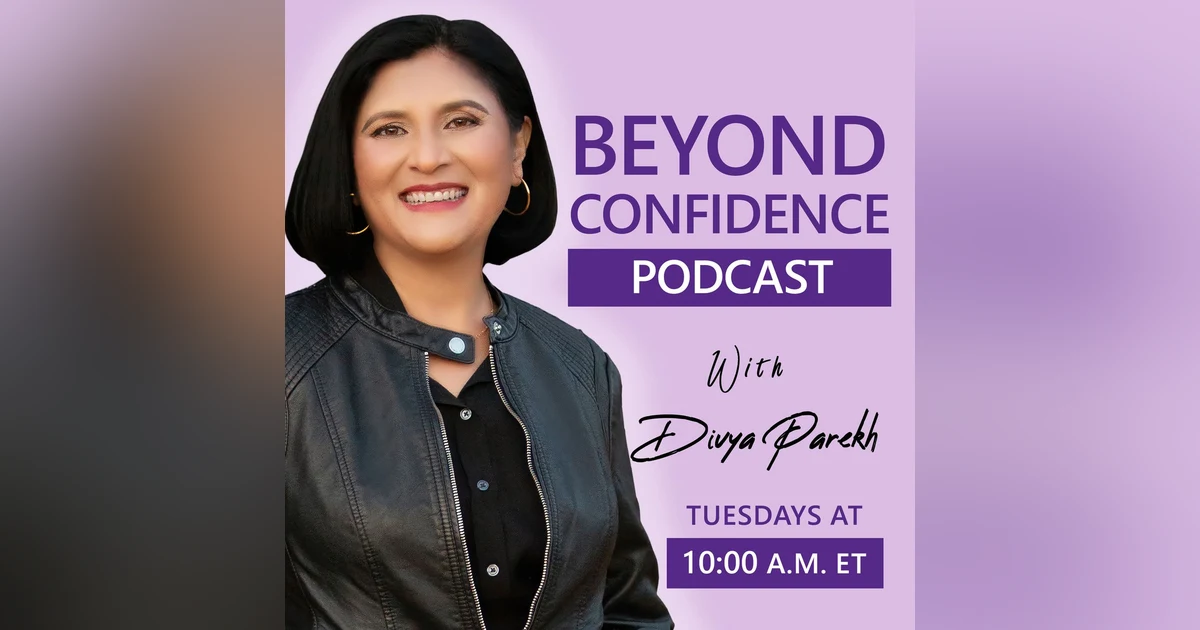

Join Divya Parekh and Dr. Frank L. Douglas to discover how to rise as a leader despite the obstacles that would stop most people in their tracks.
Click this link to learn more https://success.divyaparekh.com/unfairadvantage/
Beyond Confidence is...
 iHeartRadio iHeartRadio
 Spotify Spotify
 Youtube Music Youtube Music
 Amazon Music Amazon Music
 Apple Podcasts Apple Podcasts
 Pandora Pandora
 Audible Audible
 Podchaser Podchaser
 Audacy Audacy
 Spreaker Spreaker
 Deezer Deezer
 Podcast Addict Podcast Addict
 JioSaavn JioSaavn
 TuneIn TuneIn
 Castbox Castbox
 Castamatic Castamatic
 Castro Castro
 Fountain Fountain
 Goodpods Goodpods
 Overcast Overcast
 PlayerFM PlayerFM
 PocketCasts PocketCasts
 Podimo Podimo
 Podurama Podurama
 Podverse Podverse
 Podyssey Podyssey
 RSS Feed RSS Feed
 YouTube YouTube iHeartRadio iHeartRadio Spotify Spotify Youtube Music Youtube Music Amazon Music Amazon Music Apple Podcasts Apple Podcasts Pandora Pandora Audible Audible Podchaser Podchaser Audacy Audacy Spreaker Spreaker Deezer Deezer Podcast Addict Podcast Addict JioSaavn JioSaavn TuneIn TuneIn Castbox Castbox Castamatic Castamatic Castro Castro Fountain Fountain Goodpods Goodpods Overcast Overcast PlayerFM PlayerFM PocketCasts PocketCasts Podimo Podimo Podurama Podurama Podverse Podverse Podyssey Podyssey RSS Feed RSS Feed YouTube YouTube
Join Divya Parekh and Dr. Frank L. Douglas to discover how to rise as a leader despite the obstacles that would stop most people in their tracks.
Click this link to learn more https://success.divyaparekh.com/unfairadvantage/
Beyond Confidence is broadcast live Tuesdays at 10AM ET.
Beyond Confidence TV Show is viewed on Talk 4 TV (www.talk4tv.com).
Beyond Confidence Radio Show is broadcast on W4WN Radio - Women 4 Women Network (www.w4wn.com) part of Talk 4 Radio (www.talk4radio.com) on the Talk 4 Media Network (www.talk4media.com).
Beyond Confidence Podcast is also available on Talk 4 Podcasting (www.talk4podcasting.com), iHeartRadio, Amazon Music, Pandora, Spotify, Audible, and over 100 other podcast outlets.
0:00 The topics and opinions expressed on the following show are solely those of the hosts and their guests, and not those of W FOURWN Radio It's employees or affiliates. We make no recommendations or endorsement for radio show programs, services, or products mentioned on air or on our web. No liability, explicit or implied shall be extended to W FOURWN Radio It's employees or affiliates. Any questions or comments should be directed to those show hosts. Thank you for choosing W FOURWN Radio. This is Beyond Confidence with your host Dvapark, Do you want to live a more fulfilling life? Do you want to live your legacy and achieve your personal, professional, and financial goals? Well? Coming up on Dvaparnks Beyond Confidence, you will hear real stories of leaders, entrepreneurs, and achievers who have stepped into discomfort, shanner their status quo, and are living the life they want. You will learn how relationships are the key to achieving your aspirations and financial goals. Moving your career business forward does not have to happen at the expense of your personal or family life, or vice versa. Learn more at www Dot Divaparnk dot com and you can connect with div Ant contact at Diva Parnk dot com. This is beyond confidence and now here's your host, Diva Park. Good morning listeners, this is Diva and I'm thrilled to be here with you because this is the time I spend with you and I love it so for all of you. My heartfelt thank you for getting our books, whether it is Expert to Influencer, or The Entrepreneur's Garden or of
1:30 any of our other books, because partial profits go towards helping other entrepreneurs across the globe, and I am so thankful to you because it's important to bring about change in today's world and who can do that. Entrepreneurs do that the best and I'm not saying nobody else does it. I'm a little partial, folks, because I'm an entrepreneur. So I invite you to get your book because remember, regardless of where you are ads, no matter where you are an expert, it's important to become that influencer. And to me, an influencer is someone who creates a lasting change, a lasting impact on other people's lives and adds value and makes a difference. So, folks, either of the books. You're not going to go wrong. It's going to enhance your life and enhance somebody else's life. I cannot do it alone, so let's do it together. Another thing that I'm going to share with you is I invite you to spend just one hour of your time every month to help somebody with no strings attached. Let's get this circle of kindness going, because, folks, it is important. All right, folks, let's invite your guests in. Welcome, Doctor Frank Douglas. Welcome, and thank you for inviting
3:01 me to the show and giving me an opportunity also to interact with your audience. Oh it's a pleasure. So tell us that. Does any memory or a person stand out for you from your childhood? Yes, there is actually a sad but important memory. When I was about twelve, I used to have every Saturday morning it was my job to go to the market and it was about a mile walk and getting to the market was not a problem, but returning with a basket of girls walking them out as a problem. And finally I actually got a bicycle and this morning, this Saturday morning, was the first morning I was going to be able to actually ride to the market, so I wrote to the market, I got the goods, I put it on a bicycle handle and came riding back. And before I could think about it, as I turned into the yard as we would call it where I lived, it was sandy, and I had a spell and lost everything because I had a bottle of cooking oil, so broke the flower, the
4:34 rice, etc. The only thing that was saved, or what we call the ground provisions, namely things like a sava and plantings. I picked as much as I could uppened, got to the little room where we lived, and my mother began to whip me with a fury i'd ever experienced before. I kept asking why, why, why, and she said my aunt said that she saw me turn into the yard and push the basket off the bicycle purposefully because I did not want to go. Oh, I was so upset.
5:20 Of course, that is devastating for a young kid, especially when you didn't do anything. I didn't do anything, and this aunt had a habit of literally telling lies on me, and so I left, and I decided to go and drown myself. And so I walked till we lived, probably about a mile or so from the Atlantic Ocean, and I walked and got to the sea wall stood in it, and then I literally I became afraid. I could look at all these large boulders and the barnacles and the other things on it and slimy, and I began thinking what if I stepped down?
6:09 And you know, I didn't make it into the water, but I literally got afraid and decided not to do it, And that for that my life. Yeah, that actually changed my life. Oh and that's where as I was mentioning about earlier that it's so important to be kind and harming your aunt. I mean, we don't know, you know, what propelled her to do that, But that said, just think about the consequences your actions can have on others. It's one thing to just go on thinking, oh, this is not going to have repercussions. I'm just doing a white lie, a small white lie. But think about it, like, what was the big consequence on your life? I'm grateful that you didn't take the action.
7:04 What was going through your mind? Well, all I kept thinking was ranging myself. And then, as I said, I became literally afraid. I was afraid that I would slip and get trapped between the boulders and never make it into into the water and die that way. But I literally just chickened out and went too good to be good. But it also did. I was going at the time to an evangelical church, and so I went two or three days later, actually the Sunday to see the minister and told him I wanted to give my heart to the Lord. I wanted to be saved. And I did that because within the two days after this event, I had so many dark thoughts about what I would do to my aunt that I became afraid at how much I was in the dark side. That really changed my life because after that I spent my time, you know, in the church. I became what we would call it home a boy preacher.
8:16 Actually, after a while I was able to go to high school, where I did very well because I became very focused on doing as best as I could for the Lord in the real sense. And so that absolutely changed my life and as responsible for the man I became and I am. So did minister have any part in your turnaround the ministry? Yes, because he was very happy and then began to give me a lot of opportunities to help him.
9:01 And after a while he would actually have me teach the younger kids in Sunday school uh and then on the Saturday nights where we would go out to preach, he would preach. He began asking me to say a few words, and then after a while I began to be what we call a boy preacher and also to preach. What that did, as a matter of fact, it taught me basically how to speak publicly, you know, without understanding it. That's what they thought me. It also gave me a tremendous memory because I would memorize lots and lots of verses in the Bible in order to be able to preach. So it exercised my memory and actually also helped me as a student. What a story, and it teaches us that it's important to give a hand up and a little nudge, for you don't around your whole life. So thinking from dark thoughts, you came on the positive side and achieved so much in your life. So how was it like growing up in Ghana? Well, we were very poor circumstances. In fact, there were five of us, my mother and four siblings, and we lived in
10:35 one room and next in the room next versus my aunt and her and her kids. And my grandmother and grandfather. So I spent actually a lot of my time outside, you know, either sitting on this step or going to be what we call the promenade gardens. It was only about three blocks away, but there I would do my homework because they were benches there and I could get my homework done. So that was the way I grew up until I was about sixteen. At sixteen, I went a scholarship to go to the top high school to complete high school at what s called Queen's College in Guyana, and I did very well there and started to work after I completed high school, actually as a school teacher. And it was I don't know how it came about, but I ended up being called by the US Office one day and they told me I was being offered a Fulbright scholarship to come to American study engineering. So at age twenty, I arrived in the New York City on my way to Lehigh University to study engineering. M So,
12:07 what type of engineering did you study? Chemical engineering? Actually I started out doing chemical engineering, and then one semester I had what is called physical chemistry, and so I switched to the chemistry. In fact, my PhDs in physical chemistry. I switched to chemistry and engineering school. I just fell in love with physical chemistry. Well, a lot of people may not like it. Definitely you had a passion for it. So let's rewind back a little bit. So when you got that offer, when you got that call from the US, how did you feel and what did your family respond? We were all very excited. I was waiting for scholarships to go to British universities.
12:58 My performance in my last exam gave me admission to any of a number of British universities, but of course I had no money. Fullbright scholarship offered not only a full scholarship, but I also got a small stipend to live on. And we were all excited at home because everybody I was hoping I would get a scholarship to go away and study. My teachers, all all who were delighted. It was also very important because with the stipend, I actually send the stipend home too, and brothers and sisters, you know, And actually that is not an uncommon thing. It happens fairly frequently, not only with students who come from abroad, who come from you know, poor families, but here in America. There are many Black American kids who are students and who are working part time to help their family and brothers and sisters.
14:05 So this is not uncommon. You know, I thought it was an uncommon thing until I began, you know, to myself to be a professor and to interact with the students to realize that this is also unfortunately not uncommon in America for purpose students. So if you're sending your stypend, and if I may ask, how did you survive? Well, it was very interesting. One the canteen, my food, if you like, that was all taken care of. I did not have to pay for that. That was part of the scholarship. It was I got books, the tuition, the room residents I was paid for as well as food was paid for. So in real sense I didn't really have a need for the money, and so I sent almost all of it home. This became actually I mentioned this became an issue because one of the things that happened I actually completed in three years.
15:24 And one of the honors that I was given was I was invited to five Ata Kappa as well as Toby the Pietoby the Pias, the Engineering Honors and I declined both. I actually I had no idea what they really meant, but they required they required twenty five dollars each of them for the feed, and I got fifty dollars a month, so which I sent home. You know, I sent home about forty dollars, so there's no way I could. So I politely decline. And I actually got a call from the dean, Dan Yates, I'll never forget, and he called me in and he said, I've heard you've declined the five beta kappa and why did you do that? And I said, well, quires twenty five dollars and I don't have any money. He said, but you get fifty dollars a month, what are you doing with it? So then I explained to him, I send it home. And he looked at me and he said, here's what I'm going to do, said, five beta kappa is more important, is the more important of the two. I will pay the fee for your five beta kappa, which he did, and you know, so I'm five beta kappa. Beautiful story. And here's again that if somebody invests in you,
16:57 it somebody giving you a hand up. Give somebody else a hand up. What a beautiful story and see like little things when they add up, it becomes such a huge, huge change. And that's where I always promote kindness and sharing a little part of your time with somebody else, whether it's mentoring or just helping your family members out wherever it is. So, as you completed your chemical engineering, is that like, did you continue with your PhD like at that time or was it part of that? Well, it was part of that. But before I go to that, if you don't mind, because it just triggered something in one of your shows that I heard that I thought was so beautiful and in a way it captures what you just said, but I'll see it in the words of it you use. Then you were talking about in your into you you were talking about walking and it was raining, and you talked about the sound of the rain which are so poetic. But you talk about seeing this tiny little tree with the raindrops on the tree, and the sun shining on those raindrops that made them look like diamonds, and then the rainbows that were there, And in a real sense, you know, that captured the way I feel about individuals. I feel
18:30 about people is that you know, we are all diamonds. In the rough, if you like. And as the diamonds when others give to us and shine on us, then there's an opportunity for all the beautiful things within us, the rainbow of gifts that we have to come. And I so loved listening to you say that because it gave me this wonderful image of what I think about about people. So thank you for that, Oh, thank you, Thank you for listening, and thank you for sharing that, because I still remember that moment to this day. It was just beautiful, and we learned so much from nature. We have treasures all around us, and we forget about that. So tell us about your journey through PhD. My journey to PhD was an interesting one one. My journey in those three years that I spent at Lehigh was where I discovered discrimination and racism, But as I mentioned in the case of D. N. Yates, is where I also discovered that there were wonderful people in spite of what. So I had the unfortunately situation at these two professors who gave me lower grades than I had earned.
19:57 But then I'm going to tell you about the professor who probably changed my life. I was in my third year and Professor Dean was his name. I was taking a course from him. It actually was a graduate level of course. And he called me into his office and he said, tell me about yourself. And you know, no one had ever asked me that, and so I did, and I told him of my religious background, etc. And he said to me, he says, I understand that because I am Jewish, so I understand the importance of religion. And then he said to me, do you know you have enough hours to graduate? And I didn't know. He said, yes, you do. And as a matter of fact, we've been discussing it, and one possibility is that we do put you into a six year PhD, which we are sort of thinking that we might want to start, and you would be the first person in it.
21:07 This is but you know, I think you are at a stage in your life where you are searching for yourself, and my advice to you is that you go to another institution and do graduate work. So he helped me apply. He actually called up a number of universities got interviews for me, and then when I returned off of my road trip, I sat with him to decide, and I actually was lucky. I was accepted by all of them, and he recommended that I go to Cornell, and he did it.
21:48 It turned out for all the right reasons. And he said, not because that's where he got his PhD. But I was at that stage of my life that Cornwell was just the right place. It was in the sixties, he said, you know, it is the campus. You will find the political activity, you will find people talking about philosophy, and you will find in your chemistry department professors who are very focused on chemistry and want to be sure that you're the best chemistry that they could ever be. He was absolutely. I went to Cornell did my PhD in physical chemistry, and in fact, it's one of the two places I identify as having been important in my maturation as a human being. Was indeed, those those years I spent doing my PhD at Cornell, that's one of the times. Oh what a beautiful story, and how a person as you mentioned, created that rainbow for you. Yes, and as you got did you right after your PhD?
23:00 Did you go for a first job or what transpired after that? Well, interestingly enough, I did, even though my professors wanted me to stay and do a fellowship because the thesis I had done turned out to be very interesting and exciting. It was one of those times where what I had uncovered was the first time that it had been been seen, and so they were all excited. But I had had a job at Xerox, and so I went to work for Xerox, and that was another life changing experience. I was there in eighteen months. So you have mentioned in that you know you re framed your mindset in your first job, So tell us about that as well.
23:56 That's that's indeed where my life was refrained in the real sense. I was there for three months and could not get a good project. I asked my boss he would give me one excuse aft another, and one day a white young man joined the group and he had not even completed this PhD, and within one week he was actually placed on the hottest project that we had at Sea Rocks at the time, in research and development. And so I went to my boss and I asked the usual question, and he gave me the usual excuses, and then I said to him, look, Steve, think of me not as though I am Frank. Think of me as though I'm Bob. And I was astounded to see sort of the recognition come over his face, and he looked at me and he said, you know, Bob has only been here a week, and I've put him on the artery.
25:03 That was the big project, the archery project. I was so angry. I ran out of his office, ran into the office of the senior vice president to give him another example of where I was being discriminated against now, and that is what actually caused me to leave industry and to go to medical school. So I also have an m D. Two or three years later, I thought about that incident and realized that I had missed two things that were very important. One, Doctor Tribus, the senior vice president, had insisted on the Xerox hiring young black PhDs because at the time there was only one black PhD in all of research and development at Xerox, and that's summer. He had hired three of us. So in the real sense, it was probably more important to him that Frank Douglas who would do well than it was the Frank Douglas because his reputation was on the line. Right.
26:15 The thing was that my desired outcome was to get a good project, because I wanted to demonstrate what I had learned my PhD. And how good I was. That was my desire to come. It was not for the senior vice president to go and have tough words with my boss. So had I refrained, and had I said to the senior vice president, doctor Tribus, could you help my boss find me a good project retired from Xerox because one that was within his sphere of influence to achieve. And secondly, that was my desired outcome. When I was writing my memoirs, which I released in November twenty eighteen, it occurred to me that many times when I was faced with difficulties, I actually reframed. And that is why. Actually it's the title of my recently released the book, which talks about addressing systemic discrimination by reframing the problem. Reframing became for me, As I said, I didn't realize it until I was writing my memoirs, and suddenly it struck me how important reframing is. Yeah, that is so powerful that you had that self
27:47 realization. So this is a difficult conversation to have, and yet it's important to touch upon it. So many people face discrimination, and scrimination comes in so many different faces that there is no one particular face. It can be gender, it can be age, it can be color, it can be biased. It could even just be let's say somebody from South is going to New York, or somebody from New York is coming to the South. Oh, those Yankees or those you know people from South or from Florida, or from those Texans. And we have so many biases, so a lot of people. And I think so everyone faces some sort of discrimination once or twice in their lives. I've experienced it multiple times. So you talked about reframing.
28:45 So first of all, walk is through a process like what did you do, Like did you face anything else during medical school? And how did you handle that? I face many things during medical school, which is unfortunate because I thought, in a real sense, you know, this is the study of medicine understanding beings. But at the time, it was the early days when predominantly white institutions were beginning to admit underrepresented minorities into the institutions.
29:30 So what I found when I got to medical school is that there seemed to have been a practice every year they had. At the time, they were about eight or eight to ten black students who who were there in a class of a hundred, so about eight to ten percent. And there seem to have been a practice every year of having one or two of those students repeat the first year. Now having been a graduate student, having you know, been a graduate assistant and evaluated students, etc. I sort of, you know, had been at least gotten some training to be able to assess the capability of students. There's something unfair going on here. The fascinating thing actually that happened is that some of the boys, i'll say boys, you know you're a young man, some of the let's say male students felt that some of the female students who are getting higher grades than they should get because the male professors like them, and they were upset about it. So I went
31:02 to one of them, whom I knew very well, and I said, you know, why don't you and you know some of the other guys go and ask to have anonymous grading. He thought that was a good idea. So we had anonymous grading. And there's still anonymous grading at that institution. And I'll tell you what happened the first time we had anonymous grading. One of my black female colleagues, it was Honor's pass failed system at that time. As far as I knew no black sid ever got an honors. One of my black colleague's female colleagues got three out of four honors. Yours truly got two out of four honors, and not a single black student failed, not a single black student. Let's go back to the process. What did you do over here that changed the whole trajectory with respect to the to the just like you asked them to anonymous. So again it goes back to addressing Yes, we reframed the problem. Rather than dealing with the problem that black students were being unfairly treated is, we reframed it into let's have a process
32:34 in which all students feel they are being fairly yeah, And that came up with a different outcome, and that addressed that we wanted in a real sense, okay, right. Outcome that we wanted was that the black students should not be failed if indeed, you know, they had actually performed. Well, that was the outcome we wanted. But rather than addressing that, we reframed it to all students should feel that they're being treated fairly. And that's the way we got the outcome. And that could have addressed females regardless of the color, regardless of the color to address females, because, as I said, you know, my feeble colleague was black, got three out of four hours, which means that although she had never failed any courses, at that point, she was nonetheless not getting her you know, her do she was not being recognized. So how did you come up with that address the problem and reframe it? Well, as I said, as I was doing my memoirs, and I began to look not only at different problems that I had had, you know, also in industry. Actually I ended up.
34:02 I was a an academic physician for a short while, and then I went to work, went back and worked for industry, went to work for a pharmaceutical company and experienced racism there. The worst one of which was there was a time. There were two critical times, but I'll just tell you the second one. I was expected to become the global head of research and development was a large pharmaceutical company that was denied it because of my ethnicity. Okay, so I had to reframe. Actually what I did is I left and I went to a smaller company, which, as luck would have it, a very large company in Germany, actually bought a small company and then turned to May to become the global head research invelopment. I ended up getting the position in a similarly sized global company that I was denied two or three years years before them. So one of the key points that I want to touch upon is that you did say that, especially after leaving Zeros, it helped you reframe the problem, and you've still kept on facing the problem. You kept on facing the obstacles. So there are a lot of people who may say that, you know, I'm emotionally hurt or that hurt is there.
35:34 How can they heal themselves and reframe the problem. So then what they're doing is changing the outcome by reframing the situation. Yeah. No, this is so very important because you know what we sometimes fail to realize. It's the pain that people are feeling. And in fact, one of the things that I have done is to say, let us focus on the individual. So if we have an individual who has been aggrieved, the first thing we do with that individual and your question you'd asked earlier, so I'll do answer your question more directly now, is the first thing we do is we have that individual fill out a form which is just two pages which ask them to state what is their desired outcome one two sentences to describe the problem they're having, the situation in bullet form, because we want them to start stepping back from the emotion, the hurt that is there. Just step back, just the facts, man, just the facts, and then describe the environment that they're in, again in bullet form, and then very simply state what they think the problem is. So that's the form. We have a panel and we call our panel VIPs Victors in overcoming injustice in their professions. So these are
37:09 individuals who are professionals who have faced discrimination and have doubt who overcome And so that panel then listens to the case, let's call it a case of this in grieved individual and they do it from two perspectives. One they try to understand from that case, what are the issues around equity and we monitored very simple, are their privileged groups? Are their processes in place where someone could make a complaint without fear of retribution, you know, and what are the prospects for that individual? Very simple issues of inclusion. Now it's sometimes difficult for people to tell you whether they've included or not, but they know when are excluded. So we look at the microggressions microsoalts, micron salts, micron validations. And after we've heard that, we actually plot a little matrix of equity versus inclusion, because when you do that, you can actually identify four types of environments or cultures we call them. If a situation is one in which equity is high inclusion is high, we call it a psychologically safe culture.
38:34 If equity is low and inion and inclusion is low, that is a toxic culture, psychologically toxic culture. So you can do these four cultures. Now, once you have that and you identify in which quadrumt or culture an individual is, then you ask yourself the question, and this is where you come to reframing. Given the desire dot com and given where the sitting, what's a better problem to solve to get to that desire to would come? Is it if you look at inclusion are there opportunities there? Or if you look at equity? And so we then have that discussion of trying to find a better problem to solve. And once you find a better problem to solve, you now have reframed the problem. And then we discussed with the individual.
39:28 Now what is the dialogue. What's the discussion you would have with the supervisor with the boss. So rather than the supervisor the boss feeling defensive, you're now coming with a problem amongst which is this characteristic. It's a problem which if it were solved, not only would the aggrieved person benefit, but others in the work unit would benefit. Go back to the the medical school example. So we look for such problems and invariably what I have found in my experience, invariably, if you're an environment where discrimination is occurring, as you said, whether it's to women, whether it's because of the culture, but because of religion, if that is occurring, you can be sure there are authors who are also experiencing other types of discrimination. So because of my observation of that over many years, I am convinced that you will be able to find a better problem to solve that has that characteristic and then we reflect.
40:43 So that's the process which we use so powerful, because what's a better problem to solve? It definitely resonates with me because what you're doing is at the core of humanity. You are saying that let's bring inclusion in. When you're solving the problem for everyone, the odds of it succeeding and you achieving that outcome are so much more greater than just being focused on yourself or one thing. So that is so powerful. Oh, thank you, Thank you for sharing that, doctor, Frank, just amazing. And share with us about your memoir and where people can find you, how can they connect with you? While you can connect with me through Frank Douglas books dot com.
41:38 That's my website, Frank Douglas books dot com. You'll find both books there, but there's a ton tax form there. Just send me a note and an email. I'll respond respond to you. The books are both on Amazon also you can get it from my website, but you can also get them an Amazon and Barnes and Noble. So tell us about your books. The first one actually is interesting. It's called Defining Moments of a Freeman from a Black Stream. Why a Freeman from a black Stream, it turns out, and in the book I tell how I discovered that because I didn't know that.
42:21 But it turns out that Frank, my first name is Celtic in origin and means freeman, and Douglas is Scottish and means from a black stream. Oh oh wow, finding moments in my life. So the finding Moments of free Man from a black stream, and you find some of the things I yeah, sorry, go ahead, No, No, I was just going to say, you find some of the things that I just mentioned, like the Xerox, the medical school, the first question you asked about by upbringing you'll find them all in that book my memoirs memoir and and the second yeah that's released. Yeah, that is. It is entitled Addressing Systemic Discrimination by Reframing the problem. Mhm. No, definitely sounds a book anybody could benefit from it, so I'm hearing. Actually the book is actually it's very it's only one hundred and seventy pages or so. I particularly left it wanted it to be small, sort of a primer, and the first section of it describes the methodology, describes why the importance of looking at equity and inclusion and the methodology of reframing, And the second part of the book are eighteen cases
43:55 individuals whom I interviewed and whom we took through the process in the intake form and then to go through inclusion, equity, the matrix, etc. And to find a better problem to solve. So in reading the book, it's actually very easy. You read the first part, which is only twenty twenty five pages. Read the very first case, which is actually a combination of two cases which we use as a teaching case, and you see how the process works. And then you can pick and choose, go to the table of contents and pick and choose cases to read. Because you find cases involving physicians, involving government workers, involving people in industry, involving people in academia.
44:40 So it covers a broad definitely sounds like a good read and a book to definitely have it on your shelf or on your kindle or your noki, whatever you're using. And thank you, Thank you for sharing your heart and wonderful nugget. So what's next for you, Well, right now we are focusing on getting not just the book such interhansive individuals, but really encouraging individuals to contact us, individuals who whose well being is being affected it at work or elsewhere, whom we can help by taking them through the reframing process.
45:25 So right now that's a major, a major focus. Well, that's amazing. Thank you for doing all the good work that you're doing for people, because it's so critical that we help each other out, be kind to each other. So thank you for joining us. It was an honor having you on the show. Well, thank you very much. And if I may end, because of something else that you said in one of your shows, you've talked about honoring people, and again it resonated with me because for me, if in your organization you treat people fairly, you're honoring them, and if you value them, you value them by including them, including their contributions, and recognizing them. So this, you know, when I heard you talk about honoring people again, it struck a chord with me. Thank you for this opportunity to be on your show. Thank you, doctor Frank.
46:37 It was really an honor to have this conversation. And listeners, I hope you enjoyed this conversation as much as I did. And I'm always learning from our guests and I'm so it's a privilege to speak with these wonderful people, wonderful experts. So please know that you are the life and blood and the soul of our show. So reach out to us how we can support you, who we can bring so you get to live the life you deserve and with joy and with good health. And thank you one for making the show technically possible. And we will see you next time. Befell and take care.
47:24 Thank you for being part of Beyond Confidence with your host, Divia Park, we hope you have learned more about how to start living the life you want. Each week on Beyond Confidence, you hear stories of real people who've experienced growth by overcoming their fears and building meaningful relationships. During Beyond Confidence, Diva Park shares what happened to her when she stepped out of her comfort zone to work directly with people across the globe. She not only coaches people how to form hard connections, but also transform relationships to mutually beneficial partnerships as they strive to live the life they want. If you are ready to live the life you want and average your strengths, learn more at www dot dvapark dot com and you can connect with Diva at contact at dvapark dot com. We look forward to you joining us next week.


