
From Scroll Fatigue to Mental Fitness
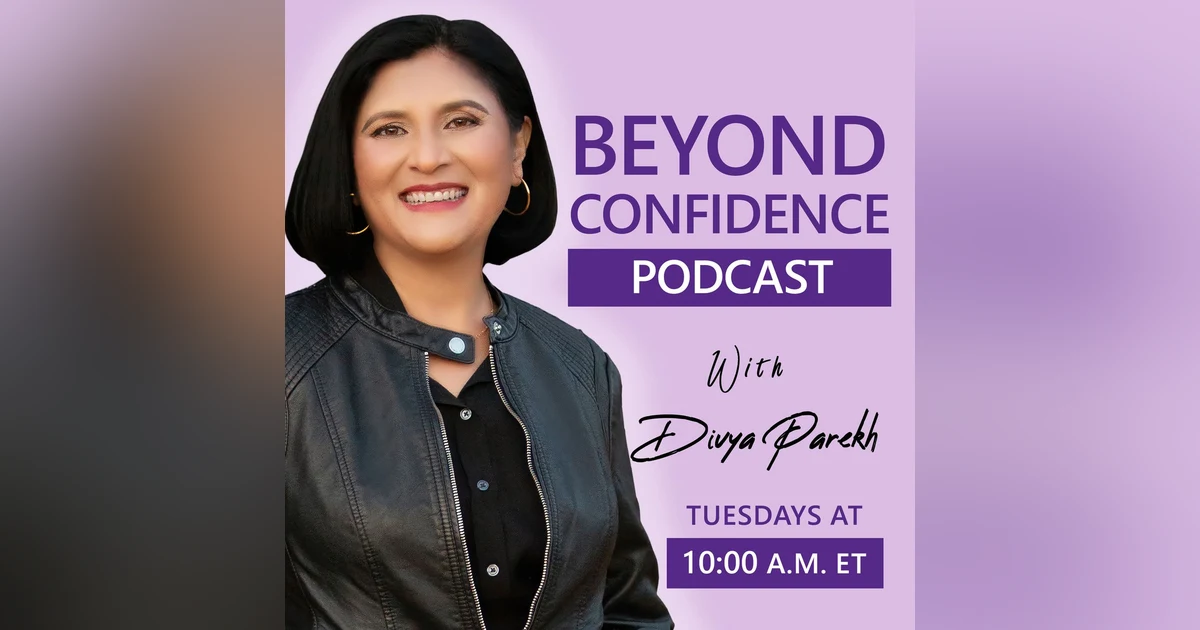

Ever spiral into a whirlpool of negativity, even with just one scroll on your social media feed? Dive in with Divya Parekh and Anthony Iannarino as they dissect the science behind our inherent negative tendencies. 🧠
Mind Over Matter! Why's that inner...
 iHeartRadio iHeartRadio
 Spotify Spotify
 Youtube Music Youtube Music
 Amazon Music Amazon Music
 Apple Podcasts Apple Podcasts
 Pandora Pandora
 Audible Audible
 Podchaser Podchaser
 Audacy Audacy
 Spreaker Spreaker
 Deezer Deezer
 Podcast Addict Podcast Addict
 JioSaavn JioSaavn
 TuneIn TuneIn
 Castbox Castbox
 Castamatic Castamatic
 Castro Castro
 Fountain Fountain
 Goodpods Goodpods
 Overcast Overcast
 PlayerFM PlayerFM
 PocketCasts PocketCasts
 Podimo Podimo
 Podurama Podurama
 Podverse Podverse
 Podyssey Podyssey
 RSS Feed RSS Feed
 YouTube YouTube iHeartRadio iHeartRadio Spotify Spotify Youtube Music Youtube Music Amazon Music Amazon Music Apple Podcasts Apple Podcasts Pandora Pandora Audible Audible Podchaser Podchaser Audacy Audacy Spreaker Spreaker Deezer Deezer Podcast Addict Podcast Addict JioSaavn JioSaavn TuneIn TuneIn Castbox Castbox Castamatic Castamatic Castro Castro Fountain Fountain Goodpods Goodpods Overcast Overcast PlayerFM PlayerFM PocketCasts PocketCasts Podimo Podimo Podurama Podurama Podverse Podverse Podyssey Podyssey RSS Feed RSS Feed YouTube YouTube
Ever spiral into a whirlpool of negativity, even with just one scroll on your social media feed? Dive in with Divya Parekh and Anthony Iannarino as they dissect the science behind our inherent negative tendencies. 🧠
Mind Over Matter! Why's that inner voice often our harshest critic? Learn the art of switching gears and turning self-talk into a power tool for positivity.
Click this link to learn more https://success.divyaparekh.com/unfairadvantage/
Beyond Confidence is broadcast live Tuesdays at 10AM ET.
Beyond Confidence TV Show is viewed on Talk 4 TV (www.talk4tv.com).
Beyond Confidence Radio Show is broadcast on W4WN Radio - Women 4 Women Network (www.w4wn.com) part of Talk 4 Radio (www.talk4radio.com) on the Talk 4 Media Network (www.talk4media.com).
Beyond Confidence Podcast is also available on Talk 4 Podcasting (www.talk4podcasting.com), iHeartRadio, Amazon Music, Pandora, Spotify, Audible, and over 100 other podcast outlets.
0:00 The topics and opinions expressed on the following show are solely those of the hosts and their guests, and not those of W four WN Radio it's employees or affiliates. We make no recommendations or endorsement for radio show programs, services, or products mentioned on air or on our web. No liability, explicit or implied shall be extended to W four WN Radio, its employees or affiliates. Any questions or common should be directed to those show hosts. Thank you for choosing W four WN Radio. This is Beyond Confidence with your host w park. Do you want to live a more fulfilling life? Do you want to live your legacy and achieve your personal, professional, and financial goals? Well? Coming up on dvparks Beyond Confidence, you will hear real stories of leaders, entrepreneurs, and achievers who have stepped into discomfort, shattered their status quo, and are living the life they want. You will learn how relationships are the key to achieving your aspirations and financial goals. Moving your career business forward does not have to happen at the expense of your personal or family life, or vice versa. Learn more at WWDS. You don't divpork dot com and you can connect with dvant contact at dvpark dot com. This is beyond Confidence and now here's your host, Dvpark. Good morning listeners. This is DIV and it's Tuesday morning, and I'll love to be with you all because this is one of my favorite times as I get to share the message of kindness.
1:23 And I want to highlight Jamie who reached out to us with her kindness story and I want to share what she shared, what she did. It was a simple thing. So Jamie is an avid bicyclist, and what she has started doing is that when she goes bicycling in the she is a like a backcountry bicyclist. So whenever she's going and anytime she meets fellow writers, she's waving to them, giving them a smile and letting them know if there's a steep curve ahead or something like that. And what she told me was that she frequents some trials that are like you know, very very familiar to her, and she is going there quite often, and that she has formed friendships just by saying hello. And one very beautiful thing that happened was now they are sitting down. But she has made a group of friends and ride outside the cars. They will sit for like fifteen twenty minutes after they have finished their bike rides and they're enjoying the camaraderie nature. So folks, you never know where the kindness will take you and what can happen, So keep on circulating kindness. And here's what I'll share with you, just one hour
2:57 of your time throughout the month. And I also want to thank you for your kindness for everyone who has bought our books, especially the ones that you see behind the Entrepreneur's Garden that will really help you unleash potential in your life and your personal life and your business or your work and expert to influencer that will position you for meaningful impact just not the likes, just not the numbers, but the interaction with your audience where you can influence people. And why am I thanking you because not only your life will be impacted. Also, we spend partial profits on global entrepreneurs from different parts of the world through keywa dot org and we have seen entrepreneurs go from taking loans to becoming independent.
3:52 So think you think you thank you, and let's welcome our guest, Anthony An arena perfect, Anthony perfect, you got it on the first try. Sometimes people just give up and they're like, Anthony, well, no, thank you. You had shared with me how to pronounce. It's appreciate that. So usually we start out from the childhood. Do you recall a moment in your childhood or was there a person or an event that you still remember to this day. I have a very a very large set of stories here, So I will give you part of that story. When I was about three years old, I lived in Dearborn, Michigan, and there was a teenager that lived in the house behind mine and I waved at him and he threw a rock and I still have a scar over my eye where he hit me. And so when you're three, you know, that's a traumatic event that happened to me. And I was bleeding and all that stuff. I could tell you a whole bunch of stories. Not too long after that, I had an apendectomy. I've had. My dad left when I was six years old, left my mom with four kids, actually six gigs because we had two of his other children. And then that's when we had some more
5:24 trauma, Like that's a trauma, traumatic thing that happens when a family breaks up like that. My mom was living with her four kids, and she was working for four dollars and fifty cents an hour as a recruiter against her draw So that's where I came from. So fortunately I had a mom who was just unbelievably great about taking care of her kids. And I couldn't understand at the time how she knew how to do that. As I started to get older and I noticed like she did a really good job. She became an auto orpreneur and she started a staffing company. I helped her build it to fifty million dollars, So that was what happened to her. And then at that particular time, it was just we didn't have enough, and I started working very early. And the reason that she knew how to do this is her mom raised five kids by herself, so she had a model and that model. I wish it wasn't necessary for to have that model, but that's the model that she had, and she did a tremendous job. She is the most important person in my life. She's been the greatest inspiration for me being able to go out. And this was nineteen eighty when they started the business, and they went to the bank and they tried to borrow money.
6:47 Two single moms, once got four kids, the others got two. And they went to the bank and the bank said, if you can bring one of your husbands in to co sign, we'll give you a our loan. And you're talking this is nineteen eighties, you're not talking late nineteen eighty. Yeah, So they didn't have any husbands. Between the two of them, they didn't have one husband. So they bought two twenty five dollars desks, pushed it together in a cheap office, and they just bootstrapped the whole way. So that's a part of my story. Well, all I can say kudos to you your mom and her mom and just going for it, not letting anything stop them. What a role model to have. And I can't believe a teenager would just throw a rock at a three year old raving.
7:44 And that's sort of the more importance it is that we spread whatever kindness we can. So when you were growing up, Anthony, and as you mentioned, you went through really traumatic times, how did that impact you and what did you learn from it? I was a very fearful kid after having a lot of violence in my young life. So I had some of that, some bullies, some things like that. At some point I read a book that my dad gave me. I think he gave it to me on my birthday. I didn't see him all that often, but he gave me a book called Will by g. Gordon Liddy, who was the mastermind of the Watergate break in, and he gave it to a twelve year old kid.
8:39 I read the whole book, but the beginning of that book, Gordon Liddy decided that he was going to face every fear that he had. He was afraid of blimps, he was afraid of thunderstorms, he was afraid of rats, and he just methodically addressed every one of those things. And after I read that, I thought, if you could do that, I could do the same thing. I could face all my fears and I could do them one by one and start to change. And just because of that book, I started to address all my fears and I became not afraid anymore. I don't know if you are familiar with the enneagram, Yeah, I am, What are you well? I will tell you I have taken so many personality tests that I have forgotten because Strengths Builder, Inni A. Graham and Colby Index and done all of them. Yeah yeah, because you know, I've got two sites to my business as an executive coach, I'm helping people take it and ultimately, what I've found is that it's all about uncovering and discovering yourself and keep on working on oneself. Right for me, after being bullied for some period of time, I wasn't afraid of bullies anymore, and then I started to intervene when other people were being bullied. So this is
10:13 what happens when you're in Enneagram eight, is that when somebody tries to bully you or they bully other people, you step in front of them and do that. So that's what happened to me, and I started to get the courage to push people back and not let people get hurt. So that was what happened to me in my young time, between like maybe thirteen and fifteen. That's when I started to realize I had to do something to help not only myself but other people. So you went from being fearful to becoming the protector. And that is a very empowering place to be for a young teenage boy and as you continued through your teenage journey, that did you land?
11:01 I landed in Los Angeles, California. I started playing rock and roll when I was fifteen, and by the time I was twenty, I was moving out to Los Angeles. Now don't laugh to play as the lead singer in a hair metal band. Now you don't see any hair now, But at one time it was down to my waist. And I went out to Los Angeles and I got a job. I started taking care of myself, and then one day, walking up to my Brentwood apartment, I had a grandma seizure. The interesting thing about having a grandma seizure is you're the only one that doesn't know that you had a grandma seizure. So the people that saw me have that seizure, they knew exactly what was going on. They called the paramedics for me, and I refused to go to the hospital with the paramedics because I had just had a grandma seizure. But the paramedics didn't give up on me. They followed me into my apartment and they said, you've had a grandma seizure, which didn't mean anything to me at that time because I was still shaken up right, And my neighbor came by and said, if you won't go with them, I'll take you to UCLA, which is only like five minutes away from where I lived. So I made the great decision of getting in a nineteen eighty Chevy Chavette instead of an ambulance. And
12:35 they took me into the emergency room and I was immediately taken into a cat scan, and then after the cat scan, they gave me an MRI. So I would say, if that ever happens to you, you're probably in deep trouble, like if they go for the MRI. Right after that, the doctor came in and he put up pictures of my brain, you know, on the big light board, and he said, you have cancer on your front right lobe and we're going to need to remove that lobe to protect the other lobe from getting cancer. And I again was now somebody who's not afraid. So I said, could I have not cancer? I didn't have another way to say it, like, could I have something that's not cancer?
13:22 And he said, you could have something that's called an arterial venus malformation, but it would be the largest one we've ever seen. And I said, well, how do we know if I have an arterial venus malformation an AVM? And he said we'll check in the morning, and so I just waited, and then the next morning they took me in and they said, if you have an AVM, it'll look like somebody took the map of the United States and they smashed it into like a giant knot. And so they gave me some medicines. I was awake the whole time they did this, and then I noticed that all of a sudden, on one of them hiteboards, I saw the giant knot and I said, that's an AVM and the doctor said, yeah, it's a big AVM. Well, the two neurosurgeons were not very good salespeople, by the way. They said, let us take that AVM out. It's going to be so good for us, and I'm like, oh, for you? I thought was my surgery. They said, we'll have a whole bunch of people here. We're going to record it, we're going to use it to train other people in the future.
14:28 And I said, we'll be okay if I called my parents and let them know where I'm at, because they had had me busy that whole time, and I called my family and they said, we'll get on a plane and go out and I'm like, don't, don't do that, don't don't come out here yet. I need to figure out what we're going to do. My aunt happened to work for a neurologist and he said, there's only one person that you need to go see. You need to see doctor John two at the University of Cincinnati. So I flew back to Ohio, went down to Cincinnati. And the difference between God and John two is that God doesn't think he's John two. So now give you a measure of the man like.
15:09 He's amazingly confident, confident, And I asked him just one question when we sat down, I said, how many AVMs have you done? And he said just a little over three thousand, And I said that's a good answer. Wow, that's a really good answer. Yes, it was not his first time. So I had two surgeries, one where they glued the AVM shut within a POxy, and then the next day they cut that out and my brain was only bruised. I didn't have cancer. It was bruised on the back temporal lobe and they had to remove that piece of my brain, which was never discussed before they did that. But afterwards when they came in, they said, if you would have kept the brain that was bruised, you would have seizure for the rest of your life. So they removed it. And then after that, after trying to drop out of high school.
16:04 For every single year I tried to drop out of high school, I wasn't allowed to do that. My mom would threaten me that she'll sit with me at school if I didn't show up there. I went to college at twenty six. I graduated summa cum laudie. I won the Dean's Academic scholarship to law school, and then I went to Harvard Business School for their OPM program. So nine years of education as an overreaction to losing a piece of my brain, but I wouldn't change it. That's amazing, Anthony. You know the story just you have told me has inspired you. I can definitely share that. And when you're talking about fear, you went from fear to fear to fear and making the decisions and just trudging along. So there are a lot of people who are hesitant and to take even full step. What would you tell them? Because there's so much. You know, there is a whole science behind as you talk about as to why you're negative and how does our current environment cause us to be negative? So can you shed some more light on that. Fear is one of the ways that prevent us from doing the things that we should be doing and that we could be doing and that could make our lives better. At that particular time, for me, I can remember I was more afraid of having it in my head than having
17:40 it out of my head. So for me, I was ready to do this as soon as I heard the number three thousand surgeries. That gave me the confidence to do that. But there's something that is important to know, like that fear is there to protect us. So it means that we need to take care of ourselves and we need to be protected, including protecting ourselves. So I think one of these things is my opinion, Sometimes we fear the wrong thing. We fear getting the surgery instead of not getting the surgery. So we do that in all kinds of parts of our lives. We don't address this problem that we have with people because we think that that's scary, but then living with it is even scarier to people. And I think that that's something that you have to do a lot of work on to have that courage to do this. And as I was doing the research for the Negativity Fast, trauma is a big deal and there's a couple of ways that people think about trauma, and there's one of two things that generally happened.
18:49 So there was Freud, and Freud believed if you had a trauma that you can never come back from it, You'll never have your goals. That's what's going to stop you from being successful. That was what Ford thought. But there was another guy at the same time named Alan Adler, and I don't know if you know who he is, Yes, so he was at a contemporary He had exactly the opposite belief as Freud. His belief was, once you get through the trauma. Now the trauma is bad, it doesn't feel good, it can be really really horrible, but after that it can have no power over you, and you can go on and live your life the way that you want, as long as you find some meaning in the suffering that you had in the trauma. That's one of the things that causes people to have what's called post traumatic growth syndrome, and that is something that there's not that much literature about in the science. So there's some science, there's maybe three significant papers, but outside of that, there's not that much.
19:56 And they're really interested in this right now because they think that you could help people not suffer and get over trauma a lot better if you could figure out how to reverse engineer that growth for them instead of the PTSD that a lot of people get from trauma. Right, that's very powerful. So then you know, most of the people talk themselves into a negative state. So well, let me comment on that. You don't really have to talk yourself into a negative state, because we have this thing that scientists call negativity bias.
20:37 And so negativity bias is just something that has been put into us as human beings because we were at one time Paleolithic people. And if you were positive and optimistic about going after a sabertooth tiger for dinner, you might have a problem because that saber tooth tiger is inviting you to dinner in another sort of way. Right, So we have this negativity bias, and we're more concerned over negative than we are over the positive. And all of the research on negativity bias is that no matter how good and positive something is it doesn't register anywhere near as high as negative things do. They're way way overpowered. Even when you have something good happen and something bad happen, like connoments exercise, you lost fifty dollars and then you've you've found two hundred dollars, you're still mad about losing the fifty dollars even though you're up one hundred and fifty dollars.
21:42 And I don't know why we're like that, but that is how we've developed. And you will have negativity bias. Everybody does. But you can't do something about it. You can try to keep it in check. The other reason that it's really easy for me to for people to be negative of is because of our environment. We have an environment that has a change rate that is beyond anything that we can keep up with now. Alvin Toffler in nineteen sixty five in a magazine called Horizon this is before Future Shock, he said, if we don't figure out how to control the rate of change in our environment, we're going to have a massive adaption ad adoptional problem. Like we're going to have it. We can't adjust enough for the speed that we have in our environment. Right now and then when you think about where we are right now today, we've got a hot war in Europe. Who would have saw that coming? Now we've got one in the Middle East. We've got the highest interest rates we've had. We've got the highest just about everything, like on everything, whatever you want. Groceries up twenty percent, hard for people to do that, housings up, everything's up so and we still have this inflation that's plaguing us. So if people are negative, you can get a sense because of all these things going on. And if you watch
23:15 televisions, especially if you watch television news, you will be even more fearful and you'll be even more negative because of the things that we do now on television. So we have Fox News for the conservatives, we have the MSB for people who are more liberal, and for some reason, we're not allowed to like each other even though we have different politics. And that's what we've been doing, has been being pulled apart from each other, right when we need to be trying to get back together. But when that is so, you have mentioned about how the environment is changing, and that's going to continue to change, because it's not only the actual environment that we are talking about not only the news but social media in itself. Oh yeah, and the Health Surgeon General, like you know, said that isolation and loneliness is an epidemic in the teens. So a lot of things are happening. People are experiencing inner critic and that inner voice is not there. So what are some of the ways that people can, as you mentioned, you know, lie to themselves, use empathy and get out of a negative state. That was my brother that taught me about lying to yourself as a way to be empathetic.
24:37 And he's a comedian and he drives all over America to go from one gig to the next gig. And I will tell you if you go to see him, I'm not responsible for anything that might offend you because because that might might happen. He was always unhappy about how people drive, and he complain about it all the time. And then one day somebody pulled up next to him and it was like trying to get in front of him, and he looked at this guy and he thought, this guy needs to get to a rest stop immediately, like that's why he's driving that way. And when he told me the story, I said, how could you tell that that was why he was driving that way. You have no way of knowing that.
25:23 And he goes because it happens to me all the time, and I know, like when you're too far away, it's stressful. And I thought, that's an amazing thing for him to do, is to say, just let everybody go. So now his whole thing is like, if you want to go in front, go in front. He just lets everybody go, and he's a lot happier with this decision that this person's driving bad because they have a sick child at home. They really need to get them to the doctor. Like he'll make up all these lies, and now it's kind of a game like who's going to have the best lie about somebody's motivations. And if you do that, I mean you can always if you look at like the four Agreements where they say don't assume, we do assume. Assume that they are really under pressure right now and they need to get moving. And I think that that's one of the easiest things for us to do. We think that people trigger us, We trigger us, And so that's Albert Ellis's work, who said you just need to remember abc A, there's an activating event be your belief about that and then see the consequences when you react in a certain way, and all you have to do is change the belief.
26:40 This person who is a problem for you has other problems themselves, and you're seeing that when they're not on their best day. But you can still forgive them and say they're under some sort of pressure, they would do better if they could. And that's as easy as it has to be for you. You don't have to get wrapped up in other people's stuff. So I think that's one of the easier things that you can do. Some of the things that I have in this book are not quite so easy, And that's a great way to get started, because for the audience, it's like, Okay, what can I take today and walk away and take some action. So coming back to the political devices, the political division that if you are with this party or this party, for me, it's all about human beings because the way I see it is, you know, we all have aspirations, we all experience pain, and we all want to be happy at the end of the day. So with all these things going, do you have any tips how could people still be positive despite all of that? That is one of the most important things that we could talk about. If you keep ingesting political content from one side or the other side, or if you're watching one of the shows where they get two people together to argue on TV. I don't know why you want to argue with people on TV, but I must
28:11 keep people tuned in. The best thing that I could tell you is to give it up. So that was the first thing that I gave up. I gave up all political everything, no television for me. I don't read political books or magazines, and people say, how do you know what's going on? Whenever any bad thing happens, people are going to tell you. They're going to want to tell you that. So I know what's going on in the world. I read The Economists because it's not divisive. It's a British publication, so they're not worried about trying to split us apart. So you can get something that's some semblance of normalcy in your news instead of having this thing where we have to try to split everybody apart from each other.
28:59 It breaks my heart that we see these things. During the pandemic. I watched a friend of mine unfriend his mother and father over politics. Now those people gave you your life, they took care of you, and you're unhappy about a difference in politics. As far as I've been able to tell, I get a vote, You get a vote. We each get one, right, Okay, so that's it. There's nothing to argue about. I would tell you the best decision that I've made for myself and my happiness is to become post political. I'm not. I'm just not going to be political.
29:40 I have people in my life that would like to argue with me. I'm not going to argue with you. I will just say whatever you say is true to you, it is fine by me. I'm not going to argue with you about it. It's there's no reason to I'm not going to. It would be like trying to turn a Catholic person into the Church of Satan, Like that's too far of a leap for them to go, right, They're not going to go. Well, I was a liberal, but then I had this argument, now I'm a conservative. That's not going to happen. So we should just leave that where it is and let people make their own decisions because that's what they're going to do anyway, right, right, No, And I really love that because one of the things that I do is also news fasting most of the time, and sometimes it does happen, you know, is that you may have other people in the family, like you know, the news is playing, you kind of get sort of sucked into it. You sit down, but I do make an effort, like you know, I'll kind of get up, move away, or change the channel because as you mentioned that they may have things going so that people can stay tuned in. And definitely agree that news fasting or staying away from it and social media to less people can make a huge difference. Absolutely.
30:57 This is why I like this. At the kids table on Thanksgiving, they don't really want to talk about politics, so that's always good. But a lot of people in my family do want to talk about it, so I try to just avoid it as much as I can. That's the best that you can do. So you mentioned about kids table and talking about teenagers bringing the topic back to the perils of social media. Do you have any recommendations around that? The one that scared me the most. So there's all kinds of things like cyber bullying. And I'm going to say this because I have twin daughters and I have one son. Boys are more likely to have a scuffle, you know, and get into a little fight and then after that that'll be over. But teenage girls they go with psychological problems like that's what they do. They try to have a psychological bullying instead, and that's really really terrible. They do that constantly, and I saw it with my girls, so it was just always bullying. They have this thing called a finsta, which is the fake instagram that your parents don't know about, so you can bully other people. Oh I did not know about that, Thank you for sharing. But that. Yeah, So they have one that their parents can see, and then they have one that only their friends can see.
32:30 So they have a second, a count that allows them to bully without their parents seeing what's going on in their instagram. The worst thing that I noticed, though, was a CNN a report that they did from thirteen fourteen twelve thirteen fourteen fifteen year old boys. The first thing that happens to them when they get on TikTok is that they're shown content to ask them something about do they want to take their life. That's the first thing that they get, and then after that, the second thing they get is a body shaming. That's how the algorithm works for those young boys. And when you see something that it's it's incredibly scary because that once that algorithm starts, you know the algorithm is going to show you what you already saw and so show you more of what you've already looked at. That's why they keep people on theirs, because they keep the algorithm running and showing them more of the things that they already like or that they've already seen. I don't think any teenagers should be on TikTok at all. I don't. I don't think that it's a good thing. I think it will harm them over time. And when you see something like that and it's cited by CNN, it's credible. Well yeah, I think so this is what you're sharing with me. It is scary,
34:02 and it's important for parents to kind of keep an eye on it and see how they can support their kids. So as these moving beyond what we have talked about, as people go into the corporate world and as they're talking about sales, how can they bring this empathy because so many times what happens is that there may be customer complaints, there may be some negativity and there's a lot of negativity in that corporate jungle as well, and especially in the sales area, Like Anthony, because you do come from sales, do you have any tips for entrepreneurs or sales professionals that can help them see the other person as a human being, not as aching chitchain, and not feel rejected And how can they handle that negativity because every now is a closer step to it.
34:59 Yes, I think that's true. One of the things that young people always ask me when they get into sales is how do you deal with the rejection? And then I have to tell them. When I was seventeen, Jennifer Deritis, my girlfriend broke up with me and she said, I want to tell you why I'm breaking up with you. I didn't really need the explanation, but she decided to give it to me too. She said, you're a loser. You're always going to be a loser. My mom thinks you're a loser, my sisters think that you're a loser. And I think that you're a loser. Okay, so that's actual rejection, right, that's like personal She knows me enough to reject me. But when somebody says no, when you ask for a meeting, or that the proposal isn't right for them. That's not a personal rejection of you. It's just simply we didn't get something right and we can try again. So I don't think that you should walk around thinking that you were personally reject unless somebody said I would buy from anybody but you, Anthony. I mean, if somebody else was selling this, I would buy it. I just not buying it from you, and that never ever happens. They're not interested in any conflict on that anything like that, so they're just trying to do the best thing. When you ask for a meeting, that person's worried only about one thing. I think you're going to waste my time, and that's why they say no. And if you don't say, I promise this is going to be worth your time, and I'm going to leave you with something that you're going to be able to share with your team. I'm trading value for their time, but people
36:32 don't know to do that. I practice something in what I teach salespeople that I call an extreme other orientation. So nobody who buys from me knows the name of my company until they get an invoice. We will never say the name of the company. We never show them a list of clients. We never we never show them anything about versal. Also we've gotten for other people. All we do is to have a laser focus on this person's trying to get a result that they can't get unless we help them. So my job is to be the person who helps them figure out what they need to do to get the better results that they're not getting right now. So there's nothing about talking about me that's going to solve that for them. It's understanding what kind of problems they're having, and what solutions are available to them, and which is going to work the best, and how are we going to get their team to go along with these things. So all of those things are what are really important. There there's no part about talking about us ourselves that causes the client to be able to solve their problem. So it always has to be, in my opinion, an extreme other orientation. So I'm only focused on that person, and I will tell you no one ever complains.
37:52 They never say, could you tell me what years started your business? They never ask, They never say where's your office, They never ask, They never ask for any of these things. They just want help. So I think if you want to be a really good salesperson, let me say it this way. Salespeople say selling is really hard, wait until you try buying. Like if you have to buy for a big company, it's incredibly difficult. First you have to make a change initiative. You got to get a sponsor, you got to get a budget, you got to get consensus from all the people on your team. I mean, all of these things are so hard. A lot of times they just give up trying to buy because they can't get it done internally. And I think the best salespeople know how to help them with that internal conversation that would allow them to get their people on board and then actually go make the change that they need to be successful in the future. Very powerful. So you've talked about a lot of value today and you have given our audience a lot of practical tips that they can take and walk away with it. So can you share more about your book?
39:07 Where can people find you? Where can people find your books so that they can do a deep dive and do that? And can I can I give them one thing that they should do If you want one thing, maybe the most powerful thing that you might be able to do. Can I give them that one? First? Of course, Marty Seligman is known as the father of positive psychology, and you know that, right, but other people might not know who he is. When he went to college, there was only negative psychology, and that means you need a pharmaceutical or a psychoanalyst. And Seligman didn't think that was the right thing to do. He's like, we should be able to flourish, we should be positive, we should have a positive psychology. At one point he was on the cover of Time magazine and he had an entrepreneur that was working with him and they built out an app online on the internet and they ask people to do an exercise that he calls three Blessings, and the three Blessings exercise works like this, At the end of your day, before you go to bed, you write down three good things that happened to you during the day and why they went well for you. You do that so three of them. At the end of the day, you have to have three things that went well for you. It's not a gratitude journal. I love my wife, I love my kids, I'm grateful for these. It's not that this is what actually happened today.
40:39 That was good. And he says if you do this for two weeks, you will not have the anxiety, the stress, or the depression that you have for probably six months. He believes it's more powerful than both a psychoanalyst and pharmaceuticals, and that's from his own research in a book called Hope Circuit. If you want to go look that up, that is one of the things that you could do. And I would tell you the real power in this is you're writing these things down in a journal and then at some point you start looking back over your journal and you're like, a lot of good things happen to me all the time. I have all kinds of good things.
41:23 Now we're pushing back on that negativity bias and thinking, well, I have all these problems. No, you have good things happening to you all the time. And if you don't capture those things, and if you don't go back and look at them, you don't realize how good your life is. One of the things about the complainers is that it's really good here. Have you ever had ice cream? Oh? Yeah, pretty good, isn't it. Oh yeah? How about coffee? You like that? And dogs of course, yes, I mean it's a good place here now, all your people that you love are here, and to complain about I mean, you're here, you got four thousand or so weeks. Make the most of it. Okay. So this book is called The Negativity Fast and it is available at many Barnes and Nobles, but you better check that first. You can definitely get it at Amazon dot com and if you buy it, if you go to the sales blog dot com, you'll find a place where you can send me a contact And if you do that or you go to LinkedIn, I'll send you the workbook for free. So you can get the workbook to go through the exercises with yourself or with your family if you want to.
42:42 Yeah. No, definitely sounds like that people would benefit from it, and especially in this era of negativity and people complaining, it's a good way to get on the other side and be positive, especially with the holidays coming up. So Anthony, thank you for sharing your wisdom and your knowledge. Really appreciate it. Thank you for having me absolutely, Thank you listeners for being with us and for sharing your stories. I cannot tell you how grateful I am that you keep on sharing your stories. And what we do is we take we write down the names, and then we pick one name and we share your story in every of our episodes. So keep those stories coming and let us know who can we bring so that you can live the life you deserve and we can be there to support you. We are here to help you, serve you and support you. Thank you, Thank you, thank you, and thank you on for making the show technically possible. Be well and be strong until next time, take care. Thank you for being part of Beyond Confidence. With your host d v Park, we hope you have learned more about how to start living the life you want. Each week on Beyond Confidence, you hear story of real people who've experienced growth by overcoming their fears and building meaningful relationships. During Beyond Confidence, Vapark shares what happened to her when she stepped out of her comfort zone to work directly with people across the globe. She not only coaches people how to form herd connections,
44:15 but also transform relationships to mutually beneficial partnerships as they strive to live the life they want. If you are ready to live the life you want and leverage your strengths, learn more at www dot dwpark dot com, and you can connect with vat contact at dvpark dot com. We look forward to you joining us next week


