
Grit, Generosity, and Growth
 iHeartRadio iHeartRadio
 Spotify Spotify
 Youtube Music Youtube Music
 Amazon Music Amazon Music
 Apple Podcasts Apple Podcasts
 Pandora Pandora
 Audible Audible
 Podchaser Podchaser
 Audacy Audacy
 Spreaker Spreaker
 Deezer Deezer
 Podcast Addict Podcast Addict
 JioSaavn JioSaavn
 TuneIn TuneIn
 Castbox Castbox
 Castamatic Castamatic
 Castro Castro
 Fountain Fountain
 Goodpods Goodpods
 Overcast Overcast
 PlayerFM PlayerFM
 PocketCasts PocketCasts
 Podimo Podimo
 Podurama Podurama
 Podverse Podverse
 Podyssey Podyssey
 RSS Feed RSS Feed
 YouTube YouTube iHeartRadio iHeartRadio Spotify Spotify Youtube Music Youtube Music Amazon Music Amazon Music Apple Podcasts Apple Podcasts Pandora Pandora Audible Audible Podchaser Podchaser Audacy Audacy Spreaker Spreaker Deezer Deezer Podcast Addict Podcast Addict JioSaavn JioSaavn TuneIn TuneIn Castbox Castbox Castamatic Castamatic Castro Castro Fountain Fountain Goodpods Goodpods Overcast Overcast PlayerFM PlayerFM PocketCasts PocketCasts Podimo Podimo Podurama Podurama Podverse Podverse Podyssey Podyssey RSS Feed RSS Feed YouTube YouTube
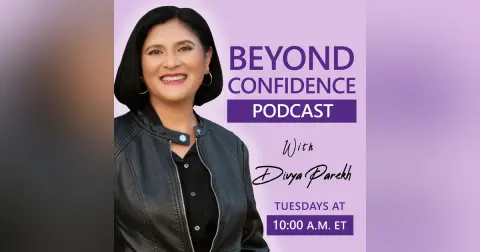
Join Divya Parekh for a grounded and energizing conversation with Honorable Paul Johnson and Larry Aldrich on what it truly takes to build lasting momentum in leadership, business, and life. Through a clear framework rooted in grit, generosity, and growth, they reveal why optimism isn’t just wishful thinking—it’s a strategic approach. Packed with practical insights on navigating change and leading with purpose, this episode is your invitation to move forward with clarity and conviction.
Beyond Confidence is broadcast live Tuesdays at 10AM ET on W4WN Radio - Women 4 Women Network (www.w4wn.com) part of Talk 4 Radio (www.talk4radio.com) on the Talk 4 Media Network (www.talk4media.com). Beyond Confidence TV Show is viewed on Talk 4 TV (www.talk4tv.com).
Beyond Confidence Podcast is also available on Talk 4 Media (www.talk4media.com), Talk 4 Podcasting (www.talk4podcasting.com), iHeartRadio, Amazon Music, Pandora, Spotify, Audible, and over 100 other podcast outlets.
Become a supporter of this podcast: https://www.spreaker.com/podcast/beyond-confidence--1885197/support.
0:00 The topics and opinions expressed on the following show are solely those of the hosts and their guests, and not those of W four WN Radio It's employees or affiliates. We make no recommendations or endorsement for radio show programs, services, or products mentioned on air or on our web. No liability, explicit or implied shall be extended to W four WN Radio It's employees or affiliates. Any questions or common should be directed to those show hosts. Thank you for choosing W four WN Radio. This is Beyond Confidence with your host d W Park. Do you want to live a more fulfilling life? Do you want to live your legacy and achieve your personal, professional, and financial goals? Well? Coming up on Dvparks Beyond Confidence, you will hear real stories of leaders, entrepreneurs, and achievers who have stemps into discomfort, shattered their status quo, and are living the life they want. You will learn how relationships are the key to achieving your aspirations and financial goals.
0:52 Moving your career business forward does not have to happen at the expense of your personal or family life or vice versa. Learn more at www. Done Dvpork dot com and you can connect with dvants Contact dants dvpark dot com. This is beyond confidence and now here's your host, div Park. Good morning listeners, It's Tuesday in super excited to be with you. Not sure where your at, but we are facing heat waves, so be sure to stay cool because sometimes the heat can get too much. So I want to share a very powerful kind of story. So this is a story of one of my clients. We're just going to call him John. And what happened was John saw that his peer was being gas lit by the boss and it was just something about his peer and his boss not getting well. And because John had a really really really strong relationship with their boss, so what John started doing was just kind of sharing, like you know, what his peer was to do and how his fear was there to support and lo and behold that toxic relationship because of which John Spear would have left the company.
2:12 They stayed back and the relationship improved. So yes, sometimes change can be difficult, but never ever think that you cannot bring about the change. So that little act of kindness venue created over a period of time, it can cause ripple effect. And also if you have none got our books. Please do get our books because part of the profits from both our books, as you're seeing Expert to Influencer Entrepreneurs Garden and my upcoming book on artificial Intelligence, we do give it to keyat our org. And today we have some very powerful guests for you. So i'd like to welcome honorable PAULA. Johnson and Larry Aldridge.
3:06 Thank you, oh deep, thanks for having. Us, Oh thank you for joining us. So I do want to share a little bit about you. You know, honorable Paul Johnson has been the mayor of Phoenix and also you were CEO and co founder of Redirect Help amongst your extensive political career with different countries. And also want to introduce Larry So Larry has been also prosecutor, see of university physicians, healthcare Sea of some newspapers. So we have some very bright and accomplished gentlemen here today, So welcome onboard. And as we always get started, I want to ask y'all, whether it was in your childhood or during your lives, was there a moment that was a turning moment for you or a person who left a positive mark on you?
4:05 Oh gosh, there are a lot of people that have left positive marks on me. Certainly my parents left one. I had nine brothers and sisters. They had a positive effect on me. Teachers. You know both of my parents, I would say they probably had the biggest influence. My dad and his brother. Their mom had died when they were seven years old and eleven years old, hitchhiked across the United States, came to Arizona and started shining shoes in downtown Phoenix, and later set up a business. My mom picked cabbage in a place called Levine. She lived here on her own without her parents, from about the age of fourteen. Both of them were I wouldn't say they were poor. You know, we weren't at the bottom economic class. But I like to say that we can kind of see the bottom from where we were. My mom was a waitress. Later on, my dad ended up becoming a construction working As I said, they started their own business. My dad had so many sayings it had an effected me. But I think my favorite one was this one day I had a guy that came in.
5:10 He was working in the drywall for my dad, and the guy was thirty. He was filthy, It was hot outside, and he knocks on the door. I open up the door. I'm about twelve or thirteen years old, and I don't let him in just because of how dirty was I close the door. I tell my dad that the guy's there, and my dad goes to the comes out and he goes, why did you not let him in? I go, dad, man, the guy's filthy. So he brings the guy in and then he has to go get him a glass of iced tea, and I'm kind of annoyed by it, and I give it to him anyway. When the guy finally leaves, my dad says to me, Hey, what's your problem? I said, dad man, that guy's filthy. He's dirty, and says, you know, he got drywall all over the floor. I don't even know why you had him in here. He said, Hey, let me tell you something. He said, if there's somebody north of you, he said, there's somebody south of you, then there must be somebody north of you. There's nobody north of you and nobody south. They're just east and west on different levels of the horizon. And he lived his life that way. It was important for him to treat all people equally. And I have found over and over again that when I followed that advice. It ended up serving me personally very well.
6:17 Yeah, what a powerful story, because here's the thing, right, we don't know very other person has been and if we were in the shoes that pe would have ended up the same way. What about you, let Ry Well. I have a very different upbringing from Paul. I certainly came from a middle class, upper middle class family, but from the earliest ages, my parents made it pretty clear that education was absolutely mandatory, and so they really put a focus on that focus on reading. So at the earliest age, I often had a book in my nose, and even today I might have a podcast going and maybe listening to you Diva and also reading a book simultaneously. So, you know, they just impressed upon me the power and the opportunities of education, and I think that has really created a foundation for me to be to have whatever successes I've had in life.
7:14 Very powerful. So did you have Larry in your you know, as you were growing up a destination? How did you end up in the career where you were at? I will turn to the story we have in the book about the moon landing. We really, you know, I really wasn't true. I knew I was strong in math. I knew I would probably do something you know, related to engineering. But you know, I listened to the moon landing in the summer of my junior year in high school, and after that I simply knew I wanted to go to an engineering school and build airplanes and build spaceships. And that was probably the trigger for me. It turned out I went to an engineering school. I ended up not being an aerospace engineer but a civil engineer, and there I ended up going to law school. And the opportunities that America presents to change your mind and do things if you and we're presented with those opportunities, and I think your your listeners should really understand, you know, to be in America, to have the opportunities to make the changes you wish to and and improve your your standing and those of your colleagues and people that work with you, as there's no other place like America.
8:26 To do that. Absolutely, And how about yourself, Paul No, I think, in thinking about your question, when you grow up poor, you're you kind of watch people who are successful. You you know you you have this. At least for me, I had this desire to want to try to do better to try to to try to do better in my life. So you create old er. You have all these heroes that existed. I can remember when I was a little boy. The Kennedys ended up being a favorite. Ronald Reagan was a favorite. So there was kind of the political in but there were also people in the space race, which was why Larry and I decided to start with that story. And so, you know, I think I came to the conclusion that at first I went and I first ran for city council when I was like twenty three or twenty four. It had a small business before then. I learned a lot in being on the council, and then I learned even more in becoming mayor.
9:25 But the thing that began to become clear to me is that when you start looking at like who are going to make the really big changes in life. You know, who's going to cure cancer or extend human life or go to Mars or you know, for that matter, grade a driverless car that might be able to wipe out Dwis. It's so obvious that that's going to come not from government, but it's going to come from the private sector. And so the big changes are going to be in that field. So when I left politics, although you never completely get to really leave it, I ended up being involved in presidential campaigns and did things with the State Department and others. But I really put a big focus on business, and in that particular area, I put a focus on healthcare.
10:09 I you know, I like the idea of being able to solve big problems. Hmmm, No, that's definitely powerful. And you became the president or CEO of Redirect Health, so you did mention your life taking the turn towards the healthcare and so telling them about some stuff about your journey. And there are a lot of aspirational especially our gen Z and millennials. They like to move upwards while they're looking for the meaningful work. What are some of the lessons that you learned on your travel from when you started to becoming the CEO. Well, what's what's clear to me if you think about like if you if you want a challenge, here's the challenge.
10:56 Trying to figure out how to take things that only a very small group of people can afford and make it more affordable for more people. Now oftentimes the single biggest challenge, and that will be rules and regulations, there's some type of construct that exists that keeps you from being able to provide a product cheaper in healthcare. You know, when we look at the healthcare system, we put a focus on Obamacare, which created some benefits. We also take a look at, you know, at the normal healthcare system. But just think about these numbers for a moment, because they really impressed me. If you take the average person in America, the average person median income is about thirty five thousand dollars a year. Half of America's workers, according to Social Security, make thirty five thousand dollars a year or less. Yet healthcare costs about seven thousand dollars a year for an employer to be able to purchase, and that's with about a seven thousand dollars deductible. So if you imagine that the employer passed on half the premium to the employees, and so the employee now is to pay thirty five hundred bucks a year to be able to have insurance, and then it cost them seven thousand dollars before they get the first real healthcare you're talking about ten thousand dollars. That's just simply not affordable for a lot of people, and so our question became, how do we help employers with those employees which would help make their businesses more competitive, it would help them reduce their workers' compensation costs. We've grown that business, we're in
12:27 all fifty states. We've been able to make that a success, but it's come from a lot of hard work with my partner, myself, actually both of my partners and myself, and it's kind of staying dedicated to the cause of trying to make certain we're making health care affordable for everyone. But if you were to ask me why there's other areas other than healthcare that I could have been interested in, it usually is going to be an area that's very complex, It has a lot of problems with it, and we're trying to figure out how do we. Sture No, definitely, so it's about I like what you mentioned that you know, take a product, whether you're a company or a business, and then see if it is something that you can bring into masses or to at least a larger segment. And when that is the case, in like, you know, fulfilling the need. And so talking to you Larry about your career, you mentioned about that you were in law. But also that I see that you know, you went towards the newspapers as well. So what brought on that change and tell us your journey on that career.
13:41 Well. I mentioned earlier that I went from engineering. School to law school just because I saw an incredible uh trial lawyer in Atlanta when I was in school and getting up on the stage, and I said, I want to be just like him. I want to be the storyteller, just like him, you know. I like love your title live beyond confidence. I think confidence is a start, but having a little bit of hoodspa uh and I, you know, for for a five foot eight bald guy, I had a lot of huspa, you know. And so part of my journey was I can do that. And then I would go home and think, well, I better figure out how I can. But I think I can. And so I really was presented with many opportunities, many of them I.
14:24 Didn't succeed that. I tried hard and thought I could work for that company of this company. They didn't think so, and I didn't. But after being a federal prosecutor, I ended up joining the get At newspapers on the corporate staff as or in house anti trust counsel, and I had a lot of HUDSPA. I pretty much told the business people, pretty much all the business people how to do their job. I said, you know, here's the legal issue, but frankly, you know, I think you should take that risk and do it. And that actually led to where they said, well, maybe you should come on the business side and you you can put your money, your money in your mouth where your brain is, and try that. And that's kind of how I went from law to running the newspapers Intucson, Arizona.
15:06 It was just, well, we'll see if you're as good as you think you are. And I was okay, But I didn't get fired, So I guess I had enough lispot with enough success to not get fired. What would you say were a few of the lessons that you learned along because I'm sure you know newspaper there's so many different aspects to it, from writers to chief and editor and distribution and marketing and I mean, just like any other company. What were some of the elements that you learned along the way before you got into place where you could be the CEO. Yeah, I think the key was just believing whatever you did was incredibly important and that you could do it better than anybody else. And you know, newspaper sounds, of course to your audience today, it may sound pretty passe, but you know, years ago that was a pretty big deal to be in newspapers. But it didn't matter matter whether you're in newspapers or you're in real estate or you're building some widget. You know, if you did it with passion and belief you were doing better than anyone else, and surrounded yourself with really talented people. I mean I always worked very hard to have people smarter than me around the table. I would tell them they weren't so they would work harder, but they often work quite smarter.
16:23 But you know, having the talent, having that confidence, having the belief that you could do it, but also I think also being able to have an awareness that sometimes you're moving down the wrong path. And you know, one of our factors in our book is about grit, but grit. Doesn't mean all the way off the cliff. Occasionally you got to stop and say, ohoh, I need to make a course correction. In some cases I might need to turn around. So having both confidence and hard work and grit, but also an awareness, having your eyes open, searching the horizon to see maybe there's a better opportunity, Maybe somebody can do what I'm doing better, but I can do something even better than that. And then surrounding yourself with a lot of talented people.
17:05 Who really will tell you you're an idiot, Larry, here's why this would be a better idea, and not taking offense to that because typically they are correct. And that's one of the things that has changed in the past, Like I would say, like the nineteen eighties, so before you know, we went from authoritarian leadership down to be coming to positive enforcement. And like in doing positive reinforcement, what happened was people who are getting awarded starts just for showing up. Nothing wrong with that, And yet what happened is that getting the feedback became not so common, and then people are hesitant about giving feedback.
17:49 So I'd love to hear both of yours opinion on that. Paul, you're muted, well, I will jump into again as Paul gets his soundback. You know, I was always known as being brutally honest and uh and so to me, yeah, sure, there was a feedback and a formal appraisal process every year they've alf got tied into compensation. But I tried very hard to provide real time feedback in the moment that was more important. And I really tried very hard not to uh uh, not to be anything, but just hardly honest, I mean, just making sure people were aware what the expectations were and uh and that I would hold them to those expectations. And then you know, beyond that, making sure that I did hold them to those expectations.
18:54 So you know, in the old you know, you've got to give people immediate feedback and real time feedback so that they can you know, sometimes they don't even know what they didn't do right. And uh, you know, if you wait for a structured process or worse yet, never have that kind of conversation, they don't have an opportunity to succeed. They don't have an opportunity to grow and get better, and therefore your organization suffers. So I tried really hard to make sure. I mean, I was a manager by walking around before. You know, maybe that was known when I was a manager, but I was. You know, I love being at the newspapers and I love getting you know, people come down to me and said, pitch me some you know, some business or some technology, and I go, hey, you want to take a walk around the newspapers, And that's what I would do, and then I would be out there. At that time, we had a lot of people, but I would be out there.
19:45 I tried very hard to know everybody's name and thank them and appreciate them and recognize the power. And they might have a very small component to what to what we were doing at a newspaper, but without that component, we would have failed. So I thought being present, giving feedback, raising expectations and communicating that we're critical. Yeah, no, absolutely, and it's about, like you know, you said something very powerful that it's important about setting that expectation and because when people know what's coming, that's what gets the surprise out of the way. So talking about expectations, Paul, you know what has been in your experience with setting expectations and feedback.
20:34 I think I would start with saying that setting expectations are important, but they're important from a motivation standpoint. If you really want to motivate someone, there are three things that are important. The first thing is that you have to set goals. Let's say these are the goals. What I want to try to accomplish, and the more actionable they are, the better. The second thing is is that when people are working towards those goals, they need to pad on the back. They need to be told, hey, Okay, this is what you're doing right, that's what you're doing wrong. Take a look at maybe trying it this way. And then the third thing is you have to look backwards and say, okay, well, let's look at what you did. Let's look at what you did right and wrong, and let's figure out what you accomplished, how you grew. That's not only important to motivate people externally, it's important to motivate yourself internally. Internally, you need to set goals and then you need to make certain that maybe if you pat yourself on the back saying okay, well I got this fars not as far as i'd like to be, but here's where I'm trying to get to. And then at the end you have to look back on it and that keeps you motivated. But I would tell you there are a variety of things I think that are essential in the overall process that you have to think about.
21:45 One of them is pessimism. I mentor a lot of people a mentor. I have a mentoring group of about thirty different business people, all of which two are new business people who are wanting to go into business, and we talk about kind of what they're doing and how they're doing it, what challenges they have. There are some interesting I'm going to call them stereotypes, because you know, I don't have enough people to give you actual data, but I can give you anecdotal data. I find if you take a man and a woman, at least in my group, and the guy's half confident to get something done and the woman has a PhD, the guy will say I can do it, and the woman will say, well, I'm not sure that I'm qualified. I mean it's I just see this happen over and again. Like I said, it could be anecdotal because it's a small sample size.
22:34 But I like working with the women more because the only thing usually they have to overcome is the fear they have to take that next step and be willing to have faith in themselves that they'll be able to pull it off. With the guy, you have to kind of back them down a little bit and say, hey, you're not really completely ready to go as a party here you think you should be going, but nonetheless, the you can't do that if you're pessimistic. And that's really kind of the whole theme of the book. We have this whole politics of pessimism today, and that you know, where people are telling us how bad it is, how bad the economy is, how our industry has been destroyed, on both the right and the left. I'm not blaming that on one person, It's happening on both sides. But that begins to create fear, and it creates it creates angst, and people all of a sudden don't know whether or not they should act. I would tell you one of the important things is be careful what you're listening to.
23:33 Be careful who you're listening to, because if you're listening to negative information all the time and people telling you how bad it is, which by the way, it's very profitable to do that, I can tell you it's a politician. If I know whether you're a Democrat or Republican, I know about five buttons on either side that I can push, and I can terrify you. And once I terrify you, I know you're going to be more dependent on me. Well, our book is about how do you gain agency and how important having agency is for you to be successful, and how important agency is from our country standpoint for us to be successful. Our country has done a lot of great things. We put people on the moon, We've built bridges and dams, We've done wonderful things. But the single most important thing our country did from the very beginning is we empowered the individual. Government empowered the individual over itself. But that comes with some responsibilities and obligations of the individual to make it a success.
24:32 Yeah, no, definitely. And so you brought up a good point that you know, if I can terrify you, then you're dependent on me. And then this also I've seen and play out not only with my clients but also being myself in the corporate career, is that there is the element of fear mongering or creating that pessimism. What would you say is at the root of it? And how can one deal with that? Well, I can tell you politically, both for people in the news and for politicians, there's a huge advantage to it. So it is I can use less words, put less money into marketing, and have to be less descriptive. If I stand here and tell you the problems that we have, all right, And by telling you the problems that we have, again, if I know which part of you are, I could tell you which problems to focus on, and if I terrify you. What it does is it engages the amignalen it's called the amygdala hijack. All of our rational thought comes out of our neo cortext all of our ability to move ourself forward, to love and have optimism. It comes out of that frontal lobe of the brain. Well, what the neo cortex does is it overpowers that when we're terrified, and then the only thing we can do is fight, flight or freeze. Well, if I can get you there, then if I'm a news station, I can tell you what. I'll guarantee you you're going to watch me tomorrow because you're going to want to know the answer, right, and so I feed you stories to keep you watching.
26:05 Politicians do something very similar. Now it's I don't want to bag on both of them. They both have industries that they're trying to promote. But what I would say to most people is take them with a grain of salt and make certain that you're getting other information and listen to people on the other side and be very careful of labeling. So you know, you'll hear the right talk about the left. They'll call them lib tards, and then the left will call the right trump tards, and you know, they have a thousand names for how they see one another. But once you label someone, you're not only doing an injustice to them, you're doing an injustice to yourself. You're creating this image in your mind of who the good guys are and who the bad guys are.
26:51 And a couple things begin to happen when you do that. First, you're alienating people that you can work with and that you can make money from, and that you that you can have a relationship with and that you can enjoy life with. So that's part of the problem. But the other issue with other people start to recognize you're doing it, and when they do, they back away from you because they don't want to have that discussion. So you start losing the ability to engage more people in a broader way. Absolutely. Yeah, So Larry, what are your thoughts? My thoughts are are are similar. I mean, going back to my newspaper experience, I'd walk around the building and I'd ask my the circulation people, hey, how's business looking, and they would go, plane crashes, forest fires, earthquakes, disaster.
27:42 Life is good. So even back then in the nineties, you know, that's you. Know, bleeding cells, that's you know, if it bleeds you ly was kind of the argument. But we also were at a place where we are at the earliest stages of trying to get to social media. Our newspapers created the it was then the fifth newspaper on the Internet. Directly to the Internet, we would have been second if back in the nineties I could have understood what this internet thing was one that long ago, but the Internet thing I had explained to my bosses as well as to myself. But we were really trying to create democracy among our our editors and reporters and their readers and opening those tools to the readers to interact back with our with our reporters in a more meaningful way. And we accomplished that, except one year after we we launched, we lost control and it was gone. The barn door had been open and they just all ran out. But uh, you know that that kind of anger is kind of a as Paul's pointing out, a normal human aspect. We just you know, we were more fearful of things we can lose than we are optimistic of things we gained.
28:57 The optimism comes from thought, the fear come from emotion, and we, you know, we have to work a little harder to be optimistic. We want to be optimistic people. You see somebody in an interview, they never say they're a pessimist, They say, oh, I'm an optimist or I'm optimistic. Well, I like to describe myself as either an optimistic realist or a realist optimist. But because we have to step back, take a breath and think about the things we can do. And one of those things is Paul pointed out as we try to underscore in the book, is that we need to work with each other, and we need to continue to love each other. We need to respect each other. Paul and I are part of a running group and there are hardcore Trump supporters, hardcore Democrats, and I don't think we've ever had an ugly moment as we push very hard about why do you believe what you believe?
29:48 But we respectfully have that because we have a foundation beyond just those politics, and that's part of the challenge across America is often the only connection is that expected political action, and so when it's not a connection, it becomes anger. But you know, we're better than that. Americans are better than that, and you know we would encourage every every American, certainly every one of your listeners, listeners, you know, to look out there, and this is going to sign sound naive, but look for the good and everybody around you. I mean, they may disagree with the views you have, but they're fundamentally Americans, and they're fundamentally good people, and we need to work together. And our book really focuses in the beginning on the Founders. Why the Founders were so successful and so visionary, but they were very different in their opinions. They were they were hardcore disagreements, but they figured out how to compromise a four letter word in today's world, but they figured out how to compromise because they saw that what was happening in America prior wasn't working and it was really damaging Americans.
30:54 So they compromise and came up with the certainly the Declaration at the time of war and then the Constitution coming away from that, to say we can work together as Americans, and I would encourage everyone and all of your listeners to remind themselves we are Americans. We work together, and the best way we make better things is to disagree so that we can push to a better solution. Absolutely, and some very great points over here. So now let's say people are in the throes of an argument where it's very hard and human beings have this need to be right. And so many times what happens, especially in corporations. You know, when you are the manager, if you are a person like a new executive who has stepped into the company, usually they lay off people and then they bring their own trusted people from other companies.
31:51 So when this is going on, and usually what happens is that so many times people who are already the company and when a new executive comes in, there's that element of negativity or pessimism. Oh, you know, they're going to come here change everything and things are not going to be right. So what could both the parties on both the sides do so that they can extend that handshake with each other and non get to a point where you're just in the throes of that conflict and not able to hear or be able to listen to each other. Let me pick up on that, Paul, I think what I would turn the question slightly differently, Adiva, I would say, we can't leave it to the politicians, so the political parties to figure it out. They're caught in their vortex and they don't know have any way out. But we in the book underscore the power of the people. The people are the power in America. The constitution is built around the federal government is limited, the state governments have a little more power, and the people have the most power.
32:58 We have flipped that around America, where there's a sense of the federal government is all consuming, and frankly, it does consume a lot and stake. Governments are subservient to the federal government and people are subservience to government, and that's a huge mistake. So we have to get people to take the. Responsibility and frankly, when you don't like what the politicians are doing, fire their drias as quickly as you can and get people in there willing to work together for better solutions. In America. You know we're on a poor path if we just are in this anger at angst and the people. And I think the stat that I read recently Vivia was something like the average American gets eight minutes of what's considered hard news every day, off and off of social media. Eight minutes and in that eight minutes, probably seven of them are fear based, if not, and maybe all eight. So we need to step back and look for maybe not more time, but less fear and really being engage in a political process in the way to shape that and make sure the people you're voting for are representing what you believe is the strength in the future of America.
34:11 Right. No, definitely, So tell us how can our listeners connect with you? Where can they find your book and any other passage you like? Yeah, a couple of things. The you know you asked the question a moment ago about how people can deal with an argument, and what I would tell you is depends upon what you're looking for. If you're looking to improve your status, you may think that talking more helps you get there. But I can tell you from being in politics this is an absolute guarantee. There's nothing that will do more to move your status upward within a group than listening to people. Overwhelmingly, doesn't matter how smart you are, If you take a really, really smart guy and he listens. In fact, most really really smart people, that's exactly what they do. They ask questions, They try to understand things about other people. In fact, I would say, if you find yourself in a room where you're the smartest person in the room, it's not just that you're in the wrong room. More importantly, what it really means is you're talking too much and not asking enough questions.
35:16 If you do that, you'll learn more, you'll gain more, and you'll and you'll also improve your status by doing it. In our book, the thing that I think is important with it is it's totally focused on giving you not only the tools that you need to be able to deal with those types of situations, but more importantly, to help give you the optimism. Here's the really good news. With all the negative things that you're hearing, it's not confirmed by the data. The data tells us there's nothing like the United States. We are in an incredibly we're in a position in the United States that has surpassed anything anyone else has done in history to move human progress forward. And the data shows that. And that's part of what we try to do in the book is to give you the data so that you start with a different basis point when you're looking at your problems.
36:13 But if you'd like to pick it up, the best place to pick it up probably is just Amazon. We have it on Amazon and you can go on there. Just it ended up being released, I believe June tenth, so now you can Now you can. Buy it, and there'll be an audio version I think coming out in early August and shout it. Also, Barnes and Noble and independent booksellers really support independent booksellers, so often independent booksellers. There's various sites to think, but Amazon, Barnes and Noble, either a hard copy delivered or a Kindle slash online version and audio in August. Absolutely, and any last parts, I guess I would just say thank you for having us, and thanks for your listeners who hung in there, to hang in there.
37:02 They have busy lives and we're. You know, at the moment we're trying to cut through the fear and negativity and bring that optimism back to where we really want to be, not where we've been forced to be. You're here, how about you, Paul? I would just say, first, I agree with Larry, but what I would I would probably also say to people is to be really cautious about finding yourself caught in that victim triangle. The victim triangle puts us in a position where it's very difficult to be able to find our options. The way to get out of that is to start with changing or at least balancing what you're reading and what you're watching. Make certain that you're getting some good information.
37:45 To. Make certain that you when you are working with other people and you're talking to other people, that you're considerate of who they are. You know, we know that to be successful in any type of argument, it's rarely happen if you put a label on them. It's only going to happen if you see them as a person and you're empathetic with them. But the most important thing that I would say is that there is no greater place to find opportunity than the United States. This is a place where you can find if you decide that you want to go out and start a business, or start a career, or change what it is that you're doing and move into a different field. There's no place in the world that has the upward mobility that the United States has. There are some traits that you have to put into it, you have to bring some confidence. Generosity becomes important. You need some courage to be successful in that.
38:39 But if you make the decision that you would like to change your life and move it up, there's no better place to do it than right here. Absolutely, and we are blessed to have the freedom that we have to do and what we want to do. And the American dream is still very much alive. So thank you Paul, and thank you Larry for joining us. It was a pleasure, And thank you wonderful audience for joining us, because without you, the show would not be possible. You are the life and blood of our show. Please reach out to us as y'all always do, and share how it can support you, how we can help you live the life you deserve. And thank you one for making the show technically possible. We well take care and al fie'all.
39:26 Next time, thank you thank you for being part of Beyond Confidence with your host d V Park, we hope you have learned more about how to start living the life you want. Each week on Beyond Confidence, you hear stories of real people who've experienced growth by overcoming their fears and building meaningful relationships. During beyond confidence. Dvpark shares what happened to her when she stepped out of her comfort zone to work directly with people across the globe. She not only coaches people how to form hard connections, but also transform relationships to mutually beneficial partnerships as they strive to to live the life they want. If you are ready to live the life you want and leverage your strengths, learn more at www dotwpark dot com and you can connect with w ats contact at dvpark dot com.
40:13 We look forward to you're joining us next week


