
Hybrid Work Unzipped

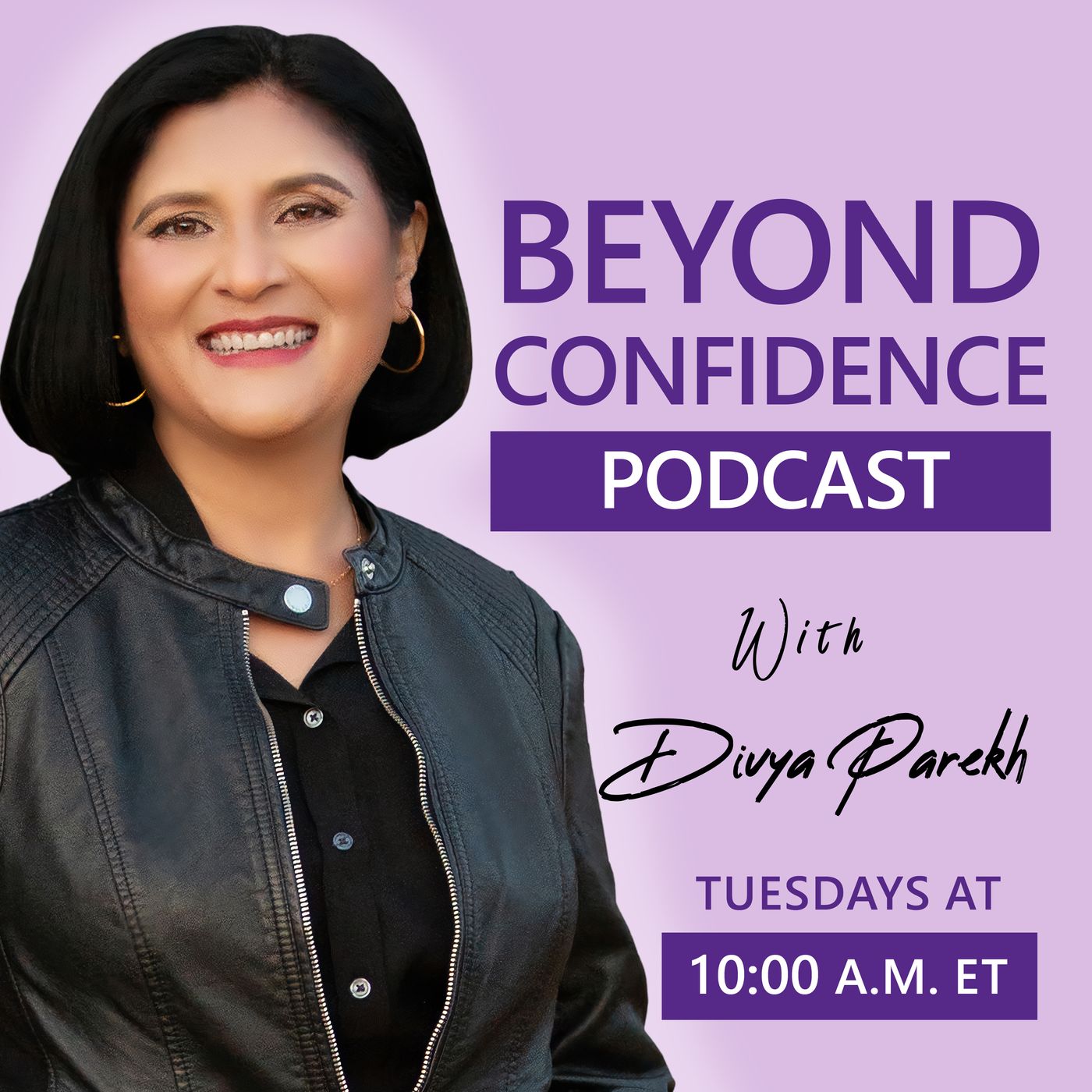
Ever found yourself puzzled at how the lines between 'work' and 'home' became so blurred? And just how do we keep our office culture alive when half the team's working from their kitchen table? Dive into this transformative dialogue as Divya Parekh...
 iHeartRadio iHeartRadio
 Spotify Spotify
 Youtube Music Youtube Music
 Amazon Music Amazon Music
 Apple Podcasts Apple Podcasts
 Pandora Pandora
 Audible Audible
 Podchaser Podchaser
 Audacy Audacy
 Spreaker Spreaker
 Deezer Deezer
 Podcast Addict Podcast Addict
 JioSaavn JioSaavn
 TuneIn TuneIn
 Castbox Castbox
 Castamatic Castamatic
 Castro Castro
 Fountain Fountain
 Goodpods Goodpods
 Overcast Overcast
 PlayerFM PlayerFM
 PocketCasts PocketCasts
 Podimo Podimo
 Podurama Podurama
 Podverse Podverse
 Podyssey Podyssey
 RSS Feed RSS Feed
 YouTube YouTube iHeartRadio iHeartRadio Spotify Spotify Youtube Music Youtube Music Amazon Music Amazon Music Apple Podcasts Apple Podcasts Pandora Pandora Audible Audible Podchaser Podchaser Audacy Audacy Spreaker Spreaker Deezer Deezer Podcast Addict Podcast Addict JioSaavn JioSaavn TuneIn TuneIn Castbox Castbox Castamatic Castamatic Castro Castro Fountain Fountain Goodpods Goodpods Overcast Overcast PlayerFM PlayerFM PocketCasts PocketCasts Podimo Podimo Podurama Podurama Podverse Podverse Podyssey Podyssey RSS Feed RSS Feed YouTube YouTube
Ever found yourself puzzled at how the lines between 'work' and 'home' became so blurred? And just how do we keep our office culture alive when half the team's working from their kitchen table? Dive into this transformative dialogue as Divya Parekh gets candid with Felice Ekelman and Julie Kantor, hybrid workplace maestros.
Ready to transform your 9-to-5... or should we say, your 9-to-couch?
Click this link to learn more https://success.divyaparekh.com/unfairadvantage/
Beyond Confidence is broadcast live Tuesdays at 10AM ET.
Beyond Confidence TV Show is viewed on Talk 4 TV (www.talk4tv.com).
Beyond Confidence Radio Show is broadcast on W4WN Radio - Women 4 Women Network (www.w4wn.com) part of Talk 4 Radio (www.talk4radio.com) on the Talk 4 Media Network (www.talk4media.com).
Beyond Confidence Podcast is also available on Talk 4 Podcasting (www.talk4podcasting.com), iHeartRadio, Amazon Music, Pandora, Spotify, Audible, and over 100 other podcast outlets.
0:00 The topics and opinions expressed on the following show are solely those of the hosts and their guests, and not those of W four WN Radio It's employees or affiliates. We make no recommendations or endorsement for radio show programs, services, or products mentioned on air or on our web. No liability, explicit or implied shall be extended to W four WN Radio It's employees or affiliates. Any questions or common should be directed to those show hosts. Thank you for choosing W four WN Radio. This is Beyond Confidence with your host w Park. Do you want to live a more fulfilling life? Do you want to live your legacy and achieve your personal, professional, and financial goals? Well? Coming up on dvparks Beyond Confidence, you will hear real stories of leaders, entrepreneurs, and achievers who have stepped into discomfort, shattered their status quo, and are living the life they want. You will learn how relationships are the key to achieving your aspirations and financial goals. Moving your career business forward does not have to happen at the expense of your personal or family life or vice versa. Learn more at www dot Dvpork dot com and you can connect with vant contact at dvpark dot com. This is beyond confidence and now here's your host, w Park. Good morning listeners. It's Tuesday morning, and I'm so thrilled to be here. So a lot of excitement going on. I want to share that we received, Yes, we received fifteen kind of stories and I cannot tell you how thrilled I am to have received. So if
1:33 you have any of your stories that you'd like to share, I would highly recommend that you send it to us and we'll be sharing it. So today, what I've done is I have created like small little pieces of paper with names, and I am going to open up one piece and let's see whose story we are going to tell. It is Jenny. So Jenny, congratulations. We saw that your story was picked up. We pick it randomly. We share one story, and that doesn't mean that we will not be sharing anybody else's story. So what Jenny shared was what she said was that like she knows, her neighbors have young kids and the gentleman was laid off and they have been having tough times and as the Halloween is coming, what she did was she asked if she could take the kids along with the mom and then just kind of helped them shop for Halloween outfits and she got them very creative Halloween outfits. Not a whole lot of money, but it's the thought and just looking out for someone. So folks, kudos to you Jenny and think thank you for sharing that story. Just love it, love your heart.
3:02 And I'm sure those kids are very happy with the creative work and having that fun. As today is Halloween, so happy Halloween to everyone. And I also want to think to each and every one of you who have got our books, especially the books that you're seeing in the back entrepreneurs got in It will help you build relationships with everything, including yourself, with your business, with your money, with your results, with your teams, and help you grow as a person, as an entrepreneur, as a professional. Or you can go to going for our book Expert to Influencer, where it will help you become the influencer who is not just about the numbers. It's also about creating that meaningful impact. And the reason I share it is because I want to thank you for getting our books, because partial profits from our books go to help entrepreneurs in Kiva dot Org. And I got to share with you. There's nothing more powerful than an entrepreneur in the world. I'm an entrepreneur, so I will say I'm a little partial, but entrepreneurs are the people who make changes. So thank you, and if you have not bought our books, please do get it. Let's bring on our guests. Welcome Felice, Hello, nice to see you, nice to be here. And
4:34 Halloween of world is yes, so falise tell us. Do you recall a moment from your childhood that still stands out for you today? You know, on Halloween, I grew up in the suburbs of New York and it was a big deal as it is today for children as well. And I was always so disappointed when I had to wear a coat over my costume when I was trick or treated, because it spoiled the look. That's my Halloween memory. Yeah, it can take that thing out of it. And I'm sure yet you know you were out and about and that cold getting your candies, and that brought a smile to your face. Absolutely absolutely, And then of course doing it with my children many years later was always a joy, of course, and it's so amazing when little kids look and just you know, that wide eyed that awe in their eyes and grabbing that life by the horn and just going with it, not just passing through life. So as we kind of move on, you know, as you kind of grew up, and what direction did your life take and what career did you to get into.
6:01 I was fortunate enough to live in an area with good schools, and there was an expectation not only in my family but in our community that college would be the next step. And so I was fortunate to go to a great undergraduate institution which also focused on graduate degrees, and that's how I ended up at law school. When I was in law school, I took a couple of classes that were electives that had to do with workplace law. One was a class on what we call today traditional labor law, which focused on the relationship between employers, employees, and unions. And another class was focusing on an area of the law which when I went to law school was still developing, and that is the area of employment law, which focused on the growing statutory schemes which protected workers from discrimination. I found those two classes compelling and then invited to look exclusively for jobs with law firms that specialized in those practices because For those of you that aren't familiar with private law firms, the practice of law is highly specialize these days, and even at the beginning of
7:36 a career, new lawyers are typically expected to focus on an area to develop their expertise. And I did that, And as crazy as this is, I'm still at my first job with the law firm of Jackson Lewis. I'm at our Manhattan office right now. I've chosen to work from the office today, not from home, and so in some sense, I've had sort of a boring career because I've been at one place and really focused on one area of expertise. But I have to say that the area of workplace law is still fascinating and developing every single day. And so when I started practicing as a labor and employment lawyer several decades ago, I never could have imagined the type of issues facing employers and leaders today, including the issue that I know we're going to discuss, which is the growth and development of hybrid work and the book I co authored about that. Yeah. Absolutely, And you mentioned about that it could be boring. And here's the thing. There is no right formula. It's what form lies right for you. That's how I say it. It's not about oh gosh, you know, I got to do five jobs. I got to have five different careers. Only then my life is going to be interesting. If you have found your passion and if you have found your home, even if it is that one employment place from beginning
9:11 till the end of your career, it doesn't matter. As long as you are happy and as long as your life is filled with joy and fulfillment, what else more can you want? And I've been so fortunate to be able to represent and serve as a counselor to so many organizations and leaders. I've worked with some organizations for over thirty years, and that is really as an outside attorney, what is important to at least to me, which is to feel like you are truly helping organizations. So I represent businesses organizations believe me they need plenty of help and that mowders need life of guidance. And it's been extraordinarily fulfilling to be able to have long term and new relationships with organizations and be able to really add value and serve them and their employees and help them succeed. So I try to look at my role in that way as a problem solver and a true partner with clients in solving problems that relate to the workplace. Well, that's fantastic because since pandemic, what has happened is we have two workplaces now, and most people and most companies they're still going.
10:46 You know, yes, there are some companies who are bringing their employees fully back to the office. And yet I would say there are majority of the workplaces. You may have one at home and one at office. It's two workplaces. What you've got to create that one culture. So tell us how can employees and employers bridge this gap between the remote work and office? I think, and you have to read the book to find out, But seriously, this is a problem that requires a thoughtful solution. One of the things we talk about in the book is something called intentionality. And what works in one organization is not necessarily going to work in another organization. And sometimes the place to start is to look at the organization's mission. Because if the mission of the organization is one of the missions is to be a what I call an employer of choice, an organization that people want to work for and are proud to work for, then that is going to make the process a lot easier. This concept of a distributed workforce, which is one of the terms that had been used for many years to describe teams of employees who work
12:16 in different places. Leaders have for many, many years in many organizations been responsible for overseeing employees who were remote, perhaps they worked in a different country, perhaps they worked in a different office. Remote did not always mean at home, and so the concept of managing a distributed workforce in some respects did not come into play at the start of the pandemic. What happened following the pandemic is the situation where you have increasing numbers of employees who want to continue to have the flexibility to work from home. Now, this is a problem really limited to what I call white collar knowledge workers. If your organization is in the hospitality healthcare is an institution, an educational institution, your employees are going to have to or manufacturing institution. Your employees are going to have to report to the workplace to do their job. You can't treat patients or at least most patients remotely. You can't teach children remotely, at least we've seen that that is not so terrific. You cannot build things for consumers remotely.
13:35 You can't serve guests in a restaurant remotely. And so this concept of work from home or work from home on a part time basis, which is what we now call hybrid work, really is limited to a sliver an importance liver, but a sliver of the labor market and last week for exat and this can create a lot of inequities. Before we even talk about managing that's liver of the workplace, you have to think about managing the equities of a manufacturing facility where you have clerical workers who could work part time at home on a hybrid basis, and the folks doing the manufacturing who might look at the flexibility allotted to the white collar workers and say that's not fair that they have the option of working from home part of the time and we don't. So there is a lot of issues. And I use that example to just point out how every workplace is different. But if we take a simple situation where everyone working for an organization is a white collar knowledge worker, and we now know that pretty much all that work can be performed at home or in an office because of the advantages of technology. So ago you and I would be meeting in a in a studio, we wouldn't be online. But now that we
15:07 have all these tools, we do have this option, and so I encourage on my own personal bent on this is I encourage employers to think about flexibility as a as a benefit to employees, as a benefit that will help you recruit and retain employees who value the flexibility that hybrid work can afford. So that's that's that's the big issue. Now. This battle that we've been reading about in the media over the number of days of work in the office, I think is a misguided battle. It's not how many days folks are in the office, it's how the employer and its leaders are making time in the office meaningful so as to do what you pointed out, create culture and create what we call in the book interpersonal glue. Because people get work done better if they know each other, if they've had a meal together, if they know something about each other, if they have some kind of a relationship that expands beyond zoom meetings and Gmail and Slack, people will get work done more
16:44 effectively and they will enjoy it more. Because let's just say work is social. At the beginning of the end of the pandemic, there was an article in the New York Times which talked about out the year or two which was then of work from home for most white collar workers during the shutdowns, and how this was impacting new workers, college graduates recent entry to the world of work, where those new employees did not have the experience of making their first work friends. So I don't know what your experience was with your early work, with your early jobs, but I know at my job when I was a new nervous attorney, my work relationships with my peers was really important.
17:47 Having friends at work made work a million times better, right, Oh, absolutely, And as you're talking about it, it definitely has emerged that having you I really like what you mentioned interpersonal glow, because that's what kind of keeps us connected. It's looking at each other in like, you know, even having some team building or just going out for a happy hour or for that lunch or having that donuts and just laughing and the coffee cooler chats. So in my good old days, in my previous life, yes, those used to be so wonderful. Like when you go, you're looking forward to seeing people. It's not just work. It is about that camaraderie and that family. And I used to call my team members as my work family, and it was just a different era. Now this begs the question. There has been the outsourcing of work for quite I would say, at least a couple of decades, if not more so so when team members are remote, it's still online. So basically lebrid work or the pandemic was an extension of it. So what are your any strategies or tactics for bringing in that distributed workforce in the fold. I think the most important part of this is to
19:25 have a sensible approach to work. So organizations need to establish a policy with expectations about where people are going to do their work, and they need to get buy in not just from the c suite, but they need to get buy in from every level of management. Because under if a manager has a team and that manager says, I don't know why we have to come to work three times a week. It's annoying to me. I hate to commute. It costs time and money. If the manager is undermining and doesn't understand the importance of creating that kind of interpersonal glue that we just talked about by working closely with his or horror staff. Then you know, the absence of buy in is just going to result in failure for that team. So it's important that the organization first get buy in from its all levels of leadership.
20:26 Who are going to who are going to live the policy happily and be part of the movement towards whatever arrangement the employer has decided is best for its organization. So that's number one. Number two, organizations need to teach managers how to manage in this kind of environment. So back in the day, when folks were just in an office sitting in front of a computer, was a proxy for productivity. If you were there, if you got in early, if you stayed late, if you ate at your desk, you must be working really hard not so right. But but now that proxy doesn't exist, and so managers have to be given the tools to understand how to evaluate staff who are not always in the same place they are, how to have connections with their staff, how to make time in the office meaningful, and if they have a distributed workforce, they need to make sure they understand how it is the employer expects them to connect. You know, the phone is under used today. You know, there are many many occasions where you know, folks want to interact with me via email, for example, which is primarily the communication that we use online. We don't use slack much, and it's
22:02 very easy for people to talk past one another. And you know, you're not in your head because we've all had this situation. We're ten emails and we still are not communicating, and yet a two minute phone call is all you needed. And then the beauty about the two minute phone call is there's always small talk. And why is small talk helpful? It's part of that interpersonal glue. It helps develop relationships between people. So I'm a big fan of the phone. One of the chapters in our books recommends that leaders establish a protocol for their team. When do you do a zoom? When is slack appropriate? When is email appropriate? When is a text the best way to communicate? And when do you pick up the phone? And you know, if everybody understands the ground rules about communication, that is one way in which you avoid situations where there are misunderstandings about responsiveness and about communicating information because employees and leaders are not using the same tools for the same reasons. I think that's a really really great it's a really great idea. I have to admit my co author Julie Is wrote that chapter, but it's one of the
23:33 many chapters in the book where we really try to provide leaders with concrete action items to help move forward and do a better job of leading in a hybrid workplace with a diversified, distributed team. Absolutely, and currently, as I was working with one of my clients and the company policy had been and I really like what you mentioned was that you know, getting the buying from on leaders because they got to lift the policy. So as I was speaking with one of my clients and he said that it has been so hard because we have to be at work two days a week, and some employees come on some day, some employees come on some days, so they're not interacting anyway.
24:25 So I said, why don't you pull people in and ask what are the two days that are really good for everyone? So then this way there are code days. People know they're going to be coming there and they can solve the issue. Going back to what you were talking about having those ground rules for communication, I completely agree with this concept of core days. Having folks show up in an office where they're alone and communicating only virtually with their team members. You know, makes no sense. We all know that commuting can be a hardship in many parts of this country. It's very expensive and very time consuming and exhausting, and it puts so much pressure on caregivers because it extends the work day in some respects in some places by a couple of hours. And so I think leaders need to be cognizant of asking people to give up extra time to commute, and why is that going to be worthwhile?
25:30 Otherwise, folks are not going to want to come to the office. They're going to be annoyed when they're in the office. But as I said before, leaders may not have the leadership tools to understand how to make the time in the office meaningful. So organizations need to make sure that leaders are leading properly in this regard and making the most of time in the office. So obviously training, team meetings, you know, celebrations. I mean, I don't think that you can win over hearts and mind with with pizza and breakfast on a regular basis, But I do think that making time in the office meaningful where people get to know one another and actually collaborate on things is going to be the secret to building success. And you know, in this labor market, which has been topsy turvy, employers that I work with tell me that the number one issue is retention and losing employees. Last week I spoke to a group of manufacturers in the Midwest who talked about one hundred one hundred percent turnover in a year. The cost of managing that is crazy.
26:56 And so how do you counter that. You have to make You have to make work better. And you know, making work better I think includes making work a family and making folks realize that they like coming to work, not only because hopefully they like what they're doing, but hopefully because they like who they are working with. Absolutely, And as you're speaking about retention, it's also about sitting down and talking with them and what are their aspirations, what are their growth plans, investing in their growth plans rather than having top down authoritarian approach. And it is sad, but so many of my times still say that the bosses will say this is the way you got to just you know, suck it up or else I'm not going to change. Just yesterday I had someone tell me that and it's very heartbreaking that even today, like you know, when we are becoming so aware, we have so many tools, we have so much more deeper awareness and understanding, and yet this is happening. So as we talk about that, it's really important that people step into leadership, not just the title, but have those competencies and qualities of being a true leader in your experience, what are some of those. Well,
28:26 it's interesting because again I mentioned this talk I gave last week in the Midwest to a number of employers in manufacturing who wanted to talk about hybrid work and how that impacts on creating a diverse and inclusive workplace. And we spend a lot of time talking about the phenomenon we have right now, which is the existence of five different generations of workers in the workplace at the same time. And I'm sure you've discussed this h on this show, UH, in other uh, in other circumstances. But you know, we have baby boomers and then you know, we have everything through all the different gens, and the approach to work that employees have really is I hate to stereotype, but I'm going to do it really is in part different based on the time period that UH that you became of working age, and you know a lot of leadership today that you read about having UH an issue with flexible work arrangements, or baby boomers who grew up in a time where work UH was approached in one way, and we all know now that there are lots of ways to approach work. Okay, I'm calling it talking not just about why collar work,
29:57 but there are many movements to day about flexible work arrangements. In addition to hybrid work, there is a growing interest in this thing called the four day work week, which is a real thing. Many employers are contemplating and testing it and piloting it. And for those listeners who aren't aware of it, it's not four days of compressed time of for ten hour days instead of five eight hour days. It's four eight hour days at the same wage, but you're more efficient. And there are a lot of studies that have been done. We discuss one in our book where employees are as efficient working a shorter period of time with more time off when time is not spent engaged in what's called endless meetings. You know, a lot of workplaces have a lot of meetings, and a lot of people feel like that's wasted time. So I do think that one of the challenges that organizations have right now is dealing with all of these different generations working at the same time and having different points of view about work. What are they getting out of work? Why are they at work? And I think leaders need to understand how this impacts their ability to successfully lead. And I do think that requires training. It's not
31:33 necessarily innate. You have to teach people how to lead. Mm hmm. Absolutely, And what would you say are some of the qualities these leaders need to have to encompass, not only cross generational communication because zgen can they can rally each other up just through texts, you know, Gen millennials. Everybody's different, so they're demain not only die how their generation is shaped, but it's just like even their communication is dictated by so many different things. So what qualities in your experience? I think leaders have to be very open minded.
32:15 Obviously they need to be able to be extraordinarily well organized and keep track of people. But I think what we have learned over the last decade or two is that we all have biases, and I think leaders need to recognize and arrest those biases. So you know, and I'm not talking about biases based solely on protected classes or discrimination, but there are things like proximity bias. Okay, we talk about this and thrive with a hybrid workplace. Proximity bias is when a leader favors someone because they are more proximate. More so, if you have an employee who's gaming the system, who's allowed to work from home X number of days a week, but decides I'm going to work in the office every day so I'm the one that's always there and ready and willing and able to get you the best assignments because someone can grab me because I'm always there. Then that a leader who falls into that pap is engaging in proximity bias. And it's important because it's important that leaders understand these biases and are taught how to stop themselves before engaging in behavior that may be because
33:45 of a bias. So leaders really need to understand what motivates them as a leader and to understand how they can correct the not so good and focus on the good qualities of you know, well organization, open mindedness, being a good leader, you know, focusing on fairness and equity, and one of my favorite topics to talk about is how flexible work really can support organizations interest and focus on diversity, equity, and inclusion. And I'm sure many of your listeners work for organizations that have DEI initiatives, and I think that flexible work arrangements can really support these initiatives because what happens is the folks who need the flexibility are often caregivers, and caregivers are often women. And there have been a number of post pandemic studies that show that even though during the initial period of the pandemic, women left the workforce and droves, and we know that happened because there was no school, no child care, and so women unfortunately had to stay home and keep their household together. Women are now back at work. The statistics that I've read demonstrate that even even in greater numbers
35:20 than before the pandemic. And one of the reasons is because so many women have the ability to work from home summer, all of the time. So this is a terrific I think, a terrific development and supports the growth and development of flexible work arrangements like hybrid work. So now that said so many times, what happens is that especially if you're at home, the boundaries just dissolve because here you are. You know, you may have started the laundry, or you may be doing something, and a lot of things are happening.
36:00 And it's what I've heard from a lot of my clients is it causes them more stress than not. So what are some of the boundaries that people can set? Tovarid this. I think employers can help employees set boundaries. So I think it's when we talked about a policy, it is lawful to require that employees have are not engaging in caregiver activities during the time period they're supposed to be working. So you know, you can't stay at home and work and care for your baby and work at the same time. When you're working, you're working, and it is lawful to have a policy that says that, you know, employees with caregiver responsibilities should not be engaging in those responsibilities during business hours. There are ways in which employers can ensure that employees are really working when they're supposed to be working, and that's to have core business hours. Again, one of the things we discuss in in the book, in the sections about the policy. Some workers can be paid a salary and don't have to track every minute of work. But some workers who are white collar knowledge workers are hourly and those individuals under the law, have to have to be paid for all the hours they work, and employers have to
37:31 make sure that they are instituting protocols that ensure that employees record their time adequately and that they're paid for all the hours that they work. So that is one legal issue that employers need to focus on. The other thing is supervisors need to be focused on employee responsiveness and deliverables. Because of an employees unresponsive during business hours, then they're not doing their job and so you know, from and there's a lot of trust that has to be created with a hybrid arrangement, employers cannot watch employees all day long, and there are a lot of issues that employers may have to tackle if they institute surveillance type of protocols like measuring keystrokes and activity. You know, there are pluses and minuses to doing that, but the fact of the matter is a lot of white collar work is not readily discernible in terms of production. You know, if you're if you are a if you're working at a call center and you have to respond to calls all day long. You can measure the number of calls that are responded to during a ship, but a lot of knowledge workers, you
39:01 know, can't be you cannot measure their productivity as easily. And so there's a lot of trust between an employee and employer. So an employer has to trust that the employee is working when they're supposed to be working, and the employee has to live up to that trust by working when they're supposed to be working. And if an employee cannot work at home without discractions, then there should go to an office. MM. So what I'm hearing is that it's important to have that trust both ways. It's a two way street. Not just expecting that, oh, my employers give me everything. It's also for the employers to know that employees are going to step up and do what they're supposed to do. So we have talked about quite a few things. You also talk about the environmental and social governance. How does that apply so to have a workplace sure? UH E s G, which is also a movement that many organizations are focusing on today, has to do with UH environmental, social and political sustainability. So the E is for environment, the S is UH for social, and the G is for governance. The social piece of E s G talks about or focuses on UH diversity and equity in the in the workplace, and as I mentioned before, U hybrid work is contributing to
40:42 UH enhanced UH focus on the part of women on returning and staying in the workforce. And you know, we don't know yet the impact in UH in supporting other diet diversity efforts, but we certainly know now based on recent statistics that at least with respect to employing more women, flexible work arrangements really can support that. That s it also will in or to the benefit of organizations by providing larger pools of women who can grow in the organization and be promoted as part of leadership. So I think that's that's all very very much right now being seen as a real reward and supporting both DEI and E s G efforts. There's also a lot of discussion about whether the reduction in commuting and the impact on the environment is meaningful. I don't know that we have a clear read on that yet, because using some of these technology tools UH uses
42:14 a lot of energy. But during the pandemic. There was a substantial reduction obviously in uh in in in the amount of pollution due to commuting, and also waste in offices as people relied increasingly on UH not using paper and the like and paper products. So we we still have to see what that impact is. But I think for those organizations looking to embrace ESG goals, flexible work arrangements can provide one way to me those goals. Definitely. So can you share the tele listeners? Where can they find you? And where your book can be found? I'm sorry say that again. Can you share the te listeners? Where can they connect with you? Oh? Absolutely? Where can they find your book? So you can find my book on Amazon.
43:21 It's called Thrive with a Hybrid Workplace, step by step guidance from the experts. It's also available on Barnes and Noble. We have and it's in your chat a website Thrive with a Hybrid Workplace dot com. My co author Julie Cantor It's Cantor with a K have websites as well. I am a partner at Jackson Lewis, a national workplace law firm that represents employers in all aspects of work, and we would really welcome your feedback either on our websites or if you would post a comment on Amazon or Bonds and Noble. We're very interested in hearing what all of you have to say about the book. Again, the book is a guide. It was written with many different chapters focusing on specific issues so that leaders can use it as a reference tool. It doesn't necessarily have to be read from beginning to end. Each chapter is very focused. We have chapters on culture, communication, how to create a policy, legal issues to watch out for, DEI and ESG, and we have
44:51 a list of items for training as well. So I hope all of your listeners our supporting flexible work arrangements. It is I think hybrid work is here to stay and we really appreciate the opportunity to talk to you today. Absolutely thank you for joining us and sharing valuable insights and some practical, actionable tips that people can use. So thank you for that, Felice, and thank you absolutely thank you listeners for joining us because without you the show would not be possible. And keep sending those kind of stories because as we share, make sure to give that one hour of your time to help someone with no strings attached and thank you one for making the show technically possible. I'll see you next week on Tuesday morning. Be val and take care. Thank you for being part of Beyond Confidence with your host d Via Parnik, we hope you have learned more about how to start living the life you want. Each week on Beyond Confidence, you hear stories of real people who have experienced growth by overcoming their fears and building meaningful relationships. During Beyond Confidence, Divpark shares what happened to her when she stepped out of her comfort zone to work directly with people across the globe. She not only coaches people how to form hard connections, but also transform relationships to mutually beneficial partnerships as they strive to live
46:25 the life they want. If you are ready to live the life you want and leverage your strengths, learn more at www dot dwpark dot com and you can connect with vat contact at dvpark dot com. We look forward to you joining us next week.


