
Speak Up: How to Captivate Any Audience
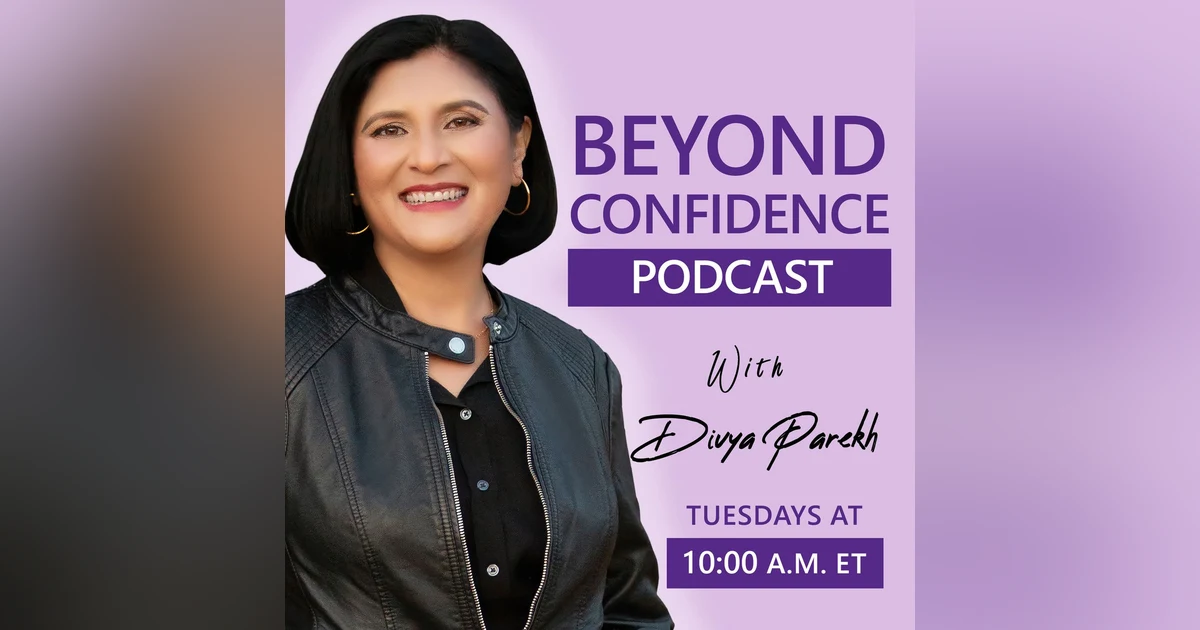

Do you see public speaking as merely projecting confidence and clear speech? In this episode, Adriana Baer, seasoned theater director and public speaking expert, teams up with Divya Parekh to challenge this notion. They dive into Adriana's rich...
 iHeartRadio iHeartRadio
 Spotify Spotify
 Youtube Music Youtube Music
 Amazon Music Amazon Music
 Apple Podcasts Apple Podcasts
 Pandora Pandora
 Audible Audible
 Podchaser Podchaser
 Audacy Audacy
 Spreaker Spreaker
 Deezer Deezer
 Podcast Addict Podcast Addict
 JioSaavn JioSaavn
 TuneIn TuneIn
 Castbox Castbox
 Castamatic Castamatic
 Castro Castro
 Fountain Fountain
 Goodpods Goodpods
 Overcast Overcast
 PlayerFM PlayerFM
 PocketCasts PocketCasts
 Podimo Podimo
 Podurama Podurama
 Podverse Podverse
 Podyssey Podyssey
 RSS Feed RSS Feed
 YouTube YouTube iHeartRadio iHeartRadio Spotify Spotify Youtube Music Youtube Music Amazon Music Amazon Music Apple Podcasts Apple Podcasts Pandora Pandora Audible Audible Podchaser Podchaser Audacy Audacy Spreaker Spreaker Deezer Deezer Podcast Addict Podcast Addict JioSaavn JioSaavn TuneIn TuneIn Castbox Castbox Castamatic Castamatic Castro Castro Fountain Fountain Goodpods Goodpods Overcast Overcast PlayerFM PlayerFM PocketCasts PocketCasts Podimo Podimo Podurama Podurama Podverse Podverse Podyssey Podyssey RSS Feed RSS Feed YouTube YouTube
Do you see public speaking as merely projecting confidence and clear speech? In this episode, Adriana Baer, seasoned theater director and public speaking expert, teams up with Divya Parekh to challenge this notion. They dive into Adriana's rich storytelling background and share practical, actionable tips to master the stage. Learn how shifting focus from yourself to your audience is the key to confidence, why authenticity makes your audience lean in, and how structuring your talks.
Beyond Confidence is broadcast live Tuesdays at 10AM ET.
Beyond Confidence TV Show is viewed on Talk 4 TV (www.talk4tv.com).
Beyond Confidence Radio Show is broadcast on W4WN Radio - Women 4 Women Network (www.w4wn.com) part of Talk 4 Radio (www.talk4radio.com) on the Talk 4 Media Network (www.talk4media.com).
Beyond Confidence Podcast is also available on Talk 4 Podcasting (www.talk4podcasting.com), iHeartRadio, Amazon Music, Pandora, Spotify, Audible, and over 100 other podcast outlets.
0:00 The topics and opinions expressed on the following show are solely those of the hosts and their guests, and not those of W four WN Radio It's employees or affiliates. We make no recommendations or endorsement for radio show programs, services, or products mentioned on air or on our web. No liability, explicit or implied shall be extended to W four WN Radio It's employees or affiliates. Any questions or common should be directed to those show hosts. Thank you for choosing W four WN Radio. This is Beyond Confidence with your host w park. Do you want to live a more fulfilling life? Do you want to live your legacy and achieve your personal, professional, and financial goals? Well? Coming up on dvparks Beyond Confidence, you will hear real stories of leaders, entrepreneurs, and achievers who have stepped into discomfort, shattered their status quo, and are living the life they want. You will learn how relationships are the key to achieving your aspirations and financial goals. Moving your career business forward does not have to happen at the expense of your personal or family life or vice versa. Learn more at wwdas don't divpork dot com and you can connect with div ant contact at divpark dot com. This is beyond confidence and now here's your host, div Park. Good morning listeners, and of course it's Tuesday morning and I love being here with you. So starting out with the kind of story just last week when I was traveling back from New York, get up in the morning, all packed, and the first message that I see
1:32 is flight delayed. I'm like, huh, half an hour. You know, it's not a big deal. Within fifteen minutes, half an hour delayed. It just kind of kept on going and I'm like, Okay. The next day I had to be back because I had in person meetings. I'm thinking, okay, what are the best ways? I call up Delta and the person was not so great, and then I what I did was I decided to kind of call back again to see if I could find another representative. It was early in the morning, not sure if the person had had a rough night or whatever. So now the second person that I call was phenomenal, and then she gave me so many different options that it was mind blowing. She said that, okay, if you really have to get back today, So it looks like the flight is when it is, I cannot predict. I cannot tell you a whole lot more. Either I can get you a later flight, or I can fly you out from LaGuardia at the time that your current flight was. And it's just this little, tiny little thing for her, but for me it was a huge thing. So remember when we are talking about keeping that kindness circle going, if you just think
3:02 about the other person, you can change their lives. I mean that day she did everything, she changed it out for me and my day went so beautifully. So here I was thinking how I was going to get back on time. She had taken care of my issue. So remember, sometimes you are just doing your job and thinking about the personal tadled bit more can really make the day a good one. So thank you for each and every one of you who are continuing to take the kind of circle going. Remember just one hour every month. And also, if you have not bought our books, get up books, either one of it Expert to Influencer or The Entrepreneur's Garden because they will change your lives. Expert to Influencer will help you become the authority, will help you become the influencer that creates impact and the Entrepreneur's Garden is going to allow you to strengthen all areas of your life, regardless where you're at, and you will help us help with their entrepreneurs grow their businesses. Well, let's get started. Let's bring our guests in. Welcome, Adriana, good morning, Good morning. I know it's early for you, so thank you for joining us. Oh it's my pleasure. So Adriana,
4:36 tell us if you're a call a moment from your childhood that still stands out for you today. Oh I love this. I was thinking about this this morning, and the thing that popped into my head was the day that I ran for class president my freshman year of high school. And it sound really silly, but in that moment, I think a lot of things happened for me that led to where I am now. And I just remember being fourteen, you know, it was in the nineties. I was wearing my little, you know, dress from Express or something wherever we bought clothes back then, and getting up on stage in front of my whole class and giving this speech about why they should vote for me for this leadership position. And I ended up winning. And I think it was this moment where I realized really early on that leadership and communication were intricately linked and that performance was a part of it. So I was just thinking about that little green dress and just sort of, you know, this mini Hillary Clinton figure up on stage, thinking, you know, I'm going to lead this room of people and figuring out how to do it. Oh, that's such an adorable story.
6:09 So, like you mentioned that you want and how did that year pan out for you? That was great. I mean I had been an actor as a kid all the way from when I was really really young, and then I went to high school, you know, thinking I'm going to be a Broadway star and wanting to be a post flower. I was always really interested in leadership too, so basically I just got to do both. I got to be on the student government and help lead the school and then also also continue to study theater pretty rigorously during that time. So yeah, it was good. So that is fascinating that you were both, and that again goes to say that who says you can't be all of the things that you want to be? Of course you can't have like, you know, fifteen things going at the same time. So you mentioned that you had aspirations for being in theater. So how did that work out for you? Did you want to how did you decide wich to pursue out of the two patsions. Well, I started with theater. I mean it was really where I felt like I could express myself. And I mean I continued in leadership all the way through. By the time I was sort of in mid high school, I realized that I really wanted to be an artistic director. And that's really the boss of a theater company. So it's the person who's the leader of the
7:40 arts organization but also gets to kind of set the chart, the course and set the mission for the institution, but also be a creative artist. And I started directing, so I moved from acting to directing, and that's where my background is. I studied theater directing, arts administration all through college and graduate school. I have an MFA in theater directing from Columbia University, and that was my career for a long time. And I did get hired to be an artistic director of a theater company. That's what brought me from New York to Portland where I live now, and that was really my pathway.
8:22 And I studied leadership all the way along because I think it's really interesting to be a student of leadership as well as practicing it. And I was also really interested in transitional leadership, so people, you know, moving from founders to the next person, or you know, when you have one really prominent and charismatic leader and then a new person comes in, how does that transition work? Which served me well because I ended up taking over from a founder myself, and then I continue to do that work for a long time and eventually decided to return to freelancing and started doing public speaking coaching, and a lot of the people I work with now are leaders, entrepreneurs, business owners in their own right who are wanting to lead their organization or grow their business and also need to be standing up on stage. So it's kind of that full circle moment of me as a freshman in high school. We're doing that right. So when you talked about being an artistic director, so many of us might not know about it, Can you share with us what does it involve and what did you do and what were the relationships. Yeah, so the artistic director of a theater company is the person who sets the artistic mission
9:52 for the company. So when you think about and when I'm talking about this, it's the nonprofit regional theater here in America, although there are artistic directors all over the world, but that was my world. So when you think about a theater company, you know, your local company that does a bunch of plays, there's somebody at the helm of that who is choosing what plays get produced. They're hiring all the artists, they're fundraising. That's a huge part of it. It's you know, theater companies, mostly in this country, are nonprofits. So there's the whole nonprofit world of relating with a board, having you know, being responsible to your donors and your key stakeholders, and representing the organization out in the community either through fundraising efforts or community building efforts. And then on the other side, on the creative side, you're directing plays, You're hiring and casting actors, you're working with designers. So you have kind of a dual focus. One is administrative and fundraising and minding budgets and all of that, and the other is creative and artistic and doing the stuff that you see that you think of when you think of a play or a theater, you think, oh, I'm going to go to the theater, I'll sit in the audience, I'll watch the play, and then I'll leave. A lot goes into making that experience possible. Mm hmm.
11:28 That definitely makes sense that how you're pulling things together. So it looks like, you know, you had to interface with a lot of different people, like you know, from sounds like, from being the stakeholders to in the day to day interaction. So as you were working with people, what we're one of the few or maybe one to three lessons that you learned. Oh well, one of the things that I think is really important and certainly goes into my coaching work now is that and I pulled this from my experience directing actors, actually, is that every person you talk to has a slightly different language that they speak. And I don't mean English versus Spanish, although that's also true. I mean everybody needs to hear words in a certain way that works for them. And so what that looks like in a rehearsal room is I might I might need to give the same note to multiple actors, but each of those actors might need to hear that note in a slightly different way.
12:39 Somebody might be more driven by an emotional experience, or an intellectual experience, or a physical experience. So once you get to know your people, you can start to translate your language for those people. And what I realized is that this was really really important when I was talking to my board of directors, because this was a really diverse group of people coming from all kinds of backgrounds, none of them theater artists. You know. We had bankers and real estate agents and you know, tech people and lawyers, and each one of those people needed the information in a slightly different way. So one of the things that I think was so important for me was to figure out how I could translate what I needed to translate in a way that they could receive. You know, and we know this from elementary school, right.
13:41 Some kids are kinesthetic learners, some kids are visual learners. Some kids, you know, can memorize things like you've got to kind of teach to what is there. So that was one really key key point that I carry with me still. And you make a really good point over here, because here's the thing. We forget that we're speaking to different people. Sometimes people are so much in their own head thinking, oh, what are they going to think of me? And don't think about that. Then we transfer the focus from us to others and come with openness and curiosity. Things open up.
14:26 So, now as you took all of this learning stepped into the public speaking area, tell us, you know, public speaking is right there as one of the topmost fears that people have. Why is that? Yeah, well, not surprisingly. I'm going to answer that question by saying, for each person, it's a little bit different, right, And one of the things I think is super super important is to figure out what it is for you. So, if you are a person who has nerves around public speaking, and there's a there's a wide spectrum, right, We've got I'm a little bit nervous before I go out on stage or I start a podcast, interview or whatever, it is all the way to full on nervous systems shut down.
15:22 You know, I'm panicking. I'm completely terrified of public speaking. And I think a lot of people say, you know, oh, I'm afraid of public speaking, But that doesn't necessarily mean that they are they have stage fright, or that they have that kind of you know, clinically diagnosed fear fear right phobia. So you've got to figure out what it is for you, So, is it my breathing gets really shallow and I feel like I can't catch my breath. Is it my words don't come out of my mouth the way they are in my head? Is it I don't know where to stand, how to hold a microphone, how to make my lighting look good, and so I feel at lost? Is it that I'm insecure about my content? Or is it what you just mentioned prior that you're afraid people are judging you. You're afraid of being seen, you're afraid of being looked at.
16:18 Right, once we figure out exactly what order of things is freaking you out, then we can start working on tools. Right. But a lot of this work, not surprisingly. I mean, it's so much what you talk about, and it's so much entrepreneurship and leadership is mindset, right, it's like what is it for? What is it for you? In your mind? What is going on? And self awareness is really really important, and so I think that's really the first step is figuring out what it is for you that's happening. And sometimes you have to go outside in to say, my breathing gets shallow, Okay, great, Now we can figure out where is that coming from and how do we address it. Really, that's a great point that you mentioned over here, because if you go from outside in, you're seeing the outward experience, outward symptoms of what's going inside.
17:19 And once you're listed out what is it for you, then slowly, one by one you can tackle it. And as you mentioned that, those butterflies don't go away. And I feel the same way because regardless of how many times you've spoken, once you're getting on the stage, you don't know who the people are, and that is such a heavy contrast. Then we're working with people, whether you are in a corporate job or you're an entrepreneur, or whether you're in pta or landscape or wherever you are, you're dealing with people one on one. You know them, and then you can adjust your communication. You can adapt your communication to that. And when you are doing public speaking, there is like audience, whether it's ten, a group of ten people, or a room full of thousand people. So that can be daunting. So now when you let's say they've gone through what you mentioned, they've gone through, figured out what's in the way, figure out how to overcome these or learn to work with them. Now they're on stage so many times the question pops up as like what do I need to sound? So for example, I might sometimes think that my voice doesn't come out right, it can be little squeakies at times, or my words are not popping out
18:53 right. So we all know what are the things that's then in our way? So with that, what is one general thing that they could tell our audience that could get them started? Well, I want to I want to address two things that and something you just said. So I think that one of the tips I would love or the ideas I would love to leave you all with today is actually that I think the most important question that you that any of us can act ask before we do any speaking, whether that's on a podcast or on a stage or one on one, is who am I speaking to? And sometimes we think, yes, there's a thousand people out there, we can't answer this question. We don't know. But actually I think you've got to decide. You need to decide. Each one of us needs to decide or find out who is it exactly that I'm speaking to.
19:55 And you can't speak to a thousand people, right like, that's too many people. You can't address everybody in a room of one thousand. You can't address everybody in a room of fifty, right, that's too many people. So what I work with my clients on, and this comes straight from the theater world, is to figure out the very most specific answer to the question who am I speaking to? And sometimes that means that you're making it up, You're making up a character. You're like, there's a thousand people out here. I'm at this type of talk. I can get general information from the conference organizer or whoever. You have a general idea of who's out there, and then what you say is, Okay, I'm going to create a character of a person that is the exact right person for my message, and you deliver your speech or your message to that specific character. Now, sometimes you're lucky and you actually know somebody who's there, and you say, great, you know, Diviya is there. I'm going to give my talk directly to her. She is my target audience. Now, the thing that that does is it eliminates that feeling that like, oh, it's a wash, it's a wall, it's a tsunami of crazy, scary, bad judge people coming at me, and it turns them into, to use a theater term, your scene partner. It turns it into your communication partner in that moment.
21:25 It also helps you specify your language, because you can't speak generally to everybody and have everybody receive your information. The more specific we get with our language, the better our message lands, even if the character we're talking to is not the person who receives the information. And I can give you an example, it's pretty simple. So say you're somebody who is giving a talk about your skincare business, and your skincare product is really targeted toward women in their twenties, but your audience is a bunch of is like mixed, right, it's all kinds of people. It's maybe, I don't know, a TED talk or a community engagement opportunity something. You can still decide that your audience is a twenty five year old woman who looks exactly like your target client.
22:22 The ninety percent of people in that room who are not that person are still going to be able to clearly see and hear your message because you're so clear about who you're talking to. And I'm forty one, so I'm not your target audience. But I might say like, oh, my younger cousin, this sounds like the perfect thing. For her or my sister or my mom or nobody. But the next time I think about you, I know exactly what you are and who you're talking to. Right, So that specificity of who your audience is is a major hack for dealing with all of the levels, right, your content, your messaging, but also that nervousness that who who's out there? It feels really a morphous And then you asked a really great question about what about when I go out and my voice sounds funny or I don't you know all this kind of technical stuff. The main thing that I work with people on to deal with that is like pure skills building.
23:29 And one key thing that I think most people forget to do or don't even know that they should do, is vocal and physical and breath warm ups before they go out to speak, because all the examples that you gave, and I do this before, I did this this morning, I do this before I'm going to speak on a podcast or a TV interview or anything. Right, we are our own instruments. When you go to the symphony and the orchestra comes out on stage before the performance, and the trumpet player is practicing scales and the violinist is practicing little pieces of the thing that's them warming up their actual instruments. For us, our body, our breath, and our voice are our instruments. That's how we're getting our message across. And we can get better through skills building around all those things. But you know, I jumped onto this call at six fifty five am. I hadn't spoken yet today, So for a few minutes before I got on here, I did some breath work. I did some vocal exercises to make sure that I could articulate words on this call, right, And we don't think we were so in our heads, and especially when we're on zoom or a box right right now, you can only see my head and my shoulders, but there's a whole bunch more of my body that's actually participating in my message giving.
25:00 We need to treat our bodies like the tools and the instruments they are and actually do that homework. And it can be really fast. It can do you know, just a few minutes or even one minute if you don't have any other time, can make a big difference. Absolutely, some good points over there, and what you're sharing is absolutely right on the mark that if you always share with my clients as well that if you are an entrepreneur, you have your ideal client avatar. So similarly, if you're doing public speaking, think about, as you mentioned, who is your ideal avatar in that in the sense that why are they there for the conference, for the event, what might they be looking for, what is it the outcome that they want? And then focusing on one person as you mentioned, and then what happens is as you narrow it down from the broad spectrum down to the knowing it to one person, Definitely, people will connect with little pieces of your talks. It may not resonate entirely, but they will connect. Then they'll be able to relate to it. Now, coming to the vocal exercises that you mentioned, can you share a couple that people can do quickly right before they're a meeting or because so many times when people are in meetings and they're
26:30 scared to speak up. Mm hm yes, So I will share a few, and then I also have a ton of free videos of each of these things. So if you're listening on the podcast and you're not watching us, you may need the visual help on some of these, So you can go to my website and there's free tools and a link to my Instagram page where I post a lot of of video tutorials about how to do this stuff. So prefacing that, but let's just try a couple and yeah, especially if it's visual, because so this way, you know, people are not figuring it out while listening to it. Yeah yeah, okay. So the first is the most simple, and this is a breathing exercise that you've probably heard of. This is it's called square breathing or box breathing. Oh yeah.
27:34 And the reason I love this as a warm up, there's three reasons. One is it has the added benefit of downregulating your nervous system. So if you're somebody who's nervous or feeling any kind of anxiousness, this is a great tool to let your body and subconscious know that you are safe and calm. The second thing is it helps you connect with your breath, and of course the voice does not exist without the breath, so we first always have to start with breathing. And the third thing is you just mentioned being in a meeting and speaking up. This is something you can do at any time, anywhere, and no one will know that you're doing it, So it's kind of like my little secret superhero tool. And so it's really really simple.
28:26 All you do is you inhale. So the way I teach it is account of four. So you inhale for account of four, hold your breath for account of four. Exhale for account of four, hold your breath for account of four. So it's a box. So I'll just do it with you, and as you're listening, you can do it along with us. So we go inhale two three four, hold two three four. Exhale two three four, hold two three four, And that's it. And you can do that. That takes about sixteen seconds or less. You can do it four times. It takes one minute, and already you've done all of the work that I just mentioned just by breathing. I always encourage people to inhale through their nose and exhale through their mouth because that's where our voice comes from.
29:27 So it's reminding your breath, your brain, and your body to connect together that we inhale support and we exhale it or message it out of our mouths. So I really encourage you to practice that now. For me, I will say sometimes that holding breath after the exhale is really hard, So just make it work for you. Even if you just inhale and exhale and even measure, it will do that work for you. The second one I really really love, and this is the one I did this morning because it's really simple and easy to do, is called horse breath. And this is where I sometimes think the video can be really helpful. But what I describe it as is it's blowing air through your lips, kind of like you're a horse or blowing bubbles underwater. So it looks like it, right, So you'll notice if you ever think of like a frustrated little kid or even yourself when you're annoyed at traffic and you just go puah, often what happens. And this is a total subconscious thing that just is again a nervous system and subconscious awareness thing. Our bodies release nervous energy that way. The reason why I love it for public speaking is it is a way to warm up your vocal cords without putting any strain on them at whatsoever. So what we first do
31:00 is we just inhale through our nose and then we horse breath out our mouths and yeah, yeah good. I love it. If you do it, you know, you try to do it as long as you can, the exhale as long as you can. Most people notice that their nose starts itching, and that's a good sign. That means you're doing a great job. So if that happens, you're doing it right. Then the next thing that I'll do so I'll just do that really easy, just you know, Oh that's a simple one. Yeah, because I fright some warm up exercises and there's so long that I end up not doing it. Ah, these are why I like the short stuff. So the next thing you can do with horse breath is you just vocalize up and down your your range, your vocal register. And again, this doesn't put any strain on your vocal cords.
31:51 So if you've got a sore throat or you're just really it's you're really tired, or it's early, just and you just try to play. A nice thing too about doing that is that it reminds you you have a high range of your voice. You also have a low range of your voice, and as you're getting to know your instrument better, you'll start, you know, especially if you're working with somebody who can give you some reflection, you'll start to notice that you have a wider range of speaking volume and of speaking tone then you might normally speak and we usually only use, you know, twenty percent maybe of our vocal range. We kind of stay right in the middle where it's comfortable. But when we want to make points, sometimes you want to drop down and make that point. Sometimes you want to get excited and share something up here, right, So when you do the vocal warm up exercise that's just up and down your register, it just again kind of opens up the possibility. So those are my two favorites to get started. I always start with their no matter what I'm doing, and then we add things depending on what kind of speaking it is. You know, I've got a microphone six inches from my face today, so I don't have to do a lot of worrying about volume or projection today. But if I was going into
33:22 a theater, I would and that would be a different set of tools. But I'm really of the mindset that you can come up with a five minute max vocal and physical warm up that works for you and just use it every time. It doesn't have to be a big deal. Well, those are simple, easy, I'm definitely going to try it. Out, and I'm sure that our audience will be trying it out as well. So you mention often that one of the ways to remove the fear of speaking is having a structure, and that there are three dates. Yes, okay, so this is my favorite thing to teach about, which is the concept that within structure there is freedom. I really really, really really believe that by creating outlines and creating structure, scaffolding, a frame, whatever visual works for you, once you have that structure figured out, you can have an incredible amount of creative freedom and freedom to respond in the moment to what is happening around you.
34:38 And so what that might look like is, for example, for almost this is this is funny considering that I started as a theater director working exclusively with scripted material eight percent of the time. I want to tell public speakers to not memorize their scripts and instead to work from a list of bullet points or a direction that they are headed. And the visual that I love to use for this is a map. So because we're in the US, all let's I will use a map of the US, but insert your favorite country here. That if we were going to use the map as a visual metaphor for our speech, or our presentation or a message. I would say, So I'm up here in the Pacific Northwest. Let's say I was going to drive to New York. Along the way, I'm going to stop in Denver, Dallas, and Chapel Hill, North Carolina, going the long way, right, So I know that I have five places that I am going to go. I'm starting here, I've got three places in the middle, and I'm ending in New York. Now I'm going to set off and my first destination is Denver. Well, I could drive however I want to Denver.
36:07 I could go north, a little bit, south, a little bit, I could stop at a museum for a day, but I know that I'm heading to Denver and so on from there. So same thing in your speeches. You know your key points. You can if you know where you're headed, you can pretty much handle everything. You can handle them dropping a tray of coffee cups in the back corner. You can handle people laughing in a place you didn't expect, right. You can handle forgetting what point you were trying to make because you know where you're headed next. So that is really really key. And I think a lot of people think that if they create too much structure, they're not going to be creatively interesting, but it's actually not, it's the opposite. Actors are working with scripts that's a huge amount structure. They're working within the confines of a stage. They're working within the confines of their character. And yet we would never say, Wow, they're not creative or they're not interesting. Right, so they have all these rules and structures around them that allow them to then show up. It has authentically them. And I know that you know, authentic is a big word for you, right, and we can't. I really have seen that it is almost impossible to show up authentically and show up as ourselves when we don't have a little bit of sort of scaffolding in place to help us with that.
37:40 That definitely makes sense, And because think about it, as you mentioned about if you know that you're going to Colorado, you know where you're going to take orn halls or rich hotels to book on your way, what food places. Just kind of having those destinations lets you know where you're going. And I really agree with you about not memorizing the script, because if you memorize the script, then you will sound more like robotic because I did that in one of my first speaking engagements. I gotta be perfect, and I gotta And then what happened was, after I was done speaking, somebody came and said, oh my god, it sounded so mechanistic. It didn't it didn't seem like it was you. And so that was a good learning lesson for me is that if you have points, it's key to remember that your audience doesn't know what point you're going to make. So if you miss, you miss, as long as there is continuity and flow to it. So you've mentioned three, So one is structure, what else is sure? So so the three kind of areas that I think are really important to focus on.
39:02 And when you kind of address all three, I think you can kind of speak to anybody anywhere at any time. The first, and I think about this in kind of concentric circles coming from me at the center and out from there. So the first is the first, and you can think of them as buckets or circles. So the first bucket is me, right, is my voice, my body, my my words, my how do I hold the microphone? And where are my feet? Where am I in space? So it's all of those things. The things that are like the skills building around vocal warm ups. Right, it's everything that's the closest to your body, your voice, your breath. Then the second circle, and this is where I think entrepreneurs generally are the strongest and leaders are the strongest. And that's content. That's the actual words that you're saying. That's your message, that's your you know, your slide, your examples, right, that's all the words piece your mission. And then the third which we've talked about, is the audience. Who are you talking to where? And also where are they physically in this room? Because that's a thing that people often miss is they think about public speaking as just themselves on the stage or themselves in the front of the room. They don't think about what that space in between them and the back of the room, which is where all the people are.
40:32 So there's some considerations about the audience physically, about the audience energetically, and about the audience sort of emotionally in what they're giving back to you or not giving back to you. And so when each of those three areas is thought about and tended to, that's kind of the combination that gives you the public speaking success. People are stronger at one or two, and then what they need to do is that, you know, as we talked about the beginning, that self identification piece where they figure out what where are where am I strongest? And how do I bring those other areas up in strength as well.
41:19 H Absolutely, this is so much value that you have provided, so thank you for that. If people wanted to get in touch with you, what's the best way to do that, and if you want to share a gift. Yeah, So I have everything under the umbrella of Claim center Stage. That's the name of my business and you can find me and the organization at Claim center stage dot com. On claim center stage dot com. If you click on free tools, there are a few free downloads. One of them is a guided grounding meditation, So for those of you who are having a hard time with nerves, like we talked about right at the beginning, that would be the one for you. It's just a five minute grounding meditation to use before any speaking event. And I've also got a few other freebies and tools on the website and links to a bunch of stuff there, including how to get in touch with me. Thank you for sharing that. Do you have any one or two tips that you'd like to share. Yeah, I would say one thing that I always like to leave people with is this, You can speak like a human and people will listen. So there is
42:52 no need for you to come up with a public speaking personality or play the character of somebody else, or pretend to be somebody or not in order for people to lean in and listen. This is what I tell introverts who are who think that they can't be good at public speaking. They absolutely can be because they're showing up as themselves. And when you show up as yourself, we love flawed people. We love real people being real in front of us. That's why we watch TV and movies and plays. So if there's one thing I want to leave people with, it's just the knowledge that that is what makes you interesting. It is what makes people lean in, and it's what makes people want to hear more of your story. M Absolutely that is beautiful, and remember their audience that we're all perfectly imperfect, and it's okay to own it up because we would not be able to evolve and become better if we were totally perfect. So just show up as yourself and we love you and reach out to us let us know how can we support you, how can we help you achieve your goals and make your dreams a reality?
44:22 So thank you Adriana. Thank you to your audience for being part of our lives because without you, the show would not be possible. And think you on for making the show technically possible. Take care and be well until next time. Thank you for being part of Beyond Confidence. With your host, Diva Park, we hope you have learned more about how to start living the life you want. Each week on Beyond Confidence, you hear stories of real people who've experienced growth by overcoming their fears and building meaningful relationships. During Beyond Confidence, Divpark shares what happened to her when she stepped out of her comfort zone to work directly with people across the globe. She not only coaches people how to form herd connections, but also transform relationships to mutually beneficial partnerships as they strive to live the life they want. If you are ready to live the life you want and leverage your strengths, learn more at www Dotwpark dot com and you can connect with vat contact at Dwpark dot com. We look forward to you joining us next week,


