
The Brand Equation: Trust + Connection
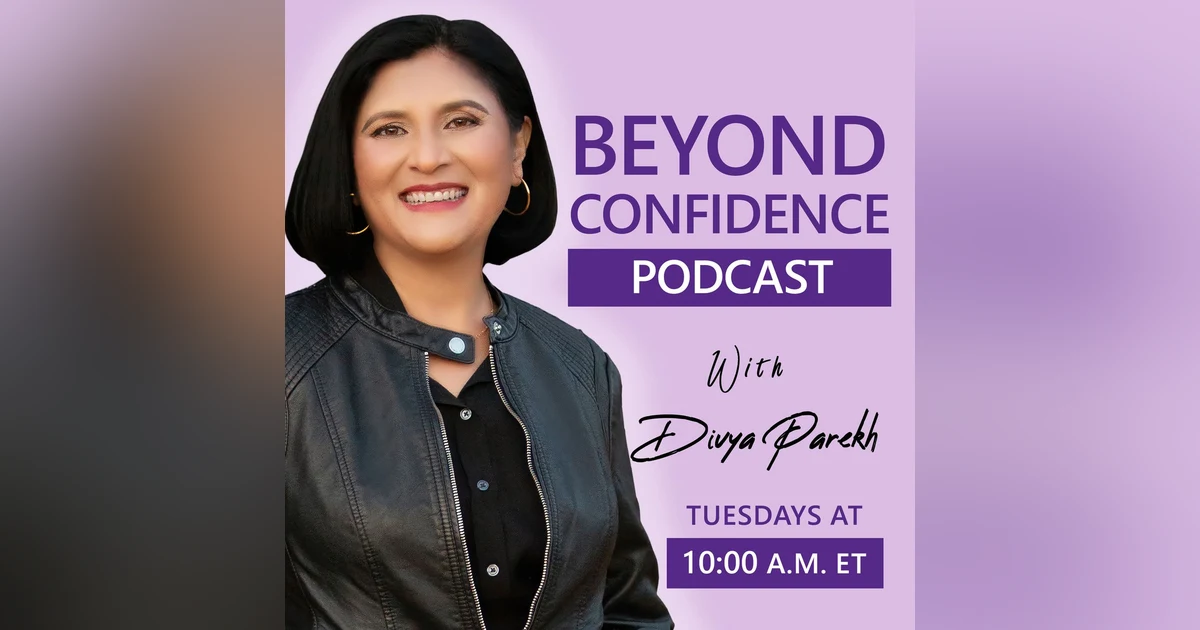

Join Divya Parekh and Erin Marcus to learn if you are running the business or business is running you. You will discover how to let go of being stuck in reaction mode and treating your brand like a patch-work quilt. Instead, you'll walk away with how...
 iHeartRadio iHeartRadio
 Spotify Spotify
 Youtube Music Youtube Music
 Amazon Music Amazon Music
 Apple Podcasts Apple Podcasts
 Pandora Pandora
 Audible Audible
 Podchaser Podchaser
 Audacy Audacy
 Spreaker Spreaker
 Deezer Deezer
 Podcast Addict Podcast Addict
 JioSaavn JioSaavn
 TuneIn TuneIn
 Castbox Castbox
 Castamatic Castamatic
 Castro Castro
 Fountain Fountain
 Goodpods Goodpods
 Overcast Overcast
 PlayerFM PlayerFM
 PocketCasts PocketCasts
 Podimo Podimo
 Podurama Podurama
 Podverse Podverse
 Podyssey Podyssey
 RSS Feed RSS Feed
 YouTube YouTube iHeartRadio iHeartRadio Spotify Spotify Youtube Music Youtube Music Amazon Music Amazon Music Apple Podcasts Apple Podcasts Pandora Pandora Audible Audible Podchaser Podchaser Audacy Audacy Spreaker Spreaker Deezer Deezer Podcast Addict Podcast Addict JioSaavn JioSaavn TuneIn TuneIn Castbox Castbox Castamatic Castamatic Castro Castro Fountain Fountain Goodpods Goodpods Overcast Overcast PlayerFM PlayerFM PocketCasts PocketCasts Podimo Podimo Podurama Podurama Podverse Podverse Podyssey Podyssey RSS Feed RSS Feed YouTube YouTube
Join Divya Parekh and Erin Marcus to learn if you are running the business or business is running you. You will discover how to let go of being stuck in reaction mode and treating your brand like a patch-work quilt. Instead, you'll walk away with how to build a trusted brand that connects with your audience
Click this link to learn more https://success.divyaparekh.com/unfairadvantage/
Beyond Confidence is broadcast live Tuesdays at 10AM ET.
Beyond Confidence TV Show is viewed on Talk 4 TV (www.talk4tv.com).
Beyond Confidence Radio Show is broadcast on W4WN Radio - Women 4 Women Network (www.w4wn.com) part of Talk 4 Radio (www.talk4radio.com) on the Talk 4 Media Network (www.talk4media.com).
Beyond Confidence Podcast is also available on Talk 4 Podcasting (www.talk4podcasting.com), iHeartRadio, Amazon Music, Pandora, Spotify, Audible, and over 100 other podcast outlets.
0:00 The topics and opinions expressed on the following show are solely those of the hosts and their guests, and not those of W FOURWN Radio It's employees or affiliates. We make no recommendations or endorsement for radio show programs, services, or products mentioned on air or on our web. No liability, explicit or implied shall be extended to W FOURWN Radio It's employees or affiliates. Any questions or comments should be directed to those show hosts. Thank you for choosing W FOURWN Radio. This is Beyond Confidence with your host Dvaparnk. Do you want to live a more fulfilling life? Do you want to live your legacy and achieve your personal, professional, and financial goals? Well? Coming up on Diva Park's Beyond Confidence, you will hear real stories of leaders, entrepreneurs, and achievers who have stepped into discomfort, shanner their status quo, and are living the life they want. You will learn how relationships are the key to achieving your aspirations and financial goals. Moving your career business forward does not have to happen at the expense of your personal or family life, or vice versa.
0:59 Learn more www dot dvapark dot com and you can connect with div D contact dapark dot com. This is beyond confidence and now here's your host, d A. Park. Hello, Hello, Hello, It's Tuesday morning, and I am so thrilled to be here with you. Why because it's always you are the soul of my show and to be with you is the best thing because you are so important to me. And also I want to thank each and every one of you who has reached out to us and shared what kind of stories do you want us to growing, which experts to growing and how we can support you to live a better life. And also thank you to all of you who have purchased my books. You can see couple of those in the bag. Expert to Influencer and the Entrepreneur's Gotten and they will help you, especially if you're an entrepreneur or even if you're looking to build those nine relationships, whether it's with money or with results or with yourself entrepreneurs, Goden will help you. An expert to influencer will help you to become that influencer that is like a rising tide that lifts all boats. It's about the impact, It's not about the numbers. It's not about the likes you get, it's about impacting even one person. So if you've not got the books, please get it, because when you purchase those books, your investment helps
2:34 us help the entrepreneurs all across the globe. And I'm sure you'll remember, I'm still inviting you to spend that one hour of your time every month, with no strings attached, helping other people, keeping that kindness circle going. So let's go ahead and get started. I'm going to bring in our guest erin Marcas Malcolm. Aaron, Hello, thank you so much for having me. I'm excited to be chatting with you. This is awesome. Oh, excited to have you here. So, Aaron, we usually started the beginning.
3:14 Do you recall any moment from your childhood that still stands out for you today? Oh, my gosh, moments that stand out. What's funny when you say that is there's nothing in my childhood that stands out. Just keeping this related to now that I would end up where I am right. I didn't have an entrepreneur environment. I didn't have a business owner environment. I grew up blue collar in Chicago. My dad was a cop, my mom was a hairdresser. Like just get a job and stay there would have been very right, would have been great. And so I definitely, you know, my young childhood fun all sorts of things, dogs, vacations, teenage years. I was, I call it now, a professional juvenile delinquent.
4:09 I use the term professional because I made money at it. You can argue whether that was bad parenting or bad child I can't blame them for everything, that's for sure, but something that stands out, I think it's more if I had to really stay like again, kind of relating it to where I am now. One of the themes that I from my childhood that I think helps me now is knowing that I had to be in charge. Not I had to be, but everybody should be in charge of their own endgame like that. If you're not making decisions for you, you're giving away that power to people who are not vested in you. So I always felt like I could do whatever I want and I could have whatever I want, but it also always knew that I was going to have to get there myself, not in any negative way, not with a chip on my shoulder, but more of a norm like, Okay, just go do it, that's what you want that's great, Go do it. You have to make it happen.
5:17 So I think that theme is a lot of what stands out in my childhood. Well, as you mentioned that you took it very beautifully, you did not take it somewhere like oh, that's a chip on my shoulder and I'm going to use it as a crutch rather than that, how can I keep my power? Yeah, it was never I think that's because it was modeled to me as an opportunity. It wasn't modeled as a bad thing. This whole idea that you have to advocate for yourself, and truthfully it comes out of health issues as a child and watching my mother advocate for me instead of sitting back and waiting to see what someone else might want to do or might think is the right idea. When I was a teenager and wanted money, she said, great, you can have all the money you want. Go get a job, right, Like, how do you do that? We'll see that street there with all the stories on it, Go into each and every one of them and ask them in they're hiring until one of them says yes, oh okay. You know. I wasn't happy about that, but I did it and so it was never illustrated to me that having to take care of yourself was anything except normal. Well, it's really great if you
6:50 kind of think about it, because so many it's very interesting. Recently I was just kind of work with a cohort on intergenerational communication, and it has become very apparent that a lot of zgen expect their parents to take care of certain things for them, even in their twenties. So and then what happens is it allows for some growth in some areas, and in some areas it miditer growth. So in your case, so there's no right or wrong for anything basically, and yet like in your case, it pushed you and okay, hey, you want to create your future. You want to create X, Y and Z, go do it. And it shifted back the responsibility and the power back to you. Yeah. And it also the other thing it does is it creates self trust. Right because I want to go do the things, all right, I want to go make money. I have to get a job. So I got a job, and I made money and I got to spend that money however I wanted to. So again just because that's who we are, this framework of business owner, entrepreneur I think doing that for so many years allows me to take risk now, to go for something bigger now, because the thing that I know is I'll always be
8:22 okay, because I'll just always take care of myself because I always did, and again not with a chip on my shoulder, but just because it was normal. And going back to your comment about gen Z and the younger generations that expect their parents to take care of certain things for them, like these parents aren't doing their kids any favors, like can't blame the kids, they didn't raise themselves. Like Okay, now you're an adult, you have to decide do you still want to stay in that situation? And I remember you want to laugh, Like I remember when I turned six teen, when I got my driver's license, I wanted to be able to drive the car and it was my mom's car that she used ninety percent of the time. So in order to even have access to the car, not my own car, but in order to have access to the car that was seldom available to me, my mother's car insurance went up. This was crazy, by forty dollars a month in nineteen eighty six. Do you know how much money that was?
9:26 I mean, right, my mom, Oh my god, my mom. To have me on her insurance cost an extra forty dollars a month. So in order to even be allowed to use the car if it was available, I had to pay that forty dollars a month. And actually, what you're telling is something that was very normal for our generation. They're so for example, like you know, when I was using one of the vehicles, I had to pay for the guests. So in my case, if insurance was covered, but I had to cover the guests. And when you're doing that, then you learn to appreciate more. And because of internet and social media, everything is so much running into instant gratification. So coming back to your story, you know you mentioned something about professional juvenile delinquent. Can you expand on that. I was a bad kid, right, we made money doing illegal things. But the other the part of that though I was in Chicago, first of all, I always grew up in the city in the seventies and eighties, and looking at the situation now and watching, first of all, when we have reunions, a lot of us talk about it's amazing how well a lot of us are doing all things considered. Huh, isn't that interesting, But the activities that we were involved in were usually not harming
11:09 people who weren't choosing to be a part of those activities. So I think that's a difference versus what you see now with jobs downtown and steal it, you know, just destroying. We were we weren't being good kids, but we weren't being a menace to society type of situation. But the other thing is, and maybe it's because I don't have kids, I do still tend to relate to that story versus the parental version of the story, where I think, if your kids managed to get through teens and young adulthood without doing anything so horrible that it do completely do rails them, what's the big you know, really it isn't really well for themselves. I agree, like there's a line between Okay, this wasn't behavior, but it also really does it really have lifelong consequences? No? Then why are we making such a huge deal out of every little thing? So true? So true? And that's another thing that I've seen a lot of parents putting that pressure on youngsters that you can do this, you can do that, and you've got to achieve this, and you've got to achieve that, So that has repercussions of its own. So moving the story forward, as you said that, you know you had your escapades, but nothing that I gotta say something like, you
12:48 know, as teenagers, we all make mistakes and as you mentioned, that's how we learn, that's how you learn. And I think you know the plus a negative. The plus side is there was no social media, so there's no proof. There's no proof of any of this. I don't I don't have a police record. It never got to that point, so there's no proof of this. But the other thing is the lack of allowing failure creates fear of failure, intensity over every little thing, having to be perfect, having to be the top of whatever it is, creates this fear of failure, and fear of failure creates fear of trying. Yeah, and that takes us to the risk, Like so many youngsters are afraid to take risks because as you mentioned, it's above bus on being perfect. Especially social media has created this fake facade that oh, yes, like because mostly people will take the selfies they're they're looking good, they're they're having like a dinner at a really good restaurant when they're out on vacationing or you know, when it's something really good happening. So it appears that everybody is doing so well, and that's not the reality because most people have something going wrong for them each and every single day. So coming in of that, yeah, did your
14:26 life take you beyond your eye years? So I went to college right after high school, which not because of my grades, because back then it was easier to get in college, just because I tested literally tested into it. And then it got more interesting, right like school got more interesting. I was surrounded by people who were doing excited about doing things within their classes as opposed to externally. And it was really what I ended up doing for most of my career was just having a really good work ethic. Right. I never was one of those people who, like, I think it's an absolute miracle that's someone at nine years old, I want to do this, and then they set out to do it and then they actually do it, Like I never knew what did I really want to do? So what I did do, though, was I had a very good work ethic and I would do a good job. And every time I would do a good job, it would open the next door lead to the next promotion and the other thing that I did at the same time. Now there's labels for it. It didn't need it didn't need a label back in the nineties to tell me to quit every job I hated. But if I wasn't happy, I left.
15:41 If I wasn't happy, if I didn't feel that there was an opportunity, I found my next job. And my success at job A either led to a promotion or it led to a better job at the next company. And I did that for several years. And what was the area that you were working in? Where did that start in? It's so weird, like when you look at back, my life is very segmented. So I started out just because you got to get a job out of school. I actually started out in property management large apartment complexes. And I started out there because I did it as a child. My mom was a beautician when I was little, but then she became a leasing agent in downtown Chicago, and as a kid, I would go to work with her on the weekends and help because that's what we did, right, Like you go to work with your parents and you help you do their job. You do the job. So I had jobs as a child, which is hysterical ten years old. Here go show this vacant apartment on the thirtieth floor to this forty year old man would possibly go wrong, like you wouldn't do that now, But I helped.
16:48 And so when I needed to get a job when I graduated college, I'm like, well, I already know how to do that. I've been doing it since I was ten. And so I applied for a job in as a leasing agent. I got a job, and I just moved up in a property management and bigger and bigger and bigger apartment complexes. And I laugh, you know, at fifty three years old now looking back at twenty six year old me. Then who in their right mind put twenty six year old erin in charge of their multimillion dollar assetists the manager? Right? But that's what happened. It eventually led to commercial real estate, and that eventually led to where I really had a big career was in financial services. But the theme was always marketing and sales. Marketing and zoos, do a good job, step up, learn more, help more, be interested, take action.
17:47 Right. So what I'm hearing is that your life traversed through a lot of corporate venues and how did the transition occur? What was that toning point that made you go from being corporated to becoming an all So my ultimate career was I was there for twelve years. My fancy title before I left was senior vice president of business Development, and that was at the largest long term care insurance only wholesaler in the country. So I was putting together these regional and national deals with manufacturers of insurance met Life, John Worth, John Hancock, and then the people who sold it, the banks and the broker dealers. And I had amazing people that I worked with, Absolutely amazing people that I worked with who exposed me to things way above my pregrade. That I got an MBA while while I was in that company, right, So huge exposure to big business, right, corporate level business, multiple million dollar deals, things like that. And when I was it's really weird when I was I don't know why this happened, but when I was about thirty nine, forty years old, I started to feel weird about what I was doing because as the company gets bigger, your job gets smaller. So I was doing a less variety of things and I'm watching this business again with people that I loved in a company that was amazing, but I was watching what it started to feel very contrived, like it was being made complex in order for more
19:25 people to make a nickel in the process. And I think we're way down the rabbit hole on that and so many of our industries in this country that the reason things are so expensive is because everybody wants to make a nickel in the process, and so things get very, very complex. And I was watching that happen, and as that was happening, I was getting further and further and further removed from having an impact or feeling that I was having an impact on anything, not because of anything anyone was doing wrong, but just by the nature of companies. So at the same time, I was getting a little older, and I'm starting to feel like I want something for me right. There was a couple of things that I had been involved in where we had been planning and working on a project for six months, nine months a year, and then someone in the someone in there decides to change their path and buy buy project and so and it just felt very like I wasn't in control of my situation. I was subjected to what other people were going to decide, not in a bad way, but just not in control, which, as we established in my childhood, was kind of a thing, and feeling like I wasn't having an impact, feeling like I'm now old enough where i have some information in my head where I've got some experiences, I want to go do something different, And so is this mixture of boredom,
20:56 constant striving to learn new things, no longer seeing a path where I was, even though the people were amazing, and it took a little while, but I'm like, all right, what if I didn't have a job anymore? What if it was my thing? Abject horrifying right, Well, it's hard to break those golden handcuffs. Yes, oh yeah, and I had the expense account and the big income, the whole nine yards. Absolutely absolutely yeah. So when he started thinking about it, what fears did you face and how did you transition out? So I couldn't figure out what I wanted to do. That was one of the first things I say, I didn't know what I wanted to do. And it actually took me probably two years while I still had that job, where between the time that idea started floating in the back of my mind and actually doing some thing because I couldn't.
22:00 And at the time, the two things that I was way, way, way into was dogs because I volunteered every week at a dog rescue. I grew up with dogs, I was training dogs, lots of things around dogs. And then the other thing in my life was working out physical fitness, personal training. I had done bodybuilding and powerlifting. Those are the two things in my world. And I'm like, Okay, well what if I did a business in either one of those, because those were the two things I knew a ton about and I absolutely loved, and so I did look in those arenas like, well, what if I was a personal trainer, Well, what if I bought a gym? Well what if I had a doggy daycare? And I what if I had dog kennels and grooming? And I had some visions of what that would look like. But one of the things I knew was I didn't want to be tied to a physical building from sun up to sundown. Like I knew I needed more variety than that in my environment. And I'm happy I never took action on only those two things because to me, that was still going to be very it was going to be a very small world. It was going to be my own world, but I somehow in the back of my mind felt it was still going to be a very small world. And which makes sense because here you are. You were tied to a nine to five job in your previous company anyway, and
23:33 you didn't want to go from same to same. So how did you come to doing the online entrepreneurship that you're doing right now? Well, there was a step in between. So I was in Potomac, Maryland, beautiful, beautiful place if you haven't been. I was in Potomac, Maryland traveling with my mother and my stepdad to go to my cousin's wedding. And I was on all sorts of medication because I had been very, very very sick before this, and so I was still recovering. Very small wedding. There was only like thirty five to small family wedding. But I'm traveling with my mother and her husband, great people, but still you get the boy right, Not easy, and I don't feel good and I'm way too many people even though there's only thirty five of us, right, because there's all these activities and I had left dinner. I also had a little bit too much to drink at dinner because I was traveling with her in her husband and a little bit too. So I left dinner early and I had walked back to my hotel room and here I am and my aunt, one of my aunts, was also not at the wedding because she her husband was sick. My uncle was very sick, and they couldn't travel. And so now I'm on the phone with them, and they were forever, she was forever looking at businesses, and she says to me the name of this business, And just because I'm laying in bed, I'm on the phone. I've got my laptop.
25:03 I looked it up and I'm like, ah, Now, this was something I could see me doing, and she wanted me to move to Vegas and do it with her. I didn't do that, but I did buy that franchise. That was the one that instinctively dropped in because it was a new franchise I would be out in the world. It was senior relocation in a state liquidation, so it was the same market as the long term care insurance. Right. I felt I had this story in my head that I would already know how to do this because of a very narrow attachment that I evidently created, but it was building a business and it wasn't tied nine to five.
25:47 It was much more flexible. It wasn't a physical location. I wouldn't have to take out a loan, right like, there was some things in there. Then I'm like okay, And so that's what I ended up doing when I left corporate. Was I purchased that franchise and how did like bring you to doing branding and helping business strategy. So what happened was because of my business background in corporate, because of my MBA, I got my office, my franchise to the top ten out of two hundred offices in eighteen months.
26:27 And so the franchise ventulations thank you and the franchise or would I would I would get hired by the franchise or to train new franchises. They would buy their offices, they could come spend a week with me. I would teach them how to do it. I was also speaking at the franchise events on how I was doing it. And then when I was involved in networking, I would want to give a presentation when it was my turn to prison vent at the networking events about my business and they were like yeah, yeah, yeah, we know, why are you doing so well? Teach us that? And after a couple years of that, you know, it's kind of like getting hit over the head. I'm like, Okay, even though my franchise was doing well, there were parts about it that I was realizing, we're not for me again. I had stopped learning. I kind of figured it out. I didn't want to play with it anymore. And at the same time, I'm helping all of my networking friends grow their businesses.
27:34 I'm helping all of my vendors grow their businesses, and that's what people are coming to me for. And that's where I'm getting excited, and that's where I'm having an even bigger impact than what my business did. And so at the end of what twenty seventeen, I tried to do both at this for a while didn't work. The universe, you know, you try to make the change in your verse goes no no, no, no no, right, And so I tried to do both. That didn't work, And so by the end of twenty seventeen, I'm like, Okay, if I'm going to do this, I have to make a break. And then I called twenty eighteen errands, you're a failure though. Truthfully, so I went from this big, fancy corporate job with all these accolades and bonuses and things, to this franchise where again great great success, external accolades, awards, financial rewards. And then in twenty eighteen I made eleven thousand dollars. So that was fun, and looking back now, I've had somebody helped me reframe that.
28:37 It really was more of a repositioning and figuring out what I wanted to do more than You're right. I didn't have a clear enough picture. So twenty eighteen was really spent not necessarily making money, but figuring it out. And then twenty nineteen is when we created, when I created Conquer Your Business, where I really now just focus on business and randing strategies, the marketing, the business strategy. How do we grow, how do I kind of my own story right, how do we help how do we help people come out of corporate and get through all the trials and tribulations in that transition to entrepreneurship, but also how do we help solopreneurs get over the bridge in a business owner? How do we think those transitions? Absolutely, and that's powerful.
29:30 So let's say there's someone in corporate they're thinking about leaving the corporate to start out their own business. What are three to five things they should be thinking about. I think you know, to shortcut the learning curve right to give you a chance at us. One of the things humans do that messes us up is we have very much all or nothing thinking, and that's not actually how things work. You can take like, if you are in a situation now, you can do it the way I did it. I just jumped off the cliff. I just left. But I also don't have children, I was renting, I didn't have a mortgage, I didn't have certain risks that I know not everyone's in that situation. So if you're in a situation where you're a little bit most people are more risk adverse than I am.
30:25 Right, get but if you need to take you know you there's so much you could be doing on the side, in your extra hours, to be setting to be laying the groundwork, to be setting yourself up for success that it doesn't have to be all or nothing. And I think right, So instead of looking at it as a problem, instead of looking at while I have a full time job so I can't do my business, Instead of looking at that as a problem, ask yourself, Okay, in a world of infinite possibilities, how could what could I do right? What step could I make right? So break yourself out of the all or nothing thinking so that you don't mess yourself up. The second thing is be prepared for everything you know about business to be wrong, it to just be wrong. Because there's two things being in corporate help you with when you become an entrepreneur.
31:26 Number one, delegation, right, we don't try to do all the things incorporate, right. I have the web guy, I have the finance guy. I don't try to do it all myself, so that helps you. Number two work ethic. We're used to working a full day. So those two things will help you. And basically everything else you know about business will kill you as an entrepreneur, because corporate is right. Corporate is completely risk adverse, but entrepreneurship, your success is tied to how much risk you can handle without passing out. And you're true and right. So what really resonated with me was it's not all our nothing thinking. Yes, because a lot of people like, oh, yeah, you know, I'm passionate about it, and yes, you're passionate about something, but passionate. Being passionate doesn't mean that you can't be pragmatic too. Yeah, yeah, go ahead.
32:24 And the other thing is one of the mistakes that I watch people make is not everything you do has to earn your money. Not everything you do has to earn you money. And I'm very glad that I didn't go down the route of doggy daycare because then my passion for volunteering at animal rescue might not be what it is, right, Not everything you do has to make you money, and that's really a big thing that you mentioned. So going back to like of things that you mentioned, one was that doing things is important, but it's also important to know that you don't have to do everything because you're not good at everything. So the key thing is what I'm hearing, is that do what you're good at and form it out to other people that they're good at, because you know, when you play things that you're playing at, it's play and it keeps your passion going. Otherwise passion drives off.
33:30 And also, as you mentioned, it does not have to be money for everything. You can do some of the things as impact creation, especially the example that you shared about volunteering with dogs, or it could be meals on wheels, anything that you have, you can still do it. There's nothing there to stop you. So these are like really good points. So let's say, okay, people have thought through, people have some clarity, they're putting in that additional work, and now they started building the business. What would be the next steps. There becomes a time where you have to get if you really want to build a business. It's the clarity around knowing what type of business you want. And there's no wrong answers. I'm a big fan of. If you just want to hobby, hot side, hustle, more power to you, but choose it. Don't settle for it.
34:27 Too many people settle for the size business they have because they can't figure out how to get what they want, so they settle for what is handed to them. So whatever it is that you want, it's perfectly fine as long as you're choosing it. So at some point, if you want a big business, you have to learn how to get out of launch mode and into leveraged mode. Right the way that I describe businesses, there's like three stages launching, leveraging, and leading, and how do you transition from one to the other, and it doesn't have to be all at once. It doesn't have to be all at once. But you have to realize that if your business is all in your head, not but you're imagining it, but everything that happens is internally you're so the business is so dependent on you, you end up pigeonholing yourself. That's when you burn out. That's when you don't get downtime, that's when you've capped your income and learning how to, especially women, that your business is not about you. Your business is not about you. Your business is about the client. And the more you can realize that your business is not about you, you'll be better at it. You'll be willing to risk more because it won't be so tied to all of those things we talked about that the story is from childhood, the fear of failure.
36:00 The closer that's tied to you, the harder time you're going to have. So true, and it's about serving your clients to succeed. So that's a really really important point because when you keep the focus on you, then it's very hard to continue objectively and prevent the bone out. So the key is working on business, not working in business. You mentioned three things, launch, leverage, and lead. Could you shed some light on each three of the steps. Sure, and you can be at different steps under different categories within your business. So I consider launching mode anything that's not yet been systemized, so you're still figuring that piece out, which means we go back to launch mode. If we have a new offer, we're launching the new offer. Right, we go back to launch mode. When we have excuse me, an expanded team, we're going we're figuring. So launching something is the figuring it out phase tried, Yeah, it's not. It's not bedded yet, or you're recreating the wheel every time you do it, So you might be selling the same thing over and over and over again. But if
37:34 you haven't systematized the delivery of it automated, right, If you haven't leveraged right, because that's the next step. If you haven't gotten to the point where you if you're at the point where you're trading dollars for hours, you're still at the launched stage, and then you move into leveraged. And leveraged is what happens. You have to move into leveraging your resources when you've run out of hours in the days and days in the week when you can no longer make more money because you are out of time, you have to learn how to move into leveraging your resources, leveraging teams, leveraging marketing, leveraging your time. That's beautiful because let me tell you, like, that's a good problem to have, and it's important going It's an important to refer to the earlier point when you talked about systematization, because that's where when companies are scaling up fail because they don't have processes and systems. And because they don't now they're working in business, and then they become the roadblock to their business subscrib and the business building up. Yeah, always the roadblock. And here's the thing. People think that there's a dollar amount associated with this face, and that's not actually true. I work with people making with a million dollar
39:09 business who have no client acquisition system. So their back end, right, the back end is systemized, but the front end isn't because they're just getting their business through networking or one to one relationships. Now not necessarily a problem. You just have to really recognize that's where you are. And that also means the business is still dependent upon you. As an individual. That's not sellable. By the way, you can't sell a business when the entire business is dependent on you as a human to be their twenty free seven definitely doesn't work perfect, right, so you can have million. You know, there's large CPA firms, architectures, lawyers who are one, two, three million dollar businesses that don't actually have the front end of their business systematized. There's no client they've never had to do a client acquisition system. So now people have systematized, and as you mentioned, it's never fully done because anytime you're bringing in a new product, new service, opening up a new branch, you will be doing some portions of it. These are just different segments of running a business. So let's talk about leading. When you have a team, that's such a beautiful phase to be in. Great. Yeah, leading is when you get to really step into CEO role of thinker not doer,
40:45 and leading is when you set the outcomes and the team creates the processes and does the work to meet those outcomes. Right. It really and again different phases. You could be leading at simple parts of your business but still launching at other parts, but leading create leading requires full on letting go hmm, full on letting go, and leading requires that team processes the whole miners absolutely, and leading is so beautiful because you have empowered other members of your team to step in and grow to be you come into their own and start leading.
41:46 And now when they lead, of course there's succession, planning and all that. That's a topic for another day. And I also just real quick, real quick. I think one of the reasons people get stuck is they see leading as a challenge and a hard thing to do instead of an opportunity and an empowering Like going back to full circle where I was always told I could have whatever I wanted, I just needed to go do it myself and seeing that as an empowerment and not a chip on my shoulder. Same thing with leading. Instead of looking at the team and thinking, oh my god, I gotta hire someone, Oh my god, I gotta train somebody, oh my god, I gotta manage somebody. What if instead you saw it as empowering people to have their dream job within your company, right, all of a sudden, leading is not so bad. Oh yeah, Leading is so beautiful because leading means and I always say that servant leadership, you are there to empower somebody else. You're there to create that impact, and that is so beautiful. I love that share with us. How can people get in contact with you? You've given us a lot of different areas to think about and a lot of nuggets that people can take and run with it.
43:15 So how can people get in touch with you? How can they connect with you? If they're thinking about starting their business or scaling their business, or creating that story as you mentioned for themselves, how can they go about it? We make it real easy. It's really easy. Conquer your Business dot com. We put everything you need in one place. You can find my podcast there, you can find all our social links there, you can find contact form there. Everything is all in one place at Conquer your Business dot Com. Well, that's fantastic, Garen. And if you were to leave our listeners with one or two tips that they can take them right now and implement them, what might that be? Reverse engineering? Every every every single thing is reverse engineered. The what do you got to start with? What you want? What do you want? You can't you have no idea what you need to do until you know what it is you're trying to accomplish.
44:16 So it sounds easy. I totally get it's not a necessarily an easy question to answer. But what do I want? What do I want to happen? What do I want to have happened? What am I trying to create and then reverse engineer? Okay, what has to happen to get there? Who do I need to be to get it there? And what do I need to believe in order for it to happen? And there's your plan, there's your roadmap. That's beautiful. Well, thank you so much for joining us and sharing your wisdom, a pass and your story and being vulnerable. I'm sure that our listeners are going to get so much value out of our today's conversation. Awesome. Thank you so much for having me. It's always great to chat with you. Absolutely, Thank you again, and listeners, thank you for joining us because without you, the show would not be possible.
45:16 And do reach out to us and let us know what you're thinking about our podcasts, different episodes and who can be bring, what we can bring so that you know how to live the life that you deserve. How can we serve you to the best of our ability? So thank you for joining us, and thank you one for making the show technically possible and until next time, be well and take care. Thank you for being part of Beyond Confidence with your host, Devia Park, we hope you have learned more about how to start living the life you want. Each week on Beyond Confidence, you hear stories of real people who've experienced growth by overcoming their fears and holding meaningful relationships. During Beyond Confidence, Divia Park shares what happened to her when she stepped out of her comfort zone to work directly with people across the globe.
46:08 She not only coaches people how to form hard connections, but also transform relationships to mutually beneficial partnerships as they strive to live the life they want. If you are ready to live the life you want and leverage your strengths, learn more at www dot dvapark dot com and you can connect with Diva at contact at dvapark dot com. We look forward to you joining us next week.


