
The Flexible Leadership
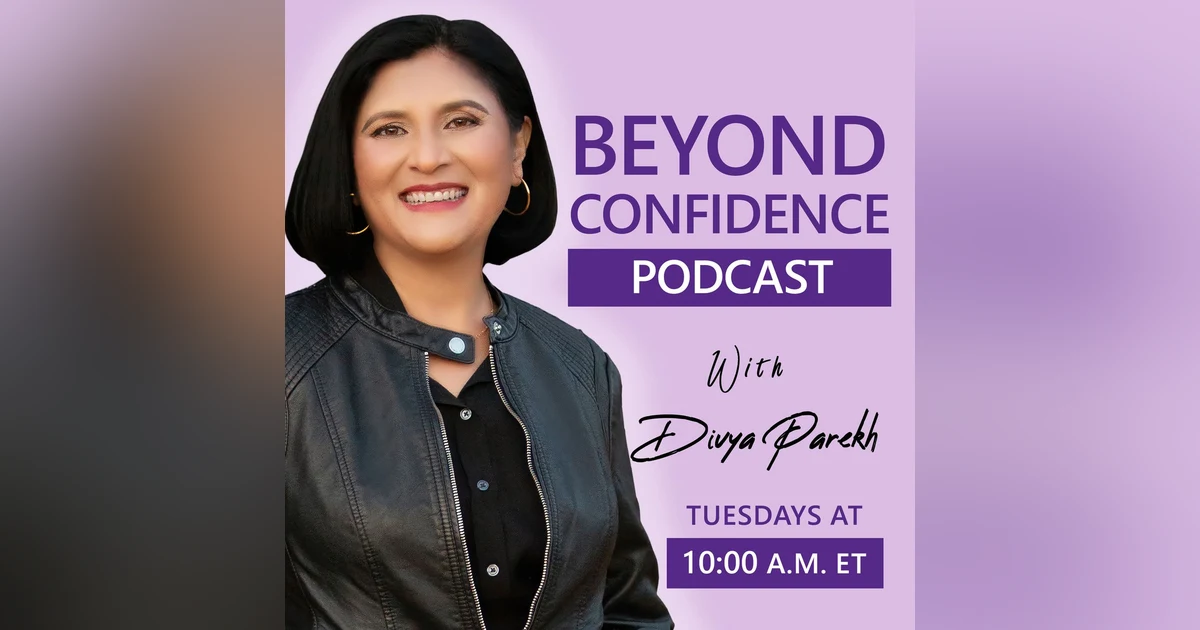

Join Divya Parekh and James Burstall, CEO of Arganon, a successful international TV production company headquartered in London, NY, and LA, producing shows like House Hunters International, Mysteries of the Abandoned, Lost Treasures of Egypt,...
 iHeartRadio iHeartRadio
 Spotify Spotify
 Youtube Music Youtube Music
 Amazon Music Amazon Music
 Apple Podcasts Apple Podcasts
 Pandora Pandora
 Audible Audible
 Podchaser Podchaser
 Audacy Audacy
 Spreaker Spreaker
 Deezer Deezer
 Podcast Addict Podcast Addict
 JioSaavn JioSaavn
 TuneIn TuneIn
 Castbox Castbox
 Castamatic Castamatic
 Castro Castro
 Fountain Fountain
 Goodpods Goodpods
 Overcast Overcast
 PlayerFM PlayerFM
 PocketCasts PocketCasts
 Podimo Podimo
 Podurama Podurama
 Podverse Podverse
 Podyssey Podyssey
 RSS Feed RSS Feed
 YouTube YouTube iHeartRadio iHeartRadio Spotify Spotify Youtube Music Youtube Music Amazon Music Amazon Music Apple Podcasts Apple Podcasts Pandora Pandora Audible Audible Podchaser Podchaser Audacy Audacy Spreaker Spreaker Deezer Deezer Podcast Addict Podcast Addict JioSaavn JioSaavn TuneIn TuneIn Castbox Castbox Castamatic Castamatic Castro Castro Fountain Fountain Goodpods Goodpods Overcast Overcast PlayerFM PlayerFM PocketCasts PocketCasts Podimo Podimo Podurama Podurama Podverse Podverse Podyssey Podyssey RSS Feed RSS Feed YouTube YouTube
Join Divya Parekh and James Burstall, CEO of Arganon, a successful international TV production company headquartered in London, NY, and LA, producing shows like House Hunters International, Mysteries of the Abandoned, Lost Treasures of Egypt, Attenborough and the Mammoth Graveyard and The Masked Singer to learn methods to future proof your business. Discover how to navigate crises not only to survive but emerge in better shape than before.
https://success.divyaparekh.com/unfairadvantage/
Beyond Confidence is broadcast live Tuesdays at 10AM ET.
Beyond Confidence TV Show is viewed on Talk 4 TV (www.talk4tv.com).
Beyond Confidence Radio Show is broadcast on W4WN Radio - Women 4 Women Network (www.w4wn.com) part of Talk 4 Radio (www.talk4radio.com) on the Talk 4 Media Network (www.talk4media.com).
Beyond Confidence Podcast is also available on Talk 4 Podcasting (www.talk4podcasting.com), iHeartRadio, Amazon Music, Pandora, Spotify, Audible, and over 100 other podcast outlets.
0:00 The topics and opinions expressed on the following show are solely those of the hosts and their guests, and not those of w FOURWN Radio It's employees or affiliates. We make no recommendations or endorsements for radio show programs, services, or products mentioned on air or on our web. No liability, explicit or implied shall be extended to w FOWN Radio It's employees or affiliates. Any questions or comments should be directed to those show hosts. Thank you for choosing w FOWN Radio. This is Beyond Confidence with your host Dvaparnk, do you want to live a more fulfilling life? Do you want to live your legacy and achieve your personal, professional, and financial goals? Well? Coming up on Dvaparnk's Beyond Confidence, you will hear real stories of leaders, entrepreneurs, and achievers who have stepped into discomfort, shanner their status quo, and are living the life they want. You will learn how relationships are the key to achieving your aspirations and financial goals. Moving your career business forward does not have to happen at the expense of your personal or family life, or vice versa. Learn more at www of you Dance Giva Parnk dot com and you can connect with div you ants contact at Giva park dot com. This is beyond confidence and now here's your host, give you a park. Good morning, listeners, It's Tuesday, and I'm so thrilled to be here with you because this is a special time of the whole week which I always look forward to. So I want to share a very quick story with you. So someone from our audience reached out and shared their kind of story with us. What they shared
1:32 was like they saw in the neighbor's yard some people working. It was very hot and as she observed, it seemed like they had like they had water, but it was probably not cold. The it didn't seem like they had a cooler. So what she did was she took a big bucket of ice and some cold water and gave it to them. And what Leslie shared, Leslie shared that the smiles on their faces were just amazing. So, folks, when we talk about kindness, you can perform kindness anywhere anyhow. You don't need money, you don't need time, you don't need to spend energy.
2:20 It can be little actions and every little action counts. And thank you for each and everyone who has got our books, especially Expert to Entrepreneurs, the Entrepreneur's Gotten and Expert to Influencer, because they are not only going to help you in your personal life, they're going to accelerate your career and your business. And also the partial profits from our book sales go to keyword dot org and we help entrepreneurs all across the globe. So let's bring in our guest, James Burstall good to have here. James, it's wonderful to be here with you in North Carolina, and in fact, in the book that we're going to be talking about in a moment, I have some wonderful interviewees from North Carolina, so I know your state. Well, oh, that's fantastic. So do you remember, even to this day any moment from your childhood that left a mark on you? Well, I mean, our childhoods are very very important. The way we are brought up, where we brought up and by whom, of course impact us for the rest of our lives.
3:35 And I had many blessings when I grew up. I grew up in London in the UK. You know, my mom and dad did work very hard to make sure that we had riff over our heads and there was food on the table, and I had a good education. But also, you know, our childhoods can be impactful. My dad had some emotion this years. My dad was an alcoholic and he struggled with addiction and my mum was embroiled with that. And you know what, I actually bless the complexity of that upbringing because it meant that I had two and my two sisters and I have two older sisters, one in New York and one in London. We all three had to grapple with complexity from a very young age. And you know, some people that can make very it can break you, it can be very damaging for a future life. But actually, in our instance, I think it really helped us to see that there is much good in the world. The world is not perfect, but that when you are resilient and you focus on kindness and you do work hard, and you surround yourself with good kind people and do a lot of work. I've done a lot of work on myself, and then you can come out a fit, a stronger person. So I do actually believe that adversity is sent there as a gift to allow us to become stronger as people. That is so powerful. And the point that you mean that complexities of the adversities had an opposite effect on
5:09 you, because so many people end up blaming their parents, blaming their childhood, and then they continue that cycle and that cycle is not broken. In your case, you all took it in such a beautiful way and broke that cycle. So that's so powerful. So as you grew up, where were your interests. Well, I was always very good at foreign languages because I love communication and I know that for you, emotional intelligence is such an important life skill. And I think now back, why did I want to learn foreign languages? I speak French, German, Spanish, Italian, of English obviously and a little bit of Mandarin. And I realized that I wanted to understand how other people think and how other cultures work. Because you know, we who grew up in these very cultural society is the UK, the US.
6:02 We obviously are impacted by cultures from all over the world, and I think that it is that blended DNA that makes us so strong. So my grandfather was French, for example, I have family from Scotland and from Northern Ireland, but also my sister now lives in New York and her husband is from Armenia. They are an American family with obviously very different roots from many parts of the world. And I love this interchange of cultures because I think it is so enriching. So I decided to learn foreign languages as a kid, and I realized now because I wanted to learn about how different people think and work, because nobody has all the right answers, and we are always students. I am constantly learning, and I love it when I go to a different country and there's a different way of thinking, a different belief system, a different way to show that you care for somebody, a different way to show respect, and we have to be mindful of other people's customs, and I love that. That's what makes the world so rich. Hm.
7:03 Absolutely, And it's just fascinating. It's just fascinating to learn about other cultures because it's one thing is at the core that binds all humans together, the desire to be happy, the desire to give better to your kids, the desire to have that family, and they're just different ways of doing that. So when we look at other cultures, it's not only it opens up our mind, but it also gives us so many different perspectives to understand other people. So where did your career first take you, James, Well, I went to university based in the UK, but as part of my degree I went to study in six months in Munich in Germany, and then six months in Paris. Obviously, practics might my French, which was at the time quite scarier because I was, you know, seventeen and moving to a foreign country and thrown into this complete foreign language environment where I basically had to sink or swim. So that was certainly a good way to grow up pretty pretty fast, but I did. I fell in love with both countries, but particularly Paris, and so when I went back to my UK university for one more year to get my final degree, and then I was writing letters to everybody on the planet to see if I could get a job. I thought I wanted to become a journalist because I love storytelling. I've always been passionate
8:37 about good stories. So I wrote to lots of people, and this is one of my beliefs in life. If you don't ask, you don't get, and you have to accept that you will get many rejections. And I wrote probably several hundred letters and probably got at least one hundred rejections, and many people didn't even respond to me. But one magazine in Paris is an American magazine called Paris Passion, a little bit like Time Out Now. They walk back to me and said, listen, we don't have very much money, but we'd love to take you on as an editorial assistant. Will you move to Paris please, and we'll pay you, you know, a couple of dollars a week. I mean, it's rtually no money, but that was okay. I got other jobs on the side and bar staff and wait stuff and what have you. And then on the back of that, I was very fortunate because I was in Paris and young and willing, frankly to do anything. If they clicked their fingers and said, will you go to Vienna thiss afternoon, I'd say, of course, where's the plane. Then Tina Brown and Anna Winter and Harold Evans, who are three amazing journalists, British journalists, all based in New York. Tina Brown was running Vanity Fair and a Winter running Vogue, and Harold Evans running Conde Last Traveler. They all started to employ me to write stories and do research on different kinds of articles for them. So I was, you know, hopping all around Europe doing one minute an investigation into gorbe Chie, the next minute a story about the Gypsy Kings, who are a band that were just kind of breaking out the time. This is in the early nineties. And I carried on working
10:09 as a journalist for those amazing publications for a few years between London, Paris and New York, but mostly based in Paris. And then I came back to London after a little bit because I wanted to be in the head office, worked for some newspapers and then I thought, actually, you know what, I don't want to continue to work in black and white. I'd like to move into visual sequences, working in a team, working in color, working with music, and of course that for me met and television. So I applied for a job and they said, well, listen, there is this kind of cool new use network on the BBC. It's based in Manchester, which at the time is a very very hip city. We will cut your salary in half, but we'll put you on but we'll put you on screen. So it's like, okay, so I'm going to move from Paris to London to Manchester, which I didn't know much about it, and I'm going to cut my salary in half, but I'm going to be on TV, so there was a no brainer. I said yes, of course, and from there on, you know, I've started a twenty five year career in the television and it was absolutely the right move. But again I do think that you know, you have to make bold decisions in your career.
11:20 You have to be very flexible in your thinking. You have to be willing, especially when you're young, and I had no responsibilities. I had no family, I had no mortgage. Obviously I was in my mid twenties at that point. But you have to be willing to think outside the box, think laterally and when opportunities come your way, obviously evaluate the landscape. But if it seems like this could open incredible new doors, even if it means taking a giant cut in your salary, then you must do it. And I'm so grateful that I did. It was the right decision. You bring up such a great point, and of course your premise is flexible leadership anyway, so you're talking about taking leadership even in your personal life, and when you lean yourself two or three things that are standing out for me from your story is one, you are definitely not afraid of rejection. So anyone regardless whether they're an entrepreneur, or youngsters or even people who are transitioning out, it's super important to face rejections and be able because so many clients who will be like, oh, I need to negotiate salary, I'm not going to take that opportunity. I need twenty percent jump and they lose out on so many different opportunities just because of money. So what would you tell them?
12:56 I think at the heart, you really have to know that you have a voice, that you have a value. But you merit the place that you inhabit on the earth, and nobody can take that away from you. And we all suffer rejection, and we all have people who don't agree with us, or people who don't like us, or people who are not prepared to value us, whether it's in our professional or our personal world. And that can be painful. You know, life at times can be painful. That's just part of the course. Unfortunately, that is that is what it is to be human, a human being. But if we can always hold on to the fact that you know, I'm a good person. I've got a clear conscience. I believe in good and wrong, actually in good and bad.
13:46 I do have strong sense of justice. I have a strong sense of fairness, and I do have very good self esteem. I know, I mean, I do believe. I do believe in God. But that is something that has come and gone over the years, I have to say. But I do believe that there is a higher power in the universe, and that we are put here for a reason. And I believe that I was dealt a set of cards when I was born, and that those sets of cards are to be the best son and brother and friend that I possibly can be. I don't have children, but I have six nephews and nieces, and I have four god children. And I tried to be the best uncle that I possibly can be. And I tried to be a role model in my business. You know, the kind of behaviors that we model, they matter. Leadership comes from the top. So I do believe strongly that we can influence the world that we live in, albeit the small world. You know, I can't influence the whole world, but my legal world, I can try to offer a place where people are valued, where talent is looked after. I set up my company twenty years ago. Leopard Films was my first company because I wanted people to know that they would come to a work environment where their creativity was going to be nurtured and looked after, not bullied.
15:07 I have worked for bullying bosses and bullying bosses who made me feel bad because they were driving the bottom line that they wanted. They thought that by kind of whipping me and my colleagues, they thought they would maybe get more out of us. Perhaps I don't know, weird mentality so not how I think. So when I set up my company, I knew I wanted to create a very positive, inclusive culture. Adversity, inclusiveness, kindness are absolutely at the heart of our DNA. It's absolutely critical. So what does the impact have, Well, of course, it makes it a happier working environment. In my opinion, makes people do better work because we empower people to do their best work. And there is compelling evidence from the Harvard Business Review.
15:52 The happy culture means a happy team. It has a direct impact on your bottom line. You make more money and you know, my business is successful. We have great team of people. We have many people who stay with us for many, many years, and we have new people coming in all the time as well. It's a good mix and we make good money, so it's kind of win win. So tell us about the transition. You mentioned that you started a company and what made you decide going and starting your company rather than going and working for someone else. Well, I did work for ten different companies from the ages of twenty five the ages of thirty five, and I had some incredible experiences. You know, I was producing and directing television documentaries and investigative programming and going all over the world. For example, I traveled all over Africa, I traveled all over Southeast Asia, I traveled a lot in the United States, all over continental Europe. And you know that was amazing, and I was being paid to do that, so what of an incredible privilege. But you know, I got to me on mid thirty and I thought, I don't particularly want to live any longer out of a suitcase. I do want to have a life partnership with I'd like to have a home, So that became very important to me, and I did then go to work in the office developing and selling programs for two different companies. My dog is making a bit of a squeaking noise. Is that a problem? Sorry, my dog's getting a bit excited in the background.
17:27 I'm trying to calm head down. Oh, you can bring your dog in the show as well. Like everyone's welcome, this is this is many a part, that is okay. I have two coccuspanuels. So so I went to work for two different companies, one who were very big in the United States and I wanted to do more business in the US, and the other who were very good at producing documentaries and I wanted to do more documentary work. And I learned on both occasions that I was able to develop ideas and sell them. So I was a good producer, creator, and salesperson on both occasions. After a year, I was able to say to my bosses, listen, I brought in a million dollars of business in my first year working for you. Now, can you give me some stock in your company? And on both occasions they said to me no, in maybe three or four years time, and I said, well, listen, I'm thirty five. And then the next time I was thirty six, I said, I can't wait three or four years. I'm going to be knocking forty.
18:30 So you know, i'd prove what I can do, and I want to do more and I want to do it for you, but you do need to make me a partner in some even just a small way in your business. And I did have to be tough and I said, well, if you don't do this, I will have to leave. And on both occasions they stood their ground. They said, no, we're not going to do this, not now, maybe in the future, in some unspecified timeframe. So I left and I had to leave. And again, you know, I would say this to everybody. You know, you give people a chance, and you give him a second chance and a third chance, and you talk fairly and openly and you have a dialogue. If at the end of the day the people are talking to and will not listen, that's their choice.
19:14 But you can't just sit around and be treated like a second class citizen, or we feel undervalued. You know, my self esteem wouldn't permit that of me. And also my business career. You know, I couldn't just keep working for other people and not getting the benefit forever. So really, having done it twice, I thought I can't do it a third time. Now I really do have to set up on my own. So I touted around the industry in the UK and the US looking for partners. I always worked fifty percent the UK US in my television career, and there was a company who said this and we will back you in your own business. And that was That was really the beginning, and I never looked back. But you know that that DNA at the heart of my business, which is value people, look after them, make them feel precious, because the people are the lifeblood of any company. I made my people feel feel valued, and I myself you know know that that is what works and as a result, you know, do have a very successful international business congress relations. So one of the things I want to ask you is that since you experienced both in the journalism and TV shows, what would you say were the five critical lessons that you brought with you that helped you in your business. Well, funny enough, I've tried to outline them in my book Here we Go a little plug Flexible Method, The Flexible Method, which is published in the US and
20:48 the UK. It's available Amazon and The Flexible Method. I wrote it coming out of COVID because I wanted to put down in writing a number of lessons, and there is sixteen lessons in this book about how to survive any crisis and come out on top. Because my company, like all of us and so many of your listeners today, will know just how painful it was. We all have our war wounds. COVID was really, really brutal and really challenged us and pushed us to the limit. But also there are many incredible people around the world, leaders, running teams, running businesses, some of them in multinationals, some of them in SMEs. There are people all around the world who demonstrated tremendous courage and thoughtful, flexible thinking. And I wanted to put it in writing so that when the next generation comes along and they have the next big crisis, they can turn to this book, and I hope it will be a useful tool. I certainly at the beginning of COVID felt like that, how are we going to get through this? What are the solutions? What? It's a methodology. But I hope now and there will be others that there is at least one book, my book, the Flexible method, people can reach and go, you know what, this this this generation, my generation, we did it. We came out with our war wounds, but nonetheless we survived, so maybe we can do it again in the future. In terms of the single most if I had to pick five, well, certainly putting your people first is absolutely critical. Emotion,
22:19 intelligence, relationships, Compassion for your people is at the heart of any business. So people, people, people, that would be my absolute top one. My next is lead with calm purpose. It is very important that we model calmness and confidence. I believe in being authentic. As a leader, you have to be authentic. So in the middle of COVID, I didn't tell my people, oh, it's all going to be fine, there won't be any problems. I was honest. I said, we don't have all the answers, and you know, there are people getting sick and some of my nobody actually in my team, but some of their loved ones did die. You know. We had to be honest about that. It was really brutal, but at the same time we were able to say the management team have got your back, we are here for you, we will find a solution together. To hang in there, don't do anything rash. If you're worried, We've got support for you to reach out. We will get through this, and of course we did get through it. So lead with calm purpose is absolutely essential. And next, I think would be gather your generals.
23:27 You cannot do this on your own. This is a sign of weakness, in my opinion, if you think you can do all this on your own, reaching out and saying I don't have all the answers. Yeah, I'm sitting in the chief executive seat. I'm human. I don't have all the answers. But surrounding me are some incredibly brilliant people who have sometimes ideas which are the same as mine, and sometimes ideas which are fundamentally different, and they will challenge me. So when you gather your generals. And I set up a group emergency team at the beginning of COVID where I had five people, a small team, but from different parts of the organization operations, HR, commercial, et cetera. And these people are not yes people.
24:11 These are people who tell me the truth, and sometimes it's the truth I do not want to hear, and that can be tough because it would say to me things, you know, James, this is really painful. You're not going to want to hear this. But actually I think X or Y or Z and I would go away and think about it, and sometimes I'd go, yeah, maybe, but maybe we can just soften that a bit. And other times I would go, you know what, You're right, we do have to do that, and thank you for holding up a mirror, because people to hold up a mirror. So, James, before we continue on the next lessons, let me ask you this. So many of my clients would come and say, let we see what's obvious, what's wrong with the system. And yet when we go on a project executive team and this is in awesome CPO CFOs or even LEPs and directors, they're not open to listening. And I'm not saying that's the case for our companies, there are quite a few. What can leaders do when you're leadership doesn't leadership team doesn't listen, how can they present any tips of tricks? Well, gosh, working with a brick wall is impossible. You can't stick around. I mean I have worked for brick walls in my life, and I have friends and recently my nephew. I'm very close to working for a brick wall that comes to point where you just have to leave. That's obviously, that's the
25:44 end point. We don't want to go there too often. Listening is again one of the single most important leadership skills, and I think one of the one of the things perhaps to hold in our mind is that this idea of a sort of supreme macho leader and that could be a man or all of them, is I think completely not fit for purpose because expecting one individual to just give top down directives, it's totally unrealistic. One can have all the answers for a big, complex ecosystem, which is a business, especially buffeting in the winds that we now live in. We live now in the time of perma crisis, whether it's inflation or interest rates going sky high, or the threat of recession, or the Ukraine or COVID or all the other things that the crisis that we've lived in the last twenty years, and there will be other climate change. Can this mean all of these threats and now coming at us, left, right, and center, not one that asks the other, but simultaneously. To expect one person to have all the answers to all of that, it's just crazy. So I think one of the things that we have to do, and I've definitely done that in my business and increasing I do see this in the means and other businesses too. The idea of a kind of mcismo top down leader is really not fit for purpose.
27:08 So I think we need to foster within the culture of our businesses a sense that positive constructive feedback is built into the DNA. So you've put systems in place where there is that opportunity for feedback and also an opportunity for people to be able to share different ideas which may not be necessarily that are currently in the business plan. If you like to maybe create opportunities, maybees once a month, once every six months, kind of blue sky opportunities where groups can get together and say we're doing things this way, but how about if we try it that way. Another important opportunity is when new people start, especially new people in big jobs. The first hundred days of that person being in that new role, they will be bringing all of the experience and expertise from their previous company, and many of the things from that previous company will be helpful. Some of them may be new. So it behooves us to make sure that when somebody new arrives, we give them an opportunity to share with us the systems that they were used to working with in their previous employment environment, so they can bring them to us and we can then review them.
28:17 Think, well, actually that is a good idea. We don't do that, Why don't we try it to give it an opportunity to be tested out. So, yeah, listening is absolutely critical and if and if we don't listen, we missed so many opportunities and our businesses are much much weaker as a result. Some really good solid points there. So going back to your company, do share like what your company does and how you've implemented all these leadership principles in europe culture. Yeah, So I run an independent media production group. We produce shows, and we produce shows for all the different platforms, whether it's Netflix, Amazon, Snapchat, Discovery, NAT, GEO, History Channel, HDTV, many many networks all over the US. Also in the UK the BBC, ITV, Channel four, Channel five, Sky, etc. So we produce content across all the genres. So we produce short form entertainment content. For Snapchat, we produced long form documentaries with David Atoner, for example about mammoths and ancient history and the natural world. We produce investigations, so we do investigative work with the New York Times, primarily looking out miscreants and criminals, and we've done quite quite a lot. We've exposed quite a lot of criminal behavior. We do very joyful reality programming such as
29:48 House Unt's International, which is on HGTV almost every night. It's a very warm, engaging property show traveling around the world. We do shows about space. Strip The Cosmos is a huge show. We do shows about engineering. Mistress of the Abandoned is the top show on Discovery Science. And we produced entertainment shows such as The Mass Singer. You may see the iteration on Fox. We produce it for the UK TV. It's a big celebrity entertainment seeing show on a Saturday night. And we also do scripted comedy. So we've recently just got a show on Netflix called Hard Sell with a very engaging British comedian called Katherine Tate, set in a women's prison. That's like Orange is the New Black, but very funny. I'll definitely able to check it out.
30:40 Yeah, So that's what we do, and our headquarters is in London and we have offices in New York, Los Angeles and Liverpool and Glasgow. So it sounds like you must have quite a few employees, and what would you say is your culture like if you were to describe it in few sentences, And well, definitely people first. We are known to be a very holistic business where emotional intelligence is at the heart of what we do. We're creative business. People are putting their heart on their sleeve when they reveal themselves in the creative endeavor. It's tough and something. Sometimes things are a huge hit and they win an oscar, and sometimes things absolutely bomb and it's devastating, you know, that's the nature of the creative endeavor. So we have to care for our people and also the people who support them, the financiers and the commercial people, and the computer programmers and the technicians and the lighting and you know, people from the whole spectrum we employ. We employ astronomers in our programming. We don't just employ creatives, you know, we do have an extraordinary broad range of people working with us. So we make sure that people are really well looked after. And then we make sure that we run a very tight management structure, because within the creative endeavor, it's very easy to lose money. So you have to combine creativity with really tight operational management. So for example, every single month, at the end of every
32:14 month, I work closely with my chief operating officer and my finance director and various people across the organization to get every single last detail of everything that's happening in the business into a giant board pack and honestly, it's like a bible. So at the end of every month we have our board meeting and I can open that book at any page and I know exactly where There are nine companies in the Argon Group. I know exactly where each of them is. And because I know the detail, I'm not worried about it. And the people who are running their individual businesses they can see very clearly. Are they where they wanted to be, a schedule with their budgets. Are there things go wrong, we need to nip something in the bud quickly and try something different. But by having that y which is excellent management, structure and detail, we can do our best work. So it is that interesting juxtaposition.
33:08 And I talk about this in the Flexible Method that you need to be flexible and agile in your thinking. So absolutely embrace that left side of your brain, but also you must engage the right side. You must make tough, detailed decisions, and when you've made those decisions, you must follow them through with fierce resolve and make them happen. When you've made a decision, you go for it and you make it happen. So you have to combine those two. So tell us more about your book. What went into a book? You know, what did you write? And you mentioned that there are people from North Carolina, so give us the whole school. Well, yes, I wrote the book to be useful because there we were coming out of COVID in twenty twenty one. That's your friend of mine said to me, listen, James. You know you and Argon on my business have been managing to battle your way through these tough times. I think it could be really useful. So that gave me the thought. So I wrote three chapters, got an agent, and the agent said you need to write a different chapter.
34:13 As I was like, oh no, I've still got no guarantees. But I did write the other chapter, which broadened it out to include nine eleven and Hurricane Sandy and Hurricane Katrina, and the wildfires of California and the icelandic ash clouds, the volcanic ash cloud and many and the credit crunch and other recessions and so on, looking at the whole of the last twenty years really and the multiple crises that we have faced, and I decided that I would I sign my dog. She's squeaking at the sounds of the terrible crisis, I think. I then decided that I would go in interview some people in different industries because I wanted the book to be as broad based as possible. I didn't want to just write it to the media industry. I wanted to write it for a broad audience. So I went out and I interviewed of the most incredible politicians actually in the US is a mayor of Oklahoma City.
35:05 He's forty. He is the youngest mayor in the US, and he is the first Native American mayor. He is a Republican. He was obviously in the state of Oklahoma, which was a Republican and where the governor frankly didn't really believe in COVID, so had a particular approach to COVID. David Hold, which is his name, the mayor's name, felt fundamentally differently. He's got quite a diverse community in Oklahoma City. He's got a very strong social conscience. He cares for his people profoundly, and he decides to put quite stringent measures in place to protect his people. So he did bring about lockdowns, he did shut down bars, he did put in shelter at home to meet distance six feet distance and what have you. And well, it's kind of weird to say, but the proof is in the pudding. The fatality rates in Oklahoma City were amongst the lowest in the United States. Why is that? Because he was brave, he spoke his authentic self, He put his people first. He put quite stringent measures in place and followed them through with fierce resolve. And he had a low death rate in Oklahoma City.
36:19 And I mean that to me. That to me says a lot. So he was very inspiring. So he's in the boom. Another really inspiring stories actually in North Carolina, where of course you have many hurricanes. And I reached out to the pork farming community because I wanted to have agriculture in the book. And I met the pork farming community and realized that one thing they did that really started about twenty years ago, was whereas historically they worked very independently of each other, these big farms, and they weren't really talking and there was kind of quite a lot of competitiveness, and therefore when giants storms came along, they were not prepared. Sometimes the animals would die.
36:59 They do a lot of money, and they could cause quite a lot of damage sometimes because they would have giant floods and things would happen. So what did they do. They decided to really pull together as a community. And this again is one of the chapter Collaborate connect. When you reach out to your community and you collaborate with others rather than working in competition, you can come up with systems that are going to be good for all of you. So what the port farming community did in the Carolinas was they decided that different parts of the port farming industry would do different things that certain certain of them would look after livestock, some of them would look after the food, some of them would look after helicopters and emergency rescue. They also put in systems in place whereby they could predict heavy storms much much earlier and therefore act more quickly and then limit the damage. So by now working together in this very collaborative way, changing breaking down all of those boundaries, breaking down that separation and the competitiveness, but actually coming together as a community and working and coming up with a plan, being much better prepared well in advance. They have now mitigated against the giant risks and the giant billions, all the losses that they used to suffer. And I just love that because I thought, well, even in farming, there is this lateral outside the box thinking and there's collaborative spirit. So Janet Archer is my interview in the book, and she
38:30 just really inspired me. Wow. I love that so definitely. I'm looking forward to getting your book and reading it, and I'm sure listeners are going to get your book as well, because it definitely sounds that it's packed with valuable nuggets, a lot of wisdom, insight and real life examples. And that's the key that if somebody else has done it, you can do it. So absolutely, Yep, as we come close to our show, people you can find where can people find you, James if they want to connect with you? Okay, Well, first of all, the book is available on Amazon dot com and I would love you to buy it. It's also available in good Reads and through local bookstores, and I would love to get feedback because I hope you've kind of heard now and can feel that. I'm very collaborative and I wrote the book as as it's my first book, and I want to hear feedback because I want to improve the book and we're all in this together and we can make the world a better place when we collaborate.
39:39 A good place to connect is LinkedIn. You can find me on LinkedIn and just reach out and connect. And I do a lot of public speaking. I'm very accessible. I love to hear from interesting, smart people who've got ideas, So LinkedIn is probably a good place to reach out. Absolutely, And you can also find James that www. The Flexible method dot com. So, James is as a pleasure having you on the show. Is there any last words that you'd like to tell our class? Well, just I'm thrilled to have been invited on the show. Thank you so much. And I think perhaps start or at the rather end where we started, which is kindness is everything. If you have kindness for people around you, people you work with, and people in your life, then you can produce remarkable change. And something I try to do every day is a small random act of kindness. It could be something very small or something big, and you don't need credit for it. You don't need people to know that you've done it, but just by doing one random act of kindness for somebody you may have never met, you may never see again, or somebody who you love, but that goes a long way. I completely agree about that. And thank you for joining us and sharing your wisdom and tests openly. And thank
41:14 you listeners for being with us because without you the show would not be possible. And thank you one for all the technical support. Be well and take care. I'll see you next Tuesday. Thank you for being part of Beyond Confidence. With your host Dvia Park, we hope you have learned more about how to start living the life you want. Each week on Beyond Confidence, you hear stories of real people who've experienced growth by overcoming their fears and building meaningful relationships. During Beyond Confidence, Diva, Park shares what happened to her when she stepped out of her comfort zone to work directly with people across the globe. She not only coaches people how to form hard connections, but also transform relationships to mutually beneficial partnerships as they strive to live the life they want.
41:59 If you are ready to live the life you want and leverage your strengths. Learn more at www dot dvapark dot com and you can connect with Diva at contact at dvapark dot com. We look forward to you joining us next week


