
The Power of Visual Storytelling: Creating Authentic Connections with Your Audience
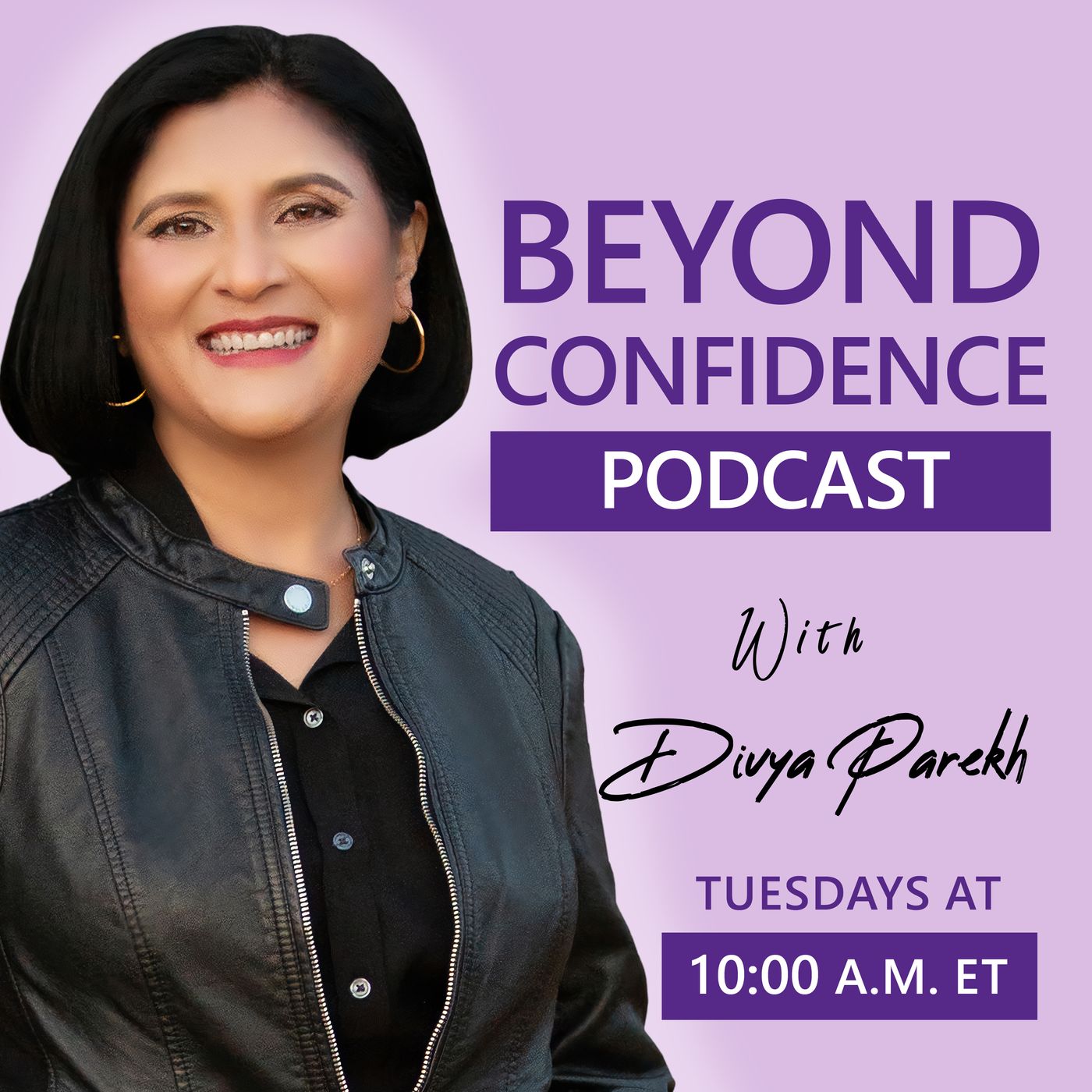
Join Divya Parekh and Riccardo Sai to learn how to employ visual storytelling to create authentic connections with your audience, and leave a lasting impression. We will explore the key takeaways of visual storytelling, including how to use visuals to...
 iHeartRadio iHeartRadio
 Spotify Spotify
 Youtube Music Youtube Music
 Amazon Music Amazon Music
 Apple Podcasts Apple Podcasts
 Pandora Pandora
 Audible Audible
 Podchaser Podchaser
 Audacy Audacy
 Spreaker Spreaker
 Deezer Deezer
 Podcast Addict Podcast Addict
 JioSaavn JioSaavn
 TuneIn TuneIn
 Castbox Castbox
 Castamatic Castamatic
 Castro Castro
 Fountain Fountain
 Goodpods Goodpods
 Overcast Overcast
 PlayerFM PlayerFM
 PocketCasts PocketCasts
 Podimo Podimo
 Podurama Podurama
 Podverse Podverse
 Podyssey Podyssey
 RSS Feed RSS Feed
 YouTube YouTube iHeartRadio iHeartRadio Spotify Spotify Youtube Music Youtube Music Amazon Music Amazon Music Apple Podcasts Apple Podcasts Pandora Pandora Audible Audible Podchaser Podchaser Audacy Audacy Spreaker Spreaker Deezer Deezer Podcast Addict Podcast Addict JioSaavn JioSaavn TuneIn TuneIn Castbox Castbox Castamatic Castamatic Castro Castro Fountain Fountain Goodpods Goodpods Overcast Overcast PlayerFM PlayerFM PocketCasts PocketCasts Podimo Podimo Podurama Podurama Podverse Podverse Podyssey Podyssey RSS Feed RSS Feed YouTube YouTube
Join Divya Parekh and Riccardo Sai to learn how to employ visual storytelling to create authentic connections with your audience, and leave a lasting impression. We will explore the key takeaways of visual storytelling, including how to use visuals to convey a message, tell a story with purpose, and remain authentic. Join us for an engaging conversation on the power of authentic visual storytelling.
Click this link to learn more https://success.divyaparekh.com/unfairadvantage/
Beyond Confidence is broadcast live Tuesdays at 10AM ET.
Beyond Confidence TV Show is viewed on Talk 4 TV (www.talk4tv.com).
Beyond Confidence Radio Show is broadcast on W4WN Radio - Women 4 Women Network (www.w4wn.com) part of Talk 4 Radio (www.talk4radio.com) on the Talk 4 Media Network (www.talk4media.com).
Beyond Confidence Podcast is also available on Talk 4 Podcasting (www.talk4podcasting.com), iHeartRadio, Amazon Music, Pandora, Spotify, Audible, and over 100 other podcast outlets.
0:00 The topics and opinions expressed on the following show are solely those of the hosts and their guests, and not those of W FOURWN Radio It's employees or affiliates. We make no recommendations or endorsement for radio show programs, services, or products mentioned on air or on our web. No liability, explicit or implied shall be extended to W FOURWN Radio It's employees or affiliates. Any questions or comments should be directed to those show hosts. Thank you for choosing W FOURWN Radio. This is Beyond Confidence with your host Dvaparnk. Do you want to live a more fulfilling life? Do you want to live your legacy and achieve your personal, professional, and financial goals? Well? Coming up on Dvaparnc's Beyond Confidence, you will hear real stories of leaders, entrepreneurs, and achievers who have stepped into discomfort, shanner their santus quo, and are living the life they want. You will learn how relationships are the key to achieving your aspirations and financial goals. Moving your career business forward does not have to happen at the expense of your personal or family life or vice versa. Learn more at www dot Givaparnk dot com and you can connect with div you ant contact at givaparnk dot com. This is beyond confidence and now here's your host a park. Hey, Hey, hey, folks, this is Deva. Good morning, and it's Tuesday, that wonderful time when I love to be with you all together because I look forward to it and I'm here to serve and support you. So I want to thank each and every one of you who have had a chance to get our books, especially the Entrepreneur's Garden and Expert
1:33 to Influencer, because that can enrich your lives and give you the tools to live the lifestyle you deserve. And I also want to invite you to take one hour of your time every month. Think about it, whether we're in the US, where we are across the pond, where our guest is from, in UK, or Australia or Asia, anywhere in the world, think about it. If the whole humanity came together and just put in one hour of their time being kind to somebody else, we could turn it around one hour every month. Let's see, even if two hundred million people did that, it's two hundred million hours, and what a difference we could make in people's lives. So do that, and let's invite our guests in. Malcolm Ricardo, I nice to meet you. Nice to meet you as well, So Ricardo, we usually start out from childhood. Tell us, do you recall a moment that still stands out for you even today from your childhood?
2:45 A moment from my childhood that was a long time ago. Well, I some of the dearest memories I have are of me creating incredible stories with anything that I could find. I had a collections of like miniature figures, I had a collections of cars, and I could and I would tell stories with all sorts of things, including pebbles and grass, anything that I could find. So I have a lot of really vivid memories of those times where I was just spending hours and hours by myself. At that time, there was no really I mean, yeah, we had a black and white TV, we had a radio, but it was more fun for me to tell stories, and that's how everything started. Really well, I love that aspect because it jugs memory down my memory lane where I used to in books. I would be so controlled with books that in it Bliden and Nancy Drew and there were so many other books that spend just kind of time lost in the world of stories, and that of course prompted me to have stories. And while I used to love climbing trees, and while I would be climbing trees,
4:15 I'd be seeing some birds and like you know, chasing each other, and those stories would kind of pop up in my mind. And I used to write short stories and short bombs, and then of course I got distracted. But I can definitely relate to that that you can spend hours together weaving those stories and having that imagination and it transports you to just another world. So as you grew up, did that interest kind of stay with you or how did it get magnified? What happened? Tell us? So that kind of passion that I had for stories really stayed with me for pretty much all my life. At the beginning, it was was it was just for me.
5:10 It was was a natural way of expressing myself and also understanding more about myself and about the world. So children use the stories all the time to to to make sense of reality and to make sense of things to Because stories are sequences of scenes, there's there's a narrative arc and and and and and and and a lot of time. In in stories, you have different different elements that come together. So building a story it's a bit like a like a puzzle really or and so in a way, at the beginning, my my interested in stories was was more like because it was fun. It was a way of entertaining myself. And then of course when you start also creating stories with other people, it becomes even more interesting. And then further down the line, I discovered new ways of telling stories, and I became more interested in the in the in telling stories through visuals and sounds. So I became quite interested in in in films, in photography and and other like visual ways of telling story. And that's how my my my passion for storytelling really developed
6:42 over the years and eventually became a job as well. And that's what I've been doing ever since, really and and for for for it's interesting because I feel very privileged as well, because it feels when I'm telling stories. I mean, of course, telling stories it's just one element of my job. There's there's more than that. There's I need to sell myself, I need to go to I need to meet clients and everything, which is also fun. But I'm not telling stories when I do that. So, but when I'm creating stories, it's not only is magical the creation of the stories, and also what is what is what is really magical is also the process of telling the stories. That's magical in itself, because when I'm creating those stories, it could be a film, could be a photo, shoots, could be um different ways of telling the stories using sounds and visuals. That could be an installations, could be an interactive drama. I get transported on a different and a different almost like a different planet. So I'm flowing. So my my, I I get really absorbed by by my job, you know, in up to us, up to us an extent that it's not a job anymore. It's a hobby and it's a lot of fun. So I feel very privileged in considering my job a hobby because it's because it's um,
8:13 it's it's it's just a lot of fun. And I really and I can bring myself as well into into the job that I do. So, my my, my, the work that I do, it's a visual representation of who I am as a person. And that's that's really it's a very nice sensations to have. But also then stories become alive in the audience, in the people who are watching those stories, who are reading those stories, who are listening to those stories, and those stories are different. They are inspired by the original stories that I designed, but then the stories that people um digest and take away they are different because we all have a very limited and kind of narrow minded way of experience in life, because we can only explore and make sense of the world from our very limited perspective. So and in doing that, we we see, we see, and we absorb those stories from our own perspective and they become something else. They become our own stories.
9:30 And that's very fascinating, absolutely, and you highlight did really a great point. Like two things that stand out for me is that there are different mediums to tell a story. So, for example, as I mentioned that I still love writing stories, and that reflects in the books that I have written I have. I use storytelling very very prolifically, because when I'm writing, I can get lost and sometimes I have to send apology. I was like, oh, I got so caught up in writing that I didn't attend the meeting, And I totally understand, Like when you are talking about being in the flow because it's a passion, it's it's something that you play at.
10:18 And then another thing you mentioned is that people look at stories from limited perspectives. And another thing that stories does is opens up people's minds and allows them to look at things in a different way and broaden their horizons. So that's such a beautiful way that you shared about it. So can you tell us about a very specific experience where you used visual storytelling and that played a key role in creating an authentic connection with your audience. Yeah, so I've done I've done many many films, and and and and I've I've produced and directed many films over the years, and so there's it's not easy to choose a particular project. But there are some projects that I've done which they still resonate with me in many different ways. And and and those projects are the one they are driven by a purpose. They're not just about creating something that looks beautiful. Films and phography they are they are beautiful. I mean they could be that they look great. It's nice to be photographed. It's nice to look at to go to exhibitions of photos, it's nice to go to the cinema. It's a pleasure for the eyes and for the years if if
11:50 we're talking about a film. But to me, the more meaningful ones and the one they really I'm mostly attractive to, are the projects there have a purpose. They are there because they want to make a difference and they use emotions in a very creative and original way because they want to move people to do something, to feel differently about something. They want to move people to actions. They want to create challenge. They want to challenge people to see reality in a different ways. They want to challenge people to discover something new.
12:33 They want to educate. So those are the stories that are more passionate about because those also the story that still talk to an audience for years to come, and they don't just leave, breathe and die in a matter of hours. Do. They're beautiful, but they're only very long. So the ones that I'm more interested are the films and the the project that they continue to talk to an audience for a long time. So, so closing this bracket, so, but I think it was important to understand the type of projects that I'm also most proud of are the one that they have a very long shelf life as we say, so there's quite a few different ones, but I will probably pick one. I wanted to talk about a different one, but I think I'll pick another one, which is an all the project that I did years ago. It was a documentary. It was a documentary that I did in Italy where I was born, and it was it was a project about cancer, but from a different perspective. It was about cancer, but not as as a disease that kill people only, but also as an opportunity to really reframe your life from a different perspective. And we're going
14:03 back to the power of the films and stories to reframe your life and really kind of giving you a different offering you a different opportunity to see reality and yourself in relation to reality in a different ways. So that project was a very very powerful project that I did because we were interviewing people who were diagnosed with cancer, different type of cancers, and a couple of them died during the production of the films that they were not at the screening of the film. But to me, what was really powerful about telling their stories, allowing them to have a voice in front of the camera, to really sharing the challenges that they went through, but also the victories and how cancer in many different ways transform their lives for the better, which might sound something like a simoron and but it was incredibly powerful really interviewing those people and following them for days and days and really understanding from them how they took that, of course as a tragic thing that happened to them, but also later so they managed to transform it into that experience into something different and more meaningful, something that can allow them to transform their lives. So that to me was a very powerful project that I did, and in a way, as a storyteller,
15:37 when you tell those stories, you are also going through a transformation, and I changed a lot as well during that film. It was it was quite shocking in many ways. So it was a beautiful experience, but really an uneasy one. It's hard to remain untouched in the presence of transformation, because what you shared was these are people who are seeing death or looking death in the eye, and then they are experiencing tremendous ups and downs, eyes and lows, and when you are in their presence, it would I would definitely agree with you, you know, how it transformed your life, and I'm sure that it transformed the audience's lives as well. So if our listeners were interested to watch that documentary, where could they find it. It was commissioned by a charity and it's in Italian, so it's not publicly available. I don't think so. Maybe it is actually because I did it like ten years ago. But I know that that's the beauty of that is that they're still using it when they do conferences that they do show it on TV as well, So it's not something that you would find online. But it's a distribution to ask them. But yeah, but it's not public here available also because because he's dealing with really private stories, some issues in terms of like publicly
17:12 sharing those stories with the world. So yeah, and that definitely makes sense respecting people's privacy and their stories. Are there any works that we can find publicly? Yeah? Well, my my work is is is on different people can find my work on social medias. I my my personal website is mister Si am I s r SI, which is my surname dot UK and there they can find my photos, my films, and then on my company social medias as well, the dot store store, on Instagram, Facebook and on LinkedIn. As well. I'm quite active, so I tell stories on social media, so I share my stories and I share share what I do and why I do it as well. So well, that's very powerful. So now as you're creating different stories, and as you mentioned, you work with photographs and you work with creating videos and movies. So when you're doing that, how do you determine what visual elements to keep and what visual elements elements not to use. It depends on the type of projects that I'm doing, so because it's it does really vary in terms of yeah, if we're talking
18:45 about like a for example, a personal branding photoshoots, if we're talking about an advertising film, a music video of it. So they're all very very different, and then the way you work on them it's a bit off front. I think. One in general, what is very important to get clarity on is is first of all, why you're doing what you're doing. And that has to be very very important. For example, when when it comes to documentaries, for example, like the one that I mentioned before, you need you need to convince people that that's this film is worth it because making a film or making any kind of collaborative creative process because that's basically what I do. I'm not a painter painting in my room. I'm working with other creators to create stories. That's what I do so, which is it's a very collaborative process the one that I use. But in a way, if you're leading that the story, that narrative, you need to lead, so you need to know in which direction you want to go. So it's very very important to that people understand why you're doing it and for what reason.
20:04 When it comes to documentaries, for example, you need to have almost like I would I would say a contract, but it's it's more like an agreement about like explaining why you're doing what you're doing and what you're going to do with those images and with those stories. So there's there's some ethical issues as well. And this is kind of looping back to what I was saying before about the documentary about cancer patients. It's very very important that you create that relationship with the people. But also when it comes to advertising, for example, you start with a strategy, So why are you doing, why you're creating that film, why you're creating that narrative. So there's always a strategic element at the beginning of everything. Then there is the creation the plan or what you want to do. So there's always a sort of scriptwriting type of process where you are starting to write a synopsis of the film. You might start with, um, a storyline of the story, just like just a few lines a lot, like a logline for example, or what you're trying to do. Or if you're doing a photo shoot, say you might start collecting some some some photos of from other photographers. You might start looking at some locations, so and then you start creating the visuals like a sort of
21:36 the visual patterns, the vision inspiration behind that vision arity that you're creating. So then you you might create a mood board for example. And then there's the production of the of the project and so that that's the shooting. In my case most of the time is there is the shooting or if you're not shooting by you're editing only existing material. That's the production of the film. And then very important is there is the post production, so what you do with the images, because even that is another level of writing. So you're rewriting the story when you're editing, so and you're rewriting the story when you are when you are changing the colors of the images if you're doing if you're creating a photo, but also you are rewriting the story when you're deciding which image goes after which, when you're doing a film, and switching those images or cutting those images one frame or two frames longer or shorter can completely change the meaning of the film. Has been there has been some interesting scientific experiment in that sense, really like having like a set and when I went to film school, we did those kind of exercises where you have like a set of like say ten shots in different ways you can tell the same stories reassembling those shots. And that's very fascinating because you know, storytelling is is alive,
23:10 is alive, and it does change all the time. I'm not sure, but yeah, what a fascinating way to approach it, because that's really a good way, Like, you know, you have ten shots, and how many ways you can use to tell that story. And this again goes back to so that's a bigger picture when you're making movies. Let's bring it down to the visual storytelling for individuals, because visual storytelling is such a critical part we're seeing on different platforms, whether it's Instagram or Facebook or YouTube, shorts like reels. As you're creating the reels, you're as you're creating the stories, then there are those sliding pose so when people are doing content creation.
24:07 So the way I see it is it's so important to be authentic. It's so important to understand who your audience is. And I really like what you shared was that why are you doing It's not just to put it, take spaghetti and throw it down the wall and see what sticks versus what is your purpose? So bringing that why into it. So now let's say, especially today, I'm not going to say that authenticity is a buzzword because it may be, but the desire for authenticity is really really high in today's world because of so many different things going on. So people are looking for authenticity.
24:48 Now, on one hand, there's that need to be authentic, and on another hand, there is that need to tell a compelling narrative. So how can you balance the from an individual's perspective, So like, even while you are creating your content, how do you balance those two out? And what advice would you have for individual entrepreneurs. I think there's a bit of a misconception about authenticity because that yes, I agree with you, Diva that authenticity is a bit of a buzzword. It's got it's got its place, I think, and I think it is important to be authentic. But I think authentic it doesn't mean cheap, because a lot of people are They think the authenticity is about just grabbing a phone and taking a video and just shooting like a like a horrible video and sharing that on social media platforms or whatever.
25:49 So that to them could be like, oh, yeah, I've just created an authentic video of myself, and that's great because people can really see who I am who I am and without any filters, so I can see where they're coming from. But unfortunately, when it comes to using visuals to create to recreate reality or to create a new reality, it's more complex than that. I mean, of course, there are some incredible cameras these days, and even the phones are very very powerful, but it's it's it's complicated to tell a story and and to be authentic. So I think, to me, authenticity it's not about necessarily using like some cheap material and producing something that is kind of a easy digested and easy easily shared on on social media.
26:53 So I think authenticity for me is it's it's about it's about your values and how your values, your missions, your your why as you, as you said before, is reflected in into how you communicate yourself to the to the outside world. So and I think the balance is very tricky because, as I said, not necessarily doing like a video with your phone means that you create unauthentic film in this case, or our authentic photos. But also the other around, if you're if you're creating something like a like a a piece of a visual storytelling using some incredible cameras, lights in a studio, all the assistems of the earth helping you to create something that is super glossy, is super beautiful, amazing soundtrack. That's the other extreme. So, so where is authenticity. I think authenticity, to me, it's it's it's it's about it's about capturing really the essence of who you are as brand, of who you are as an entrepreneurs. And also I think one of the challenges really to be original as well, because because there's a and I think there's also some ethical issues in that sense, because there's a lot of images
28:26 out there, there's a lot of stories. So every time I create a new stories or an entrepreneurs, you creating a new stories or some some new visions to share on visual on social media, you should really asking yourself does the world need another story like that? Does the world need an image like that? Is it really adding value? Is it really changing the narrative or is it just a pretty picture or a horrible video. So I think the challenge for me is really like finding new ways and more meaningful ways to tell stories so that you can have the bigger impact as well. And the type of stories which I think are more interesting are not necessarily the stories telling your brand stories or the story of view as an entrepreneurs, but they could be different. So, I mean, there's there's so many interesting examples of life.
29:21 For example, charities collaborating with them with brands and co creating stories that can benefit both are brands because they reflected their values of the brands, but also helping the charity because they raise awareness about what they do. So I think there's there's there's a lot of possibilities out there as long as you're pushing the way you tell those stories because there's so many out there. So does the world need another image? Less? Really challenge ourself to tell different stories and told in a different ways. I think that that, to me is what is driving me these days. Love that that just don't put the content out there for the sake of it. Think through it. What's your why and what value are you providing? Are you creating an impact? Are you partnering with someone? Because coming together and creating stories and more meaningful ways is going to create that deeper connection with your audience and that will go long ways rather than putting out fifty videos in a week. So that's very powerful.
30:37 So it's let's say people have created a meaningful video. How would you measure the success of your visual storytelling efforts? Well, I think there's different ways you can measure it, and again it really depends on what you doing. If it's like a video, for example, that you're doing for social medias, you can you can look at the some of the metrics, for example, how many times have been shared some how many times has been viewed? Um? But I think is that again it really depends on the type of videos. If we're talking about videos. But for example, one of the things that is important as well is that how many how many conversion did that video generated? Because even if you have ten views. But those views are very very meaningful, and these are all people, like maybe fifty percent of those people call you back, or they started to buy something from your shop, or they ask for a consultancy for example, based on on on that single video that you did, that's already a success. So I think the narrative has changed a little bit. So used to be that if you have millions of views when it comes to videos, that's a great success. Now
32:07 it's a bit different. So I think it's really about who is watching those videos. Again we're talking about videos in this case, but could be something else as well. But also I think for me it's one of the key is really when you when you are producing any type of creative projects, and again let's focus on videos for example, you also you always have to think about how are you going to share these how are you gonna reach your target? Because and I remember, but back in the days when I used to do like shot films, I remember that I had like a limited budget and I would put all the budgets, as they say on the screen, to have the most amazing cast, the best script that I could all there, the best director, photography, and the film done finished beautiful, but what do you do with that film? So at the beginning of my career realized that I run out of money and I didn't have money to like sell send them the film to festivals for example. Then going to festivals it is also a cost because you need to travel there, you need to they might need the film in a different format, so you need to pay someone to transfer the video in a specific tape blah blah blah. So so to me, that's a very important element, really really again, and we're going back to what we were saying before about the why why are you doing this film?
33:35 And I think it's a it's it's important to have this conversation. But also when you are creating, also you need to let yourself go because you've done all the homework before and after as well. But yeah, thinking about who's gonna watch that video it is very very important, and I think it's it's an element that a lot of time people don't really think about. And also repurposing films, it's quite a clever way to do it. And so when I work with clients, I always advise them to make the most of the filmmakers and the people who are working with them. So could you adapt that film for social medias? Do you have to shoot in a certain way so that you can repurpose it for TikTok for example, which is vertical YouTube reels for example, or Instagram reels. So you have to think about that in advance. And because that way, when when when it comes to measuring how successful was your campaign, you put together all the different views and shares that you had across all the different social medias and beyond. So absolutely fascinating.
34:54 You have given us very important nuggets over here. So you've talked about preparation. Now let's go to the actual creation of the content. Can you share a certain framework or certain elements that people need to focus on as they are building their storylines? Um, well, there's there's different the different there's different type of stories that you can tell. So and again it's it really depends if we're talking about films, photography, or other or other visual ways of building narratives. Again for convenience, let's talk about videos for example. And again there's so many type of videos that you need to think about. One one element that I would say it is important, as I was saying before, you need to start with the why why you're doing what you're doing.
35:46 The scripting is very very important, but not necessarily scripting writing everything on paper, and that's one of the mistakes that are lot of people do they want to write, say, for example, that they're doing they're organizing an interview for example, they want to write everything. And sometimes you don't get the best performance if you write everything, because I mean I was doing recently approject where I had to interview people in six different languages, so which was challenging. Luckily I can speak three four different languages, but you know, I couldn't speak some of the other languages. But it's you have to think about the fact that people when they're in front of the camera, they will freeze.
36:28 So sometimes it's easier to not necessarily write everything, but just do almost like a bullet list type of use that kind of approach. So like a bullet list up of approach where you just you just write some pointers about some topics that you want to cover, because the risk is that otherwise people will literally even if they're not reading, they will try to remember exactly what they read and then they use different words and they all thing collapse basically, So I think there's an element of writing which is important. So when it comes to to drama, corporate dramas, advertising, so that that's a very important aspect. And as I was saying before, so you're rewriting that script orso when you're shooting, So choosing what kind of angles you're using, choosing even the kind of people that you're working with. In a way, it's a bit like choosing a different color to paint the painting. So choosing the collaborators, it's an important part of the writing process. So you are really writing your narrative or the narrative of that project with the people that are working with you, because as I was saying before, this is a very collaborative process.
37:50 So so yeah, So choosing the right crew, the right cast, who's going to be in front of the camera, and where you're going to shoot the location is very important because that's a character in itself. It could be just a blank wall, it could be outside. Also choosing the type of equipment that you're using. In a way, you are making choices about the type of stories that you want to tell and how you want to tell that stories, what kind of framing. So if you're if you're shooting really tied shots surduali only type of style, or you're shooting very wide shot.
38:32 You can do like a very like an interview for example, with a person, that person is very very small in the screen, so that that way of telling a story is different than doing like a traditional close up type of interview for example. So yeah, so it's complicated to tell stories. So that's why collaborating with people who know how to tell stories, I think is is the best choice you can you can make or learn how to tell the stories in a way. It's quite important I think these days definitely, especially if you're working with someone who has walked the walk before and knows the details, that always goes a long way. And as you mentioned, you know, there's so many different elements that are involved. So if we were to kind of as we are getting close to the end of the show, if you had two to three pointers or brands and businesses, what would you tell them how they can go about using visual storytelling to form meaningful connections with their audience. I think for me, what is very important is to really think about the emotions behind the campaign and anything that you're really producing, because because in many ways creating a pretty photo. I mean now also with the artificial
40:09 intelligence, you just write a few prompts and you have a beautiful image. Um So creating pretty pictures is easy. I wouldn't say everybody can do it, but it's it's very easy to do that. By creating images and stories, they work for your brands. I really resonate with your with your brand is important. And I think an element that a lot of people don't consider enough is really the emotions behind so. So a lot of people, a lot of brands are also worried of like shocking people, inspiring people through emotions, or like really moving people emotionally, um in a good or in a in a bad way. That doesn't have to be That doesn't mean that we need to tell more horror stories. But you know, it could be a beautiful story to be a comedy. But it really like think about that, the emotions are the quickest route to the heart of the people that you want to communicate with. So and I think a lot of a lot of brands, a lot of companies there are they don't know how to handle the emotions because emotionals are they they they are so volatized and they people are scared of feelings sometimes, but at the same time, I think as we need to
41:39 use them, we need to learn how to use them. So yeah, my takeaway would be there to create more meaningful and emotional visual stories. It could be through photos, could be through moving pictures or even podcast. Um. I would say. The other takeaway is also like to dare to be different as well, because because other people have been doing those type of films or those type of photography doesn't mean that you have to do the same. If it works for them, it doesn't mean that it works for you. And if you feel like you want to produce a film in a very unusual scenario or location, why not if that kind of works with the with the with the with with your brands, with your with your values, why not it's um I think it's a yeah, so they're to be different. I think that's that's really important. We talk to radio about authenticity. That's also very very important, and I think it's a customers are looking for. For entrepreneurs and for brands, there really are there to build values, who are of course interested in profit, but who are there to create change and to have a positive impact on their lives as well as the rest of the society and the planet as well. So I do believe the more interesting brands are
43:15 the ones that are already telling their stories in that way, who are really using storytelling to transform their inner narrative in many ways, their purpose. Why are they're doing what they're doing. I mean Patagonia is one of the best examples, of course, But that way you are unauthentic brands. I think that way you really connect with the people because people people's values and the brand values they align in that way. So yeah, so really think about what are your values, and are your values aligned with your with your audience, and are your visuals telling that story because they look beautiful and they show your products in a fancy way, because that really anyone can do it. So yeah, I don't know there's more, but is there enough or more?
44:16 Oh? Love that love that dare to be different, align your values with your audiences values, be authentic, and tell the story. So that's very powerful. A lot of nuggets. Thank you so much Choicado for sharing with an open heart, and I know you've already shared, but I would love for you to share where can you be found so that our audience can connect with you and folks, I'm sure, like I have observed today, Ricardo is a master at visual storytelling. If you're looking to create that wonderful narrative, connect with him. So where can they find you? Thank you, Diva, it was it was a real pleasure to be here, so thank you so much. So they people can find me on LinkedIn as a Ricardo SAI with w C. I'm quite active on LinkedIn. They can find my my visual storytelling agency details on my website soon to be live, not yet live, so at the moment they can only find me on on Instagram, Facebook, and on LinkedIn as well. As My agency is called the store of and the handles are the dot store of and I also have my own podcast and everything, so they can that people can listen to my conversations about storytelling's purpose and values and images with other people as well. Yeah, I'll
45:53 be very happy to collaborate with any brands who are interested in creating visuals in a different way, agencies who are looking to disrupt and create a different type of narratives. I'm also part of our sustainability collective, so together we work with companies and brands who are looking to to communicate in a communicated sustainability in a different way, so we help them with a range of services from branding to marketing, through contents and storytelling and sustainability of course. So yeah, if any of these resonates with you, just get in touch with me.
46:38 Let's have a chat. I work remotely or in person as well. So thank you so much. Well, thank you for joining us, Riccardo, it was a pleasure. And thank you listeners for joining us, because without you, the show would not be possible. You are the life blood of our show, so please reach out to us as you always reach out. I'm so thankful to you for reaching out to me and sharing what kind of stories you would like to learn, how we can support you, how we can serve you so that you can live the life you want and that you deserve. So also, thank you one for making this show technically possible.
47:25 Be well and take care until next time. Thank you for being part of Beyond Confidence. With your host Divia Park, we hope you have learned more about how to start living the life you want. Each week on Beyond Confidence, you hear stories of real people who've experienced growth by overcoming their fears and building meaningful relationships. During Beyond Confidence, Diva Park shares what happened to her when she stepped out of her comfort zone to work directly with people across the globe. She not only coaches people how to form hard connections, but also transform relationships to mutually beneficial partnerships as they strive to live the life they want. If you are ready to live the life you want and leverage your strengths, learn more at www dot dvapark dot com and you can connect with Diva at contact at dvapark dot com. We look forward to you joining us next week


