
Transforming Trauma
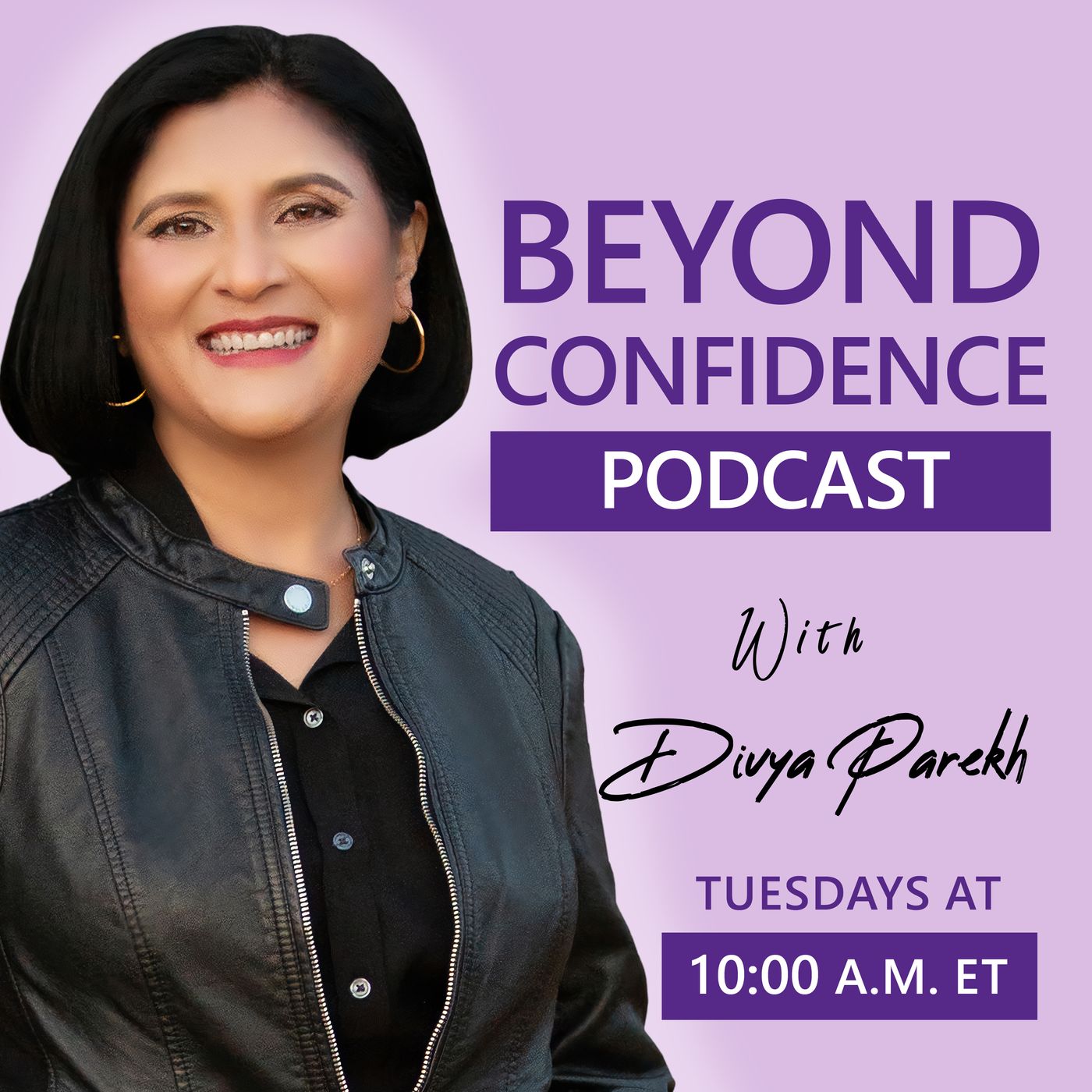
Think addiction and family trauma are unbreakable cycles? That's the common belief, right? Today, Divya Parekh challenges this notion head-on. Join us as she welcomes Dr. Andrea Arlington, an expert in addiction recovery and familial healing. Dr....
 iHeartRadio iHeartRadio
 Spotify Spotify
 Youtube Music Youtube Music
 Amazon Music Amazon Music
 Apple Podcasts Apple Podcasts
 Pandora Pandora
 Audible Audible
 Podchaser Podchaser
 Audacy Audacy
 Spreaker Spreaker
 Deezer Deezer
 Podcast Addict Podcast Addict
 JioSaavn JioSaavn
 TuneIn TuneIn
 Castbox Castbox
 Castamatic Castamatic
 Castro Castro
 Fountain Fountain
 Goodpods Goodpods
 Overcast Overcast
 PlayerFM PlayerFM
 PocketCasts PocketCasts
 Podimo Podimo
 Podurama Podurama
 Podverse Podverse
 Podyssey Podyssey
 RSS Feed RSS Feed
 YouTube YouTube iHeartRadio iHeartRadio Spotify Spotify Youtube Music Youtube Music Amazon Music Amazon Music Apple Podcasts Apple Podcasts Pandora Pandora Audible Audible Podchaser Podchaser Audacy Audacy Spreaker Spreaker Deezer Deezer Podcast Addict Podcast Addict JioSaavn JioSaavn TuneIn TuneIn Castbox Castbox Castamatic Castamatic Castro Castro Fountain Fountain Goodpods Goodpods Overcast Overcast PlayerFM PlayerFM PocketCasts PocketCasts Podimo Podimo Podurama Podurama Podverse Podverse Podyssey Podyssey RSS Feed RSS Feed YouTube YouTube
Think addiction and family trauma are unbreakable cycles? That's the common belief, right? Today, Divya Parekh challenges this notion head-on. Join us as she welcomes Dr. Andrea Arlington, an expert in addiction recovery and familial healing. Dr. Arlington brings innovative insights into overcoming addiction by nurturing connections and addressing intergenerational trauma.
Beyond Confidence is broadcast live Tuesdays at 10AM ET.
Beyond Confidence TV Show is viewed on Talk 4 TV (www.talk4tv.com).
Beyond Confidence Radio Show is broadcast on W4WN Radio - Women 4 Women Network (www.w4wn.com) part of Talk 4 Radio (www.talk4radio.com) on the Talk 4 Media Network (www.talk4media.com).
Beyond Confidence Podcast is also available on Talk 4 Podcasting (www.talk4podcasting.com), iHeartRadio, Amazon Music, Pandora, Spotify, Audible, and over 100 other podcast outlets.
0:00 The topics and opinions expressed on the following show are solely those of the hosts and their guests, and not those of W four WN Radio It's employees or affiliates. We make no recommendations or endorsement for radio show programs, services, or products mentioned on air or on our web. No liability, explicit or implied shall be extended to W four WN Radio It's employees or affiliates. Any questions or common should be directed to those show hosts. Thank you for choosing W four WN Radio. This is Beyond Confidence with your host w park. Do you want to live a more fulfilling life? Do you want to live your legacy and achieve your personal, professional, and financial goals? Well? Coming up on dvparks Beyond Confidence, you will hear real stories of leaders, entrepreneurs, and achievers who have stepped into discomfort, shattered their status quo, and are living the life they want. You will learn how relationships are the key to achieving your aspirations and financial goals. Moving your career business forward does not have to happen at the expense of your personal or family life or vice versa. Learn more at wwdas you don't divpark dot com and you can connect with vat contact eddvpark dot com. This is beyond confidence and now here's your host, Dvpark. Good morning, It's Tuesday, and I'm here and excited to be with you. So I when I share some exciting news. It came from one of our audience. Yes, her name is Jenny. And what Jenny shed was that she had never thought about going ahead and thinking about,
1:34 like you know, just having a designated one hour of kindness circle. So she decided to sign up for a human for habitat. And she decided that, like you know, she was going to go and learn about not only you know, how the houses are pulled together, but be part of that. And here's what I want to share. Jenny. I'm so so proud of you and thank you for sharing your story. So she signed up for one and now she has signed up to volunteer every month for several hours. So Jenny could as to you and I'm so excited for you because Jenny also shared that she was helping to build those houses. Now she can do so many things around her own house that she is so thrilled and filled with joy. So thank you. So that's the power of being in kindness circle.
2:32 So as I always invite you, be sure to take that one hour of your time and spread it out over the whole month. Think about it. Even if fifty million people just in the US alone were to do that, it would be fifty million hours. Can you imagine the power of that move momentum that could bring and the movement we could create. So here's the thing, folks, Do it and then share your story with us, and if you're okay, give us your first name, last name, we are happy to give you a shout out. Jenny asked us to keep her last name undisclosed, so we didn't share. But Jenny, I'm sure that as you listen, you are going to be thrilled that you are inspiring so many other people and so many other folks to do what you have done. So thank you to each and every one of you who have got her books Expert to Influencer and the Entrepreneur's Garden, because they are going to help you possition yourself as the person you want regardless of where you are in your life, have that great relationship and bring that joy in your life, and also become the influencer, just not an influencer with numbers of likes or views or any of that sort, but an influencer who impacts and leaves a lasting legacy.
4:00 So if not got you our books, please do so. Help us support the message and let's spread the message. And also remember that the partial profits from these books do go to Keywa dot org. And let's get started with our show today. Welcome Andrea. Thank you. It's great to be here. Oh, it's awesome to have you. So usually we get started with a moment in childhood. Do you recall any moment or a person from your childhood that's still is as fresh for you as if it was yesterday. Well, I have several. Some impacted me in a really great way, and some impacted me in a way that created a low sense of self worth.
4:55 So I think everybody has had that experience, right. I had a family of origin where there was a lot of conflict and a lot of shaming. But my grandmother, my mother's mother, who I saw maybe once or twice a year, was so unconditionally loving. And I remember one night when I was really struggling. I was twelve years old. I was cleaning the dining room table after a family meal, and my grandmother was helping me, and she said something along the lines of Andrea, it doesn't matter you know what anyone else thinks or says. I love you, I believe in you. And basically she just sort of sprinkled magic in my heart by the way that she energetically showed up and the comments that she made. It was beautiful.
5:46 Wow, it's so beautiful, right, a few words, and it can be either a bomb to a kid's heart and fill them with their hearts or for that matter, for anyone right right, versus when you sprinkle that bitterness that can pull people down. Yeah. So, as you grew up, were there any desired dreams that you have? I had the dream of being on stage like the Brady Bunch. I wanted to be on stage. I wanted to be seen and heard and affirmed, right, which is what all of the characters on The Brady Bunch were, and which I didn't have going on in my family of origin. I didn't feel seen, I didn't feel heard, and I didn't feel affirmed. So watching that family on TV, I felt compelled to be on stage and it has impacted my life forever.
6:56 I ended up starting to be in front of the camera when I was fourteen yearsyears old and I worked as an international fashion model all over the world starting at age sixteen for a decade, and it was interesting because I do work with families and the lack of getting what we need as children can often drive us to the careers we choose, to the relationships we're in, the way we parent, the way we show up for ourselves, and in this case, for me, not feeling seen, heard and affirmed as a child, being in front of the camera on stage was what I did to nurture that part of me that didn't get my needs met as a kid. And it wasn't always in such a positive way either. I mean being in that industry as a fashion model at age sixteen and traveling all over the world by myself was it tunity for all sorts of crazy things to happen, and they did.
8:05 So tell us how did you get into the fashion because at a tender age of fourteen, so many young girls have got no clues where they want to go. I do, yeah, yeah. So while when I was twelve years old, I was in a photography class at my school. I was in seventh grade, and I chose to be the model, not the photographer, And when the photographs came back, I looked at myself and I had never really seen myself as a model. I didn't even necessarily know what one was. I just knew that what I saw on print looked good to me. And over the next two years, I started playing with makeup and wearing my mom's clothes. And then the conflict in my family home was so great, especially between myself and my father, that I had been put in therapy and was medicated at age twelve. By the time I was fourteen, the conflict was so great that even my therapist didn't object to me leaving home, and the world outside of my family home felt safer to me than the world inside my family home. So I ended up moving in with a girlfriend, and I used to take the bus after school to a modeling agency where I worked as a receptionist at age fourteen, and then I met a makeup artist who was He liked to dress in women's clothing, and he taught me how to dress and to model and to do my hair and makeup, and
9:39 as a result of that, I put together a portfolio with the help of some photographers that were local, and he put me on a greyhound bus when I was fourteen years old to Chicago, where I auditioned and got the cover of a beauty magazine when I was fourteen, And that was what really launched me, was his belief in me, was my desire to be seen and heard and affirmed, and that launched me into a career where at age sixteen, I got a contract to go work and model in Asia. And then after that I lived in Manhattan and worked there for almost a year, and then moved to Paris and worked there for a year, and then came back to the United States and lived and operated from the Chicago area where there was a lot of catalog work, and ended up in Los Angeles, eventually working toward an an acting career. Wow, that is impressive. So on one hand, I'm sorry that you went through what you went through, and on another hand, it just makes me so proud of that fourteen year old which took the matters in her hand and carved it life out of it. Was like meths, you know, she made I will my goodness, that is just amazing. Thank you for sharing that and being so vulnerable. Yeah.
11:11 So, Henria, like you know, you said that. I mean, on the outside, it looks like, oh, you had it, you got it, and you did it. You mentioned that there were some things that could go orrie, So would you be open to sharing that what it's some things that could go wet? Did you say? You know, you mentioned that that some things could go in the wrong direction, they could take a wrong turn. Yeah. Then you are so young and outside. So there may be young girls right who may be hearing about this and like, oh, yeah, I can do that. So it's also important for them to see what can be the other side. Absolutely. I started self medicating at a very young age with substance. I started smoking weed and engaging in cocaine I had. I was a lingerie model, primarily I worked with Elite Models, which is a very well known agency, and I was needed to be very slender, have that hour glass figure. And so as a young person, I didn't you know, I didn't feel like I was I felt like I could do anything right, and so I did. I stayed up late and partied. I dated rock musicians. I dated the bass guitars from Pink Floyd. I worked, you know, and I worked, and I
12:46 partied hard, and it wasn't until I was twenty one years old and my younger brother died of a drug and alcohol related car accident that I started to change my ways. I made a commitment to myself to give up the drugs and I did. It was but it was six years before that that I was really, you know, doing a lot of drinking and drugging and it wasn't healthy at all for sure, you know. I mean there are girls that don't do that who are models, Girls like Cindy Crawford. She and I did some lingerie modeling together for a company called I Magnin, which is a very old but well known and well loved department store, and it was nationwide and she was constantly in that catalog. And I used to go work with her at Victor Scrubnewsky's studio and she would be doing her homework. She was going to college, and she had a whole different mindset, a very business minded woman, and we can see her successes today that you know, she made the decision to take care of herself. And she had a very strong family as well, which was helpful, I think to guide her.
14:07 I think she was really encouraged to put school first, even though she was making it big as a model, which was great for her. Very big contrast between the two of us. I'll tell you, well, your turn a drown, that's what matters. And what would your message be for the young ones? If you feel compelled to self medicate, to party, to use drugs and alcohol, to in a way that makes you feel at ease and more comfortable socially and with your peers, that is a sign that there are some some there's a need for you to get some emotional support, to go and talk with a professional about what it is that makes you feel like you can't socialize without those substances. A lot of times, when we grew up in homes where we are not affirmed and we are not acknowledged, where it's not safe to feel vulnerable, it's not safe to talk about our feelings, we don't feel secure, and we end up believing that we don't have a lot of self worth and it might not be conscious right. For instance, my dad told me when I became an adult and we ended up having
15:37 some conversations about what life was like for me as a child, he said, well, you were the most confident woman a young person. Excuse me, and had so much high self esteem. And I said, no, Dad, I was driven by the sense of not being good enough to prove that I was, that I was desirable, to prove that I was wanted to basically fit into somewhere, you know, because I didn't fit in at home. It had nothing to do with self esteem, you know. And he said, well, you traveled all over the world, and I said yes, because I was seeking a place to belong, not because I mean, it was a combination, right, Like, there was a part of me that definitely loved the excitement and the glamor and all that stuff. But I think under it all, I was driven by this sense of I don't feel safe in the world. So I did self medicate. I don't feel safe with other people because I didn't feel safe with my main family of origin, so why would I feel safe with other people emotionally, and so self medicating for somebody is often a sign of or it is a sign of having trauma, emotional trauma. You know, there's different kinds of trauma, right Sometimes people think of trauma as big T trauma where you know, there's been serious physical violence or sexual violence, which is very common in our world.
17:08 Unfortunately. But at the same time, just regularly being told, you know, shame on you. How could you with these critical tones of voice and eye contact that you know, the way people see us when we're children causes our mirror neuron if people understand what that is. But we do have something called a mirror neuron in our brain, and the way that we're looked at physically by other people tells us a lot about what our value is, right, and so we have work to do. If we're self medicating, it just simply means that we need to go in and heal the part of us that feels unworthy. M No, you hit a point that's close to many many people. And here's the thing that regardless wherever you are in your life, whether you are ten, fifteen, twelve, sixty seventy five, our self worth is important. And as you mentioned, it's important to be seen, heard, and affirmed. And at the same time, as you mentioned that, if you're experiencing any of the things, it's important to seek help so that you can anchor within yourself, that you can create that grounding so that you are able to live the life that you deserve. So now as you grow up, you know you had a turning point. What followed later,
18:42 Well, the turning point again was my brother's passing, and it I reevaluated the life I was living in Chicago and decided that I was going to go back to Asia and model because for some reason, I felt like I was at home there. I felt loved there. When you're a Caucasian young person in Tokyo, you are revered to some degree, and I felt really revered while I was there. So I left Chicago, went back to Tokyo, hung out with the bass guitars of Pink Floyd, who was doing the Wall tour at the time, at the Buddhican, and I was really excited to see him there. And then when he and I both returned at separate times to the United States, he asked me if I would fly out to LA and meet him there because he was doing bass guitar on one of Madonna's albums, and I said yes, So I came out to LA and after he left, I just decided I could never go back to Chicago. I was in love with the temperature and the beauty out here, and I've been out here ever since. So that was the beginning of a huge turning point.
19:56 But I ended up working here as an actress and as a model, and I met the father of my children. He was forty years old and I was twenty seven, and he was exciting and charming and handsome and successful. But what I didn't realize was that he was somebody who was struggling with substance use disorder, and that didn't come out, and I didn't even realize what substance use disorder was. Even though my brother's accident was related to drugs and alcohol, there it was never acknowledged. It was just a car accident that he died from. But it wasn't until I was in my own recovery that I recognized, Oh no, for over a year, he had been struggling with cocaine himself and alcohol from the time he was fifteen or sixteen, and he passed when he was seventeen. So when I met my husband, the father of my children, I just thought he was just this charming, gregarious, fun guy right who liked to enjoy wine. And it wasn't until I saw him black out, drink drink and black out that I recognized there was a problem. But I still didn't know anything about addiction, and it wasn't you know until I went to therapy and found out, you know, that that's what he was dealing with. And in fact, when I started
21:32 going to the twelve step rooms of alan On, I worked that program, the allan On program, and I actually think it contributed to the destruction of my family and my relationship with him. I work a totally different approach to family recovery. I don't believe in letting our loved ones hit bottom. I don't believe in letting them and detaching from them. It's not a program that helps to heal the family unit. It actually causes polarization and conflict. And we can't afford to do that these days, especially with fentanyl being in the works, because letting your loved one hit bottom, when you know ten minutes from now they could go out and smoke weed that was laced with fentanyl, is a death sentence. You can't afford to do that. But even back then, we're talking nineteen eighty nine or nineteen ninety, the listening to the anger in those rooms and I went. I actually went for five years to alan On because that's what I was told to do by my therapist and if I could go back and wave a magic wand I would undo all of it, because today I have a great relationship with my former spouse, and we've been divorced for thirty years or thirty two years, and I know that if I had, if I had use the tools that I have today, things would have turned out differently because he is sober today and we've been a close
23:06 family for at least a decade, even though we're no longer together. And that's what comes. You know, you have had a rough time. I can't even imagine being twenty one and hearing about your brother, and it's really sad what you went through, and it's your brother inspired you to kind of turn around. And life is all about learning and finding opportunities in those obstacles. So as you continued, what were some of the lessons you learned from your acting and modeling and your time with your expouse. Hmm, let's see.
23:52 Well, some of the lessons I learned were unhealthy. For instance, I learned that as long as I looked good on the outside, and I think I learned that from my mom originally, because she always, you know, was just very well dressed and well made up. But you know, I learned to put on a pretty face, if you will, and just pretend that everything was okay when nothing felt okay. Inside, nothing felt okay, you know. And my former spouse ended up because I was so critical and shaming toward him and his substance use instead of applying kindness and compassion and learning and educating myself about the fact that he was also somebody who was terribly traumatized as a young man in his family of origin. If I could have come to understand that he was somebody who really needed a lot of compassion and love, and so did I. You know, our inner children, the two of us together were really traumatized, and we traumatized each other as adults operating from the wounded children inside of us. And I guess, looking back, you know, I can now see those were lessons I learned, But
25:26 I didn't learn the lesson until I found a healthy way of recovering right, And so I didn't learn the lessons at the time. You know, he ended up having an affair with somebody who was twenty four years younger than him and left me and my two daughters, our children for that relationship because he was driven by this wounded part. And when I attacked him for what I felt was his choosing alcohol over me and the kids, it was almost like I felt like he was having an affair with the alcohol, and I was constantly berating him and shaming him. And again, wish I would have known what I know now. Right, of course he was going to go have an affair. Of course he was going to leave. Of course he wasn't going to stick around for feeling attacked and shamed, which is what his little boy felt from his family of origin because his mother was very mentally ill.
26:25 And so, you know, I learned, like I said, to just look pretty and shut up. And then when I got into alan On and started vocalizing what I was hearing in those rooms and attacking him, he left. And I, you know, I went through seven years of being a single mom, which was really hard, and I and the wounded child in me who was so afraid of being abandoned and was abandoned right by my husband. I didn't have the capacity to be emotionally available for my own daughter's emotional needs, which were huge, right because their daddy left. And now and Mommy feels insecure because I didn't have a formal education. And that's another thing I would tell a young girl, is go ahead and get yourself a formal education, even if you become an actress or a model, because that gives you a sense of stability in her stability. And you mentioned a few minutes ago feeling anchored, Oh my gosh, I spent my entire life not feeling anchored, bless you. And it wasn't until my oldest daughter, who became a heroin addict and then was facing six years in prison by the time she
27:55 was nineteen. It wasn't until she looked at me one day and she said, Mom, you know, I might be the heroin addict, but you're the one with the problem. And she was right, and it was it was her. It was her going to the extreme that she went that caused me to finally pay attention to what my broken wound itself was doing, which was hurting myself and the people I quote unquote loved. Right, But I didn't even know what love was. I didn't feel love for myself. I felt neediness, you know, toward other people and engaged in relationships from a needy point of anchoring. So you know, it wasn't until my daughter got sober and she's been sober for thirteen years now. Bless her soul because she helped. Definitely, congratulations. I'm sure you're very proud of her. Yeah.
28:55 You brought up really a good point that regardless, it's not just physical. Well, let's focus on emotional trauma. And there's so many people who experience that. How can they recognize first of all, that they have emotional trauma? I know you one time you did say for the young girls, But let's say people are adults, right, and what can they do to overcome it and heal it? Well, that's a great question. And so I never realized that I had emotional trauma. And it really wasn't until I started doing this work with a therapist and a family recovery coach that I started to recognize that. Hmm. Maybe there's maybe I am the common denominator here.
29:41 You know, maybe my relationship as a sister, my relationship as a wife, and my relationship as a mom of people who struggled with substance use disorder indicates that I have a problem, you know it? And I think that we can identify that we are struggling by internally like there we are experience, we have experienced emotional trauma. When we look at our life, is it chaotic? Are our relationships chaotic? Do we feel emotionally safe inside? Are we hyper reactive to people? Do we have a hard time tolerating other people's emotions? Because all of these are symptoms of not feeling safe with our own emotions. People like, for instance, my father who shut me down emotionally. He was very dictatorial, but that was a protector inside of him.
30:42 That was a protective part because he didn't feel safe with his own emotions. And how could he tolerate somebody else's emotions, his little girls when he didn't feel good about having strong emotions himself because he also was shut down as a child from his parents, right, And so these are generational patterns that get passed along. And I did the same with my children. My children didn't feel safe emotionally with me. So is that does that answer your question? Like how you can identify I can't hear you for some reason what happened. Let's explore a little bit more about how people can be safe with their emotions, because you mentioned that when you're not able to tolerate other people's emotions, then other people's emotions make you uncomfortable, So tell us a little bit more about not being safe with your own emotions. It's it's a process of there's a process of being able to identify. Paying attention to when when I feel triggered is really important, and then and having tools to emotionally regulate myself is so important. When I feel when I go off the handle, when I fly off the handle at somebody, and I'm much better at that today
32:15 than I've ever been. It's a sign that when I lose patience with other people, it's a sign that I am not emotionally regulated. Because our natural state of being is to be calm. It's you know, we were birthed into this life experience with a sense I think of wonder and a sense of curiosity. And when we don't have that sense of wonder and curiosity, we tend to be reactive to other people. We tend to judge them, even children. Like I know I was impatient with my children because I expect them to just fall in line, But that's not who children are, and they're curious and they're and they want to, you know, have time to be who they are. And so when when we are not able to tolerate other people's emotions. It's a sign that we are not able to emotionally regulate ourselves.
33:21 And so the key is is to find a program, work with a coach For myself. It was working with two coaches, one was a therapist coach and one was a family recovery coach to learn breathing techniques, to learn emotional freedom technique, which is a tapping you know, protocol to help calm myself down so that I don't take my emotions out on other people and damage the relationships and damage my I have five grandchildren, and I know for sure that there are times when I want to react and snap at them because old programming lives inside of me. But thankfully I can catch myself and breathe through it, or excuse myself and go have a conversation with myself in the bathroom if I need to, about the fact that they're just being kids and I am needing to be a really safe adult for them so that they grow up with a sense of feeling affirmed and a sense of well being. Very powerful, you said that emotions are not just going to go away because we are naturally programmed to have emotions, it's what you do with them is what it comes. So can you share with this couple of breathing techniques that people can use to tackle those. So like, first thing you said, figure out whether you need help. Second is like you know, once you know, become mindful of them. And thought, let's listen to some of the techniques.
34:54 Well, so one thing is called square breathing, and are navy seals are taught This technique's breathing, Yeah, breathing, Right, So you breathe into account of four, you hold for account of four, you exhale for account of four, and that's the technique, and you do it four times, right, breathe into account of four and you hold empty. Excuse me, So you breathe into account of four, hold for account of four, exhale for account of four, and then hold empty for account of four, and you repeat that four times. And my coach used to say that she would do it before she even got out of bed in the morning, just so that she centered herself and prepared herself sort of for the day from a calm place. So that's a really powerful technique. Another technique is tapping, and there is a protocol for tapping. You can learn it on YouTube.
35:50 Actually it's emotional freedom technique. There's basic emotional freedom technique videos on YouTube and it's a pattern of tapping certain points on your face, neck and underneath your arms and on your hand that our Navy seals and are actually our military is trained with emotional freedom technique because it's been proven that it reduces trauma, anxiety, depression, physical pain, and it will calm the autonomic nervous system. So I highly recommend that people seek those training videos. That's powerful. So tell us sounds like your daughters are doing great, you have got grandchildren and yeah, so where are you at right now and what's next for you?
36:44 Oh? Well, thank you. I am currently rewriting my book which is called Revelations of a Bad Mom, which is really the journey of my own recognition of what I wish I would have done differently as a parent and prior to becoming a parent. But I interject a lot of the stories from my own childhood and how they shaped my belief systems about my value and about who I am. And so that's what I'm working on. But I'm also working on a one woman's show which is called revelations of a bad mom as well. And I work as a crisis case manager for companies that hire me, but also private individuals who have a lot of crisis going on in their lives and who are dealing with addiction or mental health issues in the family and want to come from a kind, compassionate approach and want the family to the family system to heal. So I work with families for that purpose. I also am an intervention intern for the Arise Intervention program and that's a beautiful, gentle kind way of doing an intervention on families and on individuals who are struggling with addiction. And I am a family recovery coach for families who want long term
38:14 strategies to communicate in ways that create connection rather than create polarization. MM. That's beautiful, right. You know, unification of families can as you mentioned that, I still see that. Like you know when you mentioned about Cyndy Crawford that she made her career as a business and she had good, strong family support. So having that strong family support can make a huge difference in anybody's life. So like that, in sort of polarization, bringing the unification, how can people get in touch with you and where can they find you?
38:58 Okay, so people can go to my website. There's a link there for anyone who's interested in having a forty five minute talk with me, who are seriously wanting recovery for themselves and their family. And my my website is Andrea Arlington dot com. And yes, and there's a way of contacting me through email on the site as well. And do you have any one or two last listen nuggets for audience? Yes, And that is you've got to get support, you know. I tried for years to navigate the challenges I was having with my daughters and my husband from from my own wisdom, which I didn't have any experience dealing with substance use disorder, didn't even know what it was. But when I finally got support from professionals who specialize in family recovery and addiction recovery, my whole life turned around, My daughter's lives turned around. Don't try to do this on your own and as a parent, thinking that I could just sort of shame to tame my children if I just demand demanded them to behave and perform in ways that I thought would work related to their substance use was not helpful. I really needed help, and like
40:32 I said, it wasn't until I got help that everything turned around. And it is possible because when we do the work ourselves, everything in our lives gets better. Well, thank you for sharing your journey and being vulnerable. Appreciate that. Thank you for having me. I appreciate you. Oh absolutely, Thank you listeners, and I'm sure that some of the stories have resonated with you. Know that we all are perfectly imperfect. There is no perfect in anyone. So wherever you are at, pick up right where you are at. There's no wrong time, there's no right time. The right time is when you start. And remember it's okay to fall, it's okay to fail, it's not okay to give up on yourself because life is precious and it's a gift that deserves to be honored. So reach out to us, let us know how we can support you and continue the kind of circle.
41:44 Let us know your stories and we'll keep on sharing. And thank you one for making the show technically possible. So be well and take care until next time. Thank you for being part of Beyond Confidence. With your host d Via Park, we hope you have learned more about how to start living the life you want. Each week on Beyond Confidence, you hear stories of real people who have experienced growth by overcoming their fears and building meaningful relationships. During Beyond Confidence, Vpark shares what happened to her when she stepped out of her comfort zone to work directly with people across the globe. She not only coaches people how to form hard connections, but also transform relationships to mutually beneficial partnerships as they strive to live the life they want. If you are ready to live the life you want and leverage your strengths, learn more at www dot dwpark dot com and you can connect with vat contact at dvpark dot com.
42:37 We look forward to you joining us next week.


