
Unlocking Honest Creativity in Your Daily Grind
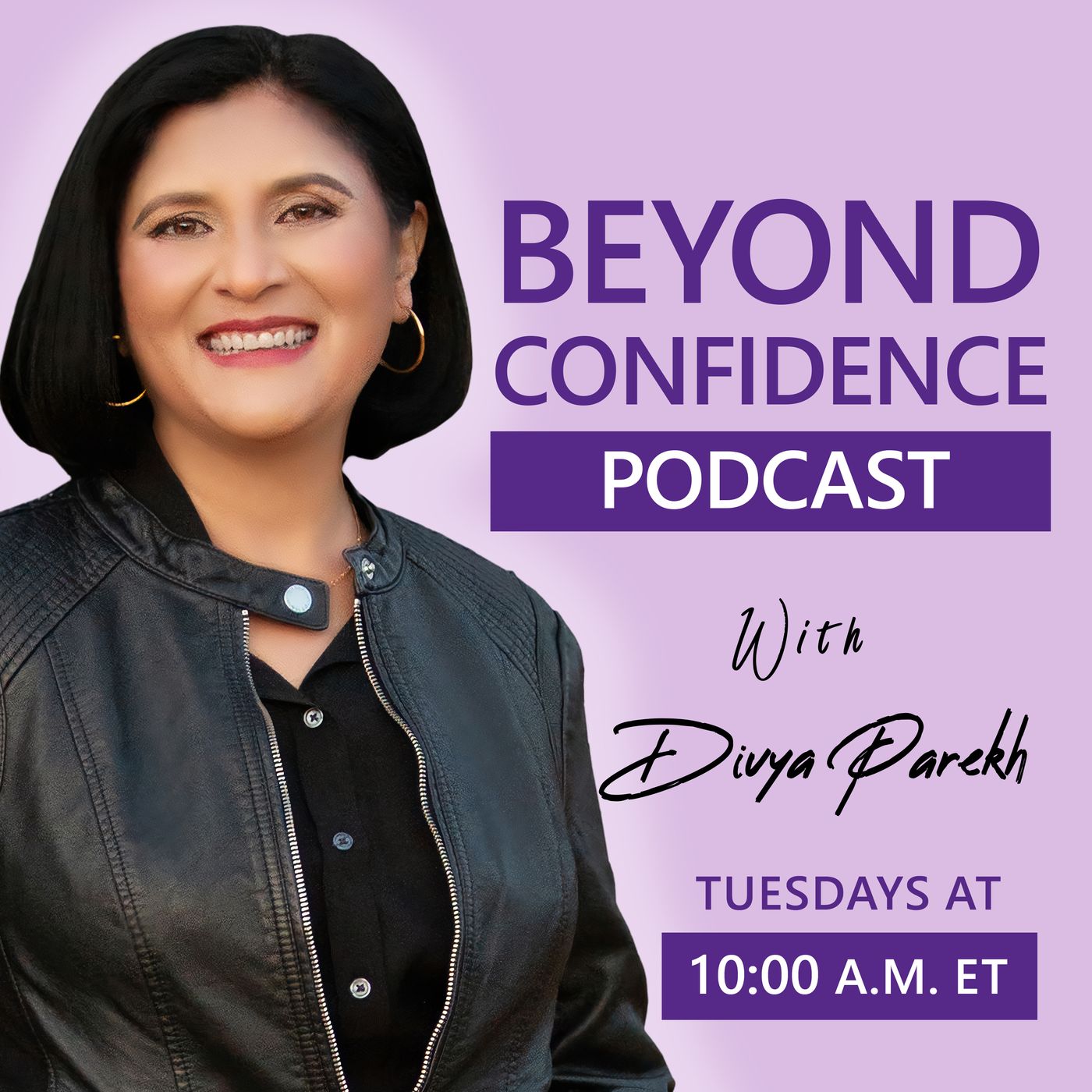
Join us for an engaging conversation with Divya Parekh and Craig Detweiler, as we explore actionable ways to unleash innovation and escape the usual comfort zones. In this episode, we delve into practical strategies for crafting cohesive, impactful...
 iHeartRadio iHeartRadio
 Spotify Spotify
 Youtube Music Youtube Music
 Amazon Music Amazon Music
 Apple Podcasts Apple Podcasts
 Pandora Pandora
 Audible Audible
 Podchaser Podchaser
 Audacy Audacy
 Spreaker Spreaker
 Deezer Deezer
 Podcast Addict Podcast Addict
 JioSaavn JioSaavn
 TuneIn TuneIn
 Castbox Castbox
 Castamatic Castamatic
 Castro Castro
 Fountain Fountain
 Goodpods Goodpods
 Overcast Overcast
 PlayerFM PlayerFM
 PocketCasts PocketCasts
 Podimo Podimo
 Podurama Podurama
 Podverse Podverse
 Podyssey Podyssey
 RSS Feed RSS Feed
 YouTube YouTube iHeartRadio iHeartRadio Spotify Spotify Youtube Music Youtube Music Amazon Music Amazon Music Apple Podcasts Apple Podcasts Pandora Pandora Audible Audible Podchaser Podchaser Audacy Audacy Spreaker Spreaker Deezer Deezer Podcast Addict Podcast Addict JioSaavn JioSaavn TuneIn TuneIn Castbox Castbox Castamatic Castamatic Castro Castro Fountain Fountain Goodpods Goodpods Overcast Overcast PlayerFM PlayerFM PocketCasts PocketCasts Podimo Podimo Podurama Podurama Podverse Podverse Podyssey Podyssey RSS Feed RSS Feed YouTube YouTube
Join us for an engaging conversation with Divya Parekh and Craig Detweiler, as we explore actionable ways to unleash innovation and escape the usual comfort zones. In this episode, we delve into practical strategies for crafting cohesive, impactful work and building a community that challenges and supports your growth. Whether you're refining your creative process or pushing business ideas forward, you'll leave with insights and tips that transform challenges into opportunities for success.
Beyond Confidence is broadcast live Tuesdays at 10AM ET.
Beyond Confidence TV Show is viewed on Talk 4 TV (www.talk4tv.com).
Beyond Confidence Radio Show is broadcast on W4WN Radio - Women 4 Women Network (www.w4wn.com) part of Talk 4 Radio (www.talk4radio.com) on the Talk 4 Media Network (www.talk4media.com).
Beyond Confidence Podcast is also available on Talk 4 Podcasting (www.talk4podcasting.com), iHeartRadio, Amazon Music, Pandora, Spotify, Audible, and over 100 other podcast outlets.
Become a supporter of this podcast: https://www.spreaker.com/podcast/beyond-confidence--1885197/support.
0:00 The topics and opinions expressed on the following show are solely those of the hosts and their guests, and not those of W four WN Radio It's employees or affiliates. We make no recommendations or endorsement for radio show programs, services, or products mentioned on air or on our web. No liability, explicit or implied shall be extended to W four WN Radio It's employees or affiliates. Any questions or common should be directed to those show hosts. Thank you for choosing W four WN Radio. This is Beyond Confidence with your host w park. Do you want to live a more fulfilling life? Do you want to live your legacy and achieve your personal, professional, and financial goals? Well? Coming up on dvparks Beyond Confidence, you will hear real stories of leaders, entrepreneurs, and achievers who have stepped into discomfort, shattered their status quo, and are living the life they want. You will learn how relationships are the key to achieving your aspirations and financial goals. Moving your career business forward does not have to happen at the expense of your personal or family life or vice versa. Learn more at wwdas don't divpark dot com and you can connect with vant contact dant dvpark dot com. This is beyond confidence and now here's your host div Park. Good morning listeners, It's Tuesday, and I want to share a quick story with you. So yesterday I was out walking with my friend and I somebody had booked on my calendar an appointment at ten am, and I really like to be on time, so we were cutting it close.
1:30 So I told my friend would you be okay for us to cut a walk shorter? And so she came up with a very wonderful idea. She said, you know, let's walk a little fast, really get a little bit more cardio in because I want you to see this beautiful mural that I have seen and developed. Like so, she saw the mural going up like you know, starting from people painting and then finishing, and I cannot tell you it's one of the most uplifting murals I've seen, like you know, full spring and so just her kindness to accommodate me. So I want to give a shout out to Christine. So I invite you to keep the kind of circle going, spending an hour of your time every month helping someone out, being kind to others without any strings attached. And for those of you who have got our books, I think you think you thank you because without you we would not be able to help entrepreneurs at Kiva dot org. And we believe in building entrepreneurs. So do get our books, whether it's the Entrepreneur's Gotten or expert to influencer. And here's what I can tell you.
2:46 You will find nuggets that will impact your life. So let us know how we can support you. And let's bring on our guests. Hello, Thank you Davia. Good to talk with you this morning. Absolutely, it's a pleasure to have you so k do you recall any moment or a person from your childhood that left a positive mark on you? Oh? Absolutely. You know some of those early teachers who clearly believed in me, right, a first grade teacher, missus McCormick, who saw maybe more potential in me than I saw even within myself. You know, she believed in me in a way that she had this great activity where everybody got to be president of the class for one week and the role, you know, it wasn't onerous.
3:43 I think you had to lead the pledge of allegiance and some other things like that, but it puts you in front of people and it said, Okay, you have the ability right to lead, and you might be uncomfortable, and you might be scared, you might be afraid, but step up and see what you can do. And of course she had no idea that, you know some you know, fifteen eighteen years later I would be president of my senior class in Charlotte, North Carolina. But I think she instilled that kind of confidence in me through her leadership and faith in me. Love that and so many times people think that they're not leaving a mark. They may be thinking, I'm tired at the end of the day. And it's so important regardless whatever you are, whatever work you're doing, never ever forget that you have your circle of influence and in that sphere of influence you will be making an impact. What a beautiful story. So, Craig, you mentioned you alluded that you were president of your senior class in high school, So definitely that tells us a lot that you were probably very just diciplanned and into different things. So tell us a little bit about that period in your life.
5:05 Well, I think you know, in junior high and high school, we're not maybe good at editing ourselves. We kind of put ourselves out there, and that foolishness can also result in surprising things. So, you know, when I put myself forward, you know, running for office at age sixteen, it was actually rooted, I think in failure. I think maybe in seventh or eighth grade I ran for student council. I was a new kid in town in Charlotte, North Carolina, and maybe I didn't know enough people and I got up on stage and I was I was absolutely quivering.
5:46 I was literally shaking like this and making jokes about it on stage, but it wasn't funny, you know, I was kind of melting down publicly. And that experience of failure actually, I think inspired me to work on myself, to work on my skills, to work on my public speaking. And then, you know, as senior class president, one of my last roles was to read all the names at graduation, which we had a big class at East me High School, was probably maybe six hundred and fifty great and so to stand in front of a stadium full of you know, probably you know, close to two three thousand parents and loved ones and pronounced names, which is a lot of pressure, right, getting people's names right. But that just how much you can grow in three, four or five years by leaning into your honest fears and working to overcome them rather than being crushed by them. Definitely. So as you went into college, which direction did your life take? At the time, I was thinking a lot about politics.
7:00 I went to a boys state, which is a you know, political approximation, and I saw the way the game was played. I saw a lot of the positioning and ambition, and it actually was off putting to me. Uh, maybe didn't necessarily have the best interests of those they are representing. They were kind of, you know, kind of endless self promoters, and I thought that is not as attractive as I thought it was going to be. And so going to Davidson College in North Carolina, there was a strong emphasis on the liberal arts, and so I took I had to take classes in a bunch of different areas. I took political science quickly, and and then I started taking classes like English and art, particularly studio art and painting, and discovered that I like that creative endeavor of reading, of writing, of trying to express things on canvas. They had a couple of classes in filmmaking, and I took both of them my freshman year, so I was already out of film classes. There wasn't a film major at Davidson at that time. But what I ended up heading towards was that creative realm, that storytelling realm. And I think just the fundamentals of studying, you know, Shakespeare, studying some of the great novelists and poets throughout time gave me a base of of how how we can and have expressed ourselves. And then the
8:33 power of art to develop empathy, to build bridges to understand other people's experience through what they've written. You know, a book like Invisible Man by Ralph Ellison helps helped helped me understand what it feels like to be invisible, to to be overlooked, and and so that gave me this sense of adventure and wanting to go beyond my experience and enter into others situations. So, if you're open, I'd like to discuss the point where you mentioned that you know, you had the feeling of being invisible. Tell us about that time in your life and what was it that happened. Well, when I graduated, I went to teach in Tokyo, Japan. In a suburb outside Tokyo, and at the time, you know, I was a for the first time in my life. I was a minority in a majority culture where you know, the Japanese as a as a an island, they have developed their own culture, very unique, very strong culture, and so to step into that, I immediately felt a little bit of what it meant to be a foreigner.
9:50 Right, there's a very strong word they have for that guy, gene. So that was one of the first words I learned in Japanese because that's a word they were talking and ascribing to me. I was being viewed as a foreigner. I was being viewed as other, and so there were times on the subway where I wanted to be invisible, I wanted to blend in, and I was always being called out and singled out. And so there I am reading Invisible Man about someone who, because of prejudice, felt like he was invisible, felt like he didn't fit in, and I was having that exact same experience as a minority for the first time in my life.
10:31 And then I started to understand where you start to self doubt and you start to self sabotage. You're may be hesitant to speak because you're not sure if you have the right words, or if you'll be laughed at or dismissed, whether your communication style will be accepted and get through, and so then you start to yes self doubt and say I don't know, maybe I shouldn't and and you start to shut down. And so the person you, the person you once were, become something else because of that environment. So there was a very good experience, I think for me to be on the other side of what it feels like to be viewed as an outsider, to be viewed as other. Would you say it felt like that little total you know, who retreats back into his shell and that zone of comfort. Well, yeah, and that was a very very weird feeling, you know, for me, you know, someone who had been, say a class president, who was used to being in front of crowds. Suddenly I'm in Japan and it's like I don't have the words, I don't have the pronunciation, I don't know what the social rules are, and I have to withdraw and kind of watch and observe and just try to say, I don't really know what's going on here. I have to kind of figure out what the social mores are what the social contracts are, and not step over into air areas where I don't understand the culture, I don't understand the unwritten rules of how things operate.
12:05 How long did you end up staying there? Almost two years? In Japan, I loved the variety of students that I was able to teach. I was teaching in kind of an after school school, so I had everything from you know, teenagers who were coming in after classes that day and wanted to get better in English conversation, as well as business people who were looking for a creative edge and said maybe if I polish my English skills, I'll be better, you know, and get a promotion within my job. And so that range from kids to adults and even older adults was really a great experience, great cross section of Japan circa in nineteen eighties. So on one hand, you were experiencing in the mainstream this feeling often visibility, and yet there were people, as you mentioned, cross sections of different generations coming and aspiring to be better communicators in English. So how did you feel in your classroom? Well, I was also interested, So I was teaching to some degree the same material, but the response would change based on the dynamics of the class. You might have a class of young people who'd come out of school and they didn't really want to study, they didn't really want to speak.
13:31 Maybe their parents wanted them to be there, and so they were less cooperative. And so in some cases, my better students were the older students who had chosen to be there. They were more actively engaged, and so to see the same material have varying degrees of effectiveness was actually helpful, and I started to realize it wasn't necessarily about me as a communicator, but I was really dependent on the audiences openness. You know, the students. Could they meet me and would they meet me halfway? Would they enter into a risky behavior? Would they take chances by speaking a language that they felt uncomfortable with, Would they risk being laughed at by their classmates as they tried to pronounce a word that they weren't quite sure of, And so they were entering into that kind of invisibility or that fear that can often grip us and keep us from being our best selves. So, once you finished your time period in Japan, what lessons did you bring back? I think the power of cross cultural communication the power of observing and perceiving what's going on, of listening before you speak, the idea that my way or my heritage or my background may not be the only way, and having much more humility towards that.
15:07 The other thing I think living abroad did was train me to enter into new experiences, trying things that I hadn't tried before. Right the first time you try raw fish, you're not sure. It's like it's uncooked. I don't know, is this going to kill me? And of course you taste some exquisite sushi in downtown Tokyo and you're like, this is actually delicious? How have I missed this my whole life? And then you come back to the States and you're like, where can I find such? You know, great things? So I actually, on my way out, I loaded my bag with all the things I thought I wouldn't be able to find back in America. The different kinds of foods, the different teas, curries, all these different things that I wasn't sure i'd be able to find in the States.
15:52 They're more readily available now, but you know, thirty years ago not so much so. Thirty years where you're able to find as good of dishes or food or sushi. After coming back here, no, you know, I mean North Carolina. You know, there were some cultures, but it was it was not as diverse a community as it is now. It's actually expanded much more where you have different cultures, different tastes, different experiences that you that have actually I think strengthened the state and strengthened local communities. So after coming back to the US, what did you venture into. I've worked with young people for a number of years as a mentor, working with an organization called Young Life that did I think really good work at entering into kids, teenagers, questions, their pain, their angst, coming alongside them as an encourager as a mentor. Through that process, I met my wife. She was a volunteer with the organization as well, and we worked in a cross cultural setting. We crossed over from you know, maybe the which might call the the south side of Charlotte, which tends to be a wealthier side of
17:22 town. We literally crossed the tracks across the freeway to West Charlotte where opportunities and maybe school experiences weren't as strong, and so we started an after school program similar to what we were doing in Japan, we were doing tutoring and that type of thing, but we were doing that in an urban young life setting, uh for uh teenagers who maybe didn't have a safe place to play after school. We partnered with local churches, We we worked with local organizations like the Urban League to uh, you know, provide vuevolunteers and enable kids to get out of maybe the situation that they had been handed and be able to rise up towards h you know, a college degree that they maybe hadn't imagined. They had the capacity, they had the skills, but they didn't maybe have enough experience, and so we as college students were able to come beside them through the young life setting and say, no, no, you can do this, you can do this. You've got the gifts, you know, let's apply what you know and figure out how far you can go.
18:32 So you gave them the confidence, like you mentioned, that they had the capabilities, they had the skills, they just did not know about it. So I'm still continuing with that or is that No? Actually, after getting married, my wife and I went to grad school in California and across the country, and in a sense we maybe thought it was going to be a short term experience, maybe a year or two while we work on a master's degree, and it became really our life for the next you know, thirty plus years. We've been Californians and raised a family there. And when I got to California, I discovered all these folks who were in the movie business and in the entertainment business who were storytellers for a living. And so I kind of reconnected that part of my brain and my experience, that English major that was interested in stories and interested in fantastic tales. And I discovered that all of that training that I'd had in reading and writing actually came in handy that people could actually pay you to make up crazy ideas, silly things.
19:47 And so I became a I went to film school at University of Southern California and became a screenwriter. Oh wow, so are there any of your words that they know about? I would say yes, if you're like watching maybe the Disney channel at four in the morning, you can you can maybe see some of my some of my work I wrote. You know, they always say, right, what you know? I wrote a film about a a dog who inherits his master's British title and a state and becomes part of British Royalty. That was my own little kind of British royal satire. So that was called The Duke, and so that was that was made. I had another film that I wrote that came out two weeks after nine to eleven, and that was not a time when people wanted to see go to the movies, and so it was very frustrating in some cases to see that the things I was making were being impacted by other larger, much larger cultural forces.
20:51 And so something you could pour two years into could be done or finished in two days, depending on what time, what time it opened. And so the process of encouraging people to develop a resilience that says, you know, maybe it, you know, the thing you were hoping for didn't quite happen. But to get up and write another story, to tell another tale. That that that grit that you need as a creative, as an entrepreneur, that that kind of muscle is really what I developed through working in Hollywood. Absolutely, And yeah, writing that script for I mean The Duke sounds wonderful, and what you're talking about, you you spend two years and then it can be gone in two days it's it's a huge that's yeah. Well it's like a huge weight sitting on your chest. I mean, it's hard to take it. And as you mentioned that you had to take that, So did you continue I did that or did you take charms? Well, so, you know, my wife said, you know, I think you get so in your head with these story ideas that it'd be better if you got out of the house a bit. And so she encouraged me to teach
22:22 even one day a week, and I taught at this program that's a semester in Hollywood program for students who's maybe schools didn't have a big enough film program. So it was a place called the Los Angeles Film Studies Center, and so you had students from all over the country who came with their own Hollywood dreams. And I found that I did a great job of encouraging them in their creativity, in their risk taking, in bringing you know, whatever their own life experiences was to bear into their storytelling efforts. And you know, I found that I appreciated what we could create even within one semester, how much people could grow in you know, ten weeks, twelve weeks, fourteen weeks, growing in their confidence, growing in their resilience, and starting to get to understand the entertainment business. So I taught a class that I would say had a kind of a larger cultural frame that helped them understand themselves as storytellers within a tradition that were responding to the times with their own creative endeavors.
23:36 And it was a successful class. And then some of those students actually became very, very successful. And that's when I realized I was a good coach. I was a good encourager to help people get over their fears, to get over their self sabotage that often keeps us from starting those endeavors, whether they be business endeavors or creative endeavors, which most businesses are creative endeavors. So it sounds like you went back to teaching. There's a lot of teaching, you know, you went through different colleges. So there are a lot of entrepreneurs and creatives out there who think, like hm hmm, it's a passion art, doesn't make any money. And yet, as you mentioned, there's so many successful people where you found that you knew kind of kept on coming back to it till you kind of what you did was you marched it to together your skill set of storytelling and getting those ideas and then helping others become so technically you found your niche. And there are so many people just kind of anchored, like not knowing there to anchor. What would you tell them? Well, I would encourage people to lean into both their passions, right their giftings. There's a reason why you love the things you love.
24:56 I loved film because I think I was looking for maybe the ability to write a different story for my own life. I was looking to write a different ending, maybe than the script that I'd been handed, And so to love the things you love and try to figure out can I be paid to do the things I love? Right? I loved watching movies. It never occurred to me I could actually make movies. And then same thing even with teaching. It was a bit of an accidental career, but I found that I actually really loved watching others succeed. I loved coaching others towards success, and that gave me deep satisfaction. And the same way you know with a new enterprise, a new story, you're satisfied to see the product get to market, but you're also really satisfied when you see people actually using it.
25:51 And so, in a sense, that's what happened with me as a teacher, to see the concepts that I had in my head of storytelling or how to communicate in idea, to see someone actually take it and run with it. And then you know, starting to work for somebody like Judd Apatow, or figuring out that they could be a comedian and starting a stand up career, or you know a kid from Hawaii who discovers that his deep empathy can help him tell a movie like Short Term twelve, which can get him enough notice in Hollywood that eventually he is directing Shang Chi for Marvel. That's a beautiful thing to see because I know the humble origins of that student, and yet I also know how he has cultivated his art, leaned into his own story and put it on the big screen for millions and millions to enjoy.
26:44 Absolutely, it's basically you are amplifying the impact that you want. It doesn't matter whether it's your story or whether you are transforming other students, and that's even harder and more powerful to do. So, can you share some practical strategies for crafting cohesive and impactful work. Well, it's interesting I wrote my new book, Honest Creativity was rooted in a lot of the anxiety that I saw rising within my own students, where they felt like they were being potentially replaced before they even started by machines and by machine learning. And you know, writers who thought chat GPT might replace them. And so what I'm trying to do is call people back to their deepest humanity, whether that's our fears, our aspirations, our limitations, and try to look at those things as strengths rather than as weaknesses, and try to say that that fear that we all share, that lack of confidence, that wonder that we all carry, that is what makes us human. And that is the starting point of good storytelling. The starting point of a good product, right is identifying your own needs, your own wants, your own hopes, and your own dreams.
28:08 And so by looking inward, I think we're better prepared to serve others outward. Mm hmm definitely, because in that you are sharing a journey that is going to be identified by others as well. Because that's, as it has been said, what is personal as universal. So so many times what happens is okay, now you've looked inward and yes, there is this philosophy and approach that our weaknesses and shortcomings can be as strends. But what's the journey? What is the strategy or what are some actionable steps that people can take from having that fear and being comfortable with that as because coming a strength.
29:02 Well, I think it's some of it is a process and realizing that your first effort may not be a masterpiece. You know that your first business may not be the home run. It's practicing, you know. For a musician, right, it's literally learning your scales. For a business person, it might be working for someone else and watching them. If you want to be in the film business, it's often good to start as an assistant and watch somebody else do their work, and you might disagree with the choices that they're making. You might say, I think I can do that better, and that actually helps you grow in confidence as you see someone who maybe is making decisions that you wouldn't. They might be making unwise decisions. You say, you know what, I think I could do this better. I could probably make more money. I think I could tell a better story, and I think I experienced that even you know, in film school, I saw some of my fellow graduates and some of the choices they were making. I was like, I think I could probably do that. I could fail as well as they can, and so learning little steps of confidence along the way to not take the big journey. You know. In the book, I talk about students often wanting to be, you know, Martin Sesse or Spike Lee or Greta Gerwig. They have these ideas. I want to be, you know, make a masterpiece. But everybody starts small, you know. Martin Scorsese's first breakthrough film was a five minute film about a person shaving in front
30:33 of a mirror. It was called The Big Shave, and it's a person who starts and he nicks himself a little bit, and there's a little bit of blood that comes out, and then he nicks himself again, and he by the end of it, he's got a big bloody mess, which is similar to the way most Martin Scorsese films end with a big bloody mess. But what you discover in the film is a little bit. It was viewed as a metaphor for the Vietnam War and how America got involved with like a little and a little cut and suddenly they had a big mess on their hands. Greg Gerwig's early films, she was in other people's films. She was in a bunch of guys' films, and she probably saw a lot of these guys where they were casting her as the girlfriend. She was a secondary character, and she kept thinking, you know what, I could do this better.
31:18 I could actually be funnier, and why don't we make this story more the woman's story than the man's story. And all of those things were little steps towards making her films like Lady Bird and Little Women and ultimately the Barbie movie. Right, she's the most successful a woman who directed the most profitable film you know of twenty three and she started out really as like fourth or fifth person on the screen, but learned through that process and said I can do it better, and she certainly has definitely. So, as you have talked to you book, it's also helpful to have a community that not only supports you but also challenges you. And how do you know which people do have in your community? Because as they say, you are the sum total or you're the average of are you the sum of five people? You surround yourself with It's a great question. You know, when you're involved in early businesses, in creative endeavors, you often end up with collaborators, and it can take a while to find the right collaborators. You know, there was a songwriting duo called Jerry Goffin and Carol King, and at the time when they were doing teenage love songs like well you Still Love Me Tomorrow, maybe people thought, oh, Jerry Goffin, he's the genius behind this. Well,
32:51 only when they broke up do you realize, well, Carol King's the one who wrote You've got a friend. You know. She's the one, you know who had maybe more creativity within her so but maybe she had to grow in confidence and it took her a few years to figure that out. How do you find the right partners? It's tough. I mean, if you think about the Beatles, they were lacking that drummer. They had two or three different drummers. It was Lennon McCartney, George Harrison and another drummer, and it took a while before Ringo Star became that fourth Beatle that solidified them as a group. But even the Beatles needed a producer like George Martin, who had the extra I would call golden ears, to understand really what their music was capable of, how to get their sound right. So finding those partners, finding those producers, finding those editors, the people who complete our weaknesses, is very very important process. I think, finding those collaborators, it often arises from our ability to listen and to take criticism. One of the folks I read about in the book is Harper Lee, who obviously got very famous for writing TO Kill a Mockingbird, and only after she was dying did we did her publishing company release an earlier version of that work called
34:22 Go Set a Watchman, I believe is what it's called, And you see an early version of Atticus Finch that is much less heroic, much less aspirational than the finished heroic version of the lawyer who's defending those who've been unjustly accused in To Kill a Mockingbird. Well, it turns out that Harper Lee's editor was the one who said, I don't really like this character that you've written in this early draft. He doesn't inspire me. And she said, well, it's based on my dad and he had some racist tendencies. And she said, well that may be fine, but I don't necessarily want to follow that character, and Harper Lee, we listened to her editor and said, will I will change him and make him more idealized. And of course that idealized version into Kila Mockingberg has been read by millions of school children. Everybody experiences it in junior high here in America, and it shows us kind of our best aspirational self. Absolutely, So it sounds like, you know, you have pulled your life experiences into your books. So tell us a little bit more about your book and what can people learn from it? Well, I think my hope is that it will give us confidence to create, will help us overcome that fear that AI may be engendering in people by saying, you know, beyond AI, I think is that older power called HI.
35:53 That's human imagination, that's human ingenuity, That's that human innovation that I think will always outthink and out maneuver even the best tools that we might create. So to look at AI as a tool rather than as a crutch, to look at AI as a possibility rather than as a competitor, and to realize that our strength, our power, our imagination will ultimately prevail and will be what continues to make us unique in the marketplace of ideas. That is so true, So do share with us the title of your book and where can people find it? Sure, the book is called Honest Creativity and you can find it Amazon, Barnes and Noble, and hopefully at your local bookseller.
36:49 Please support independent bookstores. A big fan of those, you know, those community gathering points, So if they don't have it on their shelves, they'll order it for you. Be there a couple of days mm hm. And how can people connect with you? I'm a fairly social person. You can find me on Instagram and Facebook and Twitter and all the usual places. My website's Craig Datweiler dot com. You can see the different kinds of books that I've written, almost all really helping us understand culture better, understanding movies, music, TV, fashion, sports, and looking at those culture shapers.
37:31 So Honest Creativity I talk about Taylor Swift, Beyonce, Billie Eilish, all the women shaping pop music today, and how do they tap into their own creativity and continue to captivate us. M hmm. Absolutely, So, as you have pulled everything together in your book, tell us about your philanthropic Oh yes, yes, so well, yeah, I lead an organization called the Wedgwood Circle, and we try to invest in people who are doing good, true and beautiful work at early points in their career where they may need some encouragement where you know, five thousand dollars could make a big difference in helping them get that first album done or or getting them launched on a tour to accompany it. And so we've actually invested in probably over one hundred different musicians over the last you know, decade or so, and I recently looked in like the top, you know, twenty five or thirty of our people we've invested in. I mean, they're being heard by twenty to thirty million people every month, and that could be people like John Batiste was someone that early on, we we gave him some port when he was trying to figure out some musical instruments. Right, He's got these kind of crazy key boards that he blows in and stuff, and he needed some money to buy some instruments,
39:05 and we gave him that before he was on the Late Show with Colbert and before he'd won you know, five Grammys. But you know, it's it's seeing that potential, seeing that creative spark in a young person and realizing that a little bit of investment can go a long way. Right Like, we didn't, We didn't create John Batiste, right, we didn't. That talent was already in him, but he needed a little money to get from one one step to another. And so we love to provide that kind of bridge to aspiring and talented young people. Absolutely so, if any of our listeners and audiences seeking to apply for that one little step that will take them towards success us, how can they find that? Yes, the Wedgwood Wedgwood Circle dot com is our website and you can find us there and you'll see some of the other people you know that we backed, whether that's a band like Sleeping at Last or Johnny Swin. You know these are They're beautiful the work they do. Maddy Cunningham and someone who did a concert for us during COVID and she's gone on to win Best Folk Album, won a Grammy for that her most recent album. So there's a lot of talent out there.
40:37 I hope people will continue to nurture their gifts, to not be afraid, but to put themselves out there, to open themselves up to criticism. But also open themselves up to being uh discovered and and and finding those partners that they'll need along the journey, whether that's agents, managers, lawyers, publicists, all the all the team that we often need to take our career and our products to the next level. Absolutely, is there any last piece of wisdom that you'd like to share? I would just say, fear not. You know, it's a time of great uncertainty and it makes us, you know, tend to tense up. And once we get very tense, it's very hard to be creative, right, So I want us to approach life with open hands, you know, rather than closed fists, and I think you do a great job of that. Diva here on beyond Confidence. Well, thank you, Greg, and we appreciate your joining and opening up and sharing your wisdom with our audience because that's our goal to empower people so that they can transform their lives and keep on achieving great things. So thank you for joining us, and thank you listeners for being part of our show, because without you, the show would not be possible. You are the sole and part of our show. Reach out to us, let us know how can we serve you and support you in living the life you want and deserve,
42:10 and thank you on for making the show technically possible. So be well and take care until next time. Thank you for being part of Beyond Confidence. With your host, v Park, we hope you have learned more about how to start living the life you want. Each week on Beyond Confidence, you hear stories of real people who've experienced growth by overcoming their fears and building meaningful relationships. During Beyond Confidence, Dvpark shares what happened to her when she stepped out of her comfort zone to work directly with people across the globe. She not only coaches people how to form hard connections, but also transform relationships to mutually beneficial partnerships as they strive to live the life they want. If you are ready to live the life you want and leverage your strengths, learn more at www dot Dvpark dot com and you can connect with dvat contact at all right dot com. We look forward to you joining us next week. M


