
How Great Leaders Cut Through Corporate Noise and Lead Boldly

 iHeartRadio iHeartRadio
 Spotify Spotify
 Youtube Music Youtube Music
 Amazon Music Amazon Music
 Apple Podcasts Apple Podcasts
 Pandora Pandora
 Audible Audible
 Podchaser Podchaser
 Audacy Audacy
 Spreaker Spreaker
 Deezer Deezer
 Podcast Addict Podcast Addict
 JioSaavn JioSaavn
 TuneIn TuneIn
 Castbox Castbox
 Castamatic Castamatic
 Castro Castro
 Fountain Fountain
 Goodpods Goodpods
 Overcast Overcast
 PlayerFM PlayerFM
 PocketCasts PocketCasts
 Podimo Podimo
 Podurama Podurama
 Podverse Podverse
 Podyssey Podyssey
 RSS Feed RSS Feed
 YouTube YouTube iHeartRadio iHeartRadio Spotify Spotify Youtube Music Youtube Music Amazon Music Amazon Music Apple Podcasts Apple Podcasts Pandora Pandora Audible Audible Podchaser Podchaser Audacy Audacy Spreaker Spreaker Deezer Deezer Podcast Addict Podcast Addict JioSaavn JioSaavn TuneIn TuneIn Castbox Castbox Castamatic Castamatic Castro Castro Fountain Fountain Goodpods Goodpods Overcast Overcast PlayerFM PlayerFM PocketCasts PocketCasts Podimo Podimo Podurama Podurama Podverse Podverse Podyssey Podyssey RSS Feed RSS Feed YouTube YouTube
Leadership becomes unclear when pressure, strategy, and personal life collide. In this episode, Divya Parekh and Kelly McGinnis explore modern leadership—focusing on clarity, emotional intelligence, and strong decision-making. They discuss navigating complexity, building trust, and leading effectively without burnout, offering practical insights for professionals striving to balance performance, purpose, and real-world demands.
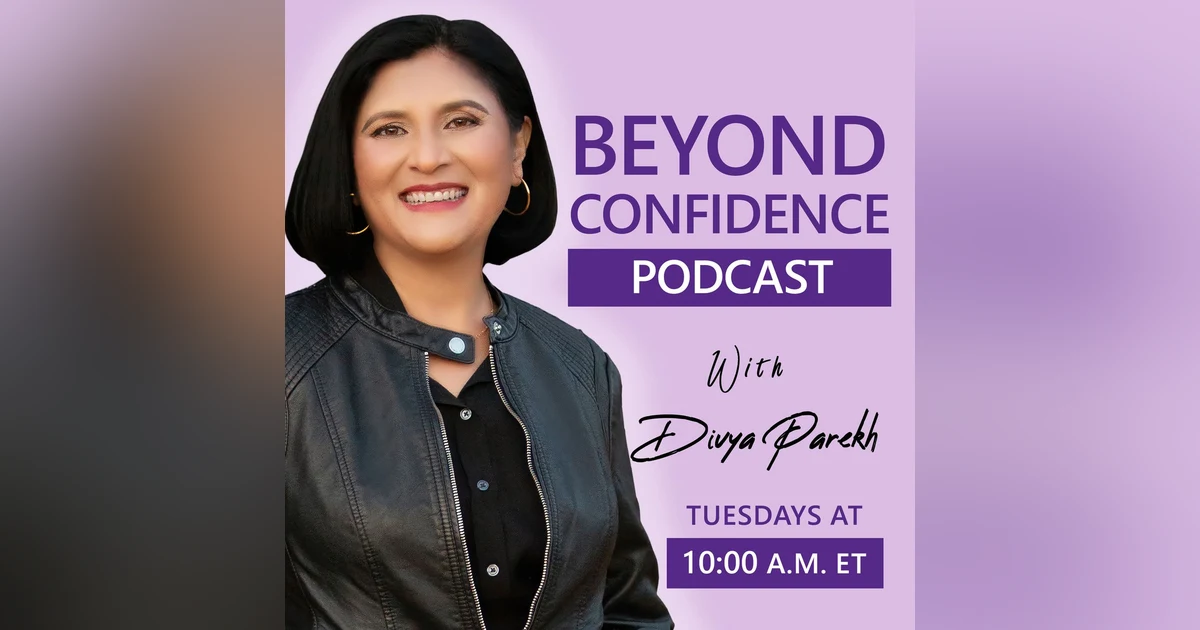
Beyond Confidence is broadcast live Tuesdays at 10AM ET on W4WN Radio - Women 4 Women Network (www.w4wn.com) part of Talk 4 Radio (www.talk4radio.com) on the Talk 4 Media Network (www.talk4media.com). Beyond Confidence TV Show is viewed on Talk 4 TV (www.talk4tv.com).
Beyond Confidence Podcast is also available on Talk 4 Media (www.talk4media.com), Talk 4 Podcasting (www.talk4podcasting.com), iHeartRadio, Amazon Music, Pandora, Spotify, Audible, and over 100 other podcast outlets.
Become a supporter of this podcast: https://www.spreaker.com/podcast/beyond-confidence--1885197/support.
0:00 The topics and opinions expressed on the following show are solely those of the hosts and their guests, and not those of W four WN Radio It's employees or affiliates. We make no recommendations or endorsement for radio show programs, services, or products mentioned on air or on our web. No liability, explicit or implied shall be extended to W four WN Radio It's employees or affiliates. Any questions or common should be directed to those show hosts. Thank you for choosing W four WN Radio. This is Beyond Confidence with your host w Park. Do you want to live a more fulfilling life? Do you want to live your legacy and achieve your personal, professional, and financial goals? Well? Coming up on dvparks Beyond Confidence, you will hear real stories of leaders, entrepreneurs, and achievers who have stepped into discomfort, shattered their status quo, and are living the life they want. You will learn how relationships are the key to achieving your aspirations and financial goals.
0:52 Moving your career business forward does not have to happen at the expense of your personal or family life or vice versa. Learn more at www. Don't Divpark Dot com and you can connect with div at contact at divpark dot com. This is beyond confidence and now here's your host, div Park. Good morning listeners, It's Tuesday, and great to be here with you, so think you, Thank you, Thank you to all of you who have got our books, especially the new book on the artificial intelligence, because so many of my clients requested that I put it out there given so many changes that are happening and how to navigate this error of AI. So do get a copy of yours and leave us your review and any questions you may have. So today we have a very special guest and we'll be going into leadership and the age old questions as to how you can remain authentic and shine in face of difficulties. So welcome Kelly.
2:07 Thank you so much for having me via. Oh it's a pleasure to have you so wonderful audience. You know, Kelly McGinnis is president at thermal Fisher Scientific, leading by a pharm of business, so she brings a wealth of knowledge and wealth of experience to us. So Kelly, share with us as to been so many times at the level where you are at. So many things feel urgent at a time, have you decide what actually deserves your attention and what's just noise. Yeah, so the thing I always say is urgent and important are not the same thing, And urgency feels like a spiral of everything all at once, and it always feels like something asked of you. The things that are important are actually things. It's usually less than five. My rule is five. There's never more than five things that are important at the same time, and if you don't distinguish one from the other, then you're just gonna end up swirling away. I always picture like a tumbleweed, like tumbling in the planes, because you don't really know what direction you're going to end up in. And so what I do very religiously is at the beginning, I'm a morning person. Everyone will have to do this differently. But every single morning, at five am, I decide what five things are important that day, and they need to be in the context of the five things that I think
3:39 are important for the week, for the month, for the year. And if you sense any discrepancy or inconsistency, I reassess. But if you don't do that every single day, and also I do it for about two hours every Friday, then you end up just you know, going all over the place, and those things are not just work things, they're also personal things, because there's no such thing as separation in my mind. You've got to put these important things in one plane and assess them at any given time. Yeah. No, absolutely, you're right on the mark. And having that little discipline, having that little time to paradise things, it's super important because when you are looking at urgent important matrix which was put out the Eisenhar matrix, it has been put out forever, but it's that distinction that makes the difference. So initially, when you started out your career, did you have any aspirations as to wish direction it would take.
4:41 When I first started, so I graduated college, it was rightpost dot com bust, right before financial crisis. So if you put your headset back to that time, it was not a frothy market. It was not one where people we're taking these big risks. And my major was entrepreneurship. So put me back then where I'm like, Okay, all I want to do in life is create a new business and build and grow these big things. On the backdrop of that timing, and it's misaligned, and so what I ultimately decided to do, which I've been quite successful in over the years, is how do I bring that entrepreneurial spirit into the context of bigger corporations because many people think they're mutually exclusive. I mean, I fundamentally believe they're not mutually exclusive if you do it the right way.
5:35 And so while my dream was ultimately start my own thing, what I have done over the years is how do I create that spirit and that growth mindset and the transformative mindset in the context of something bigger. So what I'm. Hearing Kelly is that you brought entrepreneurship to your job. Absolutely, yeah, and then you merge the two things together, because so many times what happens is that, oh, I'm not in a meaningful job. Several of my clients, including executives and down to the young gen z, they're like, oh, that next shiny thing, the next best thing. So there's such a difference in that mindset versus you are, yep, I'm going to bring this and apply it to my job.
6:26 How did you make that transition? So I think some of it is just how I'm personally wired. I'm I'm a disruptor by nature. I like to disrupt things. I'm also comfortable with getting in trouble once in a while, not for big things, not for things that are black and white, but for things that have like I tried something and it didn't work. I tried something and that didn't work, but I pivoted and I made her. So I always tell people, if you're afraid of making a mistake, or afraid of getting in trouble for something, or afraid of anything else these bigger companies, then that entrepreneurial mindset to do something different will be so stifled you won't do it. And so you have What I'm not talking about is doing like big things, but things like let me try this, or let me invest my budget here instead of here, or let me change this whole process to see how it works. If you do those things consistently, you can become fundamentally an entrepreneur in the confines of a bigger company. If you're afraid of those things, and you're afraid of just having a tough conversation with your boss or whatever, it becomes much harder. So to me, it's a bit of a mindset shift as well.
7:38 M hm. And here's something right, It's important that we look at it because there's a moment in lives where strategy pressure you know, real life, so many times they will collide, yes, and no one really prepares you for it, and it's important to have growth mindset so you're able to kind of like, you know, work through it. So, given that you've been in the corporate leadership, tell us what are some of the things that leadership gets wrong. Yeah. One of the biggest things I observe, and I have observed and been in three companies, is we get so much vested in our experience and so on the one side, experience in pattern recognition is super super helpful, really helpful. Mine is super helpful too, but only if I don't let that be the only thing that drives me.
8:41 And so what do I mean by that? If I'm not consistently curious about things that, even with my experience, seem impossible, if I'm not curious about asking people about it or letting them push back, I will consistently make decisions only based on historical information versus what what could be true in the future. And I think AI is actually it's gonna be the great I mean, you could. I'm of two thoughts. It can be a great equalizer. It can also be a great divide, making the best even better and making the weakest even weaker. But that's a perfect example of you've got You cannot replay how the past worked because it's just not gonna work that way.
9:29 And so that curiosity needs to it's certain, it needs to override the experience. And you can still choose the decision based on your experience because they need to coalesce, but it can't be the only thing. And I think what some leaders get wrong is they instantly know I need to go do this because I saw this ten years ago, or I saw this five year agos or three years ago, whatever, that's not gonna work in the future. So basically what I'm hearing is that bring your own emotional intelligence. Yes, this was the past experience, Yes, these are the things. Taking a pause, stepping back and looking at things that what's the optimal path over here?
10:09 What's my objective? Where am I going? Absolutely so, now, given. That you said something that I believe in as well, that a I will make stronger, more bolder, and more stronger and exposed or mirror the weaknesses because it's how we interact with it. Yes, So we'd love to hear your take on that in depth. Yeah, so perfect example. So I've been I am a super curious person and so I actually don't depend on my team to learn things from me. I am a big believer that you actually need to learn some things yourself.
10:50 So I play around with all of the different AI related tools. Now my latest obsession is Claude Cowork. So when you go into that and you just realize what it can do, it is mind blowing. Like so it's making me. It doesn't know all the answers. It doesn't, so if anyone who expects it to know all the answers is wrong. But because I'm training it with what I know and more data and more case studies and more this and more, that it's getting smarter and my decisions are getting better. And there's plenty of people in my peer group and then also on my team that the most that they've interacted with AI so far is simply like a Google Chat and Chat GPT. That's never that's never going to take them to the next level.
11:40 And I can't decide whether it's a lack of curiosity or just a lack of belief that we are in this moment where everything's about to change. But either way, that type of person is going to get substantially weaker in contrast to all the people that do the things that I experiencing, Like obsessing with Clod co work things amazing by the way, but like really obsessing about it and getting better and training it and just the things that it can do is amazing. But it is going to create. This divide, absolutely, and you're right on that because clod cowork is fascinating. I've been playing around with it too for some time. And one of the things you said that not sure whether it's the belief, So just to add it a little bit quickly and really come back to your topic, is that there are several stages to a adoption, and it's no different than any other technology that humans have experienced. Because as I'm helping my clients and as I'm helping my leaders executives to adapt it, people have to go through that. And one of the things that you mentioned was very important over here that highlight is that it's not a magical solution. What you give it is that's what it's going to spit out, how you train it, and that's where that metacognitive thinking. Bringing in the reflexive thinking venue interacting with it is super super
13:11 important because that's what's going to distinguish you. So those skills that were not highlighted before, now they're going to be exposed more. So it's very good. And then we talk about this brings us to trust because so many people don't trust AI. So, especially when leaders are at. The home of the ship, what do you think. Builds trust but actually does the opposite, especially in times of AI. Yeah, so I think the answer is just made worse with AI. But it's been true forever, which is the people, the leaders that don't show any vulnerability. And so what I'm not is afraid of AI. But what I don't know is what does everybody's work look like two years from now, one year from now, two years from now, ten years from now. I don't know the answer, and so I just need to say I don't know the answer.
14:10 We got to figure it out. Here's what we know it can do, here's what we think it can do. And then if we were to define the horizon five years and work backwards, what does that look like? So that goes back to you gotta show like leaders who show or think they know everything. Our complete lead is trustworthy. I mean they're just sure, like you have to be able to say I don't know certain things. So of course, no leader, no, not one leader on the planet. Even the CEOs that run these companies know exactly what things are going to look like ten years from now. And so anybody that says with definite like definitive straightness and I've heard it, AI is not going to change jobs. AI is not going to eliminate job.
14:51 Like. You cannot say things like that to people. You actually have to say, here's what I know, here's what I don't know, and then here's where we go from there. It's the conviction and the clarity of path versus the absolute knowledge about everything. Love that and that is super like. That is you have just went straight and addressed the matter at the heart, because every twenty seconds there's a change. There was Sora yesterday, I took away Sora today. So it is the backbone, it's the skeleton that's going to uphold as to the different players that we put on it. And that's very powerful.
15:35 So during these times, people are experiencing emotional exhaustion and there is a lot of confusion because as you mentioned, you know people are making predictions. So five years from now, one year from now, we can predict what's going to be one month from now. So during these times, like if you had to put your finger on, what do you think is making that trust between leadership and employees? Is an emotional exhaustion, strategic confusion or something else? I think it's both. So here's what I'm observing. And I have lots of friends who lead big places in other companies and also work for work for leaders. You see two types of leaders in this environment. You see the ones that have pretend to have extreme levels of certainty and strategy and path and then they keep it that way forever. And then you've got the leaders that don't, and they're actually both wrong because and this goes back to my prior point, because in this day and age, especially with all of the different predictions and AI is different every week, if something's different every single week, And so if you get my dog does this, if you get into like chase the squirrel mentality of like squirrel, squirrel, squirrel, squirrel, you will go nuts. Like you cannot do that. You have to have a directional view of where we need to go and why right, big business strategy, but the how,
17:07 which is via a AI, really just becomes a horizontal to said business strategy. And you have to be willing to change your mind. So some leaders, I think, get so water, you know, so bored down in this. This specific thing is my strategy. I wrote it down five years ago, and I need to just execute it otherwise someone will think I didn't know what I was talking about. These strategies need to change evolve in the how a year would mean most companies do this every year. That's not frequent enough. You need to actually look at this every quarter to say is this still the right path? And I don't think a lot of leaders do that today. M hm. Now that is that is very critical and it's important to think about it. And that's where critical thinking, emotional intelligent steps in. Now what happens is that.
18:01 There is this. Understanding or assumption that people in leadership no where they're going. But as you said, they don't. So what are some of the other things about leadership at your level or s swaite that most people completely misunderstand? Yeah, my other favorite is many leaders assume that everybody is wired like them. And they're not. And my favorite. There's all sorts of different as you know, different measurement and skill types to assess what type you are. My favorite is the enneagram. I think it does at the best, but what it effectively does is type you into these nine different types and maps how you interact with other people.
18:48 And I use it religiously with every team. Why do I do that because I am squarely framed as an eight. It means it's a challenger. And the funny vignette about this I love is there are two. There are two. There are two eights that are famous. And again we don't this isn't confirmed, but a lot of psychologists thinks this is true, Nelson Mandela and Donald Trump. And so I laugh when I say that, because every type, when it's at its best, behaves a certain way, and when it's at it's not best, it comes off another way. And so you actually need to understand yourself super super deeply before you can lead people. And then step two is actually understands how people on, how people take information, how they decide, how they like to be coached, how they Because if you don't do that, you cannot lead an effective team. And I think a lot of leaders just don't spend the time on it m hm.
19:46 And that is something that's important for a leader to sit down and think about how am I going to lead, how am I going to own the team? How am I going to people in the fold. So so many times what happens is that leadership may not have enough time. A lot of people want to get in front of them. So let's say somebody is promoted now they have to provide quick updates and create decks for the leadership team.
20:26 What are some of the ways a new senior VP or a leader like that can become visible without encroaching too much on the leadership's time. Yeah, so I think from that perspective, it's brings something helpful, and often said helpful thing is context. The C suite leaders are not going to know everything, thankfully, because that's not their job. So when you have this later, the layer of the SVPs and the vps bringing the context and the clarity is super super important. I always say this to people, even directors going up to vps. It's your job is not to make Your job at its core is to eliminate or reduce ambiguity for your boss.
21:19 It is not to give them as more data and more stuff to analyze themselves. Your job is to reduce the ambiguity for them, which means, yeah, actually, I always give this perfect example. I did this myself, so I self, you know, self incriminating here. I when I first got promoted for Yeah, first got promoted to VP, and I was moving kind of the senior executive director or director to VP. I to impress my boss, who was, you know, the president of the business at the time, I sent him like pages of decks in my analysis and data, and my like my recommendation was hidden like on page five somewhere. Horrible. That is a horrible way to interact with someone who actually hired me and promoted me to reduce the ambiguity. And so I think that is something not everybody gets right the first few times. And women are moving.
22:24 Up really really fast. You know, we are seeing more and more women in leadership positions, and yet there is some gap that's going to take time. And what would you say, A two to three things that you've faced and overcame that our audience can learn from. Yeah. So I've been pretty promoted pretty fast over the over the years, have been on the workforce twenty three years now and even now, which is amazing because it still doesn't die. I always get assumptions. If someone doesn't know me and I'm, you know, meeting investors for the first time, or I'm meeting a big customer for the first time, their immediate assumption is that I'm some junior person there, more junior person there to you know, facilitate or not not necessarily take notes, but make sure smooth running of the meeting. Okay, why is that? Because that's the bias we've existed in for the last million years, and it still exists to a certain point. So what I always try to do is make that first impression very very good. Women don't often have another opportunity for a first impression, especially if you've been promoted a little fast, if you look a little younger, if you're whatever whatever.
23:45 The said context of that is, everybody's got their biases, and so that first impression I really invest in, and so that means I ask smart questions. I sit at the table, I come prepared. I know the client in and out, I know the fund in and out. I know the investor in and out. Because more more than men, even and it's also important for men, don't get me wrong, but that is super important for women. So I would say that that is something do not do not underestimate. It's important. The other thing that I that is actually a strength of women that we need to actually play up versus play down, is women tend to be, and there's all sorts of studies on this, tend to be more EQ focused and EQ mature than our male counterparts, which means our ability to read the room, to anticipate how someone's going to behave to anticipate who's going to have issues with each other, to anticipate when you when you read a room, I can anticipate am I going to get through my three points? Or is there too much emotional tension between these people to get what I need done? And I pivot in the moment. Women can do that really really well, do it because that's going to differentiate. That's going differentiate. And then the third thing, which you know, I grew up with everybody telling me not to do this, but I lean into my personal life, meaning you know, my team and people know I've got a young son, he's three, and I've got a husband and this because why do I do that one, I
25:17 like to have more interpersonal relationship. But also if people for women, if people understand you and your context and this and that, we will not get taxed for having the harsher discussion. Meaning, so what happens if I were to just have a harsh you know, I if I have to give harsh feedback, or I have to stand up and say something, if I have to defend myself, whatever, If I just do that without the emotional context behind it, as women, we will get labeled as difficult or hard to work with or any of the other adjectives that come with that. But if you invest in the personal relationship, that doesn't happen nearly as much. So those would be I think the three things that I would say for women.
26:04 Yeah, I know, being a woman, I've experienced that, and I've also seen a lot of my women clients share that. And providing that context is so critical because it's important and talking about those things and being aware of it can make life simpler. And based on you know, what you talked about leaning in, So do you recall a time when you leaned in, especially when others were pushing back on your idea, and yet you move through it you were able to bring in the buy in and then it ended up being the right move.
26:44 Yeah, yeah, absolutely. So the best most recent examples, we were requiring a very large, very culturally different company that we spent twenty plus billion dollars on and I was at the time going to be the CFO and strategy lead to make sure that the deal integrated well, that we drove the right level of revenue synergies, and we brought the culture along. And when you spend that much on an acquisition, it has to go well. There is no failure point. Otherwise we've got huge problems. And so I was brought in to make sure that worked well. And I was getting a lot of pressure at the time to fully integrate this business into the corporate hierarchy.
27:33 So same systems, the same HR policies, same approval mechanisms, same everything. And I knew that was the wrong decision. I knew because it was a completely different type of business, completely different type of people organization, different culture. It's a people oriented business versus the more core technology businesses. And so I stood up and said, here's what we cannot do, because if we do, we will break the business. And at the time I gotten it, told no three or four times, but I stood up like I stood up for it, and we did it the way that I said to and it was hugely successful. But I know in my core if we did it the full integrate way, we would have lost tons of people, We would have broken the business, and the thing that made the business good in the first place would have died a slow death in that infrastructure. And so you just I always tell people, if you know and it's worth it, you've got to push If it's just there are things that I think that I will not push back on, even if I wouldn't do it that way because it's not that important, Like you cannot die in every hill, but if it's something that is extremely important, you've got to raise your hand and stand up. But you got to know the difference. And that's where we started this what is important versus what's not, Because if you don't know that, all of these other leadership sub chapters we're talking about don't work. I mean I fully believe that.
28:58 Yeah, that definitely makes sense. And as you talked about, you knew which battle to pick and you went after it. So could you highlight one or two obstacles that came up for you doing this journey and how did you overcome them? Oh yeah, So from the more junior people to the senior most people, I got lots of questions like, well, that's not our statements, like that's just not how we do it, and what do you mean you get to make that? How do you get to make the decision if you know so and so said this, and well if we don't do this, then this is going to be the cost every every reason. I mean I during that period, I think I had to be in like twelve different meetings telling people we're just not going to do it and here's why. And I wasn't like obstinate without facts, but I had a very clear view of here's why it won't work, and let's try this instead, and if this doesn't work or we see a negative cost outcome in the banner of plus or minus three percent, then that's fine, then we can do something different. But we got to try it. And it was I always say, when you grow up in a company and you've spent your entire career inside company, which I hadn't in this particular example, which gave me the unique ability to not get so mired in the detail or stuck in the mud,
30:31 so to speak, on how things have always been done. And I think that is the thing that made me have the context to know in my core that we couldn't do that full integration. M And. You had said about clarity and conviction, and that's that's what's coming through for me that had the conviction and you stood fast. I'm curious if you had moments of doubts during this journey, yeah, and yes, how did you do with them?
31:13 Yeah? Because I think it's impossible if you feel so sure about something yet everybody around you is telling you you're wrong, You're gonna start to have doubts. It's human, it's human nature. And at the time I was doing this, I had been in the company only like a year, year and a half. It wasn't a lot of time, and so I wasn't this very well known leadership person in this company. I was relatively new, and so I knew also at the time is if I pushed this hard and I did this and I held my ground and I was wrong, I would be doing reputational damage to myself, most likely because I was really this one was on. I was gonna die on the hill for and I was willing to do it anyway. But that's what made me, that's what made me keep being successful in this company is that store is promoted like four different times in five years, because making if you really want to get promoted that fast, you're going to be taking vets and you could be wrong, and if you're wrong, there may be consequences. But when someone when someone asked me, well, how do you actually figure out a way to do that?
32:27 Is I'm willing if it doesn't work, to face the consequence of it. And I don't think everybody is. Yeah, and that's the tugo war. People go through what if? What if? Rather than coming back to that, you know, I have the conviction because I'm ready to draw a line in the sand, then you do that. That's what's going to differentiate you from others, and that's what's going to also help you plan the letter and allowing yourself that droom to fail. And so many times what happens is that fear of failure booths mediocrity and does not allow you to rise. Yes, absolutely, absolutely so, given that you're a mom, what would you say are some of the things so many times women are scared, like, you know, I'll be going on maternity leave, and they're even scared to use full six months or three months whatever the company offers.
33:27 They're scared like, oh, you know, I will not be caught up. What would you say to those young moms or even older moms, doesn't matter, like wherever they're at, like you know, whatever age the children are. Yeah, when they're coming back from that maternity leave, what could they do that? It does not. Get them to stop from ground zero. Because those doubts can really eat you up. Oh gosh, yes, and they did need to. So I took the company provided maternity leave. At the time, I was deciding whether I should just take a little more too, because we had set ourselves up I could take a little more as well, even though it would have been unpaid, and I chose not to to only take the company provided not for financial reasons, because I was scared. I was really scared if if I just take more, will I become irrelevant? Will looking back now that that was three, you know, almost three years ago, I should have done it, because one, you don't get that time back. But two what happened when I came back is they offered me a promotion. Why did that happen? Because before I went on maternity leave, I organized who was going to do, Who's who's responsible for what? Who owns what decisions? What decision rights are they? What are we going to get done in this pier? I set everything up. It's just what I do. I'm super organized, and so I set it up. When I got back, right, it was completely fine,
34:58 It was great. Everything everything happened exactly the way that I had designed it. And so all thinking back, if I had just taken more time out and just run that out a little more, the team would have been fine. And the other thing I tell women, especially women leaders, is and I tell this to men too, since everybody, if the team cannot survive without you for a few months, you didn't build a sufficient team. You built a dependent team. And so from that perspective, my fear was there, because I think it's impossible for high achieving women not to be fearful. But I would have been fine, and even because of the team was able to execute on the goals that iligned. I was offered a promotion like the day I came back, and so we just and again it's not perfect, and not every company is perfect either.
35:50 But looking back, as long as you plan it the right way, you got a good team, you're very clear, and they're not a dependent team. We've got to be able to feel okay to take the leave. And if the company isn't a type of company that thinks that's a positive, you're in the wrong company, like honestly, because some companies are completely great and they're not all created equal. And so for women, I'm very big on me pick the right company because the ones that are the right company are going to really support you. And also, if you set it up the right way and my team executed what I wanted them to in the few months I was gone, I got a promotion. Great like that, that's what That's what's supposed to happen in these things.
36:36 Yeah, definitely, because as you said that time never comes back. Yeah. And one thing that I can even tell from my own personal experience is that kids don't remember toys. They don't. It's the experiences and the time spent with you. Yes, yes, oh for sure for sure. So as we tell talk about it, what are some of the things that women leaders tend to or complicate and comparson to men. Yeah, so women, I observe, tend to be they operate more in a checklist mindset, meaning I need to do this, see this, show this, quantify this, do like it's a checklist, whereas men don't operate so much in a checklist, and they are more they're more confident around. Here's some of the experiences I've had, here's what I don't know that's okay, and here's how I'm going to fill in the gaps.
37:41 They operate more like that. Women are more When I feel more confident in my little checklist piece of paper, I will go after bigger things. And it's it's a bizarre, really bizarre framing. I do think there's enough studies about that too. I mean one study which says it's the it's the age old study, which is, where do women feel comfortable applying versus men? The eighty percent verse sixty percent? You know that whole thing. But yeah, but this is broader than that. This is fully like it's even as simple as raising your hand to try something hard, or taking on some big thing even though you don't know how to do it, or letting you know, finding the right not mentors. I think mentors are different, but sponsors who are going to put their name on a piece of paper and support them, women go after those things far less. And so I do think that is something that hold that holds women back.
38:36 And at the core of it, it is about giving yourself to permission. Yes it is, it is, and then. You give your self permission comes back again to fail and that checklist comes. Is that fear of failure or what if I'm not good enough? And it's important to allow yourself to fail as you did. So, as we are coming to the close of our insightful conversation where you have shed some very powerful nuggets for our audience, what would you say our top three things that whether it is women, parent leaders, emerging executives, or say sweet anyone regardless we're there in their stage, could do to become a leader yetive, transformational leader.
39:27 Yeah. I think one that we didn't talk about is don't take it all so seriously. What do I mean by that? It just means when I was younger, I used to be so in my head about Oh I said this in this meeting and this person's face was funny, and they probably I created all of these stories around things surrounding when I didn't think I did that. Well, just you gotta get out of your own head and differentiate the difference between stories you tell yourself and facts that are actually true. And facts are facts, They're not like made up things that you think are true. There are things like the sky is blue and my shirt is white, like those are facts, and so I always see that that with people. The second thing, and I talked about it in the context of what is your role when you're dealing with your manager, is but I'd say it another way, Managing your manager is one of the most important things that you need to do. It is not just you manage people, You also manage your manager.
40:27 And you've got to figure out how you reduce their ambiguity because if you don't, they're not going to see you as a leader. They're going to see you as someone who just increases the complexity of their day. And then the third thing I would say is the single biggest thing that differentiates people that I see is curiosity. And you've got to be super curious. And so I can always tell I mean, I'm going this is going to be a tell for people if they interview on my team, if I ask someone. The easiest way for me to tell how curious someone is is, I'm what's your what's your favorite AI hack these days? If they don't, if they don't know, then they're not that curious. It's the simplest way to say. And I could and yes, I ask an AI question because it's the easiest, and it's it's it's it's what, it's what's surrounding our world.
41:17 But it could be everything like finance, people who don't understand how the product is made, or you know, engineers who don't understand the go to market strategy, even as if it's basic sense really cannot elevate and so it's really being super curious around those things. That's how people get to bigger leadership positions. Mm hmm. Absolutely. Where can people find you where they can connect? Yes? Yes so so best source is my substack. I share a lot of these learnings and observations lead with Kelly dot substack dot com. And then I also have a website kellyemdeghinis dot com where I'm showing sharing other things and and and connection points there fantastic.
42:02 Is there anything on your mind or in your heart that you'd like to share. Just that I'm super positive on the workers and the gen z and the millennials that are coming up. This is, if anything is. If there's ever time to be coming into the corporate world and thinking about things, it's now. So just lean into it and take it by force. Well, thank you for joining us, Kelly. I totally enjoyed our conversation and wish you all the best in your next chapter. And thank you wonderful audience for joining us, because without you the show would not be possible. Reach out to us, let us know like you always do.
42:48 I love that, and thank you for that as to how we can serve and support you. And thank you on a text genius for making this show technically possible. Be well, take care and go be that leader that I know you can be. Until next time, take care. Thank you for being part of Beyond Confidence. With your host v Park, we helpe you have learned more about how to start living the life you want. Each week on Beyond Confidence, you hear stories of real people who've experienced growth by overcoming their fears and building meaningful relationships. During Beyond Confidence, Vapark shares what happened to her when she stepped out of her comfort zone to work directly with people across the globe. She not only coaches people how to form hard connections, but also transform relationships to mutually beneficial partnerships as they strive to live the life they want. If you are ready to live the life you want and leverage your strengths, learn more at www dot dvpark dot com and you can connect with vat contact at dvpark dot com. We look forward to you joining us next week.


