
Leadership Lessons from 88 Countries

 iHeartRadio iHeartRadio
 Spotify Spotify
 Youtube Music Youtube Music
 Amazon Music Amazon Music
 Apple Podcasts Apple Podcasts
 Pandora Pandora
 Audible Audible
 Podchaser Podchaser
 Audacy Audacy
 Spreaker Spreaker
 Deezer Deezer
 Podcast Addict Podcast Addict
 JioSaavn JioSaavn
 TuneIn TuneIn
 Castbox Castbox
 Castamatic Castamatic
 Castro Castro
 Fountain Fountain
 Goodpods Goodpods
 Overcast Overcast
 PlayerFM PlayerFM
 PocketCasts PocketCasts
 Podimo Podimo
 Podurama Podurama
 Podverse Podverse
 Podyssey Podyssey
 RSS Feed RSS Feed
 YouTube YouTube iHeartRadio iHeartRadio Spotify Spotify Youtube Music Youtube Music Amazon Music Amazon Music Apple Podcasts Apple Podcasts Pandora Pandora Audible Audible Podchaser Podchaser Audacy Audacy Spreaker Spreaker Deezer Deezer Podcast Addict Podcast Addict JioSaavn JioSaavn TuneIn TuneIn Castbox Castbox Castamatic Castamatic Castro Castro Fountain Fountain Goodpods Goodpods Overcast Overcast PlayerFM PlayerFM PocketCasts PocketCasts Podimo Podimo Podurama Podurama Podverse Podverse Podyssey Podyssey RSS Feed RSS Feed YouTube YouTube
Join Divya Parekh for an inspiring conversation with mother-daughter duo Natalie and Dr. Evelyn Higgins, authors of the Amazon #1 bestseller Have a Love Affair with Travel. With a combined legacy of leadership across government, healthcare, and education—plus 88 countries and all 50 states between them.
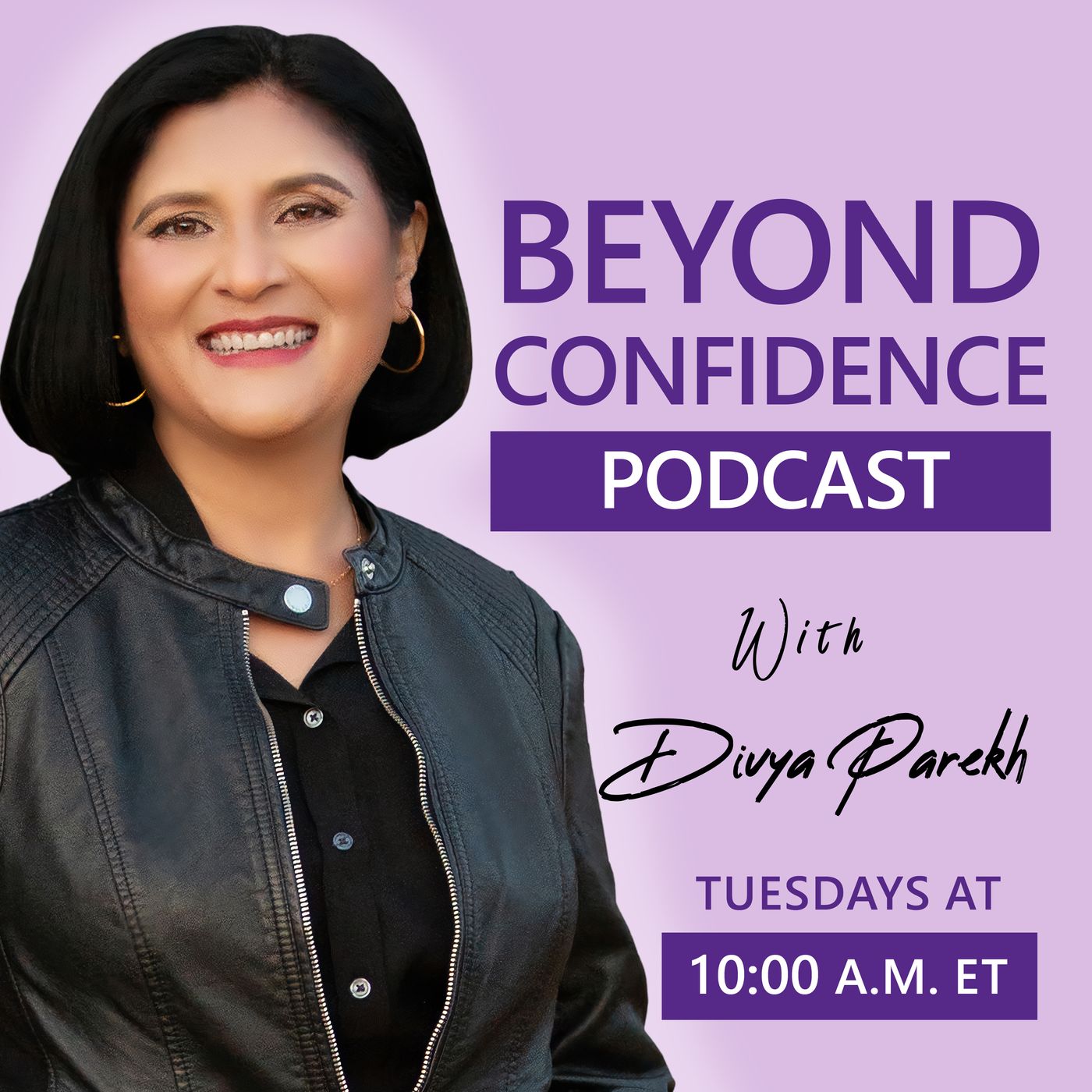
Beyond Confidence is broadcast live Tuesdays at 10AM ET on W4WN Radio - Women 4 Women Network (www.w4wn.com) part of Talk 4 Radio (www.talk4radio.com) on the Talk 4 Media Network (www.talk4media.com). Beyond Confidence TV Show is viewed on Talk 4 TV (www.talk4tv.com).
Beyond Confidence Podcast is also available on Talk 4 Media (www.talk4media.com), Talk 4 Podcasting (www.talk4podcasting.com), iHeartRadio, Amazon Music, Pandora, Spotify, Audible, and over 100 other podcast outlets.
Become a supporter of this podcast: https://www.spreaker.com/podcast/beyond-confidence--1885197/support.
0:00 The topics and opinions expressed on the following show are solely those of the hosts and their guests and not those of W four WN Radio. It's employees are affiliates. We make no recommendations or endorsement for radio show programs, services, or products mentioned on air or on our web. No liability, explicit or implied shall be extended to W four WN Radio. Its employees are affiliates. Any questions or common should be directed to those show hosts. Thank you for choosing W four WN Radio. This is Beyond Confidence with your host w park. Do you want to live a more fulfilling life? Do you want to live your legacy and achieve your personal, professional, and financial goals? Well? Coming up on dvparks Beyond Confidence, you will hear real stories of leaders, entrepreneurs, and achievers who have stepped into discomfort, shattered their status quo, and are living the life they want. You will learn how relationships are the key to achieving your aspirations and financial goals.
0:52 Moving your career business forward does not have to happen at the expense of your personal or family life or vice versa. Learn more at WWWA. You don't divpork dot com and you can connect with Divant contact dans dvpark dot com. This is beyond confidence and now here's your host, div Park. Good morning listeners, It's Tuesday morning, and of course I'm excited to be here with you all because I get to be with you. So one very exciting thing happened as a fellow writer to another fellow writer. We were just having a conversation and I was experiencing a writer's stuff and this is actually one of my clients. So I'm helping her develop her own story. And she was so kind and said, gave me the same advice back, Divia, what if you were to walk away for a couple of days and not look at your book? And it's amazing.
1:55 We all know the answers. It's just sometimes we need someone to remind us or be there for us. So take a moment to be there for someone. And let's bring in our guests. So welcome Emlen and Natlie. Hello, Love, thank you for having us. Oh, I think Sovia going to have a very exciting conversation today. So Natalie, if you recall a moment with your mom, you know, a wonderful moment from your childhood. Do share, Oh wonderful I've had. I had a wonderful childhood.
2:36 I was raised in the country and in Oakalla, Florida, which is just about an hour north of Orlando. So needless to say, we had all the luxuries of being able to go and to go to Disney World and places like that. But I'll tell you my family. We come from a very humble family and a very hard working family. And that really because of the hard work that really shaped my life and my professional life. As I soon you know, when I first got into the professional world, you know, working in the Florida Senate and then from there being an executive director and then a CEO, a contract lobbyist. All of that came from that hard work, came from my childhood experiences with my family and the hard work and the ethics that was instilled in my life at a very young age. And debas she does that, now, let me tell you this is the hardest working person.
3:43 She will be on the phone all day talking to people and encouraging them and exuding leadership, and then she will stay up two o'clock and more than working on something. So when she says she loves work, I do I enjoy it and so not enjoy work. You know, it's a different life. But if you really enjoy your job and your hobbies and you know that, that really shows and I'm just very fortunate I have that opportunity. And also it's not work, then right, it's living right because a lot of people say I need to have work life balance. But when you work is your life and when you're enjoying it, then it doesn't seem like work.
4:28 You're in the flow, you're living your life. It's such a it's it's a paradox. It is when you have that clear cut distinctions that makes the difference. But diva it also is is that you know, you really have to talk about balance, and definitely I understand. I think that's extremely important. When you do love your job, you really do get very much engaged in it. But when it becomes something that is much more than a job, something you really enjoy. I you know, besides my day job that I do and I love and I spend a lot of time on it, we are also authors. And then what we do is late in the evening because I worked till what seven o'clock or you know, beyond that late in the evening. Then we work together.
5:17 And to me, it's not like, oh my gosh, I got to do something else. I'm so exhausted. Yes i am, but I enjoy it. And when you find something you love doing what you want to do, is you find that time. It's a priority. So I have made sure in order to get a book that we wrote out in one year, I actually had to make it a priority where I work at least one hour a day, no matter what, one hour a day, but of course it was a lot more in order to get it done, you know, and vibyah. It's very interesting. As I said, we have this book and most people will say, oh, I can't stand marketing. You know, we've written the book that then we have to market it. Let me say, we enjoy it and it has just like we were saying, it has to be something that you love, you that you love doing, or you decide, oh now just be a ball and we're.
6:17 Not going to do that. Yeah. No, it's important that you enjoy and I really like what you'll are sharing. Is that setting that priority? So tell us, like, you know, Natalie, you've been through so many careers in your life. How did you know then to pivot. When you felt it was right. When I finished the Florida Center, I was there for ten years at that point, this was this was several decades ago, maybe three decades ago, and at that time it was pretty much of a man's world, and so it was the youngest female staff director and uh and I enjoyed it. I loved it, and I respected my senators. I appreciated it, and I appreciated the process of the Florida Legislature. But when I left, I just knew it was time. It was one of the things when you feel that you have you have reached your goals, you're at a level that you you know won't be able to break anymore, and that you know there's some other things out there, and so that's what I chose to do.
7:29 Well, that's very powerful. How did you get into the Senate piece? Because so many times what happens is, you know, there's always a stigma associated with politicians. They could be the best people in the world and yet be you know, as a society and as a people, as a collective, we look at them with some skepticism. So what got you in there? And what were some of the learnings from that time. Well helped me out because see, I was raised in politics. My dad actually he ran political campaigns when I was younger, and also he ran for office. It was hard for me because he lost I think it was three campaigns and lost. And then my mother actually ran and lost by just a few votes. H So you see, politics is very tough. But we had a brother that did that up. It became a representative in the Florida House.
8:28 So politics is kind of our life. But you know what, I didn't want to go in it because election it was just like I had a pit in my stomach. Every election it was like I just could you know, it was you know, we're going to lose, or if we lose, that's how much time and effort we put into this. And so I didn't want to do it. So I went to college and I did what I loved, and that was art, and I realized, well, maybe I'm just not gonna make money there, you know, be able to have a professional job. But I went into television broadcasting and from there I volunteered with a TV show called Today in the Legislature, and when I volunteered, they kept me on and then I found an internship. I got an internship with the Florida Health and that was when when a job opened up in the Florida Senate, that's when I took that job. And I really did not even want to be in politics.
9:34 M that's interesting and it's some you know, life takes a detour and it takes us. And as you said, so you'll are definitely a family with a very strong and strength and like you know, the courage running three of Blood's like you know, it's not easy to lose, and you kept coming back, so you've made a mark on it. So how would you say, like, you know, what were some of your defining moments during your you're at Senate and then you impacted. I was just going to tell how how we got into writing the book, but you asked a question about the Senate, so I'm really aheady with that. The most impactful would be when we had legislation that really positively impact families. And I was a major part of that because not only was I guiding policy and budget items, but I was really working personally with the senators to make sure their priority bills or the presence priority bills got passed, and so anything to deal with children or with seniors. I really have a heart for the aging and seniors, which I eventually went into following the Senate, but those were my years when we were able to
11:05 do that, and then I was able to get them really maximum exposure on the Today's Show things like that, So that really was a priority of mine. It was a wonderful as timon Florida Senate to interject, was this you asked about losses. Actually, when I lost my election in nineteen ninety two, my husband said to us, why don't you and Natalie go to Europe? And we said, no, you can't go. We can't go. We can't, we can't take time off, and who's going to take care of the dogs? And he said, just go, I will take care of the dogs. So out of this loss that we had has developed this interest in travel and interested in writing. So I just wanted to subject that because you mentioned about sometimes from losses like this can develop a whole morph into something that is really that you want to do, which was we.
12:17 Come back to it, and the losses are something you know, we call them as losses, but these are growth opportunities and how I live different directions. So you mentioned you know, Natalie that you were interested in supporting seniors, So walk us through the journey how you went through that and ended up being a CEO. From the Florida Senate. I had an opportunity when a knew governor came in, Governor Bush to work in his administration with one of the departments. So I really had an opportunity to be able to see the department life where my side was the basic legislative side of it.
12:57 So I got to see the executive branch and be a part of the executive branch. And then from there I had the most wonderful opportunity that just kind of fell in my lap. It was with the Alzheimer's Association at a state level, and so what I did I was hired to be their director of Policy at the state level. And what we did was we just did incredible work those seven years. We brought in so many volunteers and people, so many people that have been touched by Alzheimer's or dementia and brought them in to get engaged. We even had we started called Rally and Tally is bringing people bringing caregivers up to Tallahassee. We had one year almost five hundred people from around the state come up to Tallahassee and really advocate for enhanced policies for caregivers and people with dementia. And so with that we did extremely well. From there, I was promoted up to Washington, d C with the National Alzheimer's Association and worked in the DC office for two years. I was the director of Systems Change. So they were working so yeah with the Healthy Human Services and we worked directly with them on systems change.
14:20 Very nice. So tell me, like, you know, what were the lessons. Like, you know, as you're growing this experience, you know, a lot of women kind of think this is not for me, this is for me, and you have kind of taken an unconventional route. So what would your message be to those women? To our listeners, I would say, this, go the way your heart is telling you. Now, why did I say that? See, with the hard work that I have been in siled in when I'm you know, growing up in our family, I felt that I probably could have gone to some corporation and work in a big corporation or so on.
15:04 But I chose this way because also my family, my dad was very much into helping individuals at one time, very early, very early on in my life. I really don't even remember too much about it, but he was a preacher, So you know, it's our Our family has always been helping others. My mother was a teacher that ended up becoming professional a professor and then a medical writer. But our lives and all of our family and all the siblings we were really kind of have that instilled in our lives of really helping individuals. So I didn't go the route of the big corporations. And I'm not saying that there's anything wrong with it. I'm not saying that you're actually not helping people if you do that, But this is just the way I chose that. From the Florida Senate and getting that experience, and then working with a national organization that really supports individuals in a very vulnerable time, especially family caregivers, and to be able to support and help policy and shape policy and the way things are done here in the state of Florida, and then from there actually go I was actually a contract lobbyist for a few years. I enjoyed that, and I actually did take on a lot of nonprofits organizations that really had no idea of how to get anything done in the legislature and then from there I became the CEO of the Florida Association of Managing Entities. Now
16:37 what is that We oversee Florida's behavioral health safety nets system. So my members of my association and there's only seven, So you're saying, how could that be association? Just seven? These seven people, these seven organizations manage one point two billion dollars in the state of Florida. And we do oversee behavioral health services. We develop networks for providers that serve individuals with a mental illness, with substance use prevention, opiate addictions, suicide, I mean all of that particular area housing so that they can recover. So that's what we do.
17:30 We don't provide the services, we manage and we pay for services. Now, there can be so many hard times, right that there's all these causes that you're talking about, so much need for them, they're worthy causes and people are really suffering, and then you may have the budget constrained, So how do you manage that? Where you're looking at some of the programs and you know, as individuals, we all have these questions like, you know, how are you balancing the priority of that. You make it a priority. You make it a priority with the legislature, and of course how do you do that, You really develop relationships with legislators. Now what normal people, and I say normal knows the word normal. They hire contract lobbyists. That was something I used to do. We aren't allowed to do that because we have state and federal dollars, so we're not allowed to contract. But the good news is is I come from that world, so I know it and I used to do it. So it's one of these things that's really educating. Our leaders are an executive branch, whether it's the governor or the departments, and our senators, our House members, and are also our local leaders, our share us and so on, understanding what is really needed and then getting their support for us
19:04 to really reach out and be successful with policy issues or budgetary issues. You can see where this is part of leadership, which you have asked us about how leadership, how we look at leadership, and this is Natalie has a whole host of training that she does in the area of leadership, which is she in working with her people, she never assumes that they will think a certain way, so she has to work with them and have good communication skills to do this. This is what we feel is she's very very good at that and it's all part of leadership. It's just you know, really reaching out, never seen anything, asking questions, building a consensus, engaging your your board members or with your staff to get you know, your goal, so get to where you want to go.
20:16 Yeah, And so there may be a lot of young women or young men who may be wanting to get into the politics. And as you said that, you know you can make a difference. So can you elaborate a little bit more about how does the contract lobbying work and if they cannot do anything? You did mention about educating and engaging and so what are some of the ways to influence and just some part provoking action that are young ones can take. Navia, I get, I get that question all the time. You know, what's the difference between lobbying and educating? Okay? So our advocating Okay. So lobbying is actually when you are paid, You have a contract and you are paid to actually go and try to influence, whether it's the executive branch or the legislative branch or even local government.
21:17 You know, you Actually in some states you actually have to you know, registered to lobby for local government. So that is lobbying when you actually get paid. Advocating is different. Advocating is educating, So advocating you're not getting paid. That is the difference. You don't have a contract for that purpose to go influence leaders on a certain position. So those are the two differences. Now how do you get into that? If you want to be a contract lobbyist, my suggestion would be is to start volunteering or being an intern, being an intern with a legislator or in a legislative office, or a volunteer. See notice the word volunteer, because that's what I did. I volunteered for today in the legislature. That's how I actually got in. And then from there you may have an opportunity to be there as jobs open up, and then you'll have that experience that they're looking for. So that's how you start off.
22:37 Now as advocating, you can actually do the same. You can volunteer because that's really what you're doing, you're volunteering. You can volunteer if if you are interested in advocating for UH saving you know, the animals, you're you're you're against uh you know, uh dog pounds or you know, killing dogs if they're captured, you know, volunteer and then start working with their advocacy group and go to their state capital or go to their local government and start working that way. That way you'll learn the grassroots of it.
23:18 That's that's how I started. Yeah, and that definitely makes sense that you're loaning the nuts and bolts of it and while you're in the thick and thin off it. There's something to be said about the power of proximity which opens up doors. Yes, So why you been doing this? You mentioned about creating that priority for your book, So tell us about how did you get into the writing of the book. What is it about? Well, our book is called Have a Love Affair with Travel, and we started about a year and a half ago, a year and a half gun and we were able to get the book done in a year. But mother, how did you start writing this book? Actually? I was writing.
24:07 I am a by profession, I am a medical writer and I have written twenty two books for publishers on gene therapy and genetics and so forth. But we decided we love travel so much and I had been writing little articles for oh, some of the local magazines and so forth, and one of the editors said, why don't you write about something that only you and Natalie can experience? So we started talking about that. Hey, what are some of the things. What happened to us under the Eiffel Tower, what happened to us writing a camel in Tuisia. So we started writing and we had one hundred and one.
24:56 We published it down to seventy nine. So that is the way we got started writing on this. And as she said, we would have to write because I was teaching, but blessed COVID's heart, it cut out a lot of the class going to class and so forth, and actually we had some time that we could talk a little bit more about some of these things, about our experiences. So that is how we got started in writing. And how many countries both of you have traveled?
25:40 Well we have. Actually we just got a brand new country just a few weeks ago, so we're up to eighty nine countries, all fifty states and all continents. That means we went anarca and that's our favorite. That's one of my favorite place is Actually I don't want to live there, but it's one of my favorite places to visit. And so tell us, like a couple of stories from your. Book, Well, do you really want to know about our experience under the Eiffel Tower? This our stories. Now, most people when you go to the Eiffel Tower, it is so exciting because you're going to have your picture taken here am I standing in front of the Eiffel Tower, and send it back and put it on social media, send it to all your friends and so forth. So we were going to the Eiffel Tower and we looked over and there was a big black cloud coming up and it just all of a sudden started pouring, and Natalie and I said, oh my gosh, we will get under that Eiffel Tower. So we ran under this big stage dome and the time when a lightning was flashing, thunder was roaring, and water was splashing under our feet, and all of these tours were coming into and they knew
27:12 that was going to be the end of us. So Natalie and I looked at each other and said, you know, if this is the end, we've had one a lot. So but what happened was just as it left, and just as we looked, it went away and we said, oh my goodness, we had brush off our hair and take off our wet clothes. We went out and had our picture taken. Here we are standing in front of the Eiffel Tower, and Lee sent that back, so that that was one of the types of storts. And then we have a smart tip on each one of this, and this one was if you're ever under the Eiffel Tower, things may happen there, or may happen any place. Yeah.
28:06 So the whole, right, the moral of the story is that things happen to you and it's out of you for your control. But if it's out of your control, you know you can't you can't worry about it, you can't control it, right, so you you do things that are in your control. And that's all a part of leadership too. So the whole thing is is that you know, here we're under theneath this Eiffel Tower, and everybody just goes there to take pictures of it. But you know, we these stories are about things that doesn't happen. They don't happen to anybody else, and so it's that's what's so interesting about travel, because you can get one hundred one stories out of the Eiffel Tower, right, there are so many things and when things like this that's out of your control, you make the best of it and then you just go on and and you go on, and for us, we want on to be a tourist.
29:01 We did the selfias in front of the Idea Tower like everybody else did. But those are the seventy nine stories that we have. Actually, we started going out before it was published. We started going out and speaking about the book and some stories, and we had so much of an interest in it that they said, you know what, I've got a story. I was in Saudi Arabia and I had an issue there and so they explained it to us. And we have aid of those stories in our book that are actually from others people. They are so good and so compelling that we wanted to include that, to include their stories. So these stories are really self they're human stories, things that happen. Some are some aren't good.
29:57 We were in We were actually in Tunisia and that was wonderful. Love Tunisia. I would do anything to go back to Tunisia. We were there during the Arab Spring and we did not even know it at the time until we flew back to the United States, and then all of a sudden we turned on the news and there was that place right there I was at yesterday, you know, right the Square of Tunis, you know where they were having uh you know, uh riots there and and and then the government was taken over and then they then that spread to Egypt. So and we did not even know it. But the moral of that story was before you go to any country, you need to make sure that you checked the Department of States website to see if there's any issues going on, because we probably would have known at that time because it actually started prior for us flying in. What happened was this young man uh setting himself on fire and because of that and they took pictures of this, and this is what spread throughout social media and started the air on spring uh. And it had just a day or so before, but we kept hearing people check your chat and talk and kind of they look at something was going on and they said, okay, get back on this planet. They do not miss the plane. It's the last one. It's the last one out. And we got on. But now we know why.
31:28 Yeah, well it sounds like wonderful. So if our listeners wanted to kind of find your book, find you all, where could they find you and the book? While we have a website, it's www dot Travelers at Heart dot com and Travelers at Heart you spell it out so it's not a symbol at symbol. It's www dot Travelers at Heart dot com. It's also on Amazon so they can look up have a love affair with travel. You can even I think you can even type in affair with travelers, you know, because I tried that. But it's have a love affair with travel and it will come up. It's this beautiful, bright yellow book that comes up, and that's where you can find us. It's the easiest way.
32:21 I know we're in book of Barnes and Nobles and other bookstores, but Amazon's the easiest way to get our book. Any last thoughts for listeners and audience. We would just like to say that that leadership and you were talking about how important it is for people that are becoming leaders to remember that they have a lot of things that they can accomplish, and they can do this by by not being arrogant, by listening and Natalie, what would you say would be the number one thing that I would say you know, not assume, don't don't assume anything. Always ask questions. Flexibility is strength. That is strength, it's not a weakness. Hospitality, being gracious, not being arrogant, like mother said, and respect for others, respect for their you know, their point of view. I always listen to other people's point of views before I ever make a decision on anything or assume anything, because they may have a better idea or a better thought. So one of our favorite places, and we would love to just mention this to you, was in India. We absolutely loved India, and we would go back there in a heartbeat, and
33:54 we we have. Of course, we have a lot of other countries we would go back. But see, we've been to eighty nine country and I am ninety and by the time I'm a hundred, I want to go to one hundred countries. So we have a few more to go, a few more countries to get into. Well, we wish you all the best that you go ahead and get to one hundred countries, and kudos to you. It's a beautiful journey that you are sharing. A lot of people say, oh, I don't get along with my mom, and a beautiful example like you know that you can do a lot of things together, So thank you for joining us.
34:40 Thank you and David. We are writing another book right now and it's called Have a Love Affair with the USA, in which we only use stories from the USA, and it's really hard because there's so many, but it will come next year. Thanks year well. Thank you for joining us, and thank you one for listeners for being part of our show. Because you are the spirit and solo for show. Reach out to us, let us know how we can serve and support you. Thank you on for making the show technically possible. Be well and take care until lengths time. Thank you. Thank you for being part of Beyond Confidence. With your host d v Park, we hope you have learned more about how to start living the life you want. Each week on Beyond Confidence, you hear stories of real people who've experienced growth by overcoming their fears and building meaningful relationships.
35:33 During Beyond Confidence, Vapark shares what happened to her when she stepped out of her comfort zone to work directly with people across the globe. She not only coaches people how to form hard connections, but also transform relationships to mutually beneficial partnerships as they strive to live the life they want. If you are ready to live the life you want and leverage your strengths, learn more at www dot dvpark dot com and you can connect with dvat contact dant dvpark dot com. We look forward to you're joining us next week. M hmm


